Four Last Things: DEATH, Judgment, Heaven and Hell

Image result for christian death


Death was the subject of Fr. Wade Menezes, CPM, first conference in Ottawa Sept 30 – Oct 1/16.  Not the most enlivening subject but it is essential that we understand and prepare for it.  Having gone through RCIA 23 years ago, I have forgotten the details of what the Church teaches on this subject.  Hence I needed a refresher.  Fr. Wade’s teachings were drawn directly from the Catechism of the Catholic Church (CCC) and sprinkled with frequent scripture references:

For the wages of sin is death, but the free gift of God is eternal life in Christ Jesus our Lord.  (Romans 6:23)

And everyone who lives and believes in me shall never die. (John 11:26)

The last enemy to be destroyed is death.  (1 Cor 15:26)

  • death is the end of our earthly life (CCC 1007)
  • God the Creator had intended man not to die
  • death entered the world as a consequence of sin (CCC 1008)
  • Jesus accepted death willingly as an act of submission to the Father
  • death is transformed into a blessing by Jesus Christ (CCC 1009)
  • through our Baptism, we have “died with Christ” sacramentally in order to live a new life (CCC 1010)
  • physical death completes this “dying with Christ” so that we can live with Him again
  • death is the end of our earthly pilgrimage (CCC 1013).
  • God offers us his grace and mercy right up to the moment of our death, so that we may work out our earthly life in keeping with the divine plan and to decide our ultimate destiny
  • our goal is to die a happy death in a state of God’s grace
  • we should prepare ourselves for the hour of death (CCC 1014)
  • “From a sudden and unforeseen death, deliver us, O Lord.”(Litany of the Saints)
  • ” Mother of God, pray for us at the hour of our death” (Hail Mary prayer)

To die in a “state of grace” means at the moment of death to be free of unabsolved sin and ideally of any “temporal punishment” associated with absolved mortal or venial sin.  At the moment of death, our soul is separated from our body (temporarily).  More on the subject of JUDGEMENT to follow.  St. Joseph is the patron saint of a happy death, something I did not know:

Image result for st joseph happy death

Fr. Wade went on to explain that the taking of morphine or other pain killers for comfort purposes when the body is in the process of shutting down for death, is completely acceptable.  However, requesting assisted suicide i.e. premature to the body shutting down for death, goes against natural law and hence is not permitted.

Epilogue

Since beginning to draft this post, thousands of people have died suddenly and unexpectedly.  I am thinking of the 900+ who were killed in Haiti in the recent hurricane, people who were killed in Aleppo, Syria and elsewhere as a result of war and people killed in accidents, one right near our Arnprior home.  Were they prepared?  It underlines for me the need to prepare spiritually for death as outlined above, which can and often does come unexpected.

Finally, I attended a funeral for a middle aged man who apparently committed suicide.  It was a somber one but one also filled with hope.  The pastor said that the family members should not dwell on the feeling that they could have done more to prevent this tragedy.  We cannot save those we love – only Jesus can.   Furthermore, Jesus turned to this man at the moment of his death and said “Peace be with you, I give you my peace.”

Amen.


Leave a comment

Filed under Uncategorized

Surprising Spititual Connections


Marie and I had the great pleasure of attending a weekend conference sponsored by the Motherhood of Priests Apostolate in Ottawa at which Fr. Wade Menezes, CPM preached. You may have seem Fr. Wade on EWTN – he is a frequent visitor and conducts his own programs there from time to time.  A very dynamic and forceful young preacher, we learned a lot about the Four Last Things: Death, Judgement, Heaven and Hell, which I will post on separately.

Noticing his large cross looked much like my small Oblate Cross, I was intrigued.  Then he said that their order, was originally called the Missionaries of France and had been founded by Fr. Jean-Baptiste Rauzan in Lyons in 1808.  So, after checking, it turns out Fr. Rauzan knew Fr. Eugene de Mazenod and invited him in 1815 on more than one occasion to join the fledgling  MoF community.  Perplexed as to what to do,  (St.) Eugene was inspired by the Lord to instead found his own mission society in 1816, which eventually was named the Oblates of Mary Immaculate.  This was to meet the needs of Aix-en-Provence area parishes for missions preaching.  Hence, by his example, Fr. Rauzan must have influenced St. Eugene to take this initiative in response to the call by Pope Pius VII to form mission societies to help restore the French church to health.

The Missionaries of France were suppressed briefly around 1830 in response to political turmoil in France which outlawed religious societies.  Fr. Rauzan spent the time in Rome drafting up a constitution and rules and in 1834 received papal approval for his order, renamed the Fathers of Mercy and consecrated to the Immaculate Conception.  In 1839, they began sending missionaries to the U.S. to help attract fallen away Catholics back to the Church.  Now based in the U.S., the Fathers of Mercy home is in Auburn, KY.  Their  mission remains to preach missions to parishes at the request of the local pastor.  And what a great job they do!  I was delighted, as an Oblate Associate in Lacombe Province Canada, to discover and revel in the founding spiritual connection between Fr. Wade’s order and the Oblates some 200 years ago.

For more info on the Fathers of Mercy, you can go to: http://fathersofmercy.com/

The Motherhood of Priests Apostolate is a growing women’s ministry formed in Ottawa whose mission is to pray for the sanctification of Catholic priests.  They have as many as 200 members.  It is a beautiful ministry and we were glad to be part of their annual conference which was open to the public.  You can find more info about them at:  http://www.spiritualmotherhoodofpriests.ca/

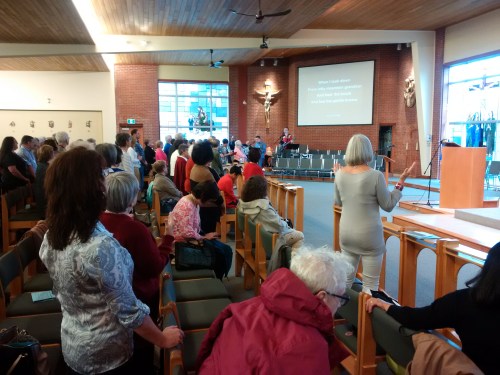
Here are a few photos from this event held at Holy Redeemer Church in Kanata, ON.

img_20161001_112446_hdr

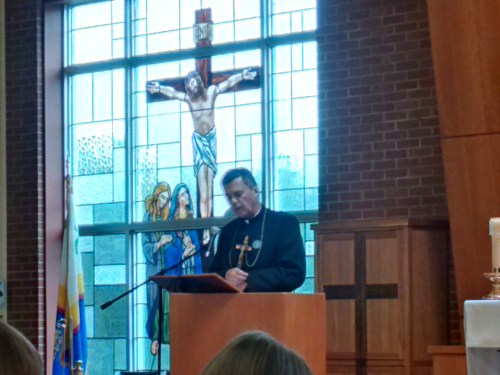
Fr. Wade makes a point

img_20161001_111533

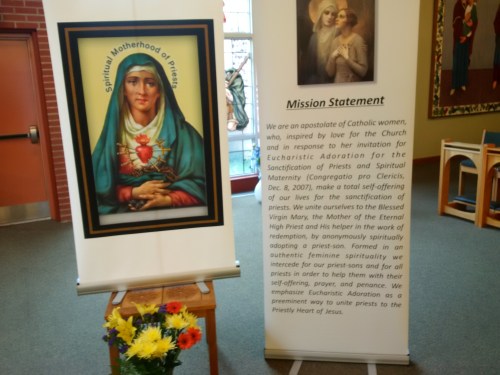
Motherhood of Priests Mission Statement

img_20161001_090953

Music ministry from St Morris Parish was great

img_20161001_094721

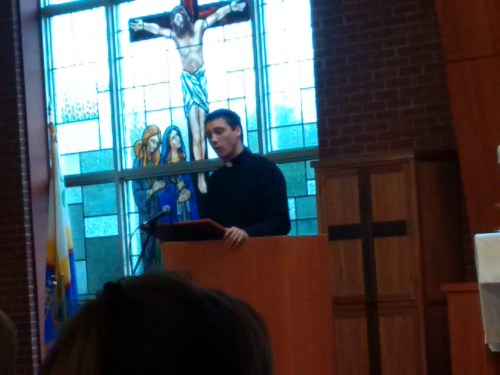
Fr. Mathew Chojna, Associate Pastor Holy Redeemer

https://i0.wp.com/www.eugenedemazenod.net/wp-content/uploads/2016/09/Chapitre.jpg


Leave a comment

Filed under Uncategorized

Percherons, Clydesdales and Belgians

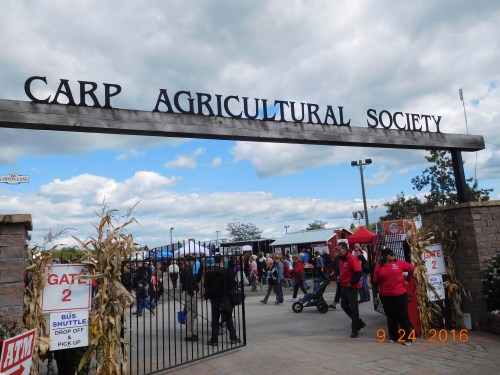
We attended the 153’d annual Carp Agricultural Fair on the weekend with some friends. We fell in love with the draft horses!

dscn0423

A draft horse is a large horse bread for work. There are several breeds all known for there strength, patience and good temperament.  Used less for farm work these days, they are used for driving carriages, for breeding and for horse show purposes.

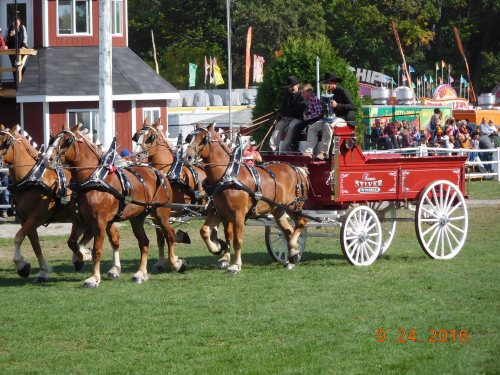
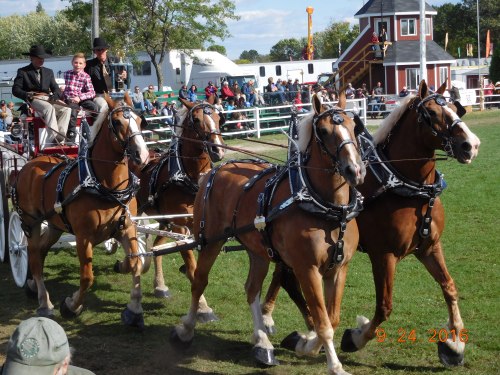
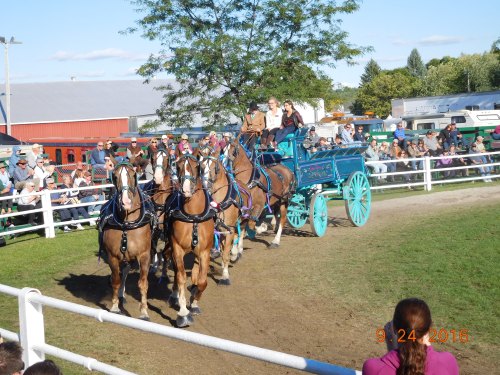
There were a quite a number of draft horse competitions.  We saw the 6 hitch horse show competition.  There were 22 entries for a total of 132 horses who came from Quebec, New York and Ontario.  It was an absolutely beautiful show.

dscn0436

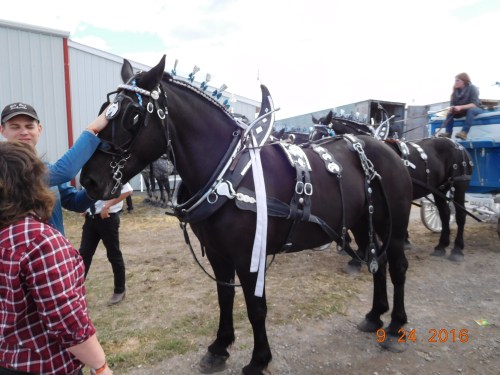
We saw 3 breeds in action: Percherons with their strong war like appearance:

dscn0439


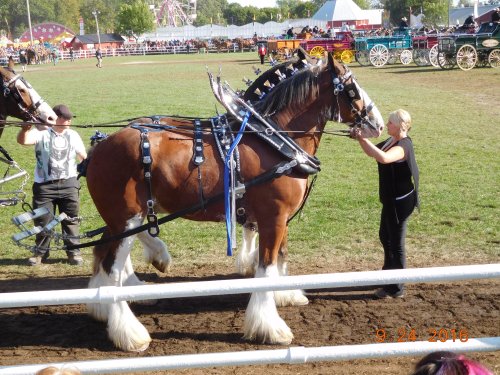
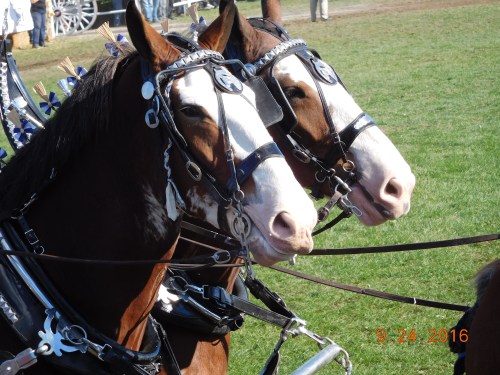
Clydesdales with their beautiful pom pommed ankles:

dscn0441

… and palomino-like good looks:

dscn0443

The Belgians took first place this year – such majesty, calmness and affection.

dscn0437

dscn0446

But my favorite remain the percherons – these dark horses break your heart for their gentle obedience, vast strength, fierce pride and showmanship.


DSCN0427.JPG

There is lot’s more to see at the Carp Fair.

dscn0428

Dog jumping contest

dscn0429

Huge harvester

An assortment of “hit and miss” gasoline motor powered pumps and grinders from long ago.

We also saw Tracey Brown of the former award-winning Family Brown country music group, sing.  We will be sure to bring Wyatt and Jackson our two grandsons next year.  They will love it too!

2 Comments

Filed under Uncategorized

The Cariboo Mission Residential School

Image result for The Cariboo Mission

This is a gripping and balanced account of the history of St. Joseph’s Mission near Williams Lake, BC from its establishment by the Oblates of Mary Immaculate in 1867 to its take over by the Canadian Government in 1964.  Margaret Whitehead is a trained historian specializing in Church studies – specifically Oblate and First Nations history.  As an Oblate Associate and former B.C resident, I enjoyed learning more about this part of the Oblate missionary story in Canada.

The Oblates built this mission as a base for evangelizing and educating the Carriers, the Shuswaps and Chilcotin indigenous bands.  Early on, they encouraged what had been migrant groups, to settle near to the mission and so they could be taught how to grow corn, vegetables and raise cattle to better sustain themselves.

Image result for St Joseph's Mission residential school

St. Joseph’s Mission Residential School for girls

They also taught these natives about God and the Catholic faith.  Only after behaving well (no intoxication, no seeing the Shaman or wild dancing and singing) for a whole year, would they baptize those who consented.  Progress was slow at first, particularly with the aloof Chilcotin.  The Shuswap and Carrier bands already believed in a deity and life after death, so they found the Christian faith not unsimilar to their own.

In 1890 both a girls and boys residential school was established at St. Joseph’s to teach trades and English to the children.  Initially skeptical, First Nations parents were wary of sending their children to these boarding schools where the elements of their local culture and language were repressed and free spirited children were confined.  With good intentions, the Oblate Fr. and eventual Bishop Paul Durieu implemented a rigid system that made use of spies, capital punishment and fear to impose a European colonial type education (the only one they knew), on indigenous students that in the process discarded their cultural heritage.

Image result for St Joseph's Mission


There were many runaways and the occasional deaths due to exposure or disease.  Gradually however, the benefits of learning to read and write and speak English were seen as assets by the natives and enrollment increased, albeit as decreed by law.  One of the darkest times for Canada was the government’s banning of the Potlach ceremony where a (rich) host group would hold a big feast and give away all their possessions to their friends, to obtain greater glory.  The Oblates opposed this practice on moral grounds because they thought it undermined the economic well-being of the natives, encouraged wild practices and posed a health hazard to children.

Image result for williams lake residential school

Vancouver Sun photo of the abandoned boys residential school near Williams Lake, B.C.

In the words of Bud Felker who attended the St. Joseph’s Mission school in the early 1900’s: “I tell you, no fooling, it was a pretty good school….I meet some of the Indian men who went to school with me and they say ‘Not too bad a place that Mission School.'”  According to the author, the younger generation did not agree.  They resented the part played by the Mission in undermining their cultural heritage.

9.5 out of 10, a very well written and researched account of raw Canadian history.


Epilogue

The Oblates of Mary Immaculate are holding their 36th General Chapter in Rome right now.  Here is a link to a video prepared by the North American Region provinces entitled Missionary Journeys that offers much insight and hope: https://youtu.be/ec2fCdAOObU

1 Comment

Filed under Uncategorized

God does not rescue – He redeems


This is one of the powerful messages Marie and I took away from our 2016 OMI Lacombe, Ontario District annual retreat with Fr. Ron Rolheiser, OMI.  “If you consider Jesus’ life, he lived it robustly, enjoying people, hospitality and even wine.  When it came to his death, he was not rescued by God.  Rather, he freely gave it up.  Three days later he was resurrected offering us redemption from our suffering. You have to go through the nasty middle part to get to the glorious end, just like Jesus did.” counselled Fr. Ron.

Jesus’ life is thus a metaphor for our lives. We too will suffer and die.  However if we believe in Him, we too will be redeemed and have eternal life.  (John 3:16 and 36).  How then should we live our life?  Robustly like Jesus.  How then should we die?  Freely and happily like Jesus.

Image result for Oblate Cross

The Oblate Cross

This metaphor explains a lot of things – like why bad things happen to good people, why there is so much suffering, death and evil in our world.  Why abortion and assisted suicide are morally wrong. Where is God in all this pain we often ask?  God is in the victim says Fr. Ron. e.g., in a helpless baby; in a child who dies of cancer or is tragically killed in an accident; in an aging person who is ill and suffering much pain.

When we let our lives flourish, yet are willing to give them up, a big challenge becomes finding the correct balance between “giving our lives away in sacrifice” and “letting our lives flourish.”  Jesus led the perfectly balanced life where he loved to be with the poor and heal them yet enjoyed the good things in life such as being anointed with expensive perfume by Mary Magdalen (John 12:1-8).

Mary Magdalen anoints Christ’s feet

Conversely, if we die embittered and angry unlike Christ, we will not only not be rescued but we also will not be redeemed nor receive eternal life.  The purpose of life then becomes not just to seek unity with God but also to prepare oneself for a happy death.

The secret of the cross: God does not rescue – He redeems.

Thank you Fr. Ron and all my Oblate brothers and sisters.  This was a powerful message on how to live and how to die.

Image result for Oblate cross

dscn0396

dscn0393

dscn0399

dscn0409

dscn0410

dscn0418

img_7968

Photo courtesy Paul Howard


Leave a comment

Filed under Uncategorized

Ordination to the Diaconate

scan0126

Our friend Guy Dacquay was ordained as an RC Church Deacon this past weekend in the Archdiocese of Ottawa.  I have known Guy for 25+ years since we met at Measurement Canada many years ago.  We do not see much of each other these days but do keep in touch on spiritual matters.  He and his wife Christine are Franco-Manitobans hailing from the St. Boniface area.

A permanent deacon in the RC Church provides a ministry of service to the community.  Currently men are ordained as deacons but I believe ordaining of women to this position is actively being considered.  With proper authority, deacons preach, teach, counsel and assist the bishop or priest in liturgical celebrations.  More importantly they minister to the shut-ins and destitute by taking the Eucharist to their homes, visiting the sick, marginalized and dying and evangelizing e.g., in prison ministry.  They baptize, witness marriages and preside at funerals.  They promise “obedience” to the Bishop and his successors and are married, widowed or single.  The spouse of a deacon in formation is deeply involved in the program.

Permanent deacons are appointed to a particular parish based on the expressed need and, in some cases, based on their particular preference.  Some parishes have 1, 2 or more deacons and some have none.  Our parish, St. John Chrysostom has 1 permanent deacon and 1 transitional deacon who will eventually be ordained a priest.  Men about to retire are prime candidates for the 4 year formation program but there are many younger deacons as well.  One Priest we know who shall remain unnamed calls them, tongue in cheek, the “freakin’ deacons”.

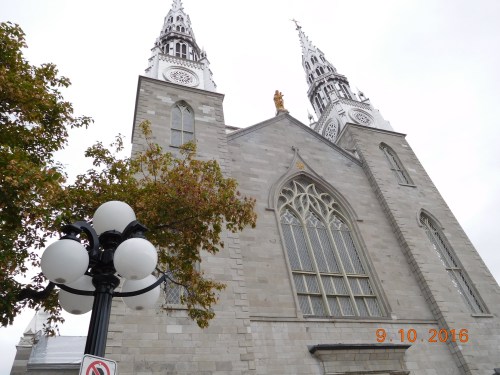
We enjoyed the ceremony.  The cathedral was hot and crowded.  There was a reception in the basement following where we could chat with friends.  It was great to be there to celebrate with Guy and Christine.  Guy is retiring from Measurement Canada next June.  Wishing you both well in your ministry.  Congratulations my friend!

dscn0370

Notre Dame Cathedral dating from 1842

dscn0371

Gothic revival style was refurbished about 10 years ago

dscn0377

Archbishop Prendergast, S.J. delivers his homily on the family

dscn0379

Laying prone before the altar

dscn0381

Associate Rector Fr. Geoff Kerslake and Auxiliary Bishop Christian Riesbeck, C.C. look on

dscn0380

Laying on of Hands

dscn0386

Christine and Deacon Guy Dacquay


Leave a comment

Filed under Uncategorized

Jesuit Spirituality for Today

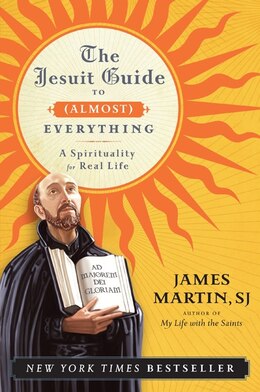
Book The Jesuit Guide to (Almost) Everything: A Spirituality for Real Life by James Martin

This is a popular book on contemporary spirituality by Jesuit James Martin.  He is a popular communicator who appears on CNN and is an editor of America Magazine: http://americamagazine.org/

I learned a lot from this book – a guide to understanding and applying Jesuit spirituality in everyday life.  I must say I was surprised at the light hearted way that (many) Jesuits carry themselves.  There are many humerous anecdotes that liven the discussion:

“A Franciscan, a Dominican and a Jesuit are celebrating Mass when the lights suddenly go out in the church.  The Franciscan praises the chance to live more simply. The Dominican gives a learned homily on how God brings light to the world.  The Jesuit goes to the basement and fixes the fuses.”

Jesuit spirituality is defined as “Contemplatives in action who seek to find God in all things by looking at the world in an incarnational way, and in their quest, realize their desire for freedom and detachment, which helps them move even closer to God.”

I particularly liked his discussion of the various paths people take to God.  I find myself respecting each of these paths by no longer seeing any path as better than another:

  • Belief for those who have Faith in God (and never wavered)
  • Independence for those who make a conscious decision to leave organized religion
  • Disbelief, those who have arrived at an intellectual conclusion God does not exist
  • Return, those who have returned to their Faith in a newly committed way
  • Exploration, seeking growth through interaction with other religious traditions
  • Confusion, running hot and cold with their Faith

His discussion of “chastity” vs. “celibacy” is a real eye opener.  Religious order priests make a vow of chastity – abstaining from any sexual activity.  Diocesan priests vow only to not get married.  There is a big difference and the RC Church seems in no hurry to clarify this ambiguity.

There is much practical advice on the Examen (examination of conscious), the Spiritual Exercises, how to make better decisions through discernment and how to become the person God wants you to be.  There is a lot of emphasis on defining your desires at each stage of your life and then seeking God’s support through prayer in achieving them.

My only regret is that I wish that I had read this book some 40+ years ago when I was starting out as an adult…  A superb book to read for anyone at any age, 9 out of 10.

Leave a comment

Filed under Uncategorized

Fiddlefest

Click on the Facebook link below for some accompanying music to this post.


Marie and I attended the 41st annual Fiddlefest in Pembroke, ON on the Labour Day weekend.  It was a lot of fun.  Our good friends the Clarkes have been coming since 1983.  We joined them and partook in the beautiful family like experience that this event has become for us.

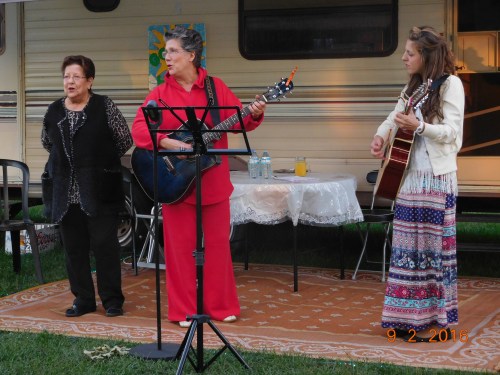
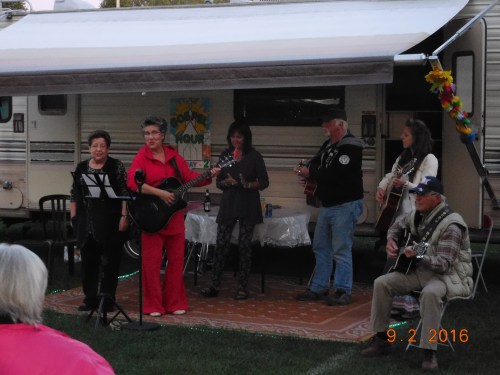
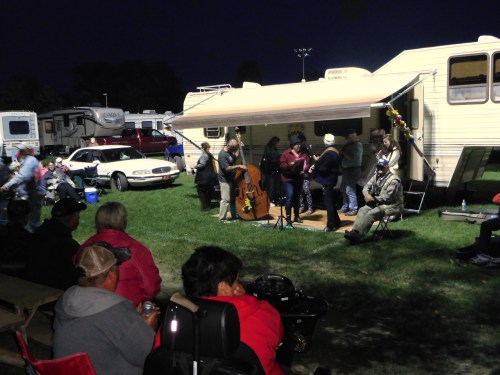
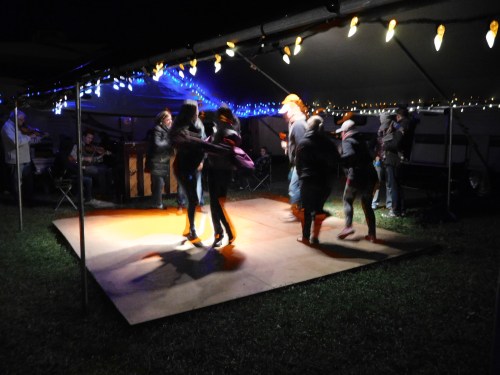
Amateur musicians- fiddlers, guitar players, bass players, mandalin, piano, singers and celtic dancers come to Fiddle Park by the hundreds to sing, play, dance, joke and party.  The way it works is that different venues establish themselves around the various RV sites in the park.  Roaming musicians drop in for a few songs here and a few songs there to perform with each other for the shear love of the music.  There is a fee for camping of course but walk in entry and the music is all free!

DSCN0334

A random gathering in the day

DSCN0335

Maggie and Debbie welcome a newcomer to start off

DSCN0337

More musicians come

DSCN0338

And more

DSCN0339

Mini Pearl makes an appearance

DSCN0343

We adjourn and wander around  bit

DSCN0346

Then return for a nightcap singalong

There is lot’s more to do in beautiful Pembroke too – like visit the farmers market for some fresh produce or home made preserves.

IMG_1087

Meet up with friends and see some neat cars.

IMG_1096

IMG_1097

Rest up a bit before the fun begins again.  I am goin’ to learn me a song or two for next year. We most highly recommend this best of the Ottawa Valley event.

IMG_1093


DSCN0348.JPG


1 Comment

Filed under Uncategorized

The Queenship of Mary Community

Scan0125
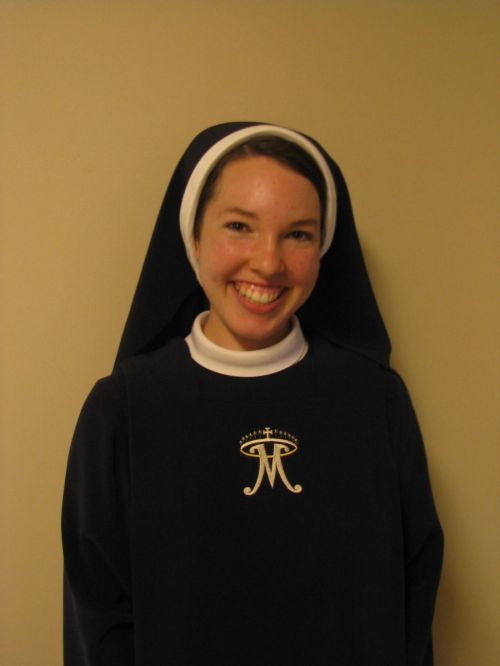
The other night Marie and I attended a Mass in honour of the Feast of the Queenship of Mary. The invitation came from the John Paul II Centre for Mercy on behalf of the Queenship of Mary Community.
It was our second encounter with these young and vibrant Roman Catholic Sisters. I decided to find our more about their story. And what a story it is! Rather than paraphrase, I post a link to it here:
 http://www.bccatholic.ca/canadian/3014-new-religious-order-founded-in-ottawa
Wow, a charism of praying for Priests. How beautiful is that?   While they are based in Metcalfe, ON at present, they dream of acquiring a property to establish a sanctuary and retreat house. How beautiful is that?
One of the gifts we received at the Mass was The Miraculous Medal also known as the medal of the Immaculate Conception.  The prayer on it says “O Mary conceived without sin, pray for us who have recourse to you.”  We noticed many young people at this celebration, particularly young women.  We heard to the most beautiful rendition of Ave Maria sung by one of the young nuns – it brought tears to our eyes.
Miraculous-Medal-gold-scarlet
While my base community is Oblate as an Associate in OMI Lacombe Canada Province, I always enjoy learning about other religious communities, their charisms and their foundation story.
We really enjoyed the Mass, saw some of our fellow Poland Divine Mercy pilgrims there and hopefully, will come in contact with this community again in the future.  Our prayers are with you.
SrPhilomena


1 Comment

Filed under Uncategorized

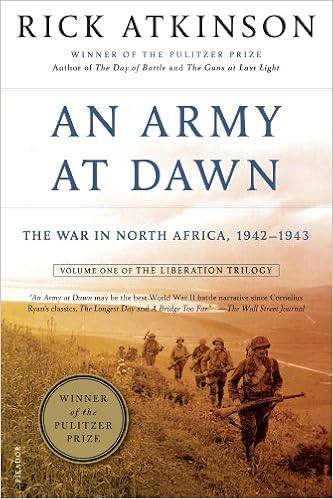
An Army at Dawn

An Oblate priest told me about this book and the series.  He said if you like history, you have to read this guy.  So I did, all 540 pages in 3 weeks flat – it was an inter-library loan with no renewal.

Basic story: The U.S. enters WWII after Pearl Harbour.  They are called upon by Churchill to help Britain drive Rommel and the Nazis from North Africa in late 1942.  (Reluctantly they agree as they would have preferred a more direct assault on the Continent as well as an allied focus on defeating the Japanese in the Pacific.)  Gen Ike Eisenhower is appointed Commander.  They land in Morocco and Algeria.  They suffer initial setbacks and humiliations in learning how to fight.  There is much rivalry and disdain between the American and British commanders. They proceed east to Tunisia where the bulk of the fighting takes place, finally annihilating the Afrika Corps, Panzer Divisions and Italian forces in May 1943 with the help of liberated French troops.  This is not before suffering some 100,000 Allied casualties (killed, wounded or missing)!

It was the coming of age of America’s might and world domination.  Part way through it became evident to everyone that the Allies are going to win the war due to the shear depth and strength of America’s industrial might.  It was a Quartermasters war and America was second to none in its ability to provide equipment, troops, food and transport.  Rick Atkinson is adept at explaining the horror of combat and the ugliness of war in exhaustive detail.  He won the Pulitzer Prize in history for this book in 2003.
There is some ugly portraying of Muslims as looters and traitors, Italians as lazy and inept, French as vacuous and pompous and the British as egotistical and simply awful.  There is grudging respect for Germans ability but real hate and a developed desire to kill, kill, kill Heinies.  I had some trouble understanding the maps detail but that was probably just me.  There were interesting references to U.S. Civil war heroes such as “unconditional surrender” Gen Ulysses S. Grant.

All in all a solid 8.5 out of 10, riveting.  Not sure whether I will read the 2 sequels yet, need a breather.


Leave a comment

Filed under Uncategorized