I attended Camp Opemikon for a week on Christie Lake near Ottawa. I believe it was the summer of 1960 when I was 10 years old. I have some badges and banners to prove it. It would have been my first or second extended stay away from home.
I was in Boy Cubs then along with childhood friends Charles and Bill. The 80 hectare camp, run by Scouts Canada is still going strong and is one of the best in Canada.
I learned to swim and got to shoot a Daisy BB rifle during target practice. We took archery lessons, sang songs around the campfire and swatted mosquitoes. I remember a bell was rung at meal times which is still in use today apparently. Charles, Bill and I attended weekly Cub meetings at D. Roy Public School on Woodroffe Avenue in Ottawa’s west end during the regular school year.
L to R: Charles, me and Bill as Cubs
I remember a fellow camper spilled some hot chocolate on his leg and screamed out in pain. Not exactly sure if this was at Camp Opemikon or on another ocassion. Must have learned to sing Kumbaya there.
I liked the camp fires and swimming. I remember sending a post card home and may have received a reply from Mom and Dad. That is the extent of my fond and not so fond recollections.
In 1961 we moved up to Scouts. And in 1961 and 62 I went to Frontier Ranch summer camp near Arnprior.
A few years back I wrote a biography of Mom on another platform to share with family members.
I was trying to capture the happenings from a treasure trove of family documents and photos. It was written in a detailed way for family members who know the context better than the casual reader now will.
I wish to share it here on Mother’s Day as I am thinking of Mom.
Mom, strong woman that she was, was never a complainer. She lived by the motto “Live and let live”. She carried herself proudly and while she might have an opinion on a family situation, she would refrain from interfering and do anything that she could to help. She was also a great cook!
So Mom, here is your life story. Happy Mother’s Day with all my love, I still miss you immensely.
I’ve had this book in my library for over 45 years and finally got around to reading it. Reading recently The Last Spike by Pierre Berton has spurred my interest in exploring more about the fascinating history of the railway in Canada.
What are freight rates and what was the issue?
The federal government back when railways had a monopoly, set up a series of rates for hauling cargo on the CPR (1885) and the CNR (1918) which often charged the West (and Maritimes) more than the equivalent rates in Ontario and Quebec. Western farmers in particular felt discriminated against and pressured their provincial governments to negotiate with Ottawa to resolve the issue. Politicians dug in on this as they realized they could make hay lol!
Who is Howard Darling?
Howard Darling was a U of T educated transportation economist and consultant with years of experience at the CPR and Transport Canada. He happened to be my step-father. Unfortunately he passed away suddenly in 1977 after having completed the manuscript for most of this book. Proff. Cecil E. law of Queen’s University took over and had the book published posthumously in 1980.
So what happened?
The Crowsnest Pass Agreement of 1897 locked in preferred rates for transporting western grain and flour. But extra charges for terminal storage and car handling snuck in over time while the policy framework remained stuck in the past. The disagreements morphed into other commodities, broader regional development issues and even the need for a federal subsidy to keep the railways solvent after labour strikes and generous settlements.
The acrimonious situation endured for over 60 years despite repeated efforts to rectify it which some thought was originally grounded in higher railway operational and capital costs, mountain terrain, longer distances, etc.).
AI generated cartoon
Governments came and went and still the problem persisted and grew, Finally in the 1960s with the rise of efficient truck transportation of goods, the fixed freight rates were swept aside in favour of permitting railways to charge whatever they could in order to remain competive. Howard interjected humour saying how all kinds of people including the man on the street pronounced on the issue over the years but had no direct knowledge or vested interest in the outcome.
The Constitutional Problem
In a remarkable last chapter, he narrows down the long delay in resolving the imbalance to the monolithic nature and failure of the Federal government. Built along the model of British rule for a much physically smaller country, Canada’s federal system was not up to providing the tools and assistance the West needed to overcome its unique set of geographical, environmental and economic problems, which were and still are, very different from those in Central Canada. He warned that a federation like Canada will not last long if it cannot handle a wide variety of diverse interests in an efficient and effective manner.
The beautiful high trestle over the Oldman River in Lethbridge, AB
One concrete suggestion he made was to enable Federal MPs to sometimes vote according to their regional constituents’ interests rather than strictly on party lines.
The book is very well written and researched. I found it difficult to read in places due to the amount of detail but what an eye opener on the politics of freight rates and the larger issue of failures in Federal-Provincial relations that persist today.
I truly think that Howard Darling wrote a remarkable book both for the policy analyst and the general reader that is still relevant today. Oh Canada, what a beautiful thing!
…is somewhere I could live. Sunny everyday, occasional sprinkle, 5 beaches within walking distance, a laid back vibe, friendly courteous people, wild chickens.
So we have been everywhere and this is one place I would choose to live. Just had the best of family vacations there in a 4 bedroom house. Six plus days to get into the local vibe: grocery store, shrimp trucks, Catholic Church, ocean sunsets every night, all within walking distance.
The Shaka
The Shaka is the Hawaiian sign used in the surf culture to mean great, compassion, friendship and understanding. Read all about it here. That sums up everything here. Just sayin’
A change of heart, this cruise was a solid 4 out of 5.
After a few lacklustre days, we finally had some very good times on the Anthem of the Seas.
We went to the matinee performance of the We Will Rock You show. The story was a bit confusing at first but we really liked it in the end.
It is a futuristic story taking place in 2325. The world has forgotten all about rock and roll. A guy has some dreams and strange words pop into his head, the titles of famous songs like Blue Swade Shoes etc. He eventually remembers a bunch of Queen songs, this engages everyone and they get into it.
It’s hard not to like the music and the dancing. They did a great job putting the show on 3 times so everyone could see it. Will remember this one. Apparently it was a massive hit musical with audiences around the world but the critics panned it due to its thin storyline.
Then, the next night they had Maine lobster tail and baked Alaska in the dining room for dinner. Yum. And they did a dancing parade of all the dining room staff. Pretty impressive.
And finally on the last day, they had a hula hoop contest and a lady from Canada won. Lots of fun on this cruise. 9 days all the way to Hawaii!
SS Athenia in Montreal 1933 (photo courtesy Wikipedia)
The Steam Ship Athenia was a transatlantic passenger liner that worked between the UK and eastern Canada from 1923 to 1939. It was the first UK ship sunk by Germany in WW II. My Aunt Joan was a passenger on the ill fated crossing and survived. 117 passengers and crew did not including Joan’s brother Alan. My cousin Anne tells the story:
“82 years ago today, on September 3, 1939, the first day of World War II, the British passenger ship “SS Athenia” was torpedoed in the North Atlantic. My mother Joan, age 6, her brother Alan, age 7, and their mother Dorothy were aboard that ship.
They had boarded 2 days earlier on Sept 1 in Liverpool. They had been visiting family in England. My grandfather Edward sent word for them to return home to Montreal early as there was talk of war starting up in Europe. And 2 days into their journey – on Sept 3, war was officially declared between Germany and England.
The ship was overcrowded and behind schedule because they had taken on extra passengers. The captain was sailing in a zig zag pattern to make up time. The windows had all been painted black to avoid detection at night. But still this was an elegant passenger ship and at 7 pm that evening, most passengers were having supper in the dining room.
At the same time a German U-boat, U-30, captained by Fritz Lemp surfaced and spotted “ Athenia” in the distance and misidentified it as a merchant ship. He fired 3 torpedoes and missed the target on the first and third but hit the ship with the 2nd. Lemp submerged so he could get closer to fire again.
On board “Athenia” there was an explosion and the ship began to list. When U-30 surfaced again they were close enough to realize they had mistakenly fired on a passenger ship but Lemp fired again and missed and then submerged and fled the scene. He did not admit his error for years and it was not officially acknowledged by Germany until after the war.
Back on “Athenia” the overcrowded lifeboats were launched. Joan, Alan & Dorothy made it into a lifeboat together but in the ensuing chaos, young Alan was lost. Joan and Dorothy, like many of the other passengers suffering from hypothermia & frost bite after spending the night in the cold North Atlantic were eventually rescued by the Norwegian ship “MS Knute Nelson”. Alan’s body was never recovered and for years afterwards whenever an orphan boy was found (as often happened during the war) my grandfather would travel to see if it was Alan. The loss of Alan was a wound that never healed in their family.
My mom died this week (on Sept 1, 82 years after boarding “Athenia”) and although she was very ill, this event was very much on her mind. She wanted to talk about it and about Alan. I sincerely hope that their spirits have finally been reunited and that the Alan shaped hole in her heart has finally been filled.”
Here is a link that lists Allen Vincent as a casuality of this monstrous war crime. Thank you Anne for telling the story.
Here is a link that provides detailed historical information about this sad event.
We are home now after our short stopover in Winnipeg. During our last two days there we went bowling together.
And back to the park one more time.
After some delicious donuts.
Went to St. Kateri Tekakwitha church as it is run by the Oblates of Mary Immaculate. They have a new larger church located in the north Main area now. We were welcomed warmly.
And Elias helped me blow my birthday cake candles out. Thanks Elias!
The weather was great. This week they are expecting 30 to 50 cm of snow from a late Colorado clipper storm! We were truly blessed in seeing our family. It’s good to be home again.
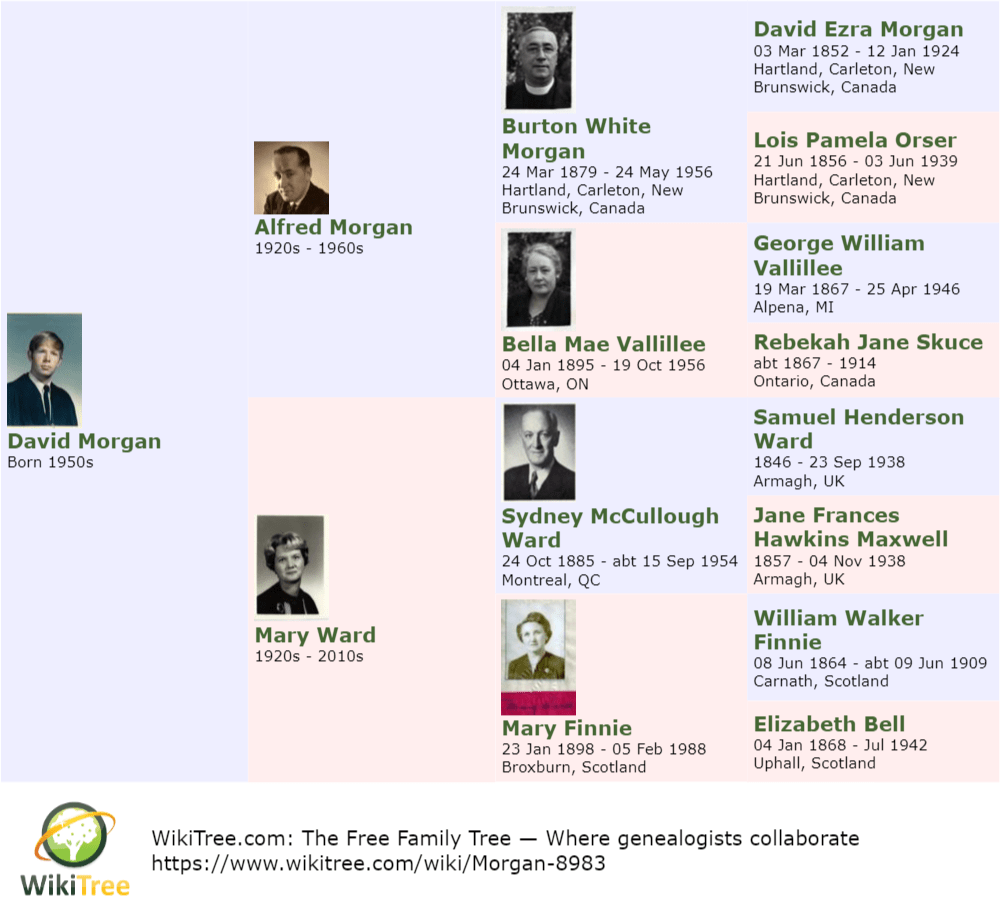
My paternal grandfather White Burton Morgan was born in Hartland, NB on March 24, 1879. His parents were David Ezra Morgan 1852-1924 and Lois Parmelia Orser (Morgan) 1856-1939. Each was descended from Loyalists from New York State who came to New Brunswick from the U.S. following the American Revolutionary War. In 1879, Canada was but 12 years old. PM John A. McDonald was busy introducing protective tariffs on manufactured goods and promising a transcontinental railway as the Plains first nations people were starving in the west due to the disappearance of buffalo. I never really got to know my Grandpa Morgan as he died after a long illness when I was 6.
White was the middle of 5 children. Sadly older sister Martha died in 1878 at age 3 and younger brother David died in 1888 at age 4. Older brother Edmund and younger sister Lina lived a long life so little White’s life was tinged with both sorrow and subsequent joy from the very start. There must have been a lot of religion in the family to sustain them as both his mother Lois’ father Moses and Uncle Charles were Free Baptist Ministers. White’s father David listed his profession as farmer. His mom’s sister Minnie Bell was married to a Samuel White so I suppose this is how White may have got his unusual first name.
Edmond and White c 1882-3
Hartland (pop. 1000) had been founded by White’s mother’s great great grandfather William Orser in 1797. Known now for having the longest covered bridge in the world, it is in the heart of potato country and must have been a very peaceful place to grow up in.
I have little information about his early childhood life other than he grew up on a farm with his older brother and younger sister. He went to Hartland High School and later Provincial Normal School in Fredericton. White began his career as a teacher locally but then out west to teach in Saskatchewan and Alberta. He served a stint in the Royal Engineers in Halifax and came to Ottawa in 1905 to be boys’ secretary at the YMCA. He then went to Queens University, Kingston graduating with a BA in 1909. In 1913 he enrolled in Theology at Trinity College, Toronto and graduated with a BD in 1914.
He was ordained an Anglican Rector at Christ Church Cathedral in Ottawa in 1913 and briefly assigned to the mission at Madawaska and Killaloe in the Ottawa Valley. Interesting, living in Arnprior we travel up that way frequently – beautiful country.
He then became assistant rector at St. Mathew’s Anglican Church in Ottawa before being assigned as Rector, St. John’s Anglican Church, Vankleek Hill, Ontario in November 1915. But just before this move he married Bella Mae Vallillee of Ottawa on July 7 at St. Mathew’s. They had courted for a year. She was the only child of George William Vallillee and Rebecca Jane Skuce both of Ottawa and was born Jan 4, 1895. Her mom Rebeka Jane nee Skuce died in 1914 when Bella Mae was 19. Her dad, George Vallillee remarried Margaret Tait in 1917 and they had a son George Vallillee.
In Vankleek Hill, White and Bella Mae gave birth to six children. It was a busy time for sure. White was 42 and Bella was 26 when my dad was born:
Lois Geraldine Feb 5, 1916
Burton Roper Mar 23, 1917
Vera Marjorie Apr 19, 1918
Barbara Caroline Jul 11 1919
Alfred David Apr 14 1921 (my dad)
Reginald Aug 24 1922
St. John the Apostle Anglican Church, Vankleek Hill, Ontario Today
In 1922 he moved to Russell and Edwards, ON where he was Incumbent. It was on May 1, 1927 he was appointed Rector at St. Martin’s Anglican on Woodroffe Avenue in Ottawa’s west end. St. Martin’s then was located in what is the current Hulse and Playfair Chapel just across from Our Lady of Fatima RC Church. White was also responsible for St. Stephen’s Anglican on Britannia Road. The Morgan family established themselves on Fourth Avenue in McKellar Park not far to the east from both churches. McKellar Park Golf Course had just opened in May so it was the start of a long love relationship with golf in the Morgan family.
Morgan Family c 1929Scotty Dig Picture given to White by Anglican Bishop Charles Roper c 1917Morgan Family c 1935White, Bella Mae and daughter Vera on the golf course, c 1938
White was busy with his two churches and Bella with their 6 kids. He was also responsible for the Missions of Chelsea and Gatineau Mills across the Ottawa River in Quebec from 1933-40. The years flew by. The kids went to Broadview public school and Nepean High School just a few blocks away. Then it was off to university for some. When the war years came, oldest son Burton who also went to Trinity College, enrolled in the army and my dad Alfred, in the RCN Volunteer Reserve. White was a Mason of the Scottish Perfection, was very affable and popular, making many friends around town.
At my dad’s graduation from McGill 1942
Meanwhile the grandchildren had started coming and coming and coming. All told he and Bella had 20 grandchildren from 1941 to 1961. 4 of their 6 six children stayed in Ottawa, only the oldest Lois moving to Brantford, ON and the youngest Reginald ending up in Cornwall. So there was plenty of opportunity to be with their grandchildren. Many large family get togethers occurred at the Morgan household now on Windermere Ave, Fourth Ave having been renamed.
With grandson Robert Carson c 1941
At the sea 1940s
However, tragedy was about to strike. Rev. White retired from St. Martin’s in 1949 after 23 years as Rector, for illhealth reasons. Mind you he was 70 so he was likely ready to retire anyway. I do not know the details of his illness but I know it affected his retirement adversely. His friend Rev. Ken Cowan took over as Rector. Bella was not well either suffering from some disorders that I do not know the details of. As a young boy I remember visiting them in hospital and that is about all.
My Baptism Certicate
Me with Grandma and Grandpa Morgan 1951
Sadly White passed away on May 24, 1956 at the age of 77 in the Perley Hospital Ottawa and was interred at Beechwood Cemetery after the service at St. Martin’s. Bella Mae did not live much longer and passed away on Oct 19, 1956 at the age of 61. They had had a good very productive life together and the Morgan family name lives on in Ottawa and elsewhere thanks to them. I wish I had had the chance to get to know you both more Grandpa and Grandma Morgan, may God continue to bless your souls.
I wish to acknowledge and thank cousin John Morgan for supplying the bulk of the family material used to create this biography. Also posthumously, his sister Barbara who provided me with the Morgan family genealogy files some years back. This is one of a series of family biographies on Mattersofthemoment.com based on my family tree below. Cheers, Dave.
I was a member of the Woodroffe High School (Ottawa, Canada) Band for 3 years way back. I played the flute which happens to figure prominently in the recent concert above. The reason I played flute goes back further. In Grade 6 my mom decided to enroll me in music lessons. I was given an aptitude test and found out I had good aptitude. The results are shown below complete with Mom’s scribbles. It was recommended that I take up the violin. For some reason I abhorred the violin and instead chose the 2nd recommendation, the flute.
The flute is a relatively easy to play wind instrument (you need to develop your ombouchure) and relatively inexpensive. The one above is what I think I had – it currently retails for $129CDN. So I began music lessons on the flute after school. However in those days, that was a lot of money!
Armstrong Beginners Flute
This is the 52 bus route I took every Wednesday after school. I had to go to Elmdale School for the lessons as they were not offered at D. Roy Kennedy or Woodroffe public schools. It was fun taking the bus and walking a few blocks – rain or shine. It was my first experience at solo travel.
A Mr. Guibault was my flute teacher. He frowned a lot when I played meaning I had not likely done my lessons nor practiced sufficiently in his eyes. I was not a natural for sure. I remember practicing at home. Gradually I made progress, learned to read music and my embouchure, the way in which you apply your mouth to the mouthpiece, strengthened. I remember being in a concert once as a Scout. We all had no idea how to play our instruments but our parents clapped anyways. This reminds me that Miles Davis once told a bandmate “to play that instrument like you don’t know how to play it.” It all paid off though when I got to high school.
1965-66 Wyvern (Woodroffe High) yearbook photo
In Grade 9 I took Music and continued to practice and learn how to play the flute. The next year I made the Junior Band pictured above. We were a concert band that played in the auditorium occasionally but mostly practiced in preparation for individually moving up to the Senior Band. We did enter band competitions and placed well. In the spring of 1966, the Senior Band lost a large number of it’s senior members due to graduation. So I was moved up to the Senior Band, flute in hand by the end of Grade 10 in the spring of 1966.
Me 2nd Row 4th from left, Mr. Manley centre, (photo 1965-66 Wyvern)
Mr. Peter Manley was our very talented conductor. He had built this band up in only a few years to be among the best in Ottawa. It had tied in the A class competition with Ottawa Tech and got invited to play at the World’s Fair in NYC in 1965 before I joined. It was indeed an honour to become a member. It was an extra-curricular activity and we practiced at 8AM sharp every Thursday morning. I remember waking up at 7:40, throwing my clothes on and literally running the 4 blocks to school. You did not want to be late – Mr. Manley was a great ribber. In front of the whole band he would say something like – “Ah Mr. Morgan, late again. Perhaps we should all change our time to suit your schedule, eh?” as I slunk into my place.
We played a lot of marches, some orchestral overtures adapted for concert band and selections from musicals such as Gigi. Our set piece was Colonel Bogey on Parade which figured prominently in the Bridge Over the River Quai movie if you remember it.
I have 2 records they made in the mid 1960’s just before I joined, but no record player on which to play them lol. Here are the numbers recorded as listed on the 1964 recording:
On the Quarter Deck (Alford)
Mannin Veen (Haydn-Wood)
Chorale and Alleluia (Hanson)
Academic Festival Overture (Brahms)
And on the 1965 recording:
“Finale” New World Symphony (Dvorak)
2nd American Folk Rhapsody (Grundman)
Colonel Bogey on Parade (Alford)
Selection “Mr. Lucky” (Mancini)
Record Cover
Wow, pretty cool! An awesome band experience was in store.
This posting is about Marie and my visit to Rio in 2014. I promise I won’t talk any more about Brazil – well perhaps one more posting on my love of Brazilian music, lol.