Book Review – A History of God, Karen Armstrong

Product Details

I found this book somewhat difficult to read and absorb.  Karen Armstrong traces in detail our concept and thinking about God over 400 years.  She does it by referring to the specific writings, teachings and thinking of dozens of philosophers and theologians in the Christian, Jewish and Islam religious traditions.

Very thorough and engrossing at times, I found it very dense in places and difficult to sustain my attention and to understand.  In different chapters she goes into great length on The Trinity, The God of Islam, The God of the Philosophers, The God of the Mystics, A God of Reformers, Enlightenment and the Death of God.  Each one of these chapters could easily become a book in itself.

To try to understand the trends in our thinking about God over the ages, I had found (and have since lost) a tiny little book by author unknown.  In it he said that originally there was Grace (above the line) and Nature (below the line) i.e., wo(man) in the physical world recognized his permanent separation from God who is beyond any limit we can think of (as he told Moses simply, “I am”).  Over the ages nature has ate up grace totally so that wo(man) became the upper entity (above the line) and nature (everything else is below the line). i.e, (wo(man) is now “God” and the mythic God of the Bible we knew is dead or nothing.

We all certainly do not believe this, but for those who do have Faith, there is a distinct group (the mystics) who believe God is within each of us and our goal in life is to reach divine unity with Him in us through meditation and contemplation. i.e; heaven on earth.  There is also the more recent Universe Story where believers believe we are made of stardust (matter is created in super nova explosions or black hole implosions so that is where we ultimately come from if I understand this correctly).

Back to Karen’s book.  For some reason Islam mystic Mullah Sadra’s theology stands out for me https://en.wikipedia.org/wiki/Mulla_Sadra.  As does the famous Jewish coming of the false messiah Sabbatai Zevie https://en.wikipedia.org/wiki/Sabbatai_Zevi  Similarly what she says about the heroic athiesm of Friedrich Nietzsche’s writings stands out:

“The Christian God, was pitiable, absurd and a crime against life.  He had encouraged people to fear their bodies, their passions, their sexuality, and had promoted a puling morality of compassion which had made us weak.  There was no ultimate meaning or value and human beings had no business offering an indulgent alternative in “God”. It must be said that the Western God is vulnerable to this critique.  He has been used to alienate people from their humanity and from sexual passion by means of life-denying asceticism.”

The Protestant reformation and its claim of salvation through faith alone and revelation through scripture alone changed the Christian world forever.  There was no longer an obvious need to “live a good life grounded in charity” in order to be saved some had argued.  One merely had to accept the gift from God of having Faith in Him to know that one had indeed been saved.  The lives of the Saints, “the Pope and the “Church”, intercessional prayers for others and Mary Immaculate were all “wo(man) made” traditions and no longer worthy of our attention or devotion.

Is there a future for God Karen asks?  Yes.  “Human beings cannot endure emptiness and desolation; they will fill the vacuum by creating a new focus of meaning.  The idols of fundamentalism (instant charismatic religious satisfaction) are not good substitutes for God; if we are to create a vibrant new faith for the twenty-first century, we should perhaps ponder the history of God for some lessons and warnings”

A monumental well researched survey of our changing concept of God, I would rate this book 3 stars out of 4 or 5.

2 Comments

Filed under Uncategorized

Living God’s Way

Galatians 5: 19-26, (The Message)

19 It is obvious what kind of life develops out of trying to get your own way all the time: repetitive, loveless, cheap sex; a stinking accumulation of mental and emotional garbage; frenzied and joyless grabs for happiness;
20 trinket gods; magic-show religion; paranoid loneliness; cutthroat competition; all-consuming-yet-never-satisfied wants; a brutal temper; an impotence to love or be loved; divided homes and divided lives; small-minded and lopsided pursuits;
21 the vicious habit of depersonalizing everyone into a rival; uncontrolled and uncontrollable addictions; ugly parodies of community. I could go on. This isn’t the first time I have warned you, you know. If you use your freedom this way, you will not inherit God’s kingdom.
22 But what happens when we live God’s way? He brings gifts into our lives, much the same way that fruit appears in an orchard–things like affection for others, exuberance about life, serenity. We develop a willingness to stick with things, a sense of compassion in the heart, and a conviction that a basic holiness permeates things and people. We find ourselves involved in loyal commitments,
23 not needing to force our way in life, able to marshal and direct our energies wisely. Legalism is helpless in bringing this about; it only gets in the way.
24 Among those who belong to Christ, everything connected with getting our own way and mindlessly responding to what everyone else calls necessities is killed off for good–crucified.
25 Since this is the kind of life we have chosen, the life of the Spirit, let us make sure that we do not just hold it as an idea in our heads or a sentiment in our hearts, but work out its implications in every detail of our lives.
26 That means we will not compare ourselves with each other as if one of us were better and another worse. We have far more interesting things to do with our lives. Each of us is an original.

Paul sums up for me what I have struggled with in my own life and what I see others struggling with around me. Call it the curse of freedom. I have a choice to live God’s way. Why do I not consistently choose God’s way. Something to reflect on in the coming days.

1 Comment

Filed under Uncategorized

Unresolved Conflict

Unresolved conflict is at the root of many troubles in today’s world. Look at the Teachers’ work to rule campaign, the wars in Syria and Iraq and closer to home the turmoil in our own families and between couples.

It is easy to brush conflict under the table by pretending it is not there. Conlict is bad and something we don’t speak of.  Why deal with it, just ignore it and it will go away.

But at what cost? Unresolved conflict leads to bullying, harassment, scapegoating, more pain, unhealthy behaviour, broken relationships and violence. We have all seen the fruits of unresolved conflict and the damage it brings.

So why do we not deal with conflict when it arises? A little short term pain for long term gain. Right? Quite simply because we don’t know how. By raising the issue we fear we open up a can of worms and make things even worse.

We lack the capacity to resolve conflct, the tools, the trust in each other and the faith that we can succeed. But not the will. After all who wants to live in conflict?

Each of us is worthy with our own views and values. No one’s view should prevail over others. We need to listen to each other and not feel threatened or diminished by the others feedback or feelings of our lesser hood.

Dear Lord, give us the strength, wisdom and courage to help us resolve our conflcts. Help build our capacity to listen and give honest feedback to each other. Help each of us to take our rightful place in our families, our worplace and in our communities.

“Put on the new life from Jesus, transparency, goodness of heart, compassion, putting aside all malice and resentment.” (Jean Pierre Medaile)

Amen.

Leave a comment

Filed under Uncategorized

Sin is no thing

At David Perrin, OMI’S recent retreat, I was somewhat shocked to hear him quote the mystic Julian of Norwich who said sin is nothing i.e., no thing. I thought this could be a dangerous proposition.

Julian of Norwich was an English anchoress (religious hermit) who lived from about 1342 to 1416. When she was about 30, she suffered a severe illness. While on her deathbed, Julian had a series of intense visions of Jesus Christ. She recovered and in 1395 wrote about her visions in a book entitled Revelations of Divine Love. It is the first book in English known to have been written by a woman.

Her view of sin was unique. Julian believed that sin was necessary because it brings one to self knowledge.  This leads to acceptance of the role of God in one’s lfe.  We sin because we are ignorant or naive, not because we are evil.  Julian believed that to learn we must fail, and to fail we must sin.  She saw no wrath in God.  Wrath exists in we humans and God forgives us for this.  She wrote that committing sin was not wrong – it is part of the learning process of life, not a malice needing God’s forgiveness.  God sees us as perfect and waits for our soul to mature zo that evil and sin will no longer hinder us.

The Ranters were one of a number of nonconformist dissenting groups that emerged in England in the first half of the 17th century.  They held the desire to surpass the human condition and become God like.  The believer is free from all traditional restraints and sin is a product only of the imagination.  The Ranters were often associated with nudity, sexual immorality, profanity, fanaticism and antimonianism.  An antinomian is one who takes the salvation by faith and divine grace to the point of asserting that the saved are not bound to follow moral laws.


Is there a link between the theology of Julian of Norwich and the Ranters?  Hard to say.  I think to say that sin is nothing can lead to trouble and I think I found an example.


Leave a comment

Filed under Uncategorized

The Crimson Tide

We saw the Blind Boys of Alabama the other night at the Ottawa Jazz Festival. They put on a great show and had the crowd of 5000 or so up dancing and cheering.

Formed in 1944, they consisted of four blind singers and four other musicians. There goal is to “spiritually uplift audiences.” They succeeded.

It was hilarious. One singer would stand and take the lead with another two singers sitting and singing harmony. The fourth would sit back dormant and we thought he was having a heart attack. Then he would rise and start dancing and singing while the previous lead would sit and go dormant.

They sang a range of gospel songs that the audience loved. The highlight was a guided walk through the audience by the lead singer while proclaiming “Yes He does.” and shaking his microphone in the air and towards people’s faces. Who says Ottawa has no appreciation of gospel music?

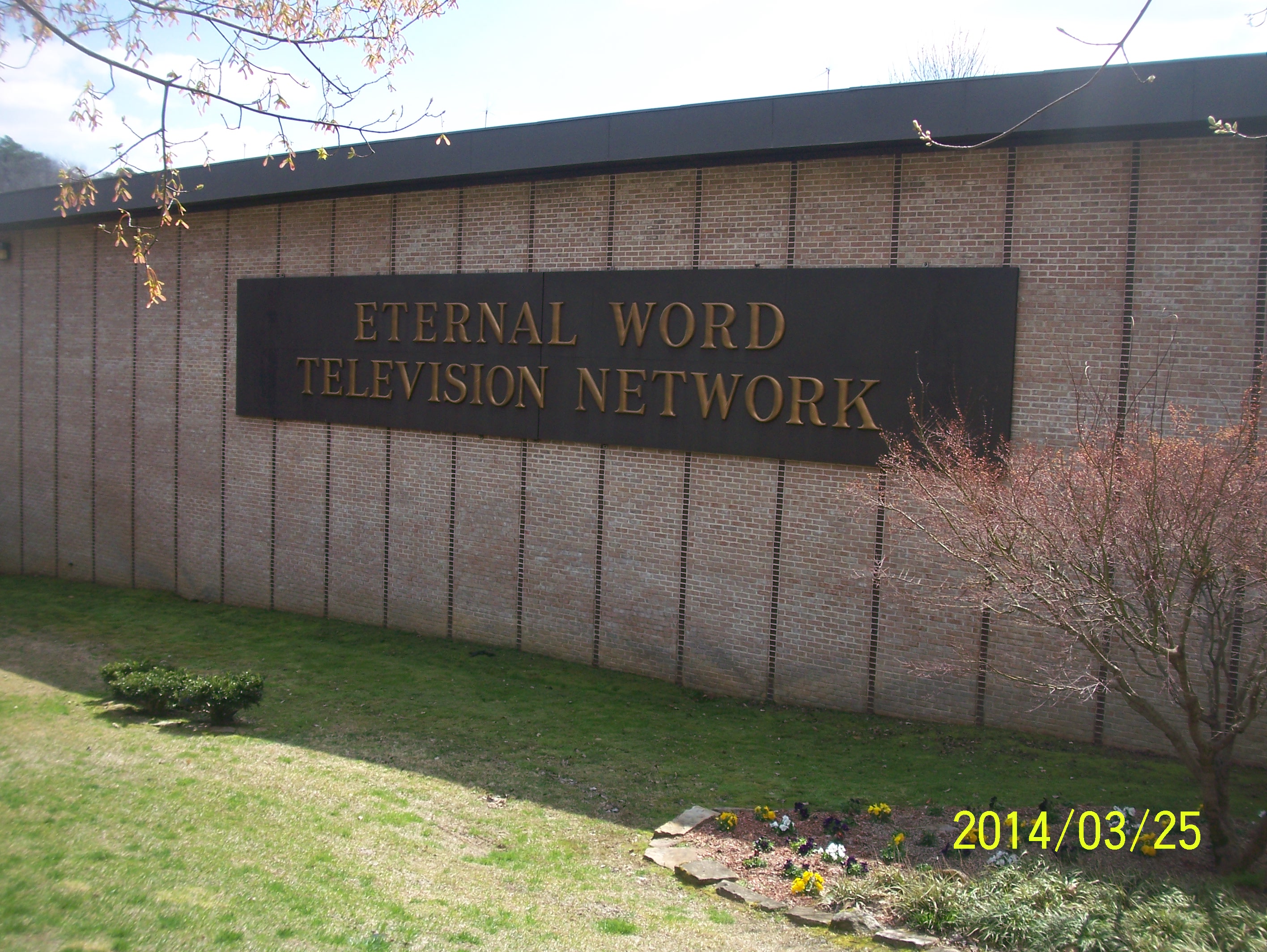
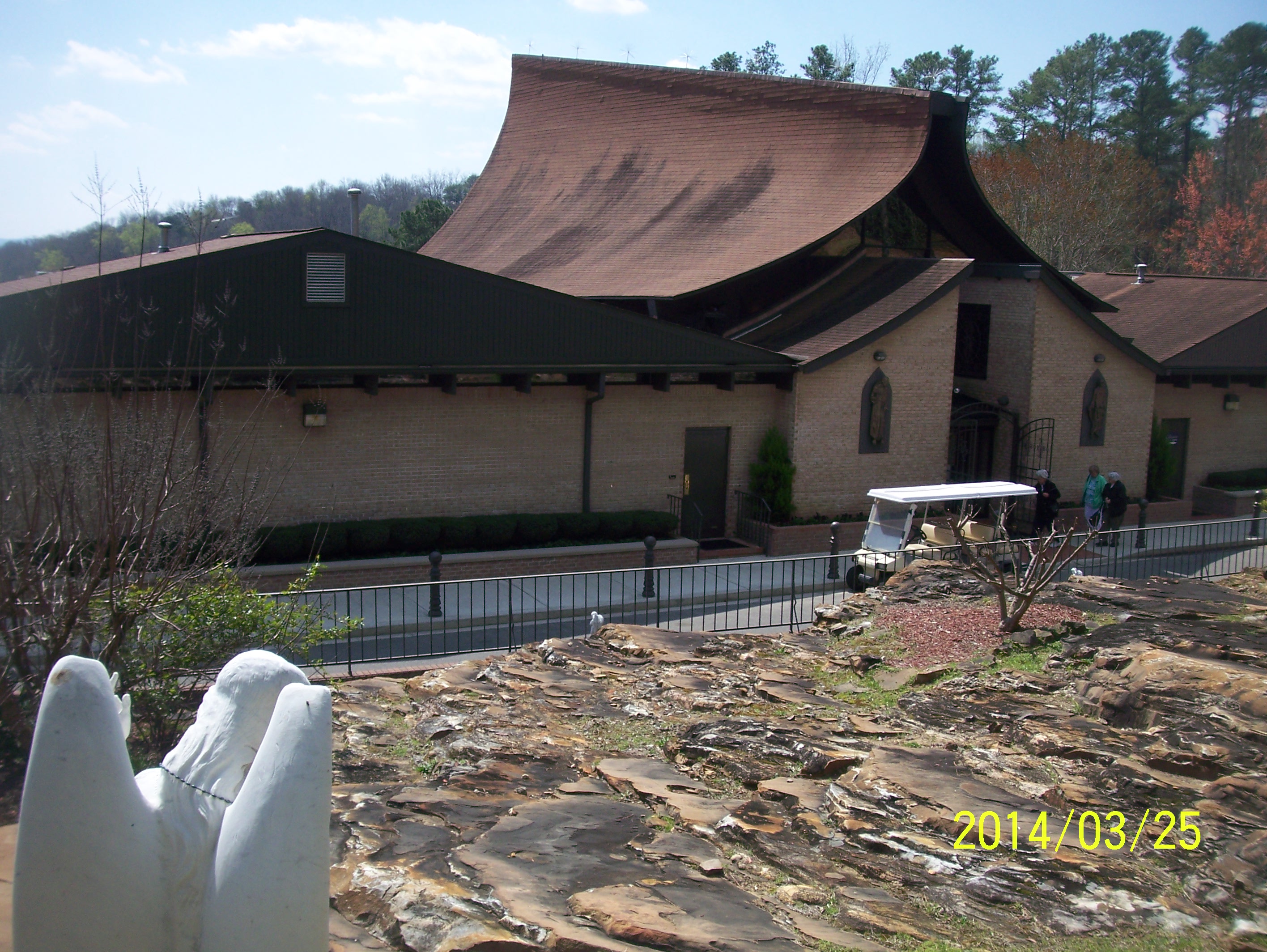
We traveled through Alabama in March 2014 stopping in Montgomery and Birmingham. The highlight was a pilgrimage to the EWTN (Eternal Word Television Network) studios, chapel and Franciscan monastery in Irondale, just outside of Birmingham. We attended the Mass and sat in the second row which is easily visible on the TV Masses they broadcast on the Internet every day.

The Crimson Tide refers to the University of Alambama football team who won an important game against Auburn in 1907 in the red mud. You may remember the 1970s Steely Dan song Deacon Blues “…they call Alabama the Crimson Tide, they call me the Deacon blues…”

In Alabama the announcer on the radio will say things like “Have a blessed weekend”.  I wish you the same.


__TEMP__4d43c1d0fa422993f7b99ff35ad8b480-1419042138_4576_IMG_20150623_212145

The Blind Boys of Alabama at the 2015 OIJF

100_1199

EWTN Chapel

100_1194

In Irondale Alabama

Leave a comment

Filed under Uncategorized

The Retreat Experience

Recently  I was privileged to go on a two day retreat at the Galilee Centre in Arnprior. I want to share my experience with you.

Actually there were two separate retreats, The first was a day retreat with 18 Oblates of Mary Immaculate and Associates led by Roy Boucher, OMI. The second was‎ a weekend retreat with 15 people including one Oblate and one Associate led by David Perrin, OMI.

First, why go on a retreat at all? I spend enough time with the Lord already, working in daily time for prayer and reflection. There is no need. I am up to speed.

Up to speed with what – a daily routine that sometime blinds or numbs me from that real connection with God and others that we all need. I found that stepping out of my daily routine during this retreat to let others take over the mundane, enabled me to see new possibilities of living and feel the connectedness with intensity.

In Fr Roy’s retreat we reflected and talked about our connection to Oblate individuals, groups, mission and ministry, and how we felt about it. There were periods of silence and periods punctuated with laughter and song. The hospitality was superb and we felt nourished.

In Fr David’s retreat we explored the three fold way to personal mysticism ‎(unity with God) articulated by John of the Cross and many other Christian mystics. This retreat was very meaty and I found myself desirous of learning more to help me advance on my faith path. There are no comparisons with others, we each are the person God intended us to be and His love is at the centre of each of us whether we always know that or not. Anyone can become a mystic if you are willing to do the personal work.

Something happened over those two days. Call it transformation or conversion. A sudden realization that the Kingdom of God is here and that I am part of it along with you and everyone else. Language cannot capture the feeling and experience adequately. A new way of living and loving has emerged for me. I wish to sustain it.

Thank you Fr Roy, Fr David and Galilee for facilitating this experience. We all need a retreat occasionaly to nourish our body, mind and spirit. I know again what ‎the hundreds of ohers experience each year who come on retreat here. We are all joined together and better equipped to contribute to a healthier world.

__TEMP__e65999728d5cb55046605368e7e3bf74-1419042138_4496_IMG_20150619_184550


__TEMP__aba9e080817edc2a123352896bf4ddbc-1419042138_4491_IMG_20150621_101840

Leave a comment

Filed under Uncategorized

Stop with the cynicism, secularism and immorality

We must regain the conviction that we need one another, that we have a shared responsibility for others and the world, and that being good and decent are worth it. We have had enough of immorality and the mockery of ethics, goodness, faith and honesty. It is time to acknowledge that lighthearted superficiality has done us no good. When the foundations of social life are corroded, what ensues are battles over conflicting interests, new forms of violence and brutality, and obstacles to the growth of a genuine culture of care for the environment.

Pope Francis Laudato Si Encyclical June 2015

Leave a comment

Filed under Uncategorized

Oh Oh Pope Francis Look Out

Pope Francis is coming to the United States in September 2015.  One of his purposes is to attend the World Meeting of Families to be held in Philadelphia.  He will also address the United Nations.  So far so good.

He will also be canonizing (declaring sainthood on) Blessed Junipero Serra the Spanish Franciscan friar who founded the first 9 of 21 Spanish missions in California between 1769 and 1782.  Franciscans saw the natives as children of God who deserved the opportunity for salvation, and would make good Christians. Converted natives were segregated from those  who had not yet embraced Christianity, lest there be a relapse. Discipline was strict, and the converts were not allowed to come and go at will.  Serra resisted efforts by Governor Felipe de Neveto to bring enlightenment policies to missionary work allegedly because this might have subverted the economic and religious goals of the Franciscans.

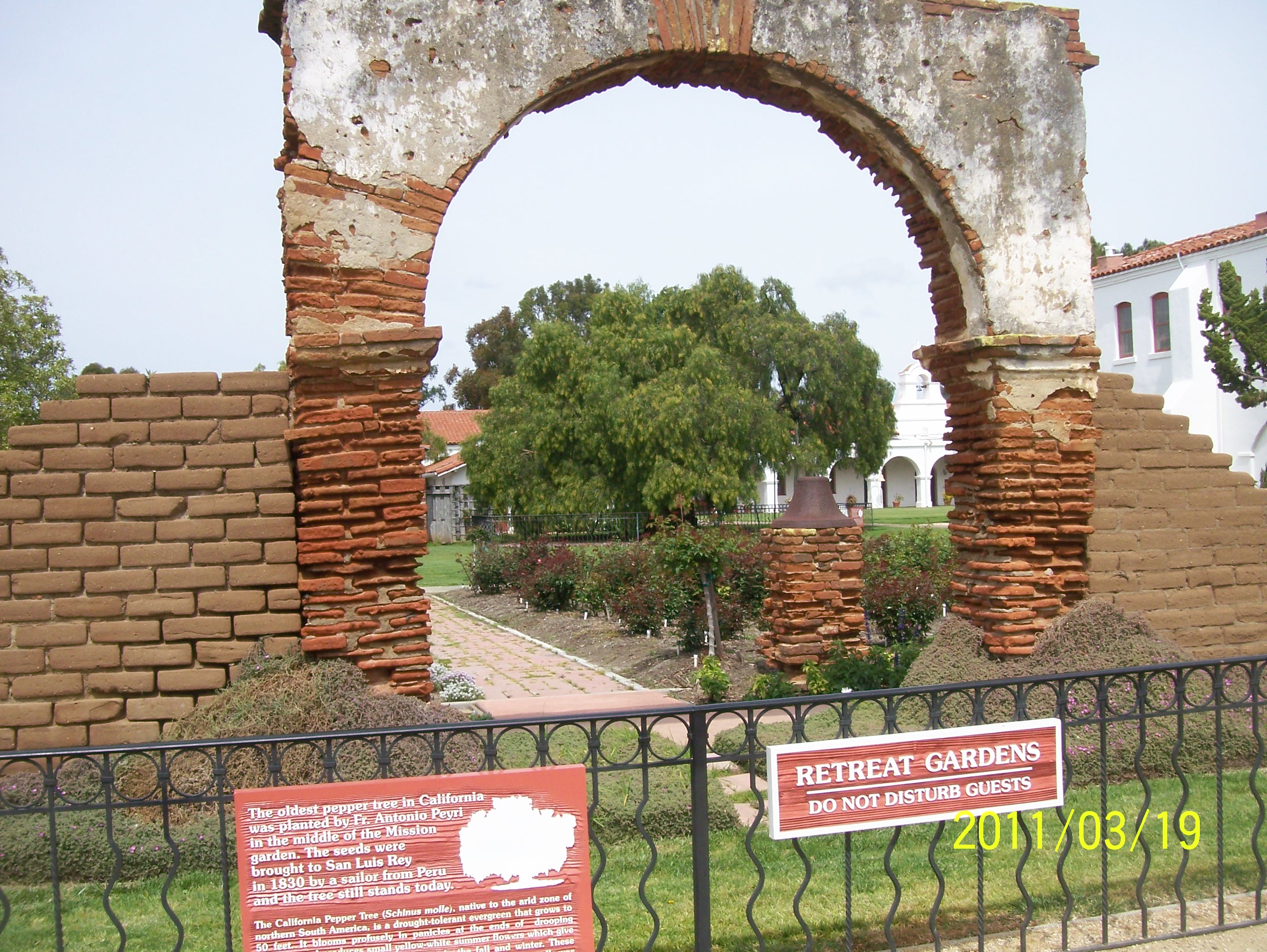
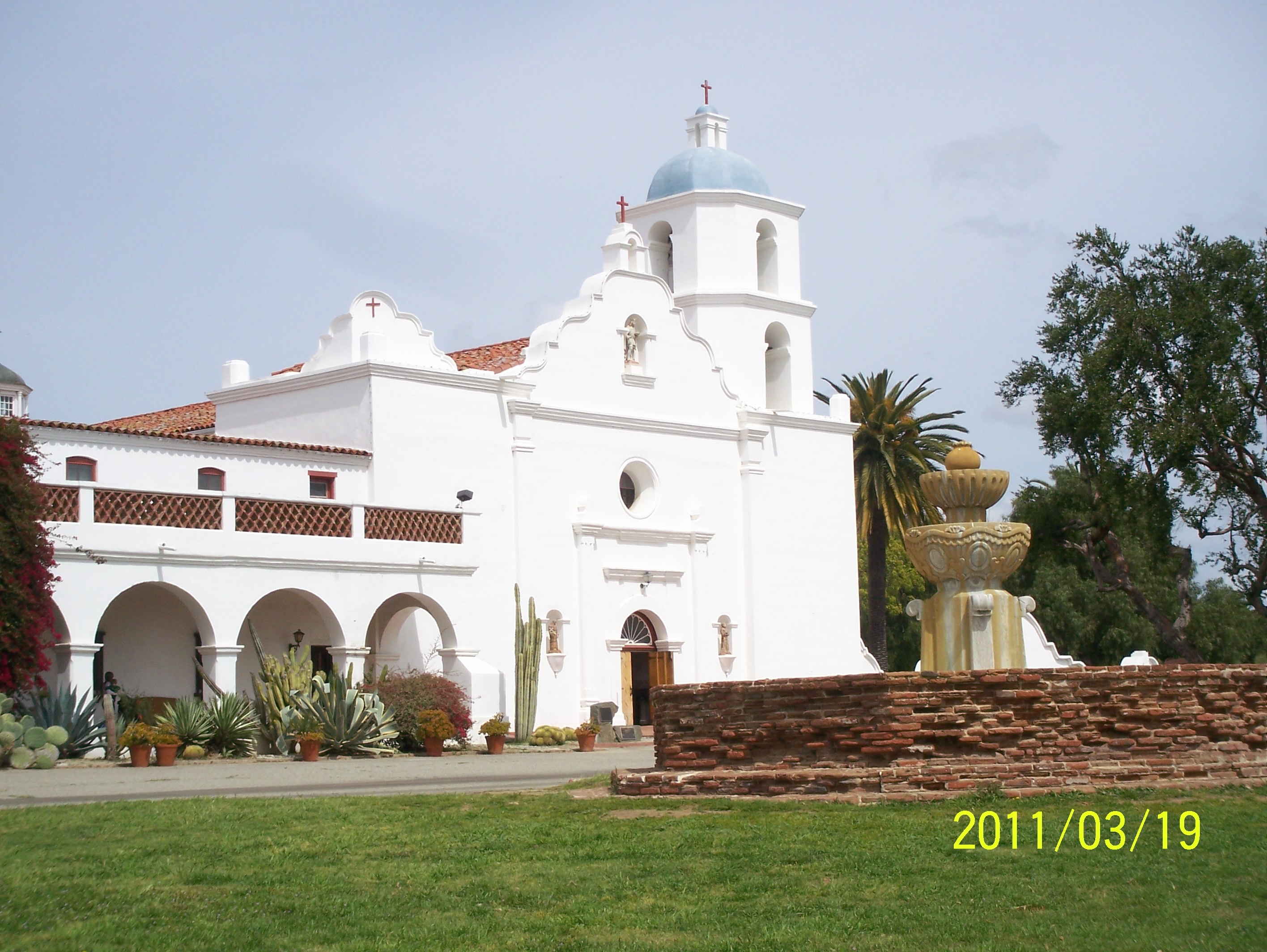
In 2011 we visited the Mission of San Luis Rey de Franca in Oceanside, CA.  It was a beautiful facility with no evidence of any historical wrongdoing on display that I remember.  It is the largest of all California missions and today operates as a retreat house.

100_6368 100_6382 100_6384 100_6386

In this NY Times article, native historians and authors have blamed Blessed Father Serra for the suppression of their culture and the premature deaths at the missions of thousands of their ancestors.  Apart from all the good it did do, according to some, the California genocidal mission system legitimized the routine beating and whipping of disobedient natives in the name of God.

Sound familiar?  Canada’s Truth and Reconciliation commission has just asked the Pope for an apology for similar tactics that were employed in the government mandated and church run Residential Schools in Canada for 130 years.  Approximately 60% or more of these schools were run by Roman Catholic entities such as the Jesuits and Oblates (who have already issued their public apology.)

So if you were the public relations chief at the Vatican or the Papal Nuncio of Canada or the U.S., how do you help Pope Francis prepare?

In the moment, I truly believe that Pope Francis will find the right words to appease all parties.  He is from Argentina and very sensitive to this kind of new world ministry dilemma.  However it will be interesting to see how he handles the situation and how it is portrayed out in the press.  Both religious conservatives who tend to rationalize it all away and liberals who say that missionary work was all wrong, will be watching closely.  Not to mention many First Nations peoples across North America who want an apology rather than a canonization.  Where do you stand?

Leave a comment

Filed under Uncategorized

Vocations

https://i0.wp.com/www.omijaffna.com/wp-content/uploads/2012/08/OMI-cross.jpg

The Oblates of Mary Immaculate Cross

Having been raised Protestant and converting to Roman Catholicism some 22 years ago, I am still sometimes confused about certain terms and practices in my Catholic faith community.  Take “vocations” for example.

As an Oblate Associate, one of the things‎ I wonder sometimes is why I, a married person (happily to Marie) feel called to the Oblates, a consecrated religious community, as a lay associate.  A good number of fellow lay associates are no longer or were never married it seems.  Hence, it seems like it’s a non married group that I hang my hat with spiritually now.  However, I likely overly generalize as their are indeed many married lay associates with the Oblates.
Roman Catholic monk and author Thomas Merton has something to say about this in his No Man is an Island.  He says the “ordinary” way to holiness and the fullness of Christian life is marriage. Only a comparatively few are called to a  consecrated life as a “special” way of sanctity. Most men and women he says will become saints through married life.  Indeed, we are all called to love by God.  Some live this love out through marriage.  Some live this love out as religious or, as unmarried.
Many Christians often say “I have no vocation.”  What a mistake says Merton!  ‎ Married people have a wonderful vocation all the more wonderful because of the relative freedom and lack of of formality compared to a monastic or religious community call.  Furthermore, navigating the marriage relationship and raising children in difficult circumstances often enables entering more deeply into the mystery of the divine, says Merton.
So I need not lament being married while attracted to the spirituality of a religious ‎community. People who are single by choice or circumstance, can remember that Paul says he does not recommend marriage.   Christ is coming back soon so no need.  However if you must, get married, but it was not for him.
In the moment, it seems that God has provided us the gifts of a single life, a consecrated life (which may be single or married) and a married life.  It is for us to choose as guided by the Holy Spirit how we want to live out God’s love.  I am grateful for having had the choice and appreciative that the Holy Spirit has guided me to make what feels like the right “vocation” for me.  What about you?

3 Comments

Filed under Uncategorized

Louis Riel and the Oblates

IMG_20150530_102325

Louis Riel’s tomb in front of St. Boniface Cathedral

Métis leader Louis Riel is a controversial figure in Canadian history.  Leader of the Red River and North-West Rebellions, he was executed for treason in 1885.  We stumbled upon his grave site while walking from Winnipeg to St. Boniface over the Red River bridge.  I wanted to learn more about him and his connection to the Oblates of Mary Immaculate.

First, a little about the Oblates in Manitoba.  In June 1844, the Bishop of the North-West, Normand Provencher requested the help of the Oblates in evangelizing the Red River Colony (modern day St. Boniface).  After 26 years of his trying, there was little to show.  Most of the diocesan priests who came to the Red River mission soon returned to Quebec and the comforts of home.  The Bishop wanted a religious order to establish itself locally to bring stability and progress to the mission of french Roman Catholics, Métis (French speaking mixed race of white European, Canadian and native descent) and the local Indian bands.

Initially somewhat hesitant, the Oblate Superior in Canada Fr. Guigues, was over ruled by St. Eugene de Mazenod the founder of the Order, who authorized sending Fr. Pierre Aubert and Brother Alexandre Taché to Red River in 1845.  From 1845 to 1861, 20 Oblate priests, 8 brothers, and 2 secular priests who became Oblates were sent to the Red River missions. Brother Taché went on to be ordained and appointed the Bishop of St. Boniface in 1853.  The Oblates in their missionary zeal went out to help found Manitoba, Saskatchewan and Alberta thanks to their tireless missionary efforts.

Louis Riel was born in 1844 in the Red River Settlement.  His father, Louis Riel Sr., who was of Franco-Ojibwa Métis descent, had gained prominence in this community by organizing a group that challenged the Hudson Bay Company’s historical trade monopoly.  Louis Sr. had enrolled briefly in an Oblate novitiate but withdrew.  The Riels were noted for their devout Catholicism and strong family ties.

Young Louis was educated by the Oblates in St. Boniface.  In 1858, Bishop Taché, OMI arranged for Louis to study in the Sulpician Order`s seminary in Montreal.  Louis was known as a good student but one who suffered from unpredictable moodiness.  Withdrawing from his religious studies in 1865, he spent time in Montreal, Chicago and St. Paul, MN before returning to St. Boniface in 1868.  He soon became sympathetic to the Métis cause for independence.  Both Canada and the U.S. were threatening annexation and there was no guarantee of language, cultural, property and political rights.

The Métis Provisional Government

After forming a group who used force to interrupt a Canadian land survey of their community, Louis was elected President of the Métis Provisional Government in 1869.  After making good progress in negotiations with Ottawa, the execution by Riel of a local English speaking Fort Garry citizen, Thomas Scott for insubordination, drew the ire of Ottawa and the Protestant elite of Ontario.

The negotiated agreement enshrined the Métis demands and a list of rights which eventually formed the basis for the Manitoba Act of 12 May 1870 that formally admitted Manitoba into the Canadian confederation. However, the negotiators could not secure a general amnesty for the provisional government.  A Canadian military expedition was dispatched to St. Boniface as an “errand of peace”.  However, when Louis learned that they intended to lynch him, he fled to St. Joseph`s Mission in the Dakota territory of the U.S..

Louis returned to Canada after things cooled down and was elected as an Independent to Parliament in 1873.  He was expelled and not permitted to take his seat until PM Alexandre MacKenzie secured an amnesty for him.  While in exile, he spent his time with Oblate priests in Plattsburg, NY.  It was then that he started suffering some megalomania, a narcissistic personailty disorder.  He then spent time in an asylum in Quebec.  He would pray for hours while standing, wrote many religious articles and started calling himself Louis “David” Riel, prophet of the new world.

After spending time in Montana and having a family he moved to Saskatchewan.  A break with the church followed and he was barred from receiving the sacraments due to his increasing erratic behaviour.  However, in 1884 he was to become the political and spiritual leader of the Métis Provisional Government of Saskatchewan.  Known as the North-West Rebellion, the Métis and native forces led by Métis Gabriel Dumont were defeated at Batoche, SK in May 1885.  A disheveled Riel also  surrendered.  He was tried and found guilty of treason in Regina.  He was executed by hanging on November 16, 1885 after reconciling with the Catholic Church.  He had rejected his lawyer`s advice to plead not guilty do to insanity.  The jurors were all white protestants.

Riel is now regarded by some as a heroic freedom fighter who stood up for his people in the face of racist bigotry, and those who question his sanity still view him as an essentially honourable figure. His conviction was revoked by Parliament and he is regarded as a hero in Manitoba.  Riel nevertheless presents an enigma. It is possible that Riel was both a murderer and a hero.

In the moment, I find Riel`s connection to the Oblates fascinating as they came to his spiritual rescue on several occasions in his life.  I did not realize the extent of Riel`s religious activities and writings.  He is indeed an enigma – a Canadian political figure who, greatly influenced by his Faith, stood up for the rights of the downtrodden Métis and native people against the prevailing racist and discriminatory attitudes of his times.  That he mixed religion with politics and used force brought about his temporary downfall.  I am glad he has been vindicated.  The pattern of his life and later resurection is eerily Christ like. What about you?

“Tortured” Louis Riel statue in St. Boniface.

2 Comments

Filed under Uncategorized