Fireworks every Saturday night, a wedding by the beach every second week or so, warm sea temperatures, endless sun, friendly people, visiting good friends, weekly Mass with Padre Miguel at the Paradise Village Parish, Salve Regina following, great food, eating out, drinks, Marachi bands.
Ashley, Elias and Kyle
We are absolutely enjoying our stay in Mexico!
Felize Complianos to Marie!
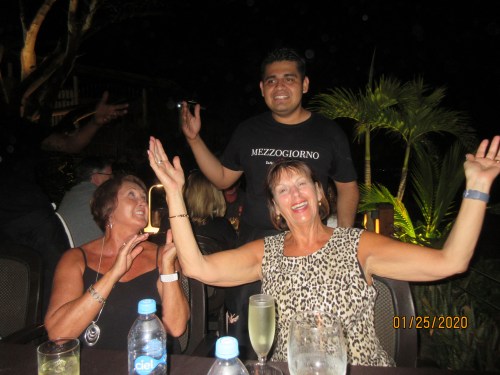
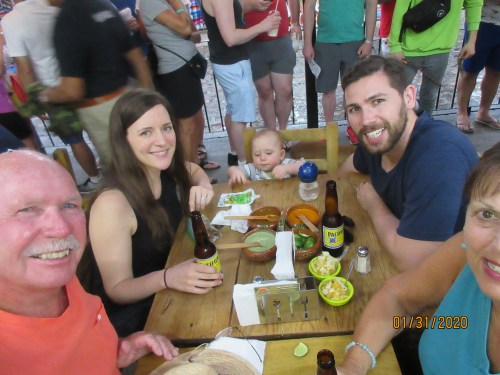
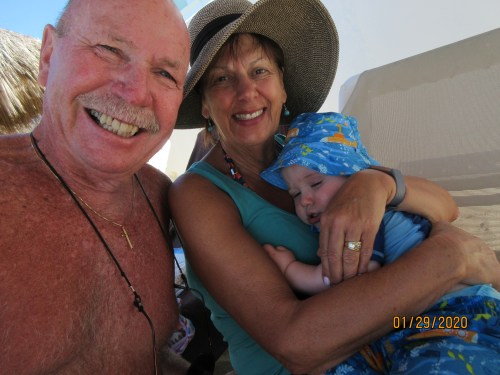
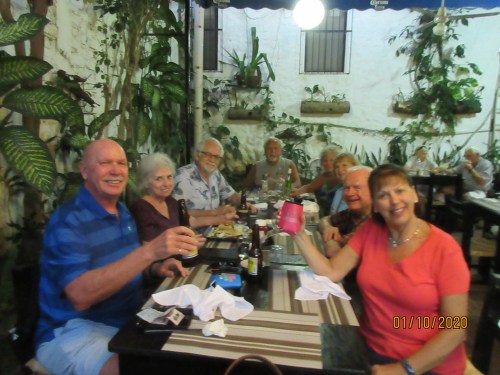
But the best part is that our son and family were here for a week to help celebrate Marie’s birthday. We all had so much fun together. From beach time, boogie boarding, zip lining, lot’s of bonding time with our grandson, the iconic Pancho’s Tacos, long walks, pool time, Fajita Republic, family dinner on the beach – it does not get better than this!
The only disappointments are how fast the week went with Kyle, a day of rain (hey they went zip lining that day anyway) and for Dave at least, no golf yet. We welcome Michelle and her family here anytime soon too.
Elias with Humphrey and his remote
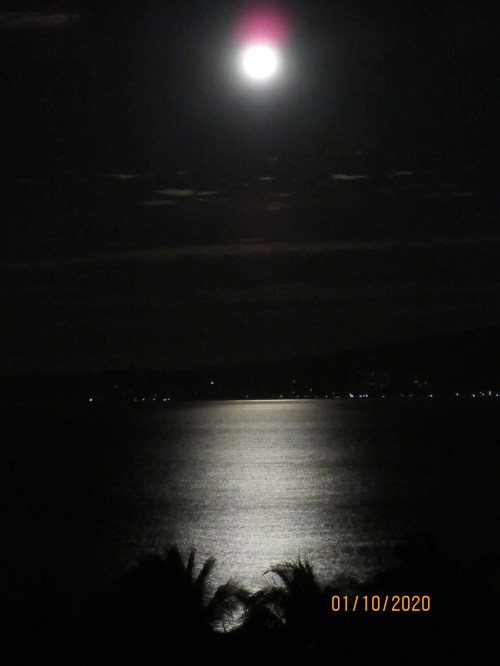
We are truly grateful for our time here and all God’s gifts to us. Hope you saw the super moon too! God bless and hope to see you soon.
Play time at the Riviera GrillIn Bucerias with friends…is all you needSuper Moon
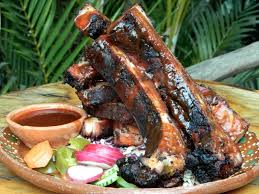
This was funny. Our friends Bob and Carol made a reservation at the El Rio BBQ in Puerto Vallarta. It is a large outdoor venue with live music and the best pork ribs on the west coast.
We bussed it to Bob and Carol’s condo in PV for a pre-drink and then took another long ride bus up the steep winding road that follows the Cuale River into the hills here. Arriving at 4 PM, the place was already packed as the popular Quatro Amigos were playing today. Well our reserved table no. 30 had been given to another group. So after squabbling a bit, they set up a new table for us but it had no number.
We ordered beer and food – ribs of course. Our beer came and we enjoyed it – Pacifico is light delicious with a hint of molasses! We danced a bit and really enjoyed the band who played familiar Boomer hits from our youth.
We were getting hungry and after more than a 90 minute wait, our food orders never arrived. Bob calls the manager over and he promises to look into it. After another 10 mins or so we get up and decide to leave. On the way out Bob expresses his displeasure to the manager about the mix-up and that we are not paying for the beer.
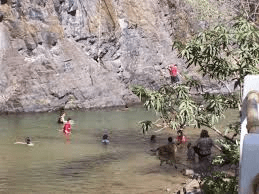
So we left after having free beer and dancing outside to live music on a beautiful day in the mountains by a beautiful river. We also hed met Bob and Carol’s friends from Calgary and Winnipeg and all had a great time.
(We eventually did have fantastic dinner of shrimp fajitas with more Pacifico of course, once we got back to PV.)
So in the moment, we learned to go with the Pacifico flow!
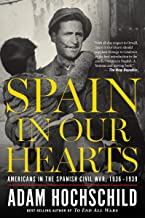
This is an excellent read. I had very little understanding of the Spanish Civil War 1936-39 when a friend leant me a copy of this book.
Who were the good guys? Who were the bad guys? What happened? What was Canada’s position. How about the Church? Best selling author Adam Hochschild takes us through the very sad and brutal story of all this with some great prose. His 2016 book is well documented with maps, notes and photos.
Due to rising popular pressure, King Alphonso XIII abdicates in 1931 and the 2nd Spanish Republic is proclaimed. In the feudal system that had prevailed up to then, no one other than the existing land owning class was permitted to buy or own any land. In January 1936 the Socialists, Communists and Republicans work together under the name the Popular Front. They win the election, defeating the National Front consisting of monarchists, landowners and the Catholic Church hierarchy. It is the overthrow of the feudal system in Spain. Unwilling to accept this outcome, monarchist General Francisco Franco launches a coup. When the coup fails, a civil war erupts and he quickly becomes leader.
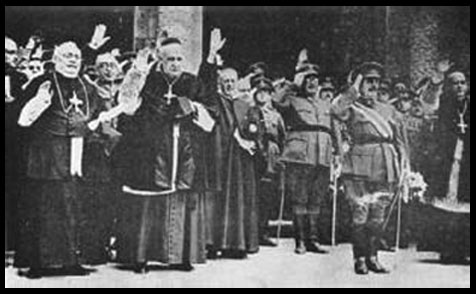
The Nationalists (led by Franco) are supported by fascists Adolf Hitler and Benito Musolini with troops, planes, bombs and guns. The Republicans are supported only by Joseph Stalin. The United States, Canada, Britain and France decide to remain neutral, refusing to supply arms to either side. The Nationalists win the ugly war and over 200,000 civilians are killed making it one of the most brutal wars of all times. Thousands of Americans, Canadians and Brits volunteer in several international brigades fighting on the Republican side and are in the end decimated. The Vatican surprisingly to me, aligns itself with the Nationalists as it is strongly opposed to the secular Republican state. Hence it is a war of the rich and privileged against the meek, poor and destitute.
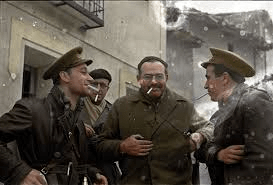
In the book we learn about the key role of journalists such as Ernest Hemingway and authors like John Dos Passos and George Orwell in getting the word out about what is happening. Also about volunteer leftist American fighters like Bob Merriman who commands the volunteer Lincoln-Washington Battalion for the Republicans. Some 1500 volunteers from Canada join the Mackenzie-Papineau Battalion (the Mac-Paps). However, Texaco supplies oil for Franco’s war machine while the U.S government looks the other way. Hitler and Mussolini’s arms, planes, bombs and troops turn the tide for the Nationalists.
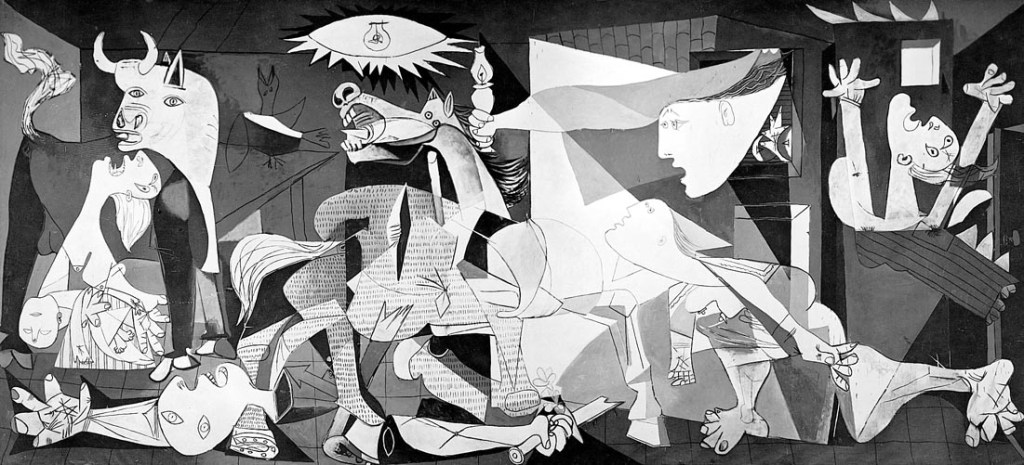
Guernica by Pablo Picasso
Guernica, a small town in the Basque country in northern Spain is carpet bombed by the Nationalists killing over 200 civilians. It takes 40 years for the truth of this and many other like events to get out. Prisoners are routinely shot on the spot, thousands of priests are murdered by the Republicans. Later the Catholic Church would canonize many of these martyrs but still refuse to officially recognize the hundreds of priests in the Basque country who supported the Republican side, many of whom were murdered by the Nationalists. You can see how poisoned these times were. It seems the western allies were paralysed by their fear of communists on one side vs. fascists on the other, and consequently did nothing.
While the book is more a rendition of American volunteer participation on the Republican (democratic) side and the nasty role Texaco played in fueling the Nationalist (fascist) side, it makes for a good introduction to these troubling times. I rate it 9.5 out of 10, a great read.
Our home for the next 3 months
The forecast was bad – freezing rain, snow and cold – on the very day we were to fly to Mexico. Darn! More than 19 flights out of Ottawa were to be cancelled that day including ours to Toronto. So we called Air Canada the day before after they had declared a travel advisory. They put us on a flight to Toronto the day before we were to leave for Puerto Vallarta. Thanks AC.
We spent a short night at the Hilton Garden Inn at Toronto airport rather than at Ottawa. However it was hectic, bags checked, off the plane, on the shuttle, off the shuttle at the wrong Hilton, back on the shuttle, off at the right hotel, back on the shuttle, off the shuttle and finally checked in on AC to PV. Travel is not for the faint hearted! lol!
New Years Eve Party
Checking into our condo a little early, we surprised the cleaning and maintenance staff. Our property manager Jesica arrived and took us to Mega to do a grocery shop. The Scotiabank ATM was out of money! Hey this is Mexico, the credit card free society. Luckily, Mega takes credit cards. And we were able to sign up with Telcel – 26 days, unlimited North America calling, 4 gigs of data for only $11 for each cell phone!!! After hiking to the nearby Oxo store for some jugs of water, we spent a pleasant evening watching the Dreams Villamagna Hotel guests party hardy on New Years Eve. Our condo being part of the same complex.
The beach beckonsRiviera Nayarit attracts many Canadians particularly from the West
A couple of days later we did a Costco run. This involves taking the bus ($1.5 each) into PV, walking about 2 km to the Costco and taking a taxi back ($15 with tip), with all our stuff to Nuevo Vallarta. Then we have to find a couple of shopping carts to take everything up the elevator to the 7th floor. It takes a good half day, but now we are all set.
The Norwegian Joy is in
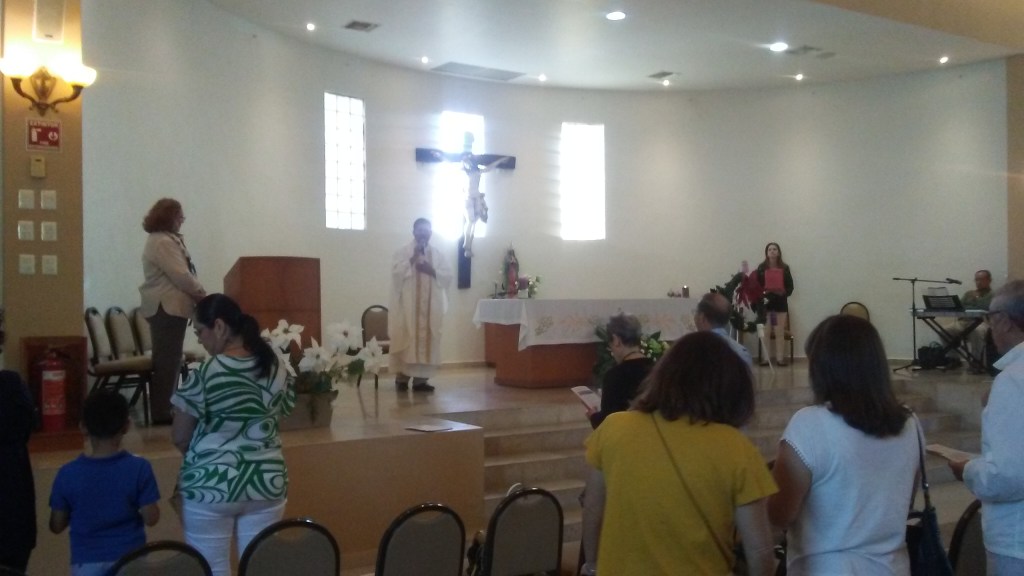
Before you know it, it is Sunday. We walk the 3 km to our local church which meets in a large hall for Mass. An Oblate, James Holland, OMI and another Canadian have donated the Sunday Missals again this year. Our priest arrives early and the Mass proceeds, mostly in Spanish. A Canadian woman reads the gospel in English and gives us a synopsis of the homily. It is packed, over 400 people, most of them Mexican.
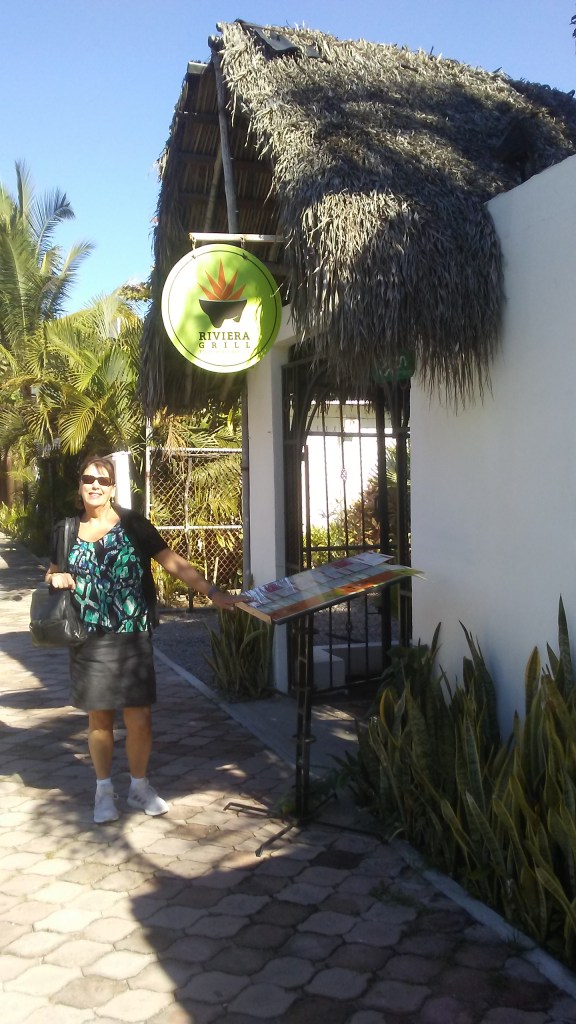
Then it is off to our favorite breakfast place, the Riviera Grill. The food is fresh, the service great and you can help yourself to a free orange on the way out. Huevos Mexicanos with some hash browns, black beans, toast and coffee. Yum.
After a pleasant day on the beach in 30 deg heat, we catch the perfect sunset in Banderas Bay. Ah, we have settled into Mexico again, thanks be to God.
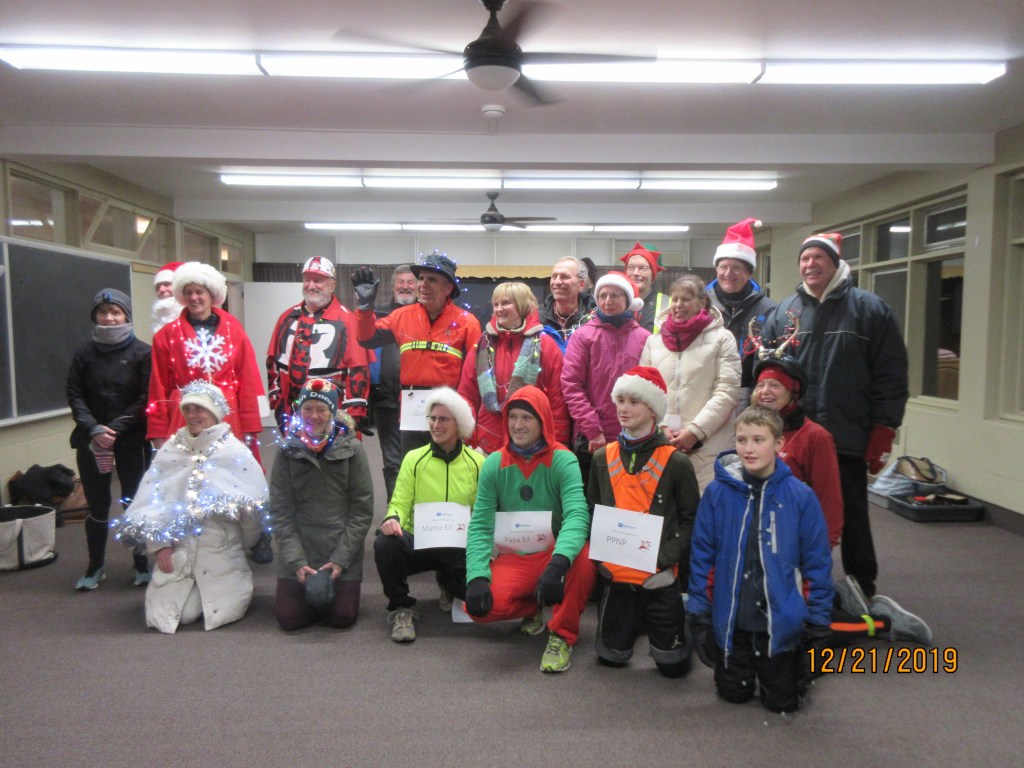
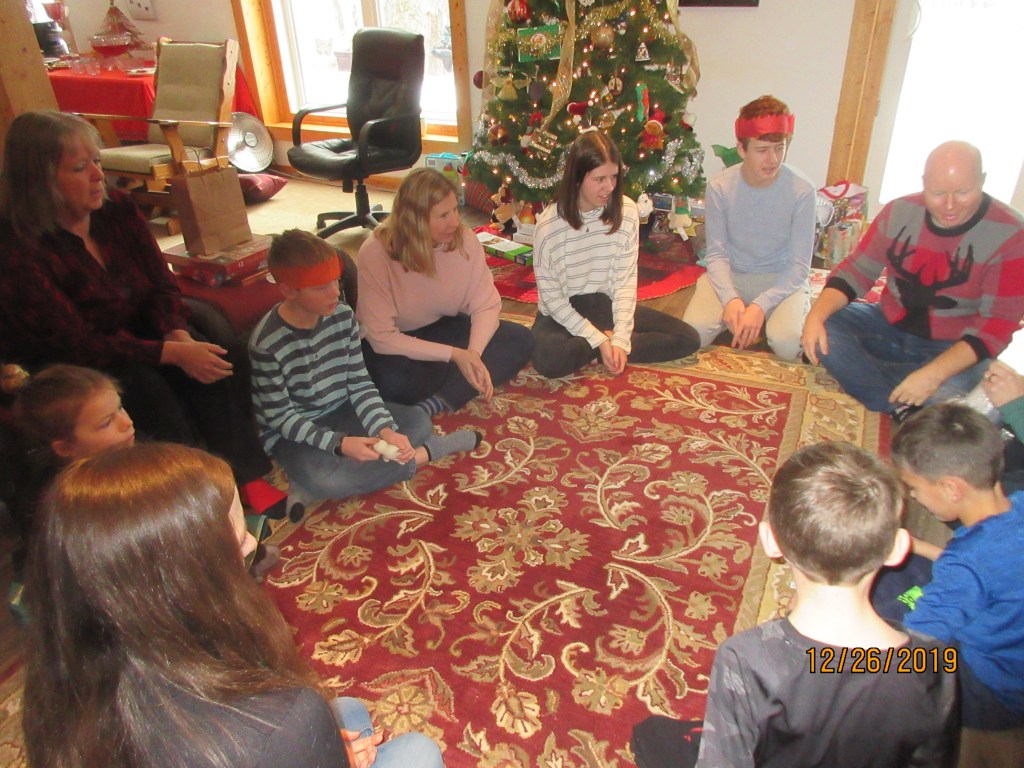
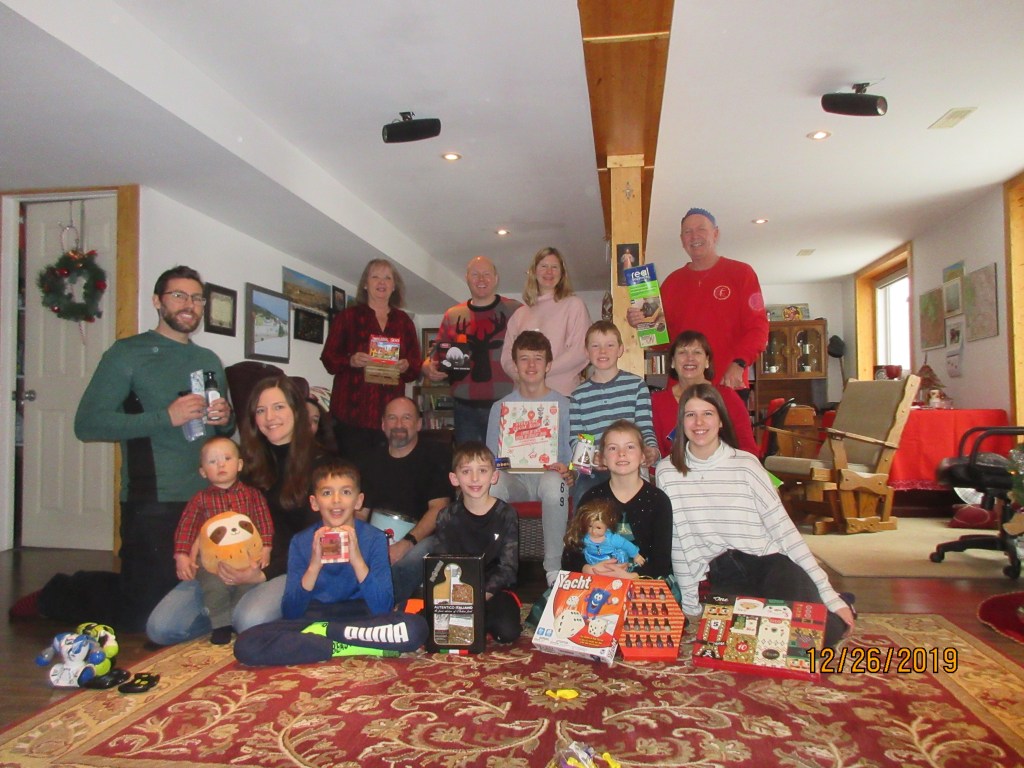
Christmas hibiscusSt. John Chrysostom ChurchSolstice Run/Walk at GalileeJackson greets EliasWyatt wins the battleGamesKaylie tries her luckAlex is nextKyle cleans upThe familyCousins bond
Waiting to enter the Grotto of the Nativity in Bethlehem
We Christians are on a spiritual pilgrimage to Bethlehem during the season of Advent. Advent means “coming” and we are indeed waiting for the coming of Lord Jesus – the birth of the Son of God, in Bethlehem.
We learned from the guest homilist on EWTN today, Fr. Glenn Sudano CFR, how St. Francis of Assisi was so taken with the Incarnation of God as Man – how could almighty God humble himself so much as to become a lowly human being who sweats and eats and sleeps just like you or me? He added that it’s like a human deciding to become a slug in order to enter the slug world and make some improvements. However in this case, humans have much more in common with a slug – we eat, breath, drink, make a mess – than does an omniscient God have with us.
Jews and Muslims alike he went on, are incredulous that Christians believe that our omnipotent God, lowered himself so as to become a mere human. I confess that I never thought of it this way before. So the Incarnation of the Word as flesh, is indeed even all the more incredible!!!
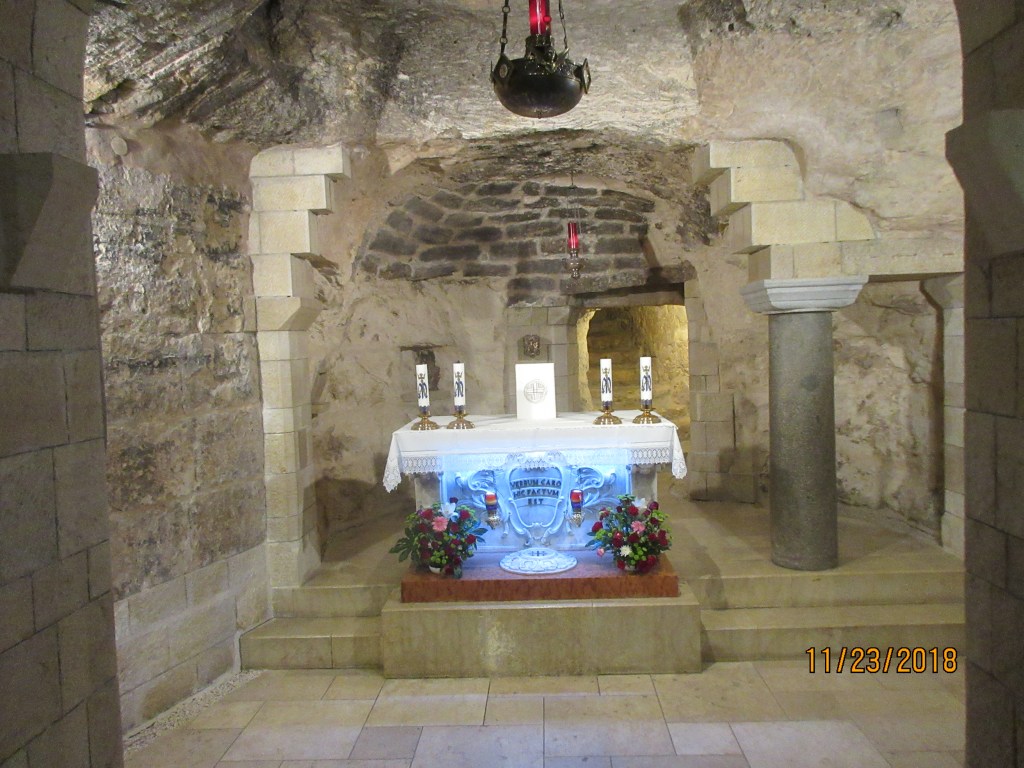
Grotto in Nazareth where the angel Gabriel visited Mary
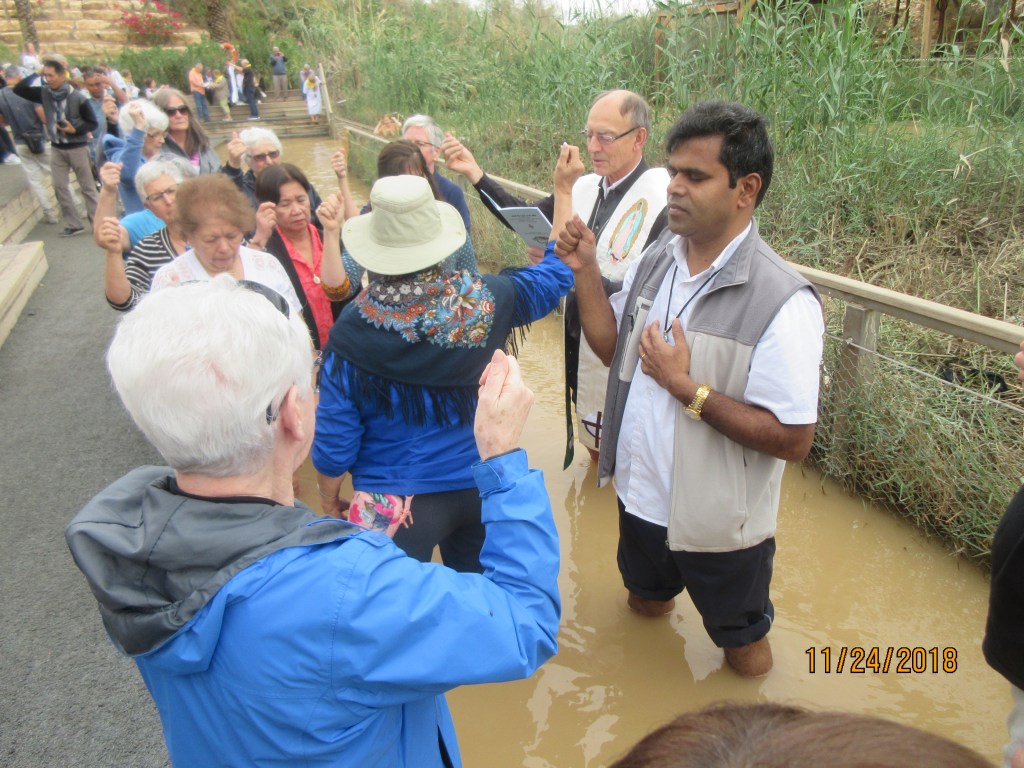
Last year we went on a OMI led group pilgrimage to the Holy Land. I will never forget the sacred sites we visited, what we saw and how we felt there. These holy memories are all the more present as we enter the 2nd week of Advent, on our journey to Christmas.
Renewing our baptismal vows in the Jordan River
Yesterday we treated ourselves to the Arnprior Community Choir’s Sing Noel concert at the local Pentacostal church. It was a fantastic sold out experience of energy and talent – a joy to behold. It was nourishing food on our pilgrimage to Bethlehem. Perseverance, perseverance, perseverance.
Isaiah’s question, “Is there anyone around who knows God’s Spirit, anyone who knows what he is doing?” has been answered: Christ knows, and we have Christ’s Spirit.
The main theme of Paul Theroux’s recent travelogue on Mexico is economic and social exploitation. Large corporations have usurped the role of governments through global free trade agreements to increase their profits. He cites the narrow band of factories – appliance, textile, pharmaceutical and automobile manufactures who picked up and moved across the Mexican border to exploit cheaper labour, as evidence. The small Mexican farmer was dealt a significant economic blow by genetically modified crops and competition from huge American factory farms as a result of the 1994 NAFTA agreement.
The practice of some NGO’s and aid organizations to decide on what impoverished communities need, without actually consulting them is too common he says. e.g., fresh water is needed and a school is built. Foreign aid as practiced in the third world, is essentially a failure, futile in relieving poverty and often harmful, relieving the ills of a few at the expense of the many. Pretty harsh words. Paul cites his extensive travel in Africa over fifty years as the basis of his first hand conclusions. He sees the same failures in Mexico.
The Mexican drug cartels known as narcos, have exploited the safety of people. Everyone is very cautious and lives in a gated secure community whenever possible. The U.S. is about to declare these narcos as terrorist organizations. However, it’s the huge American demand for illicit drugs which fuels this mayhem.
I stuggled with this book. Parts of it were interesting and other parts were somewhat boring. When he talks about Mexican social trends, cultural issues and literature, he is at his best. When he bogs down is a small town to interview obscure individuals, the story slows to a crawl. The “plain of snakes” does not actually exist per se but this title serves to sell more copies of the book no doubt. In any case, after writing more than 50 published books, he has earned the right to ramble on. I would give it a 3 out of 5 star rating.
Looking much forward to getting down to Mexico again and feeling the warmth ourselves firsthand.
Everyone. has to die once and then face the consequences.
Hebrews 9:27
One of the more curious and macabre aspects of Mexican culture is their reverence for death. Nosa Senora de la Santa Meurte – Our Lady of Holy Death – has a huge cult following that is growing fast across Mexico claiming millions of adherents. Outlawed by the Catholic Church, this folk saint is associated with healing, protection and safe delivery to the afterlife. While we in the north tend to regard death as horrorful and not to be discussed socially. In Mexico they openly acknowledge death and celebrate it on the Day of the Dead with public parades and festivals.
Many of the death ritualized masquerades in Mexico had their origins in the Aztec culture, an empire of blood sacrifices and skulls and glittering masks. “During the 20th century, a gay familiarity with death became a cornerstone of national identity. Mexico’s nationalization of death had a more nihilistic and lighthearted component. It is a modern refurbishment of a medieval theme.” writes Claudio Lomnitz as quoted by Paul Theroux. “The Mexican chases after death, mocks it, courts it, hugs it, and sleeps with it. He thinks of it as his favorite plaything and his lasting love.”
Is it any wonder? There are over 35,000 murders annually in Mexico – that’s almost 100 per day, a country with a population of 130 million. In 2018 in the U.S there were 15,500 reported murders. In Canada during 2017, police reported 660 murders. Mexico’s violent past – the War of Independence, the Mexican American War, the Mexican Revolution, earthquakes and now the Mexican Drug War, only serve to reinforce the constant reminder, that death will strike each one at any moment.
How morbid you may think. I tend to agree. For we gringos, (actually Canadians are not Gringos, only Americans are) it is hard to get our heads around this “pastime”. I am not a particular fan of the Day of the Dead, Gothic masquerade parties, nor even much for Halloween anymore.
But wait, there is something redeeming to this. Practicing a frequent remembrance of death serves to make life more intense. It increases one’s vitality. It’s like waking up every morning and saying, “Hey I’m still here.” as Paul Theroux reflects. We have seen this vitality in the eyes of Mexicans we meet – a reverence, gentleness, calmness, patience, humbleness and acceptance of life and death – the way it is. Memento mori – remember you will die – is a subtext of Mexican life.
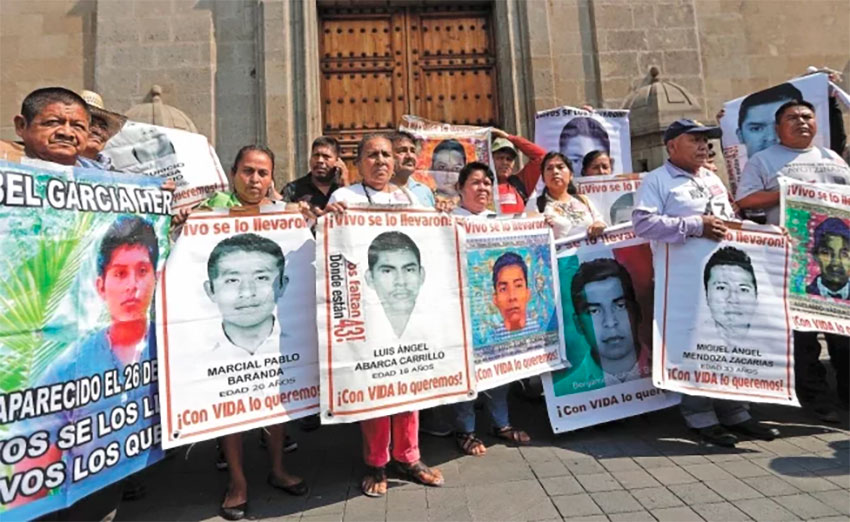
Ayotzinapa Parents Protest Nov 11 in Mexico City (Photo, Mexico News Daily)
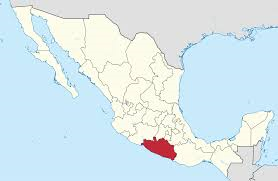
Guerrero is one of the most dangerous and crime ridden states in Mexico. According to Wikipedia, “The Guerrero State is listed as Level 4 – Do Not Travel by the United States Department of State stating armed groups operate independently of the government in many areas of Guerrero. Members of these groups frequently maintain roadblocks and may use violence towards travelers. Violent crime, such as homicide, kidnapping, carjacking, and robbery, is widespread. The U.S. government has limited ability to provide assistance here. It is recommended that nobody travel to Guerrero if possible.” Acapulco as a tourist destination is out.
The main reason for this area’s carnage is massive poppy cultivation in the local hills. The poppy species grown here is a major source of opium which is used by the local drug cartels (known as Narcos) to produce heroin, which they then export to the U.S. In July of this year, Mexicos’s President, Andres Manuel Lopez Obrador (AMLO) announced that the government will provide marketplace price supports for corn and other grains as part of a strategy to give farmers an alternative to planting these illicit crops.
On September 26, 2014, 43 male students from the Ayotzinapa Rural Teachers College in Guerrero were forcibly abducted and disappeared in nearby Iguala. The students annually commandeer several buses to carry them to Mexico City to commemorate the anniversary of the 1968 Tlatelolco Massacre where hundreds of student protesters and onlookers were shot by the army.
Well this year was different. Paul Theroux speculates that the bus the 43 students commandeered happened to be full of hidden illicit drugs. The corrupt local authorities took this as an affront and ordered municipal police to abduct and kill the students. The government tried to blame the whole thing on a local crime syndicate who supposedly had mistaken the students for rival cartel members. No one accepted this story line. The perpetrators and their motive remains unknown.
To this day, not a trace of the 43 missing students has ever been found. Their parents demanded again this week that police involved in the disappearance and the officials who botched the original investigation, face justice.
As Paul mentions in On the Plain of Snakes, when an oppressed group in Mexico airs a grievance, it doesn’t mumble. It takes to the streets with resolve, holds a demonstration in the main plaza, camps out in front of a ministry in a defiant vigil, burns a bus, blocks a motorway. The parents of the 43 missing Ayotzinapa students met with AMLO and gave the federal government 2 more months to produce results, or they will increase the intensity of their protests.
The government claims that it is making progress in the reinvestigation, but objects to the timeframe pressure being imposed. We shall see what happens, as Marie and I will be down there in January when the deadline expires… In the meantime, let us pray that justice is achieved for the parents of these missing sons.
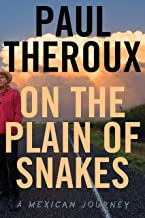
I would like to start a series on Understanding Mexico. They seem to have some serious problems down there. Not sure how far I will get with this as I am not knowledgable about Mexican history, their culture or language. However we do spend winters there and I would like to learn and share more about this beautiful place and people. I am part way through Paul Theroux’s On the Plain of Snakes, A Mexican Journey, and will be using it as my road guide.
The socio-economic problems in Mexico are primarily due to political ones. According to Paul, Mexico was bankrupted in the 19th century due to three major conflicts:
With a bankrupt nation, the only way to sustain political and security institutions is through corruption ie. instituting an inbuilt bribe tax. What this means is that in Mexico, you cannot distinguish the good guys from the bad ones. For example the police are paid very low wages in Mexico and some are known for “shaking people down” – namely insisting on a cash bribe or you will be locked or roughed up. Hence some police are not there to serve and protect as we know it in Canada, but rather perhaps, to line their own pockets to pay their bills. The other side of this is that if you have or will be committing a crime, you can pay some police to look the other way. Frightening, isn’t it?
The next part of the equation is that America criminalizes drugs like cocaine, heroin, even marijuana. This creates a huge market for illicit drugs that Mexico is happy to supply. Drugs flow north, money and guns flow south. The drug gangs referred to as “the Mafia” by locals control this trade and are not willing to give it up without a fight. Hence the extreme violence between the drug cartels and anyone else caught in the middle.
Bring in the military to a region and the killing rate goes up. This is exactly what happened in Ciudad Juarez across the border from El Paso, TX a few years back. The military are expert killers and not accountable for who they target. In fact, Theroux says the drug cartels hire ex-military staff precisely because they are such good killers.
So what is good about Mexico other than the weather? Why even risk going there you might ask? It is because the average Mexican you meet, faced with all this institutional dysfunction, becomes very self-reliant, family focussed, more religious, entrepreneurial and charitable, willing to help others, since they can’t count on the police or government for assistance.
As the saying goes within the expats community “Once the dust of Mexico settles on your heart, you can never go home.” We too have found this to be very true.





































 mattersofthemoment