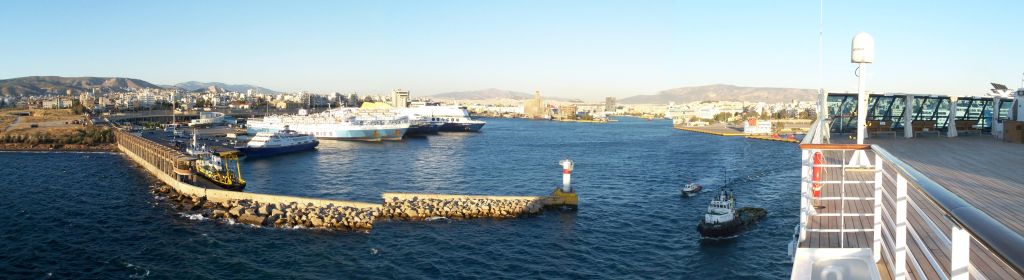
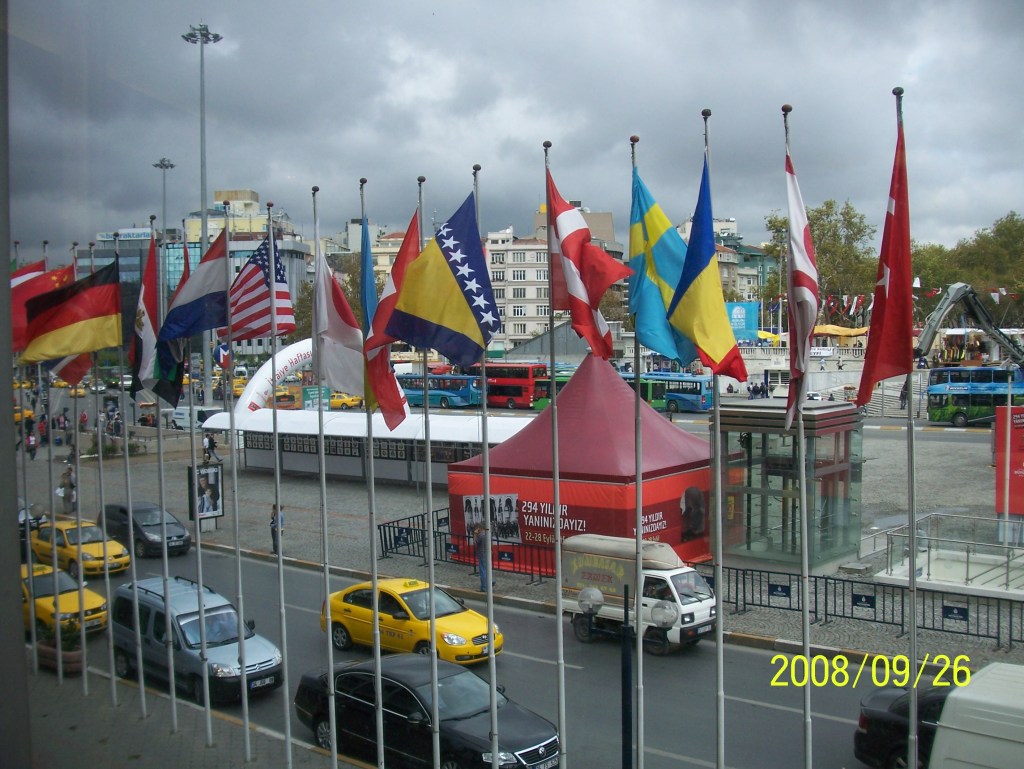
Athens is a big hot busy placePiraeus port city of AthensThis is common in busy cities like Athens
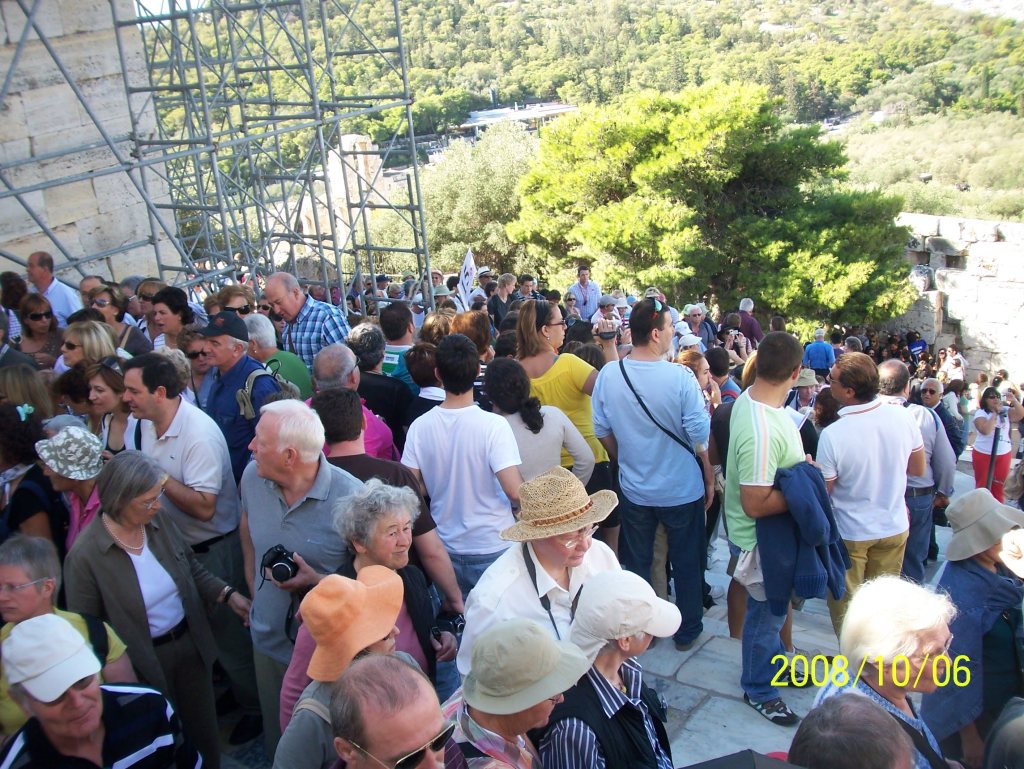
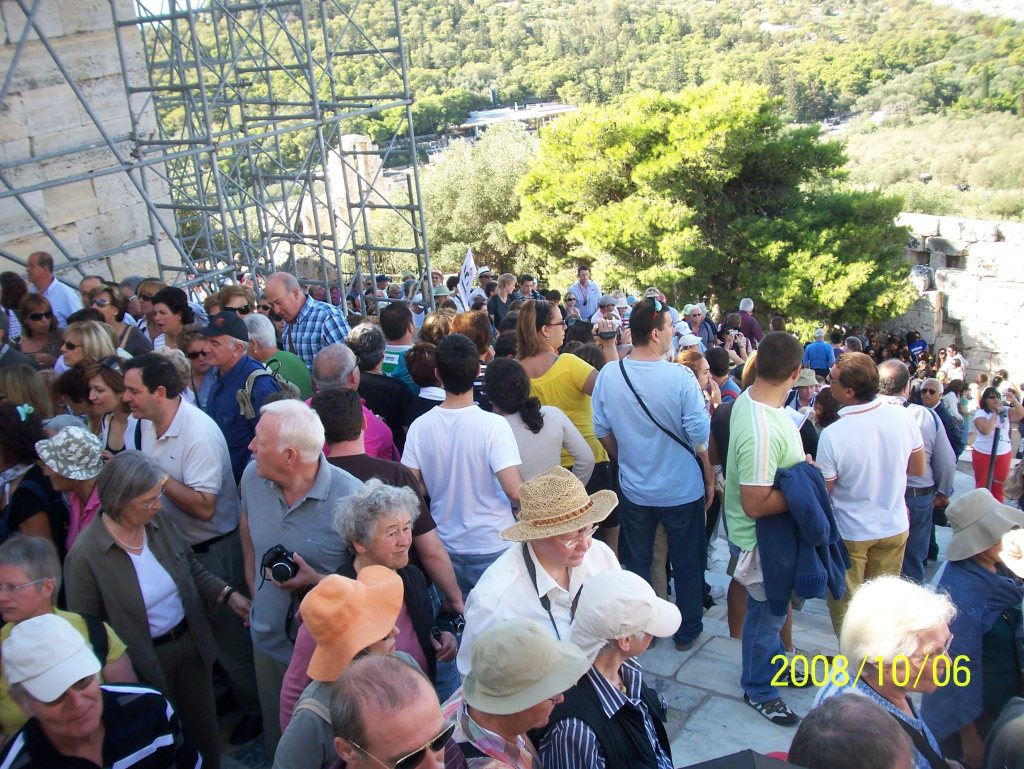
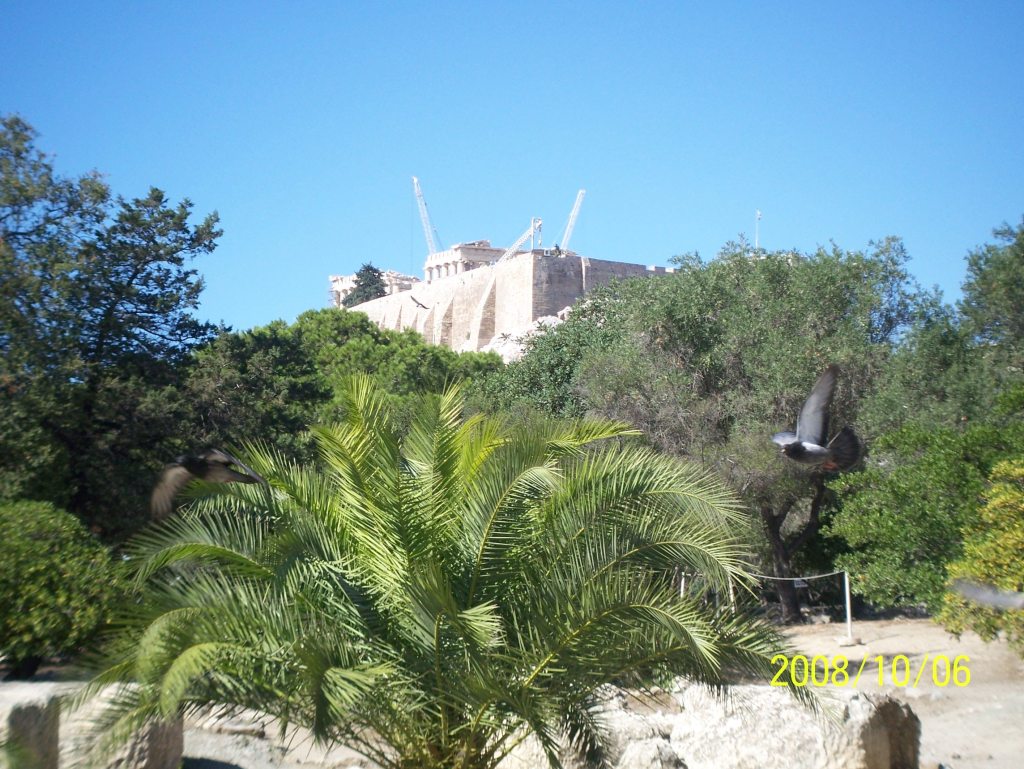
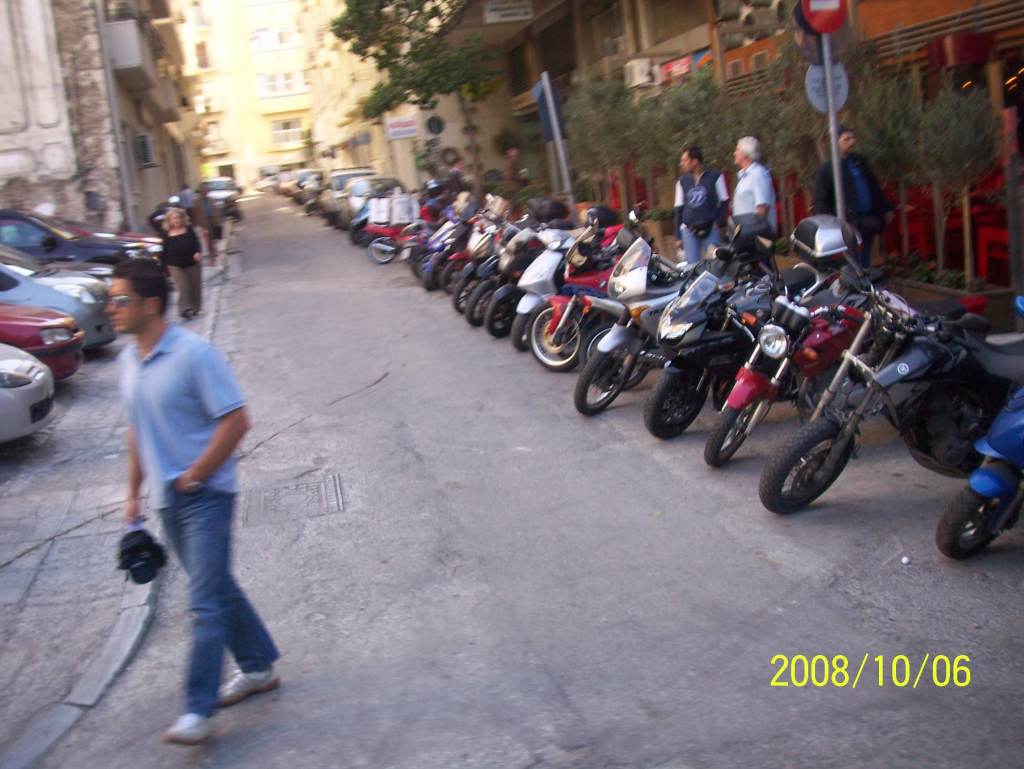
We arrived with much anticipation at Athens, ready to see it in all its glory. It was a hot sunny day as we boarded the tour bus after walking off the Nautica. The bus angled its way down narrow crowded streets 8 km into Athens. It was a long long drive delayed by heavy traffic and congestion. We recall it took most of an hour. Finally we arrived at the Acropolis. It was very very crowded! You had to really pay attention and watch your step on the steep stairs going up and down.
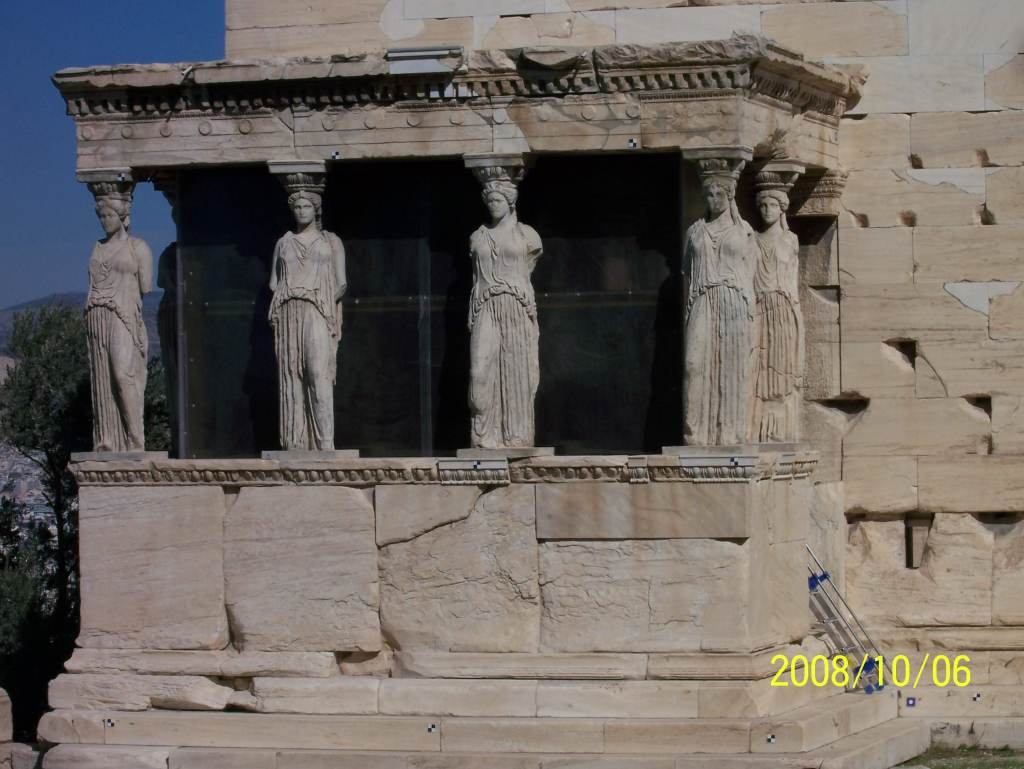
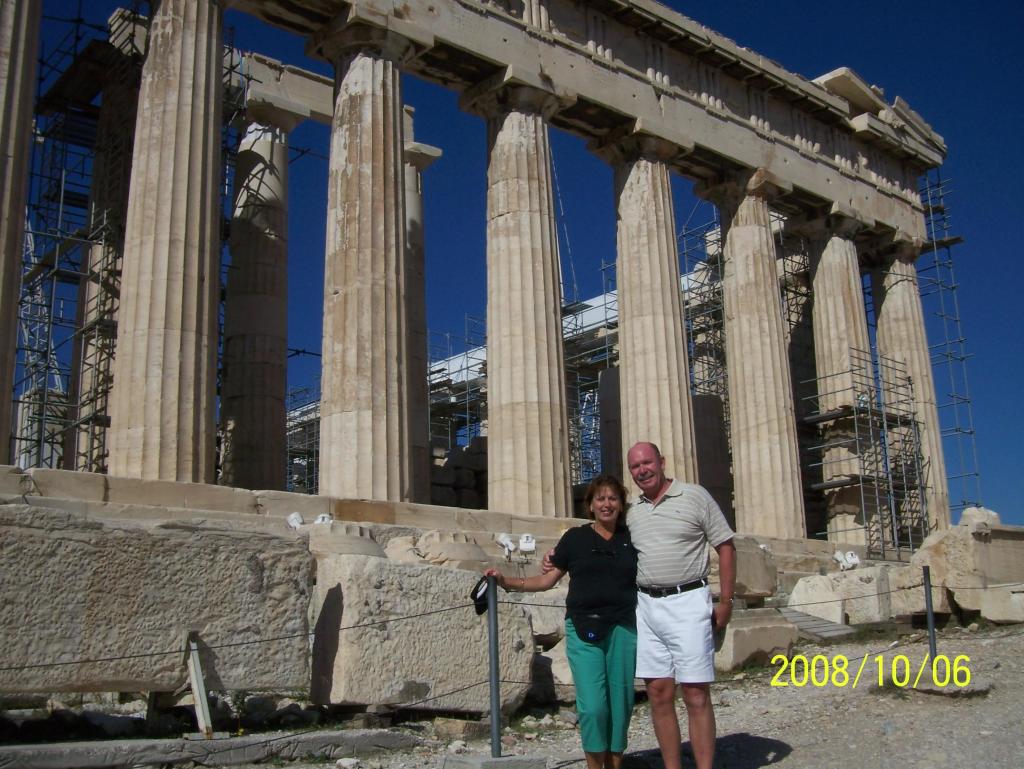
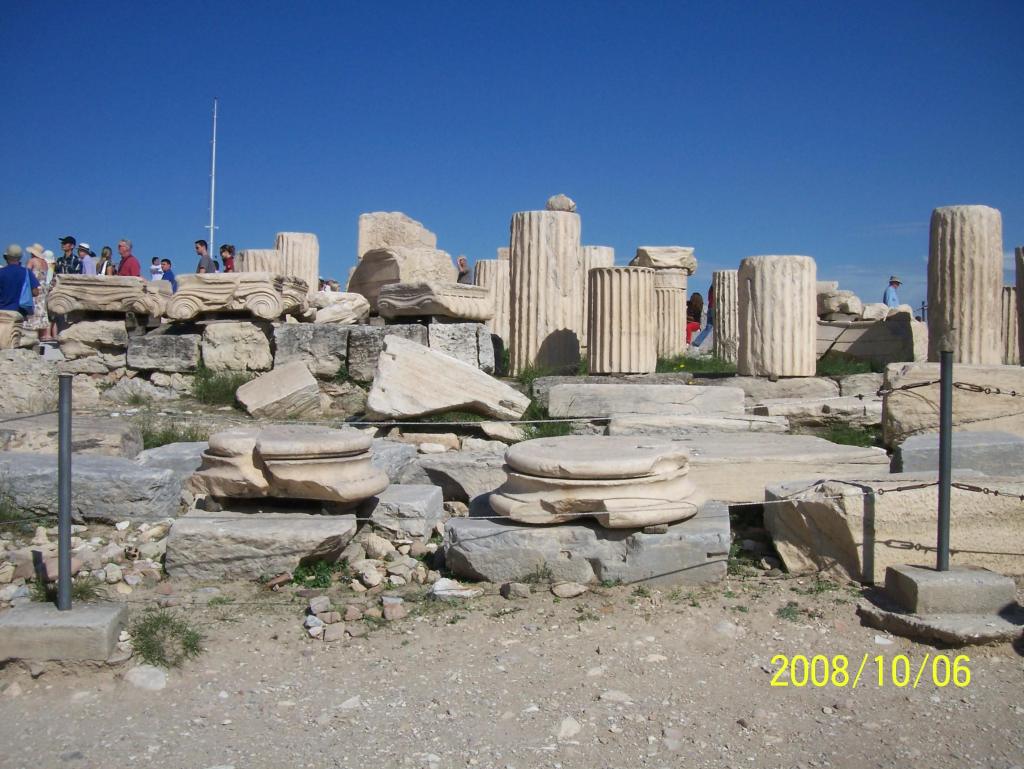
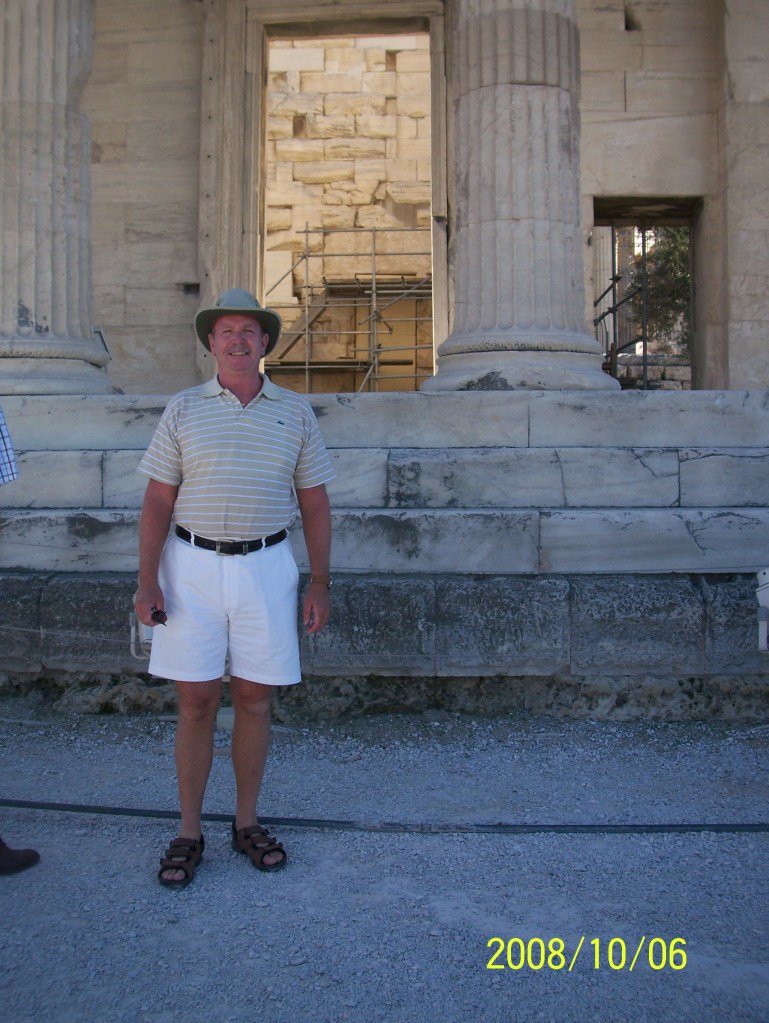
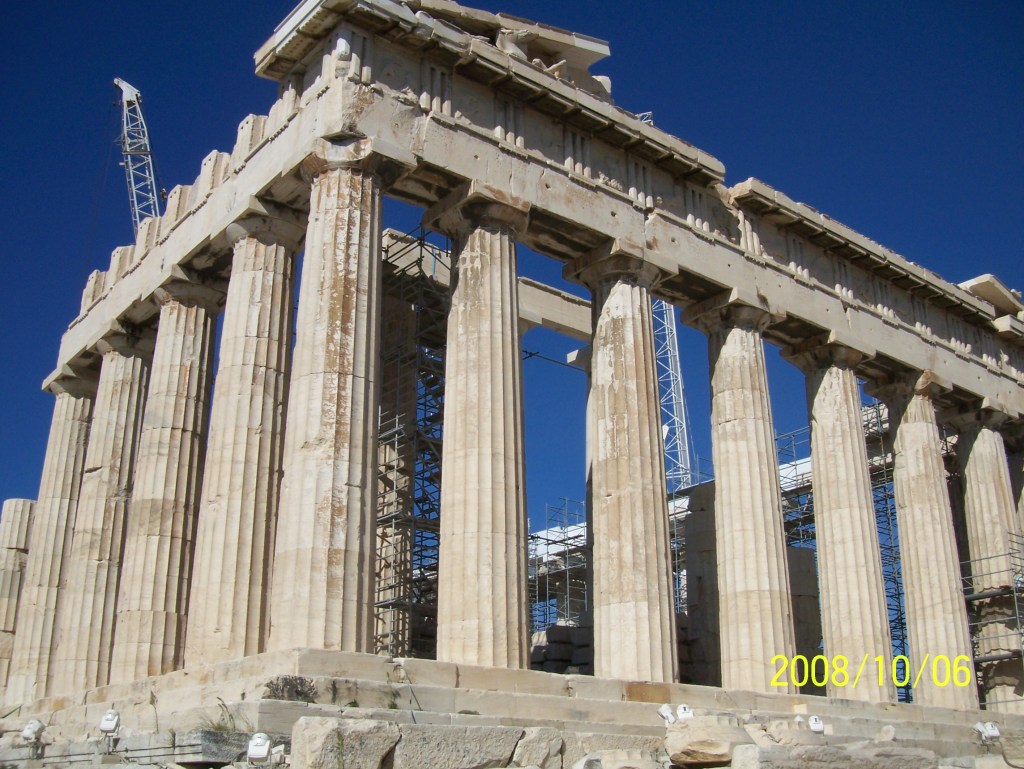
Our guide got us tickets and we listened patiently to him giving us much detailed information for what we were about to see. I think though we eventually wandered off among the ruins, eager to see and take photos of one of the most iconic buildings ever, the Parthenon.
Words cannot capture our rapture when we made our way around the site and marveled at the beauty of the Parthenon. Built in the 5 century B.C., it was a symbol of the power, wealth and elevated culture of Athens. It was the largest and most lavish temple the Greek mainland had ever seen. Today, it is one of the most recognized buildings in the world and an enduring symbol of Ancient Greece. An eternal tribute to Athena, the patron deity of Athens. It was severely damaged in 1687 when an Ottoman ammunition dump inside the building was ignited by a Venetian bombardment. You are not allowed to touch any part of it and it is being slowly restored.
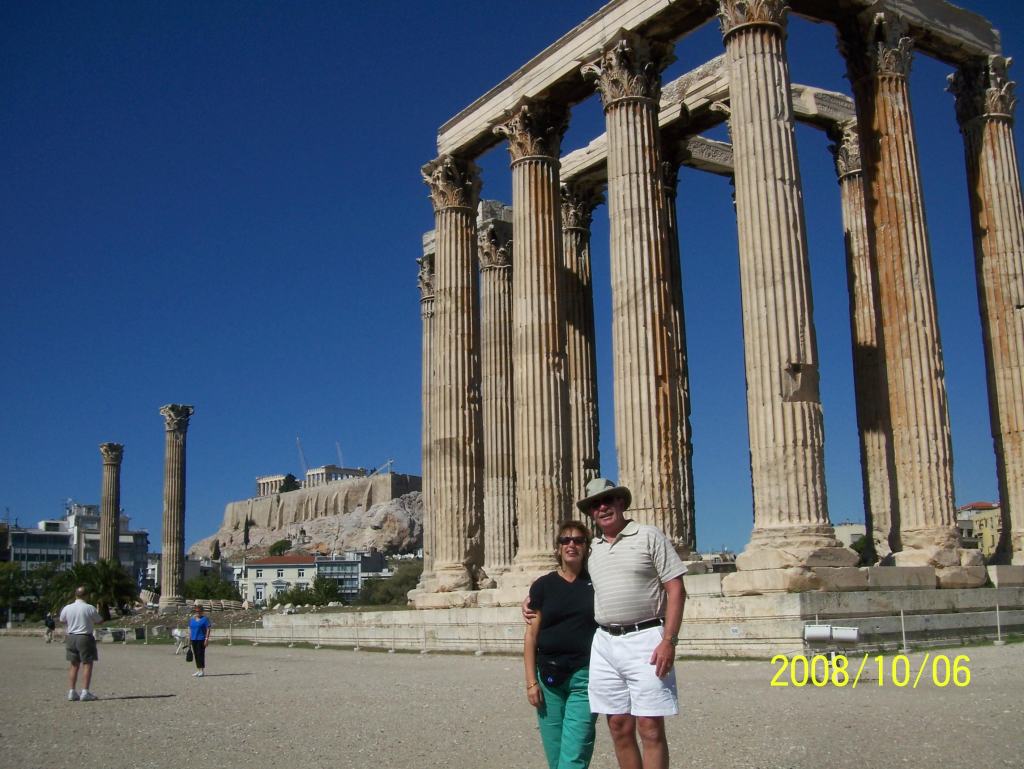
We then headed back down to the city to tour the Temple of Zeus. It is a former colossal temple in the centre of Athens. It fell into disuse and was pillaged in an barbarian invasion in 267 AD,
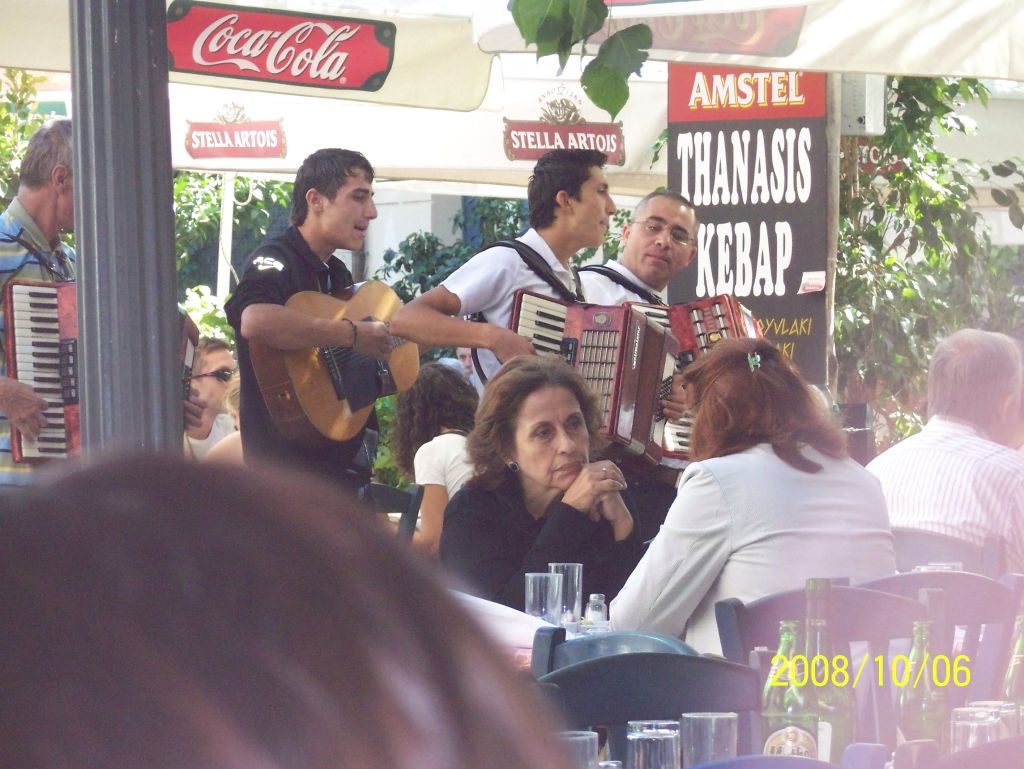
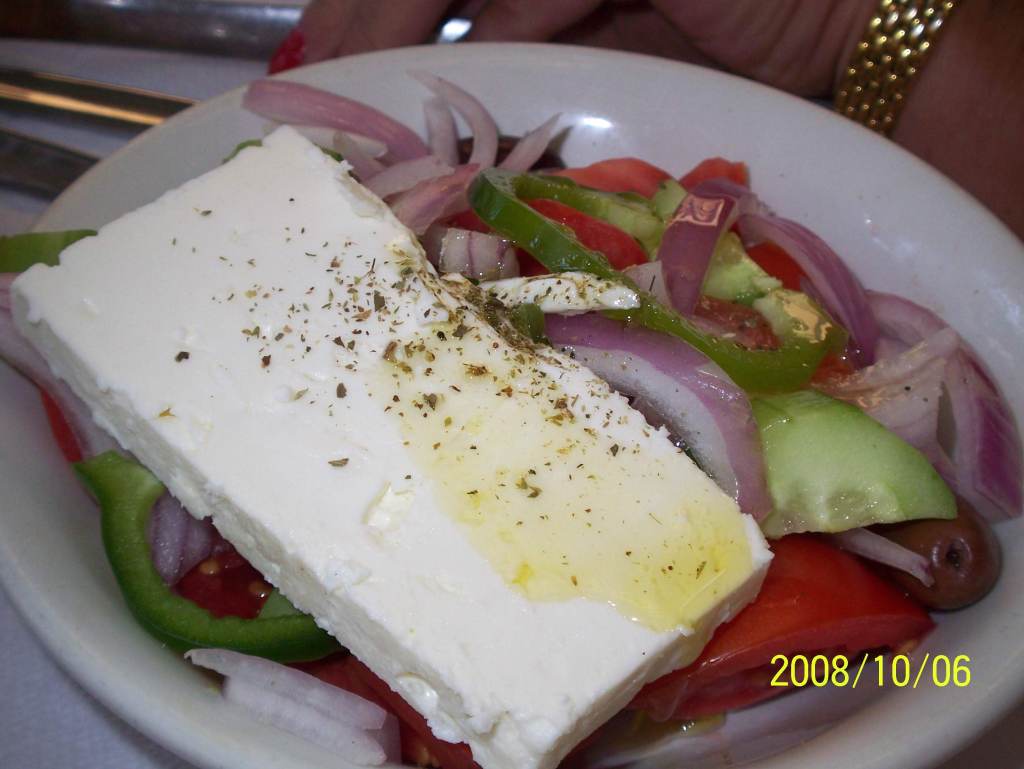
We were then dropped off in the tourist area of town for some sightseeing, shopping and lunch. We had the best Greek salad you could imagine as we were serenaded by a lively group. We soon found our way back to the bus and then in traffic to the ship, ready for relaxing again onboard. Athens is a big busy hot city that we would love to come back to someday for sure.
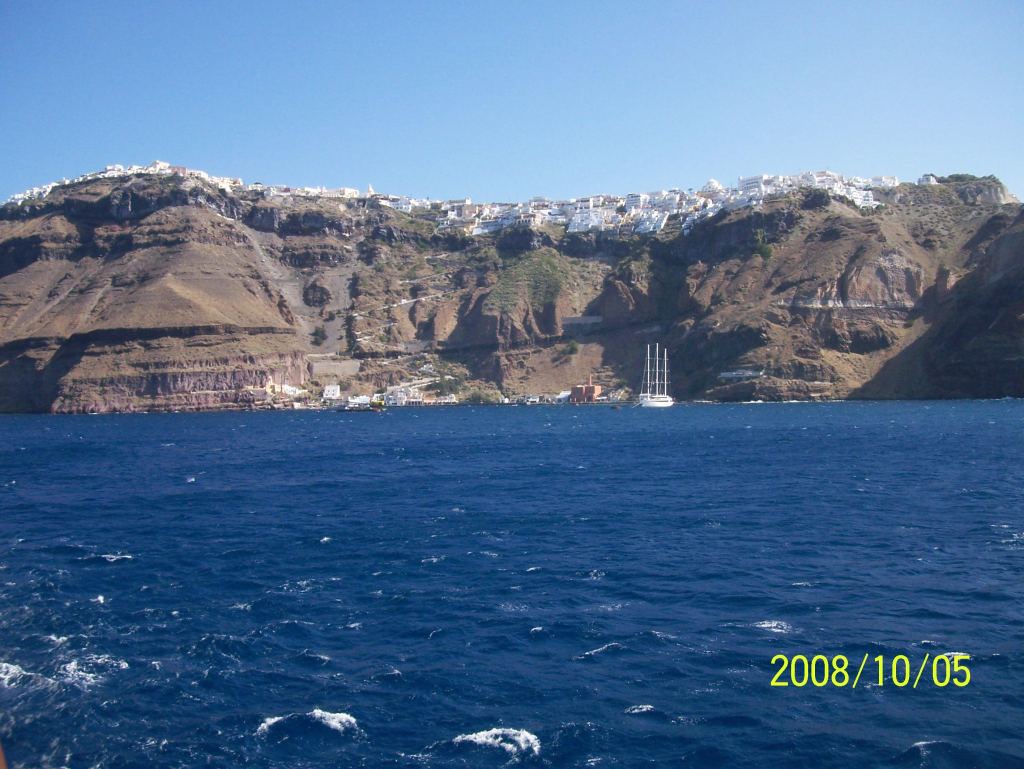
As our little ship the Nautica moved towards Santorini we were very excited. Who hasn’t seen images of this iconic Greek island with its white buildings and blue domes perched high on the cliff overlooking the deep blue sea? We could hardly wait to disembark and sample these eye treasures.
Then the captain’s voice came over the speaker: “We’ve encountered some trouble. The port had just been closed due to high winds today. The tram has been shut down and we will not be able to disembark. We are truly sorry but it’s beyond our control. Instead we will take you on an extended cruise around the island so you can see Santorini from all angles. Once again our apologies for this situation.”
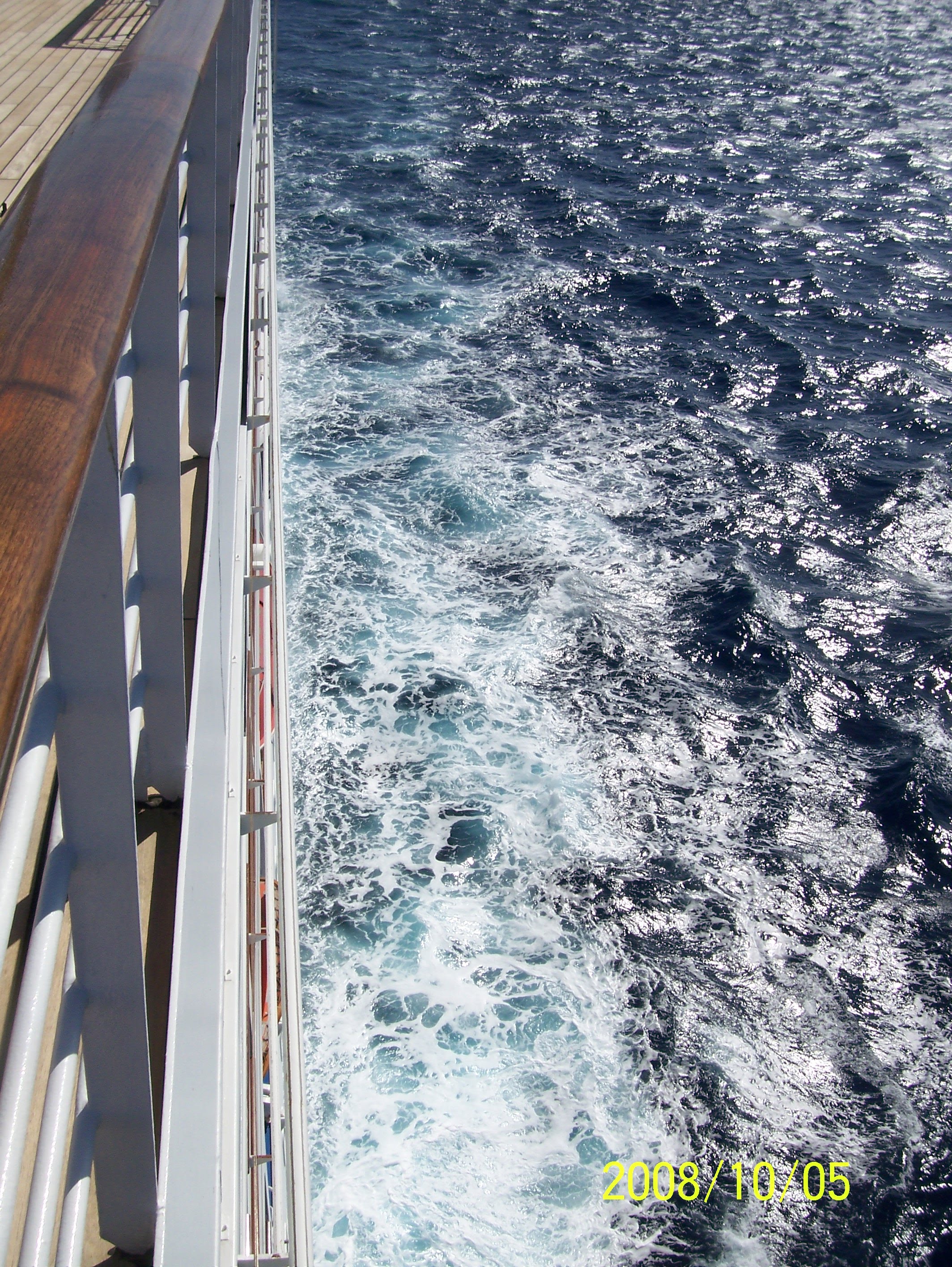
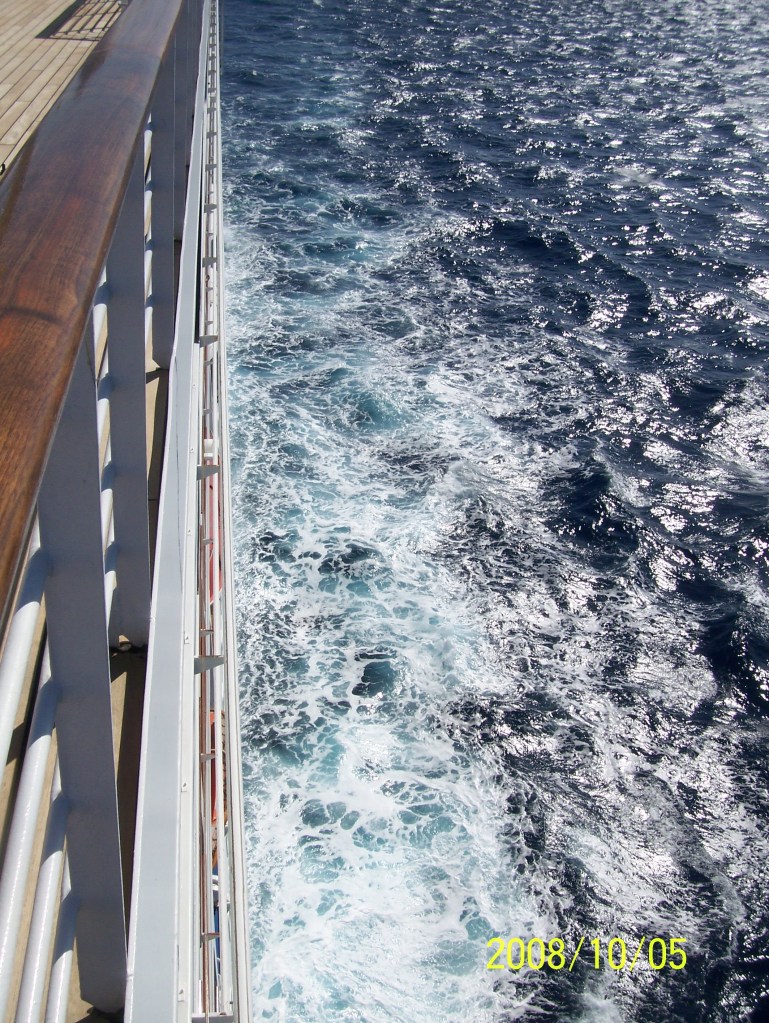
Darn! Of all the places for this to happen, it had to be Santorini. We had noticed the whitecaps and the fact the ship was rolling a bit more than normal, but we were truly surprised and disappointed. So we spent the day cruising around the island. There was free gravol available at the desk and the sick bags were put out by the elevators etc.. I think we felt a little queezy at times that day but our discomfort soon passed.
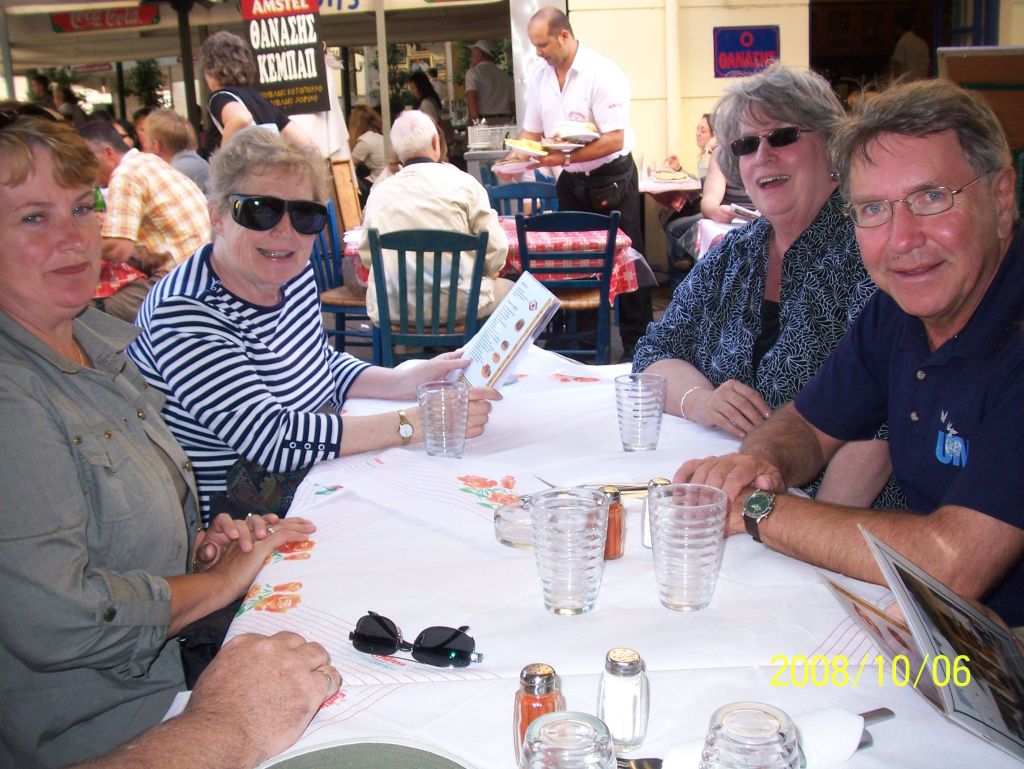
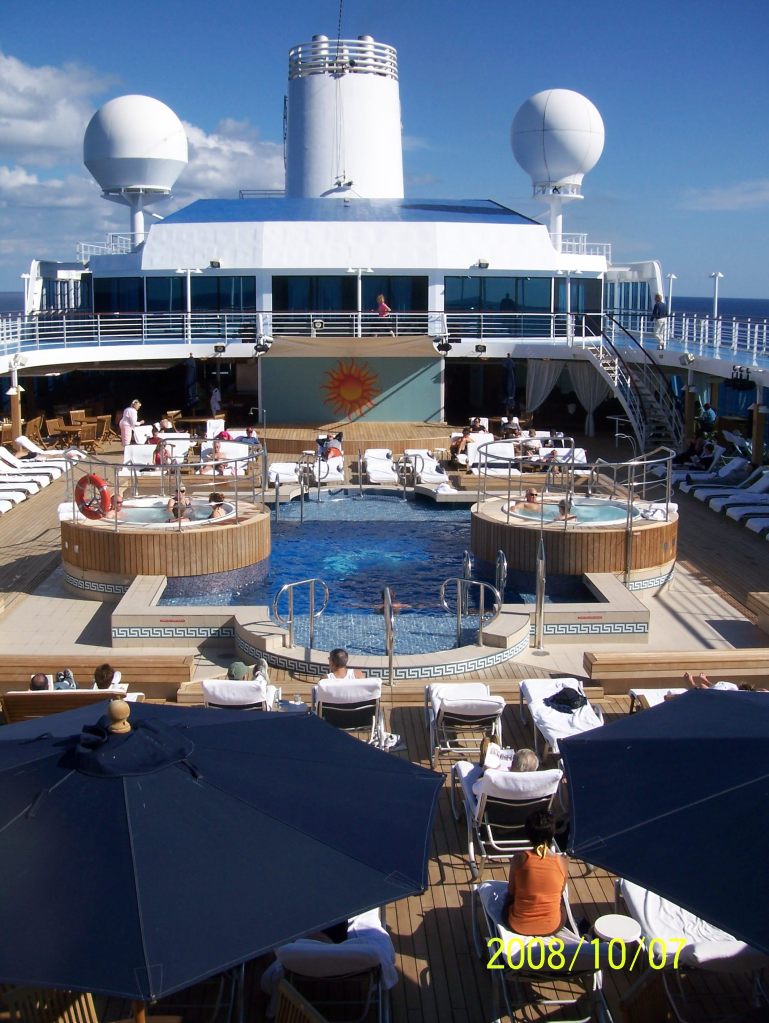
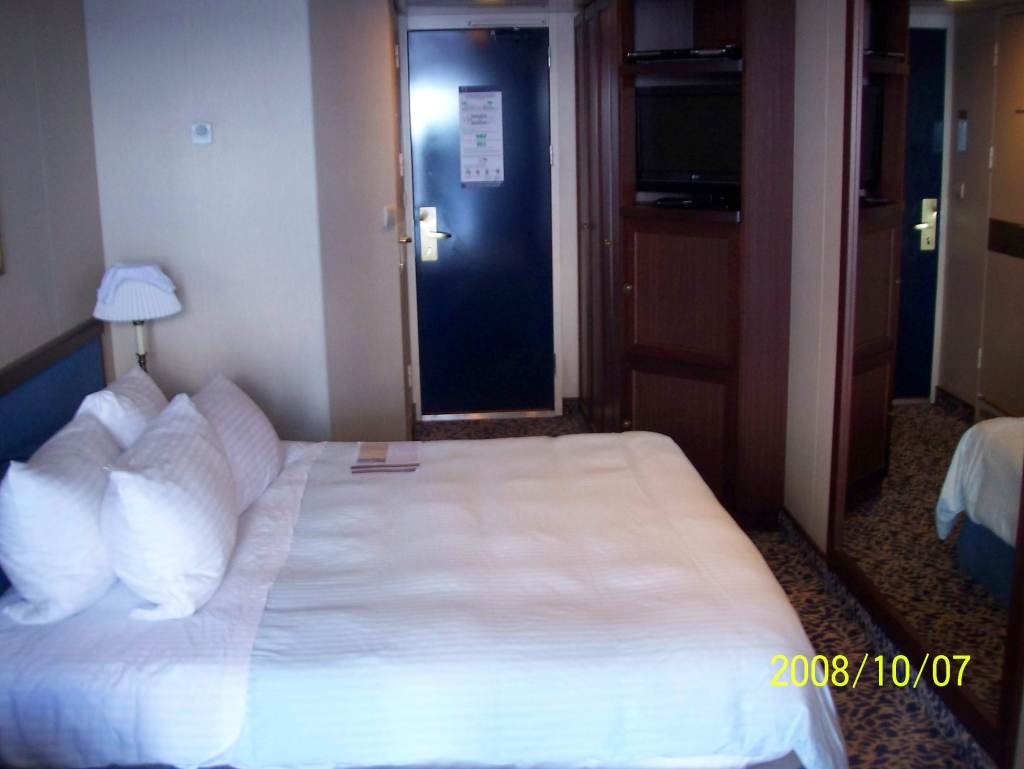
So this gives us the opportunity to talk a little bit more about the Oceania Nautica. The most important aspect of a cruise for many people is the quality of the food. Next usually comes the quality of the service and then the comfort of the cabin. The destinations and other facilities on board are the bonus. Oceania Cruises ranks near the top consistently year after year in consumer ratings and is known for having the best onboard dining experience. We agree!
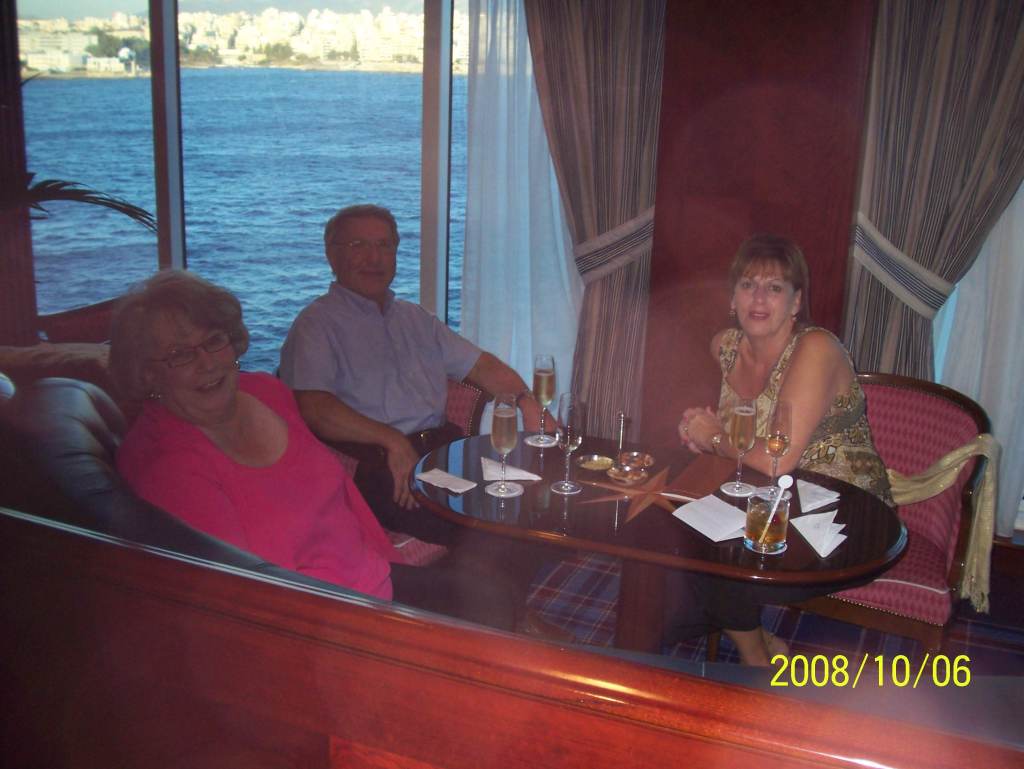
In addition to the Grand Dining Room (breakfast, lunch or dinner), the Terrace Cafe (breakfast or lunch) and the Waves Grill (mahi mahi lunch) there is the Polo Grill (filet mignon and lobster tail) and Toscana’s (pastas and salad). Of course there is also 24/7 room service, Baristas specialty coffee bar and daily afternoon tea time with all the trimmings. Here are more details. It was a true gourmet experience with amazing choice and variety for a small ship (684 passengers as opposed to 4000+). We enjoyed many a fine meal with wine! Unlike mass market cruise lines, there are no upcharges for the specialty restaurants and “O” permits you to bring on board all the wine and spirits you can carry, for personal consumption in your cabin or for a corkage fee at the dinner table.
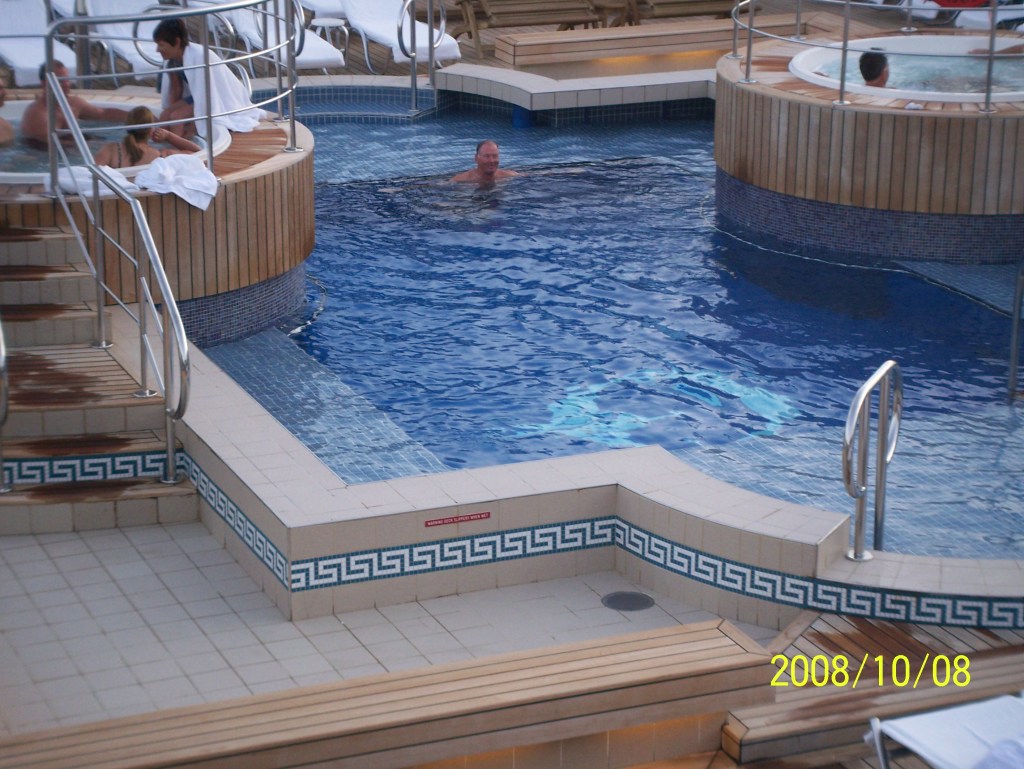
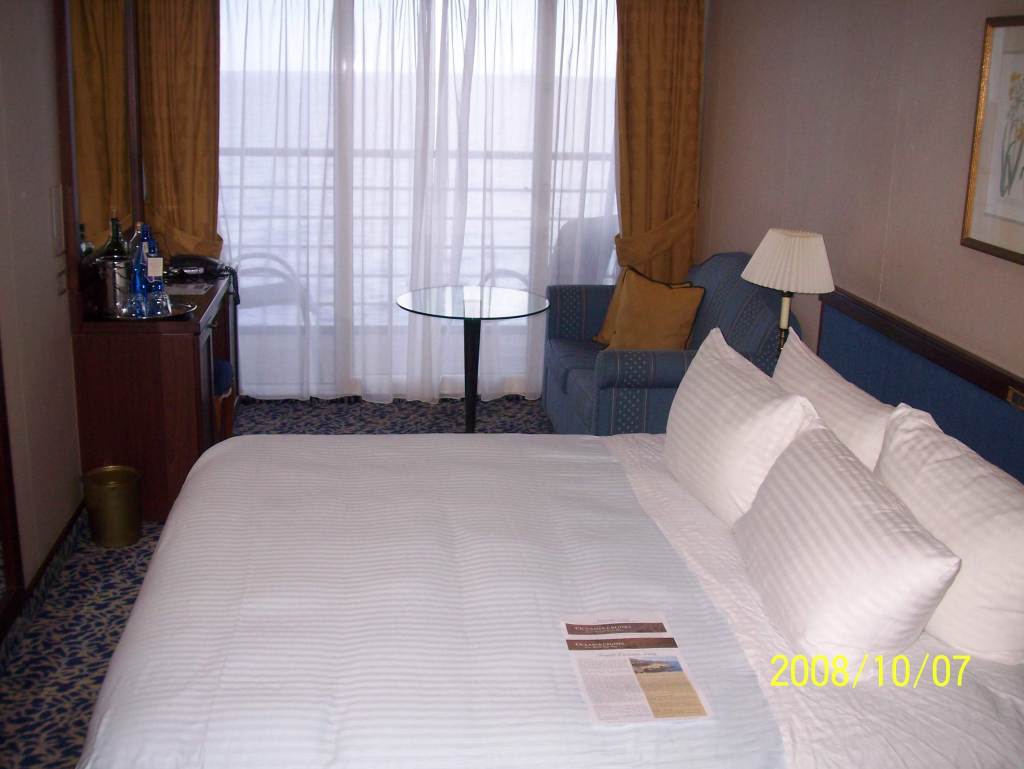
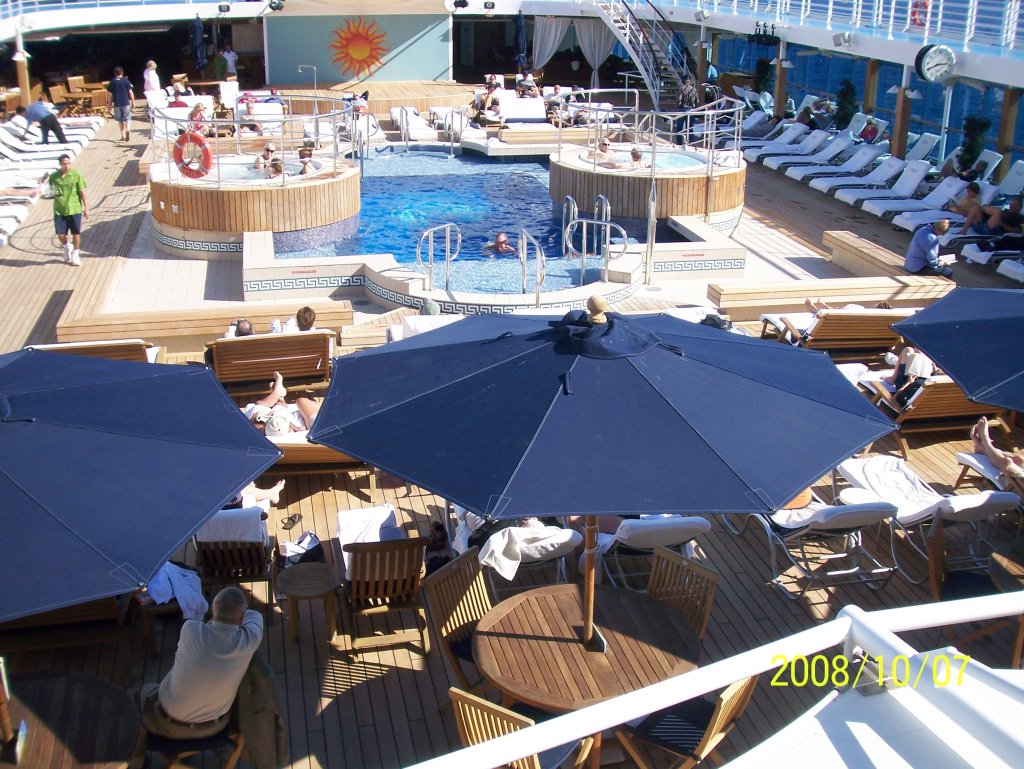
We will leave you now with a few more pics of life on board Nautica. It was difficult to find anything not to like. It was Santorini at sea lol!
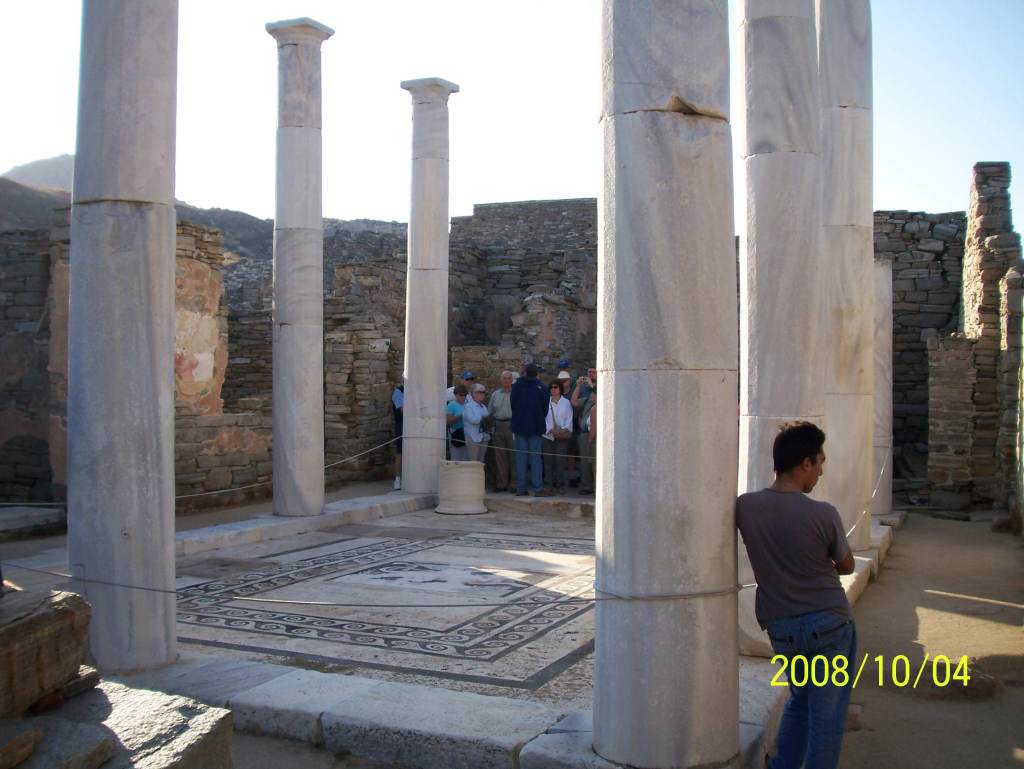
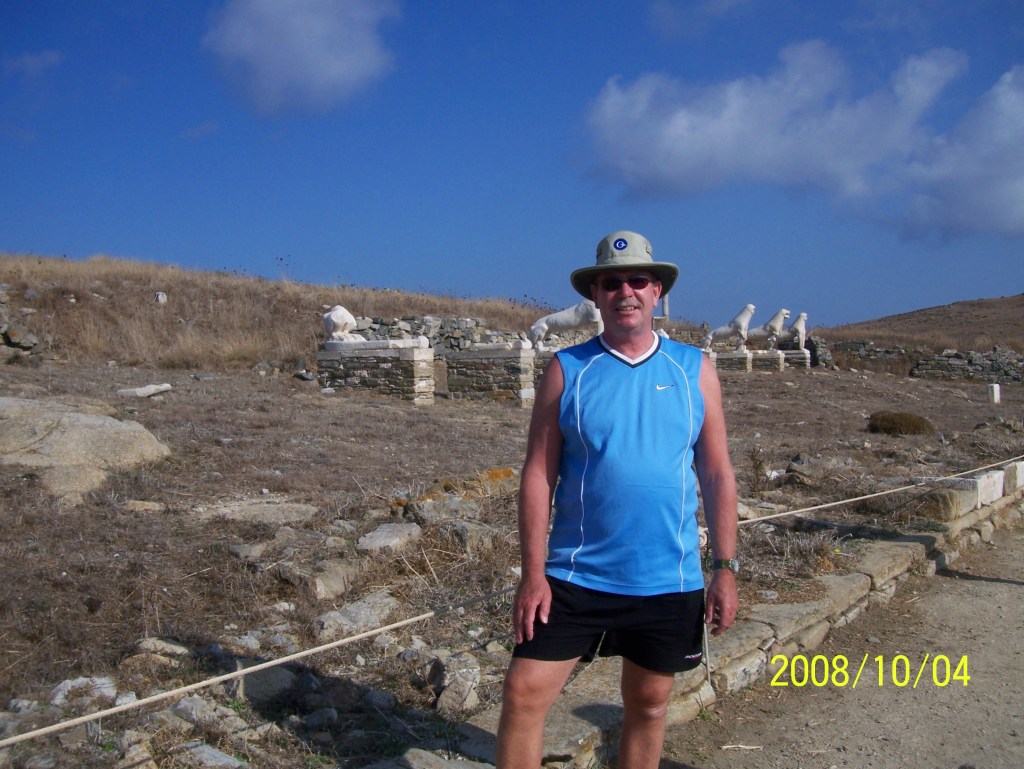
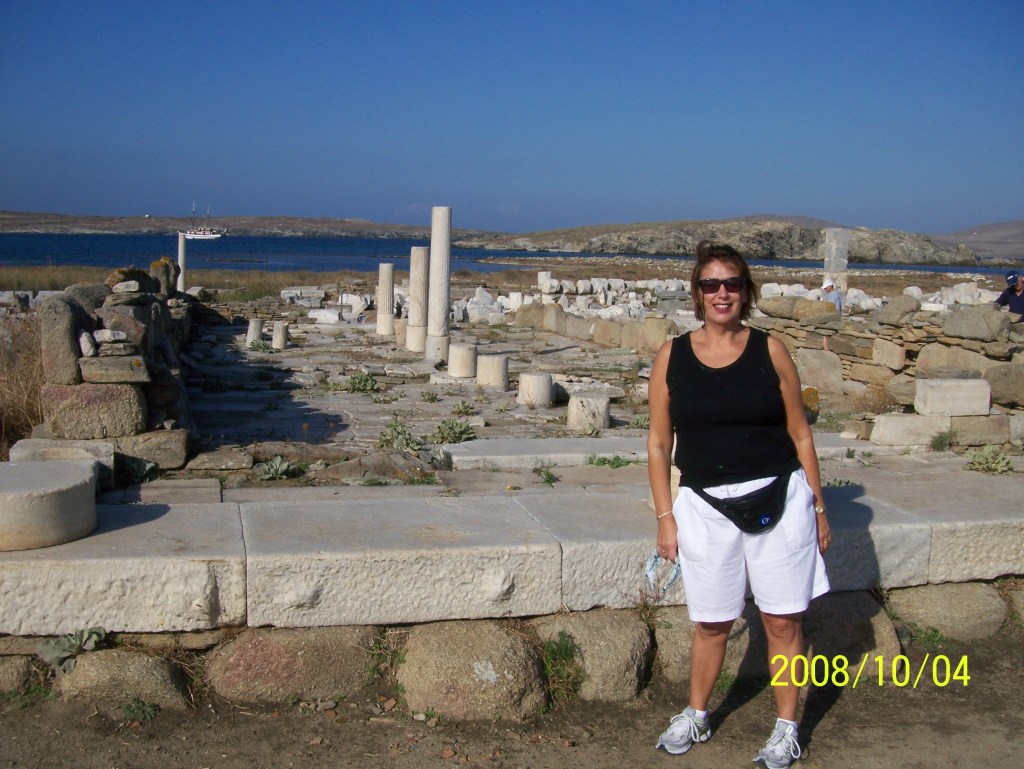
On a perfect Aegean Sea morning our small ship dropped anchor and we were tendered in to the ancient island of Delos. I think larger ships would not have attempted such a delicate operation but perhaps so. Delos is one of the most important historical, mythological and architectural sites in Greece. The Ionians arrived here in 1000 BC bringing the worship of Apollo. Uninhabited today, it is revered as the birthplace of Greek gods Apollo and Artemis.
It was a crash course to be shown these ancient ruins and instructed in Greek mythology. We had to watch our step though as it was very rough territory strewn with rocks. The highlight was the magnificent Terrace of the Lions, guarding the birthplace of Apollo, the God of archery, music, dance, truth, prophecy, sun, light, healing and poetry. Artemis was the Greek goddess of hunting, wild nature and chastity. She was the sister of Apollo and the daughter of Zeus and born here to their mother Leto.
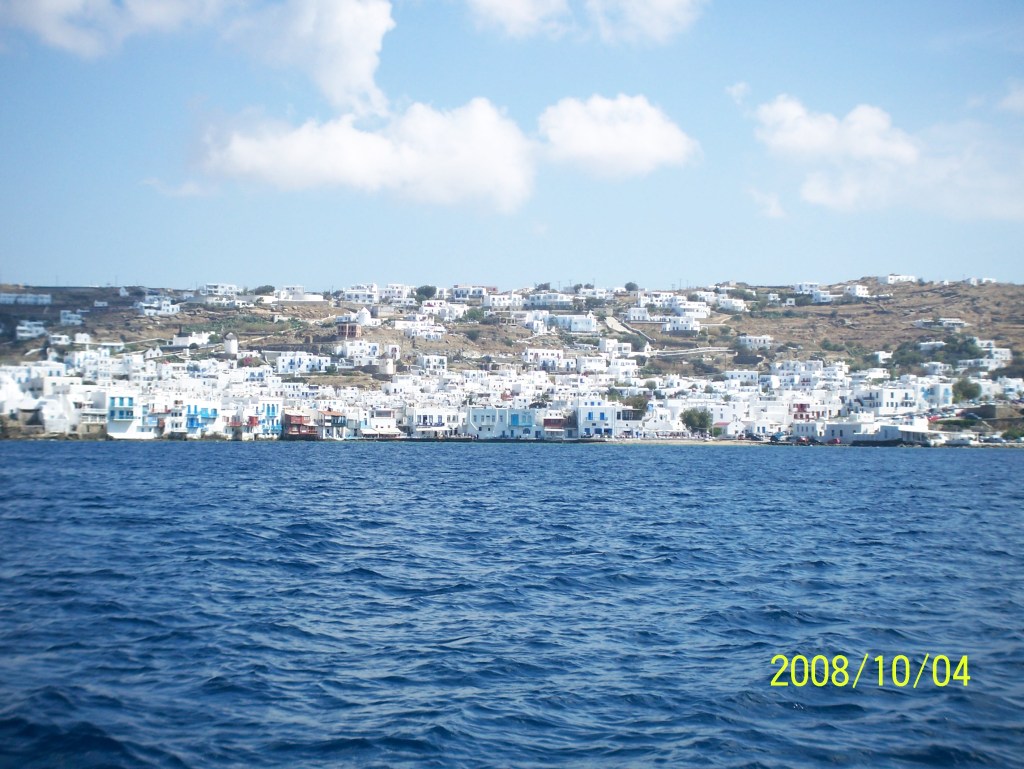
We headed back to the ship in time for lunch and then a short cruise to neigbouring Mykonos. We were now in the Cyclades group of Greek islands known for their beaches and whitewashed clifftop villages. Mykonos is dry and barren but its sandy beaches and dynamic nightlife make the island one of the most popular in the Cyclades. It was under Venetian rule from 1207 but eventually flourished as a self-sufficient society.
Mykonos
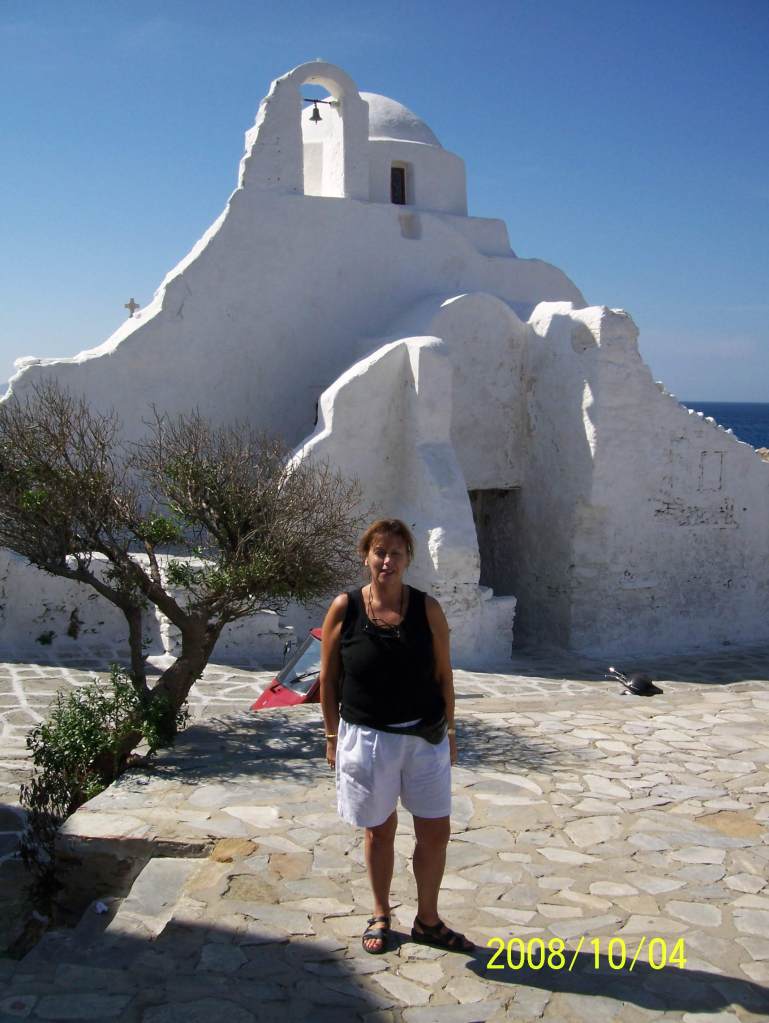
Known as the glitziest island in Greece, we were indeed in for a beautiful afternoon wandering around the intricate shopping streets, the waterfront bars and restaurants and hitting the town beach, all within easy walking distance.
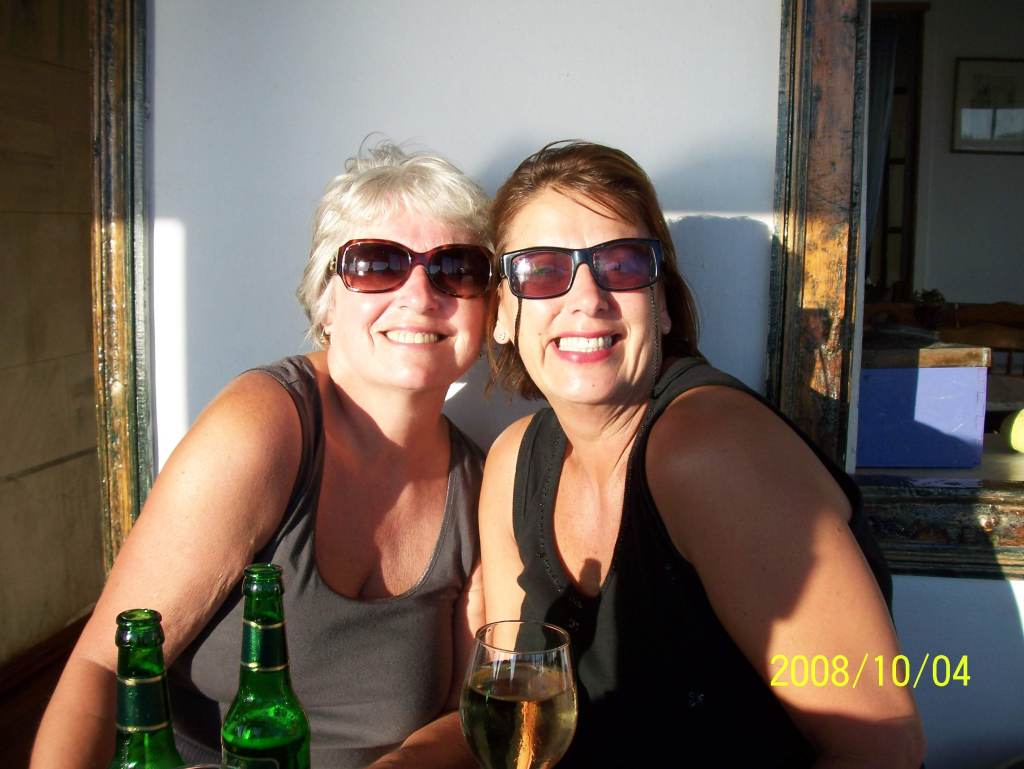
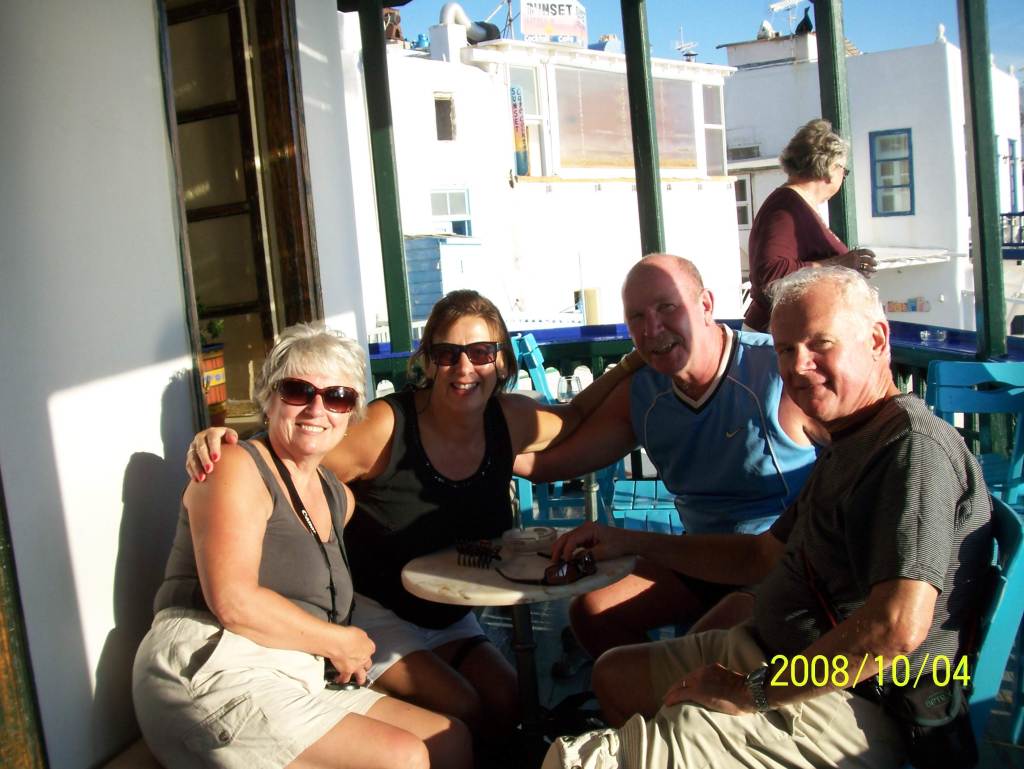
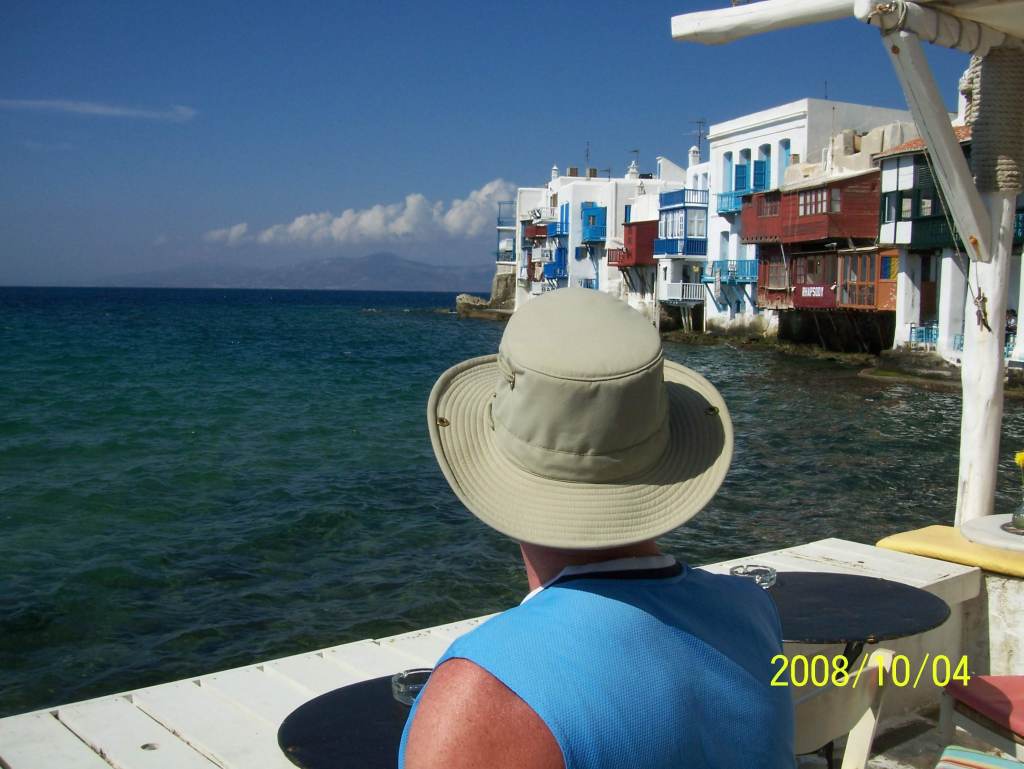
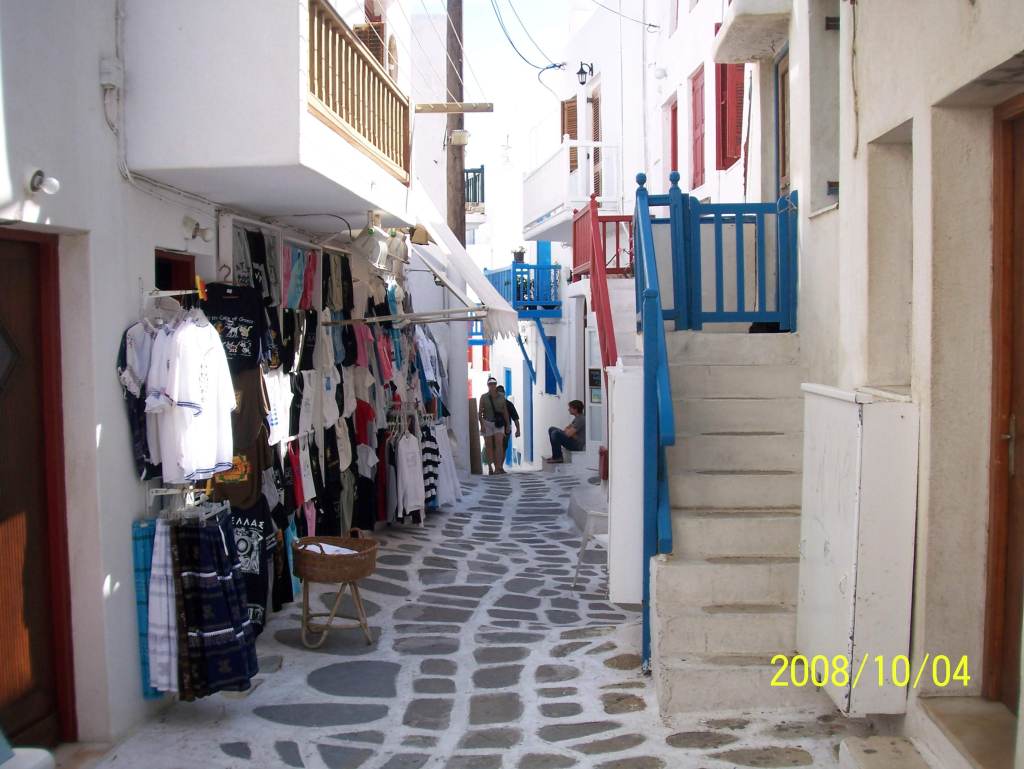
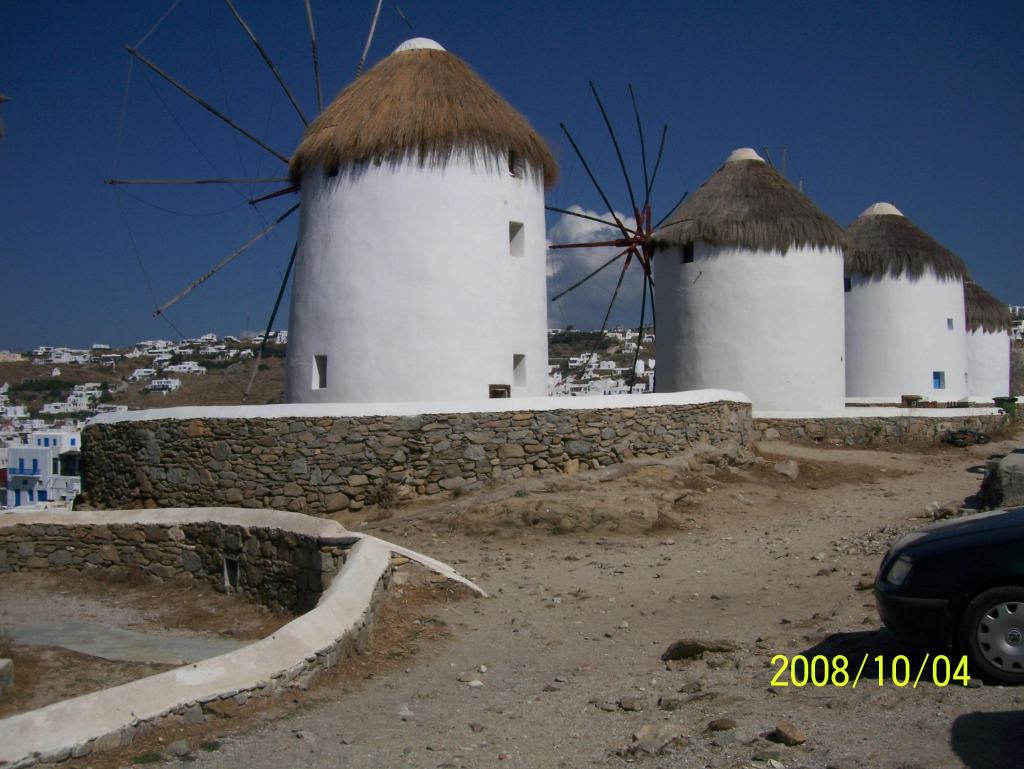
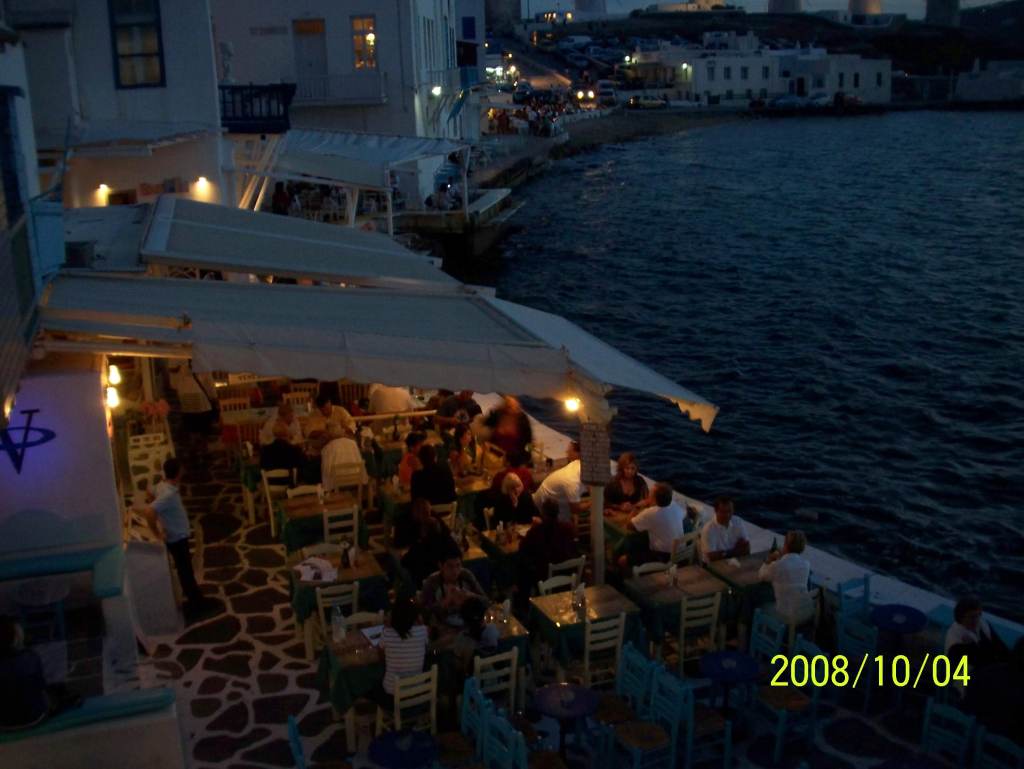
Mykonos Town is a tangle of dazzling white alleys and cube-shaped houses. It was purposely built this way to defy the wind and pirates. One can easily get lost in the maze of narrow streets, shops and colourful bars and restaurants. It was truly the quintessential Greek island. We enjoyed some beach time with friends Judy and Bruce, visited the Folk Museum, saw the still working 16th century windmill and of course had a beer or two in “little Venice”, the colourful bar area overhanging the sea.
Truly a gorgeous place to visit this Mykonos, we would love to come back someday and stay awhile.
Artemis is one of the most venerated of Greek god’s. Her temple was one of the Seven Wonders of the Ancient world whose ruins are in Ephesus. She vowed to remain a virgin and help mothers bare the pain of childhood. She also was good with bow and arrow and became the goddess Diana in Roman times.
A famous myth about her according to Lamar Ronald Lacey’s The Myth of Aktaion: Literary and Iconographic Studies, is that Actaeon was the hunting companion of the goddess who, seeing her naked in her sacred spring, attempts to force himself on her. For this hubris, he is turned into a stag and devoured by his own hounds. However, in some surviving versions, Actaeon is a stranger who happens upon her. According to the Latin version of the story told by the Roman Ovid having accidentally seen Artemis (Diana) on Mount Cithaeron while she was bathing, he was changed by her into a stag, and pursued and killed by his fifty hounds. Different tellings also diverge in the hunter’s transgression, which is sometimes merely seeing the virgin goddess naked, sometimes boasting he is a better hunter than she.
Map courtesy Pinterest
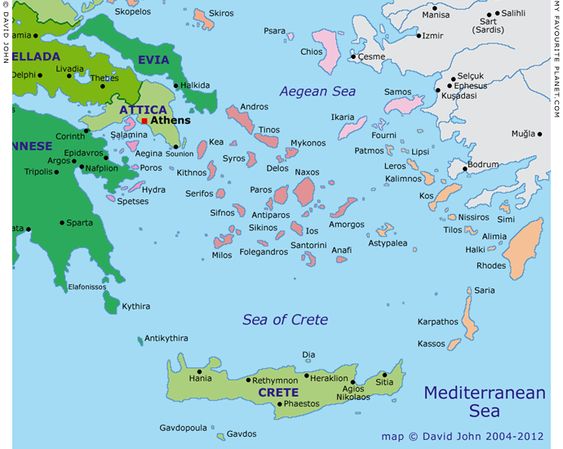
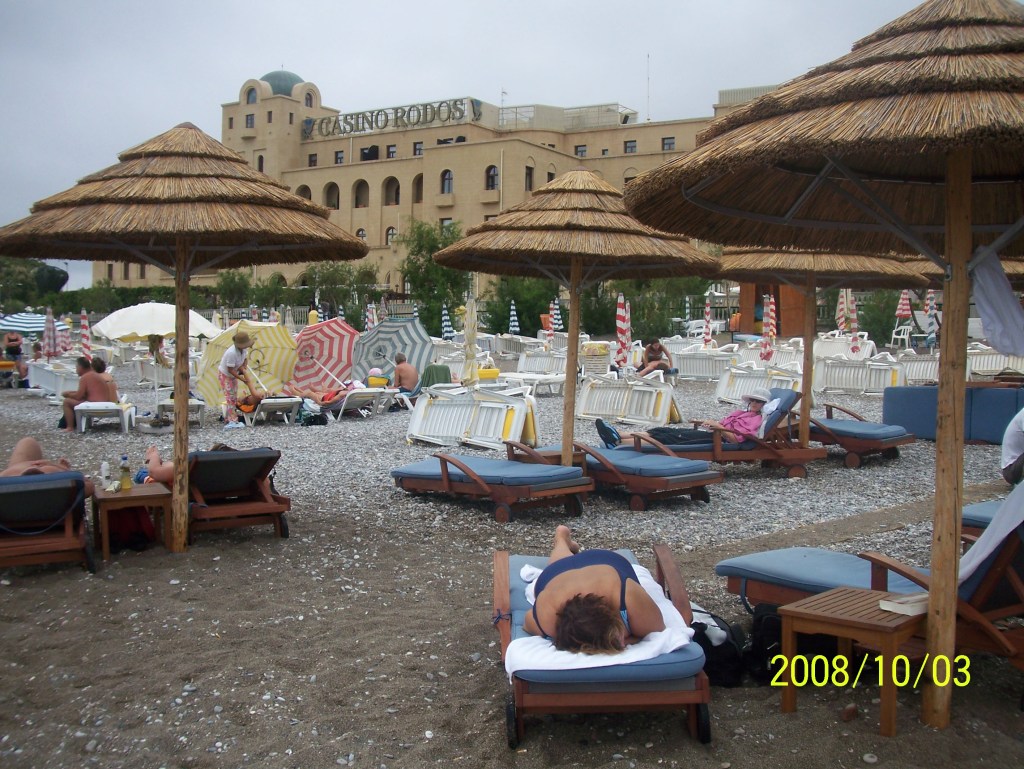
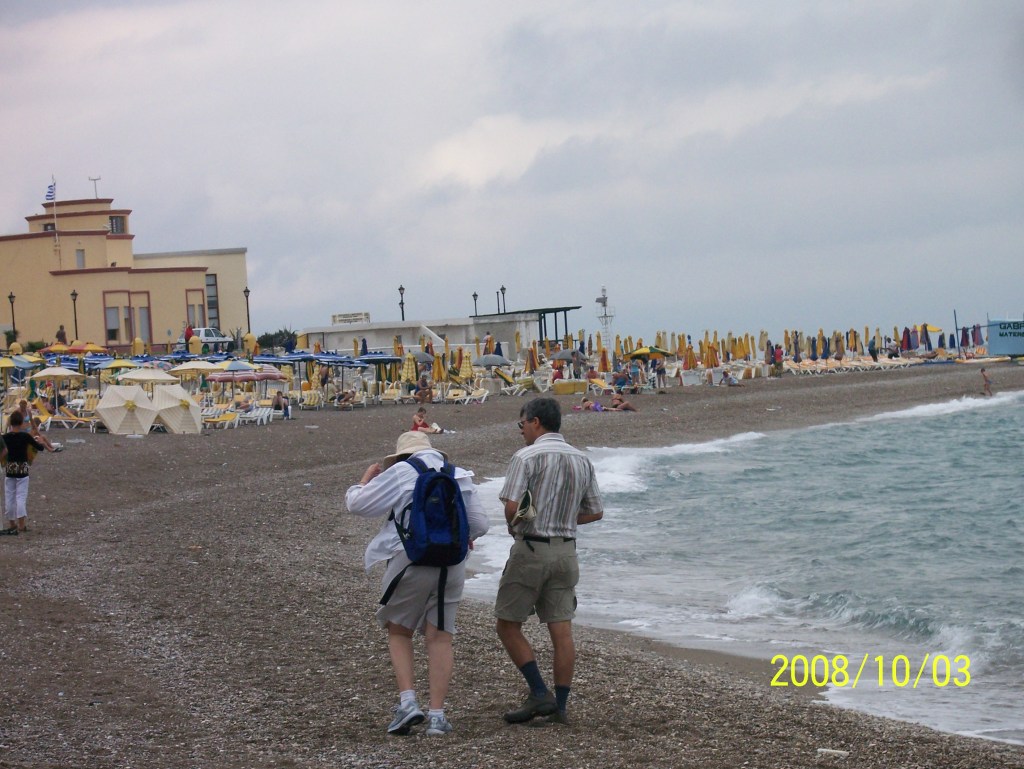
Rodos or Rhodes is the capital of the Dodecanese Islands, the farthest of the Greek islands from the mainland. It is a rather large island second only to Crete in size. It was an important centre in the 5th to 3rd centuries BC. It was part of Roman and Byzantine empires before being conquered by the Knights of St. John in 1310. Fringed by sandy beaches, with good hiking and lively nightlife, Rhodes attracts thousands of tourists in normal circumstance years. There is no connection between Rhodes the island and the Oxford University Rhodes Scholarship which was established through the will of Cecil John Rhodes.
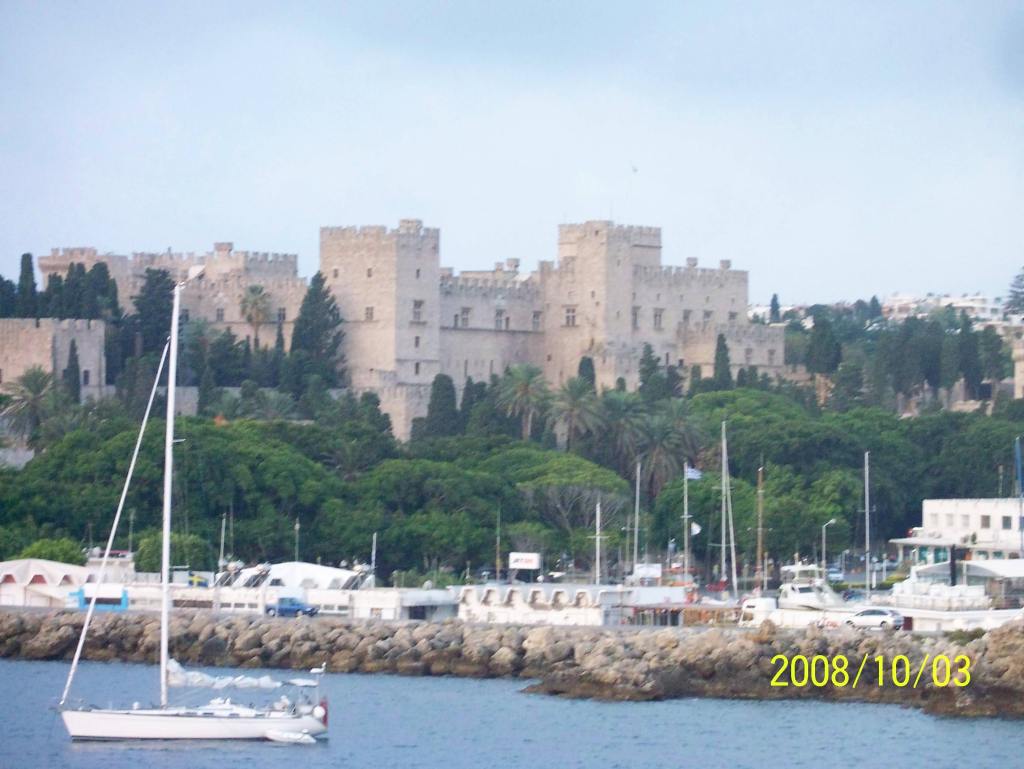
Putting in to Rhodes Town
We had time to see the Acropolis of Rhodes, the Palace of the Grand Masters, the Street of Knights and wander the streets of the old town. The famous Colossus of Rhodes statue was one of the seven wonders of the ancient world but collapsed during an earthquake in 226 BC.. It is no longer visible however constructing a new one has been envisioned.
Temple of Apollo
Acro means highest, topmost, or farthest and polis means city. In ancient Greece, an acropolis was a settlement, especially a citadel built on a high hill with steep sides which provided a good defensive position. We toured around the site with our guide but after having seen Ephesus the day before, it was hard to hold our interest for long.
Friends Glenn and Betty
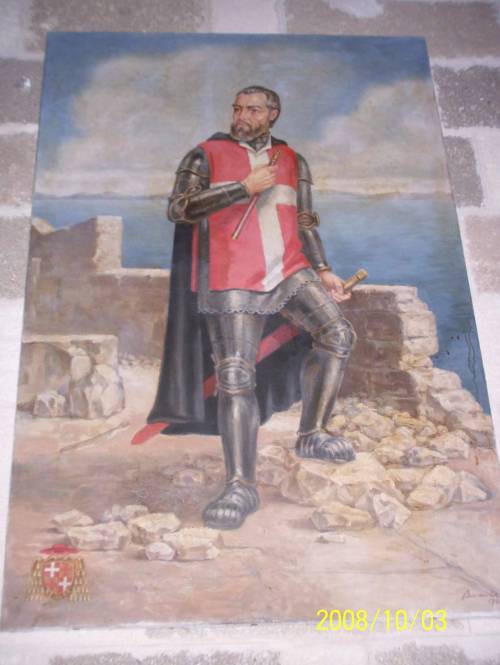
The Palace of the Grand Masters was the highlight. Founded by the Knights of St John also known as the Knights Hospitaller, the Knights of Rhodes and the Knights of Malta. This order was founded around 1099 in Jerusalem to provide care for poor or injured pilgrims coming to the Holy Land. It is named after St John the Baptist. The order was also present for pilgrims during the middle ages on Spain’s Camino de Santiago after taking over from the Knights Templar. Several organizations continue the Hospitaller tradition today such as the Sovereign Military Order of Malta.
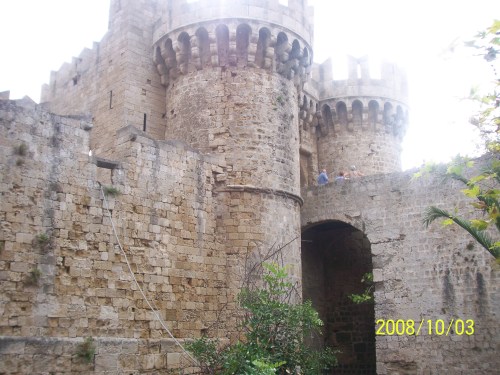
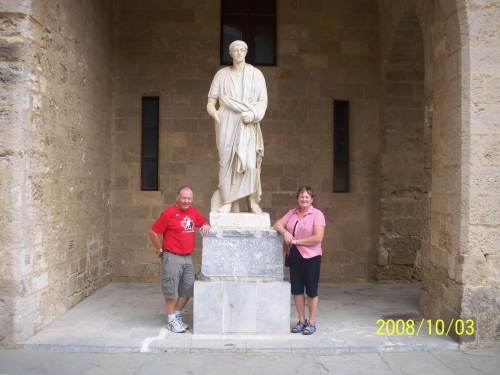
The Palace of the Grand Masters had been a fortress but became the knights administration centre and home of their Grand Master. It is one of the few examples of a gothic architecture in Greece. We enjoyed touring its insides and out and dreaming of the days of the chivalrous Knights and of their mysterious Grand Masters. Routed by the Ottoman Empire in 1522, eventually Italy took over their palace which served as a holiday home for Benito Mussolini. His name can be seen on a plaque inside. Italy transferred ownership of the Dodecanese Islands to Greece in 1948. Lots of fascinating history here under the dry warm sunshine.
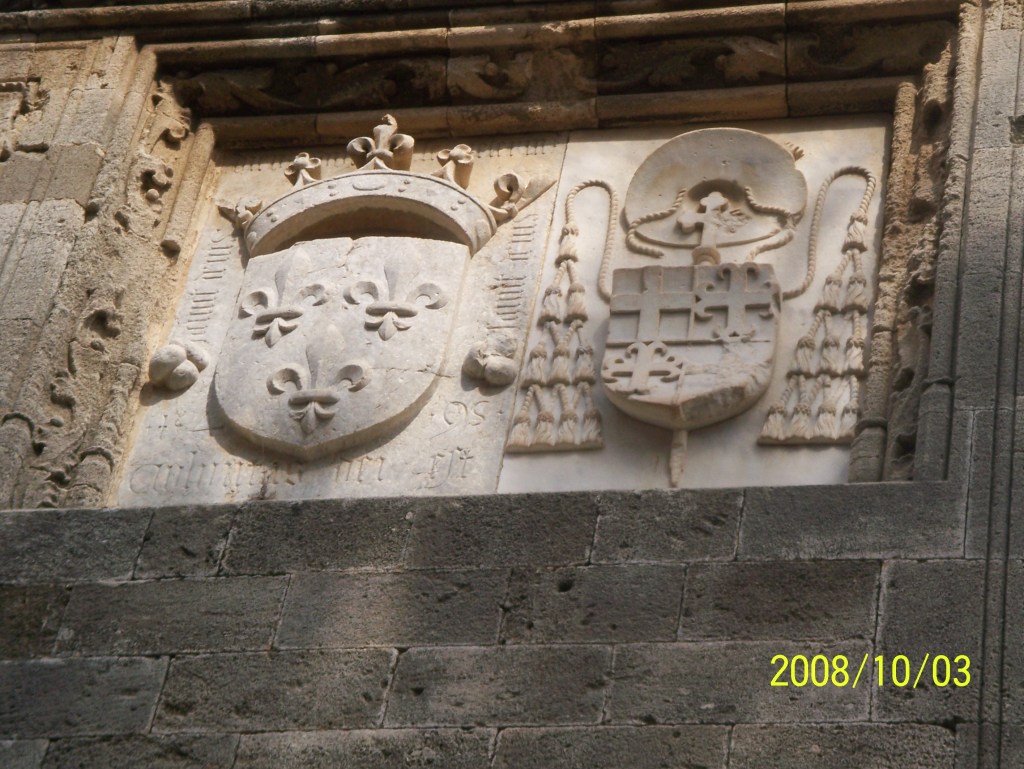
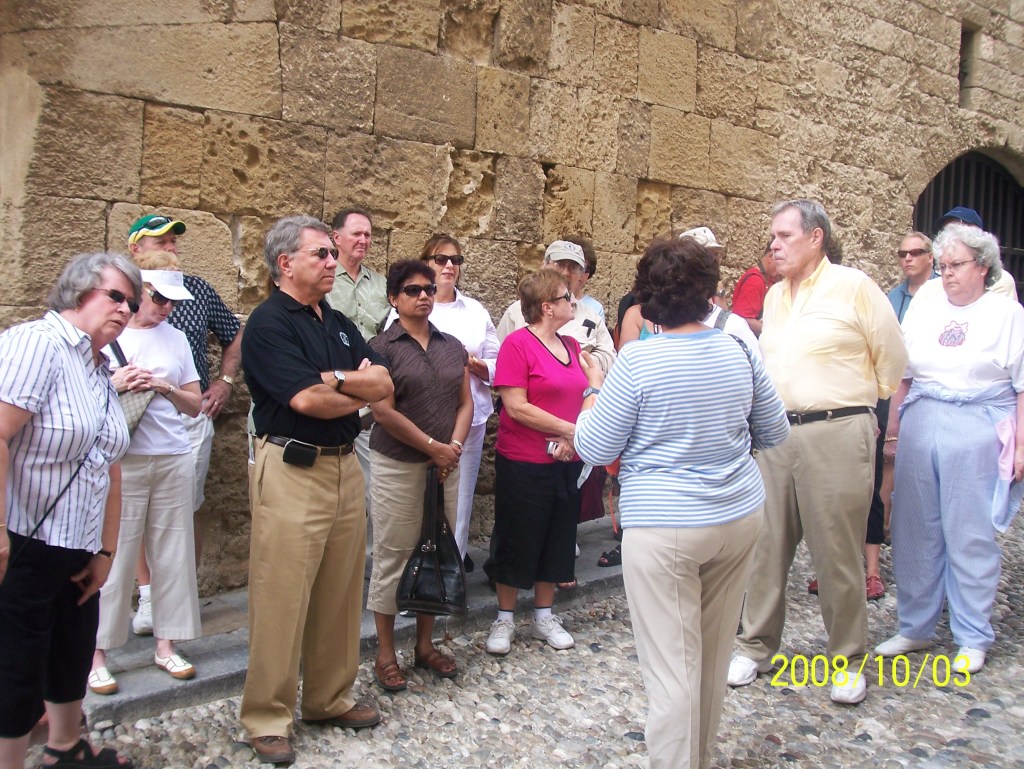
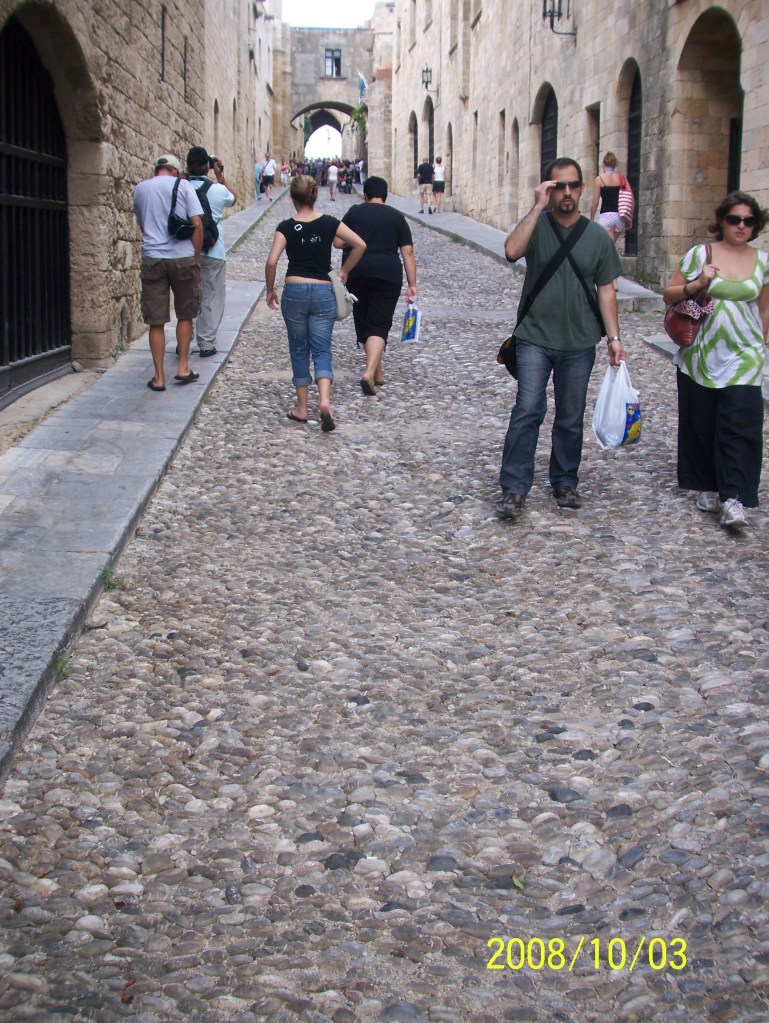
Next we sauntered down the Street of the Knights in the UNESCO World Heritage medieval town centre. Along this 640m long cobbled street, the Knights of St. John constructed 7 different inns in the early 16th century. These represented the 7 countries that the Knights had originated from. Each facade is decorated with emblems and details of the home country. Auberge de France is the most splendid example. These inns are still functional today.
It was soon time to head back to the Nautica. We had had another full day of sightseeing and were ready to relax over dinner and a drink.
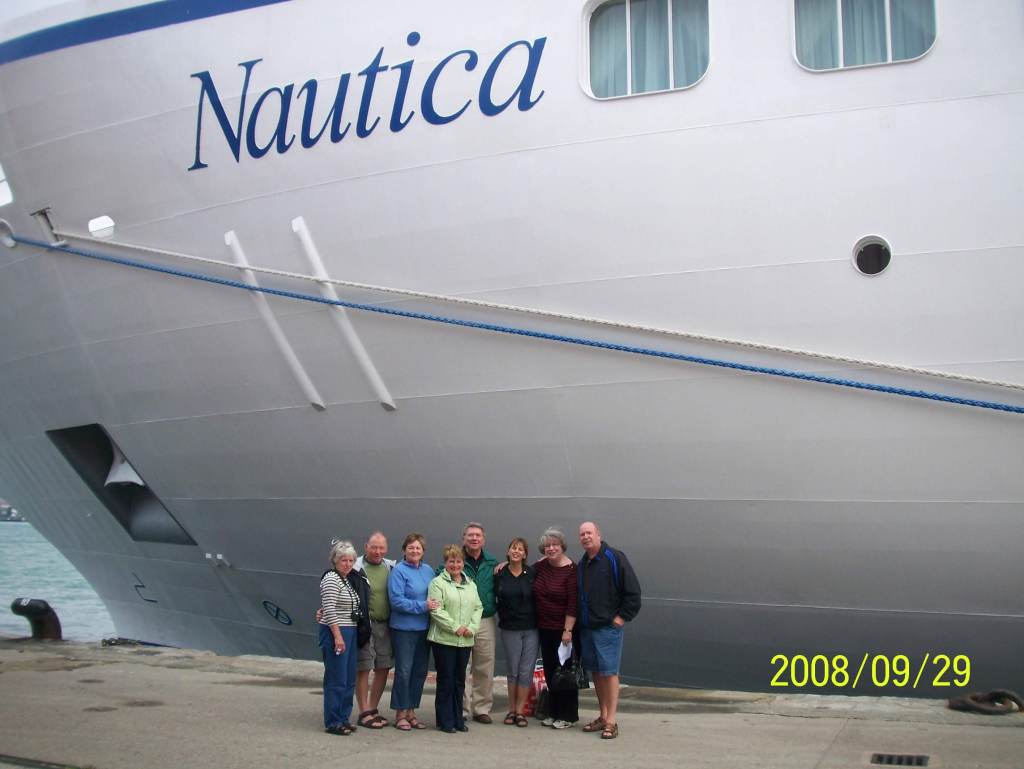
Friends Lydia and TonyThe Oceania Nautica
The newly envisioned Colossus of Rhodes bids us goodbye.
Resuming our Eastern Med voyage, nothing could prepare us for the glory that was to come in downtown Ephesus.
Before we get to that, a curious outcome, the Hagia Sophia Museum in Istanbul has just been reconverted to a Mosque. This is big news in Turkey as it is apparently being done to shore up political support for President Recep Tayyip Erdogan. Many do not think this a good idea. Living history for sure.
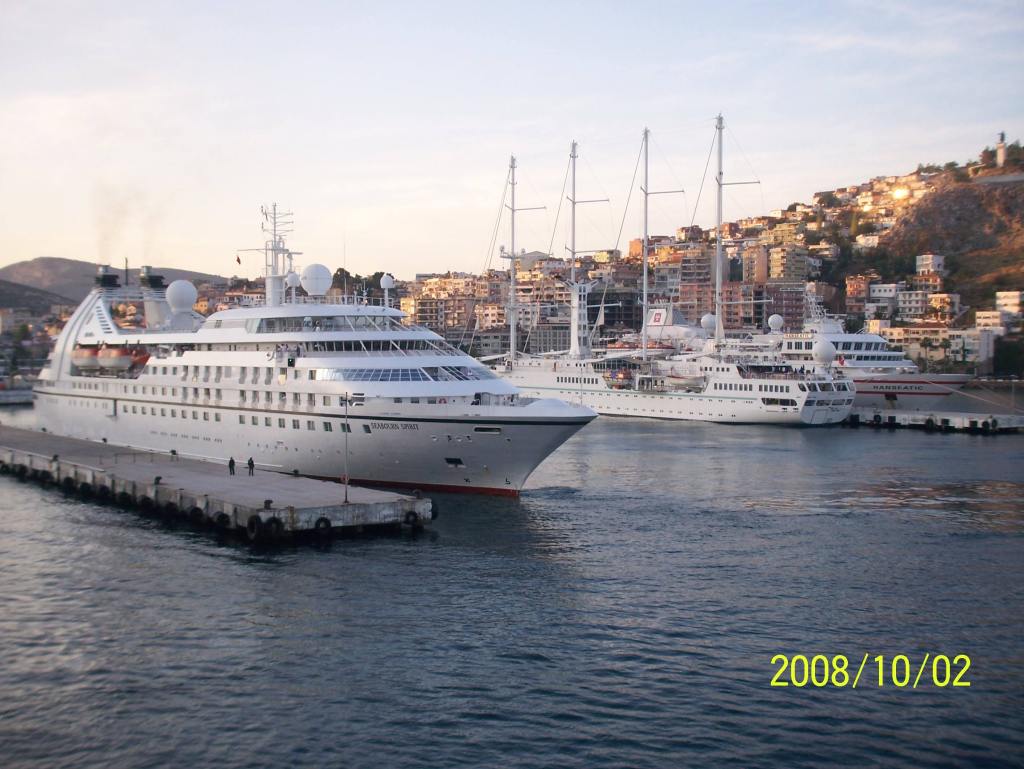
Our ship put into Kusadasi, Turkey on a perfect sunny day. We boarded a private tour bus for Ephesus, a 30 minute drive from the port. Yes Ephesus is the famous Greek city mentioned in the Bible many times in Saint Paul’s epistles. It was one of the ancient 7 churches of Asia and had come under Roman rule in 129 BC. The Christian Council of Ephesus was held there in the 5th century that confirmed the Nicene Creed and condemned Nestorius. Today it is a favorite tourist site. Its extensive antiquities are still being uncovered and lovingly restored.
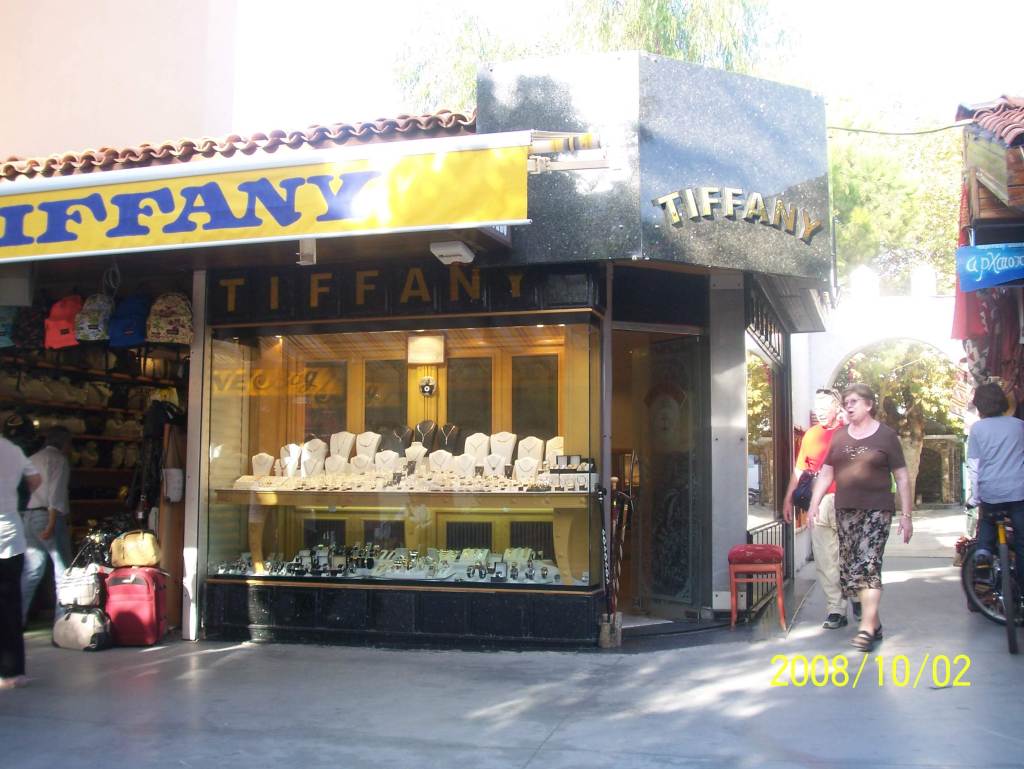
Was nice to see my name in the window!
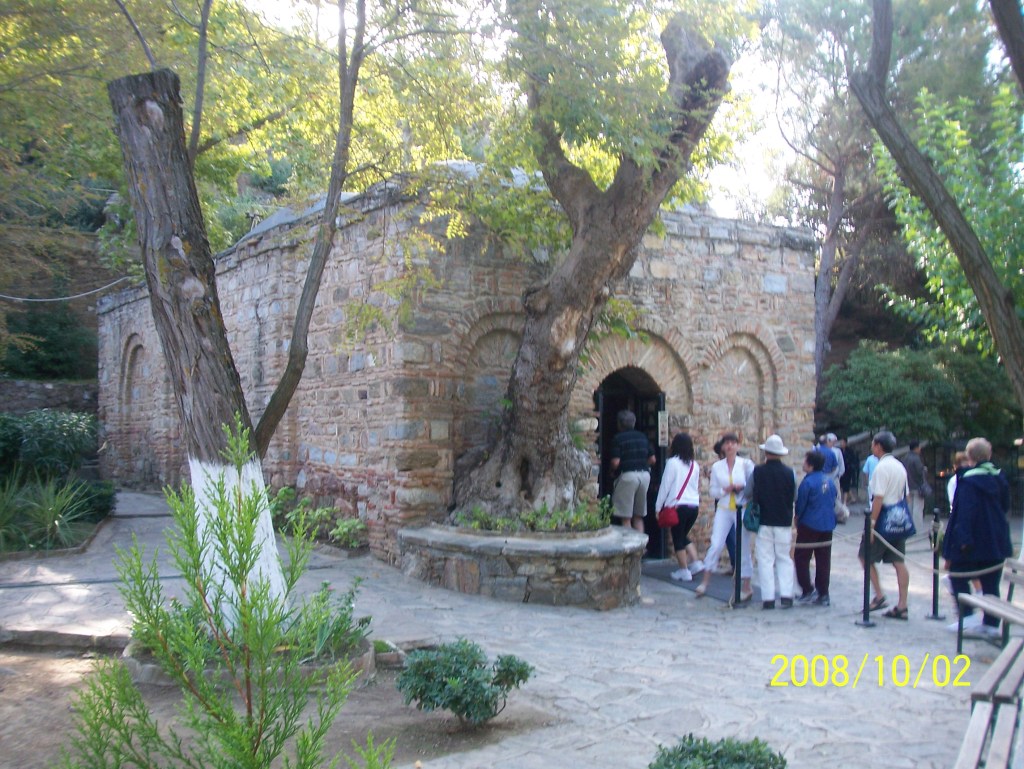
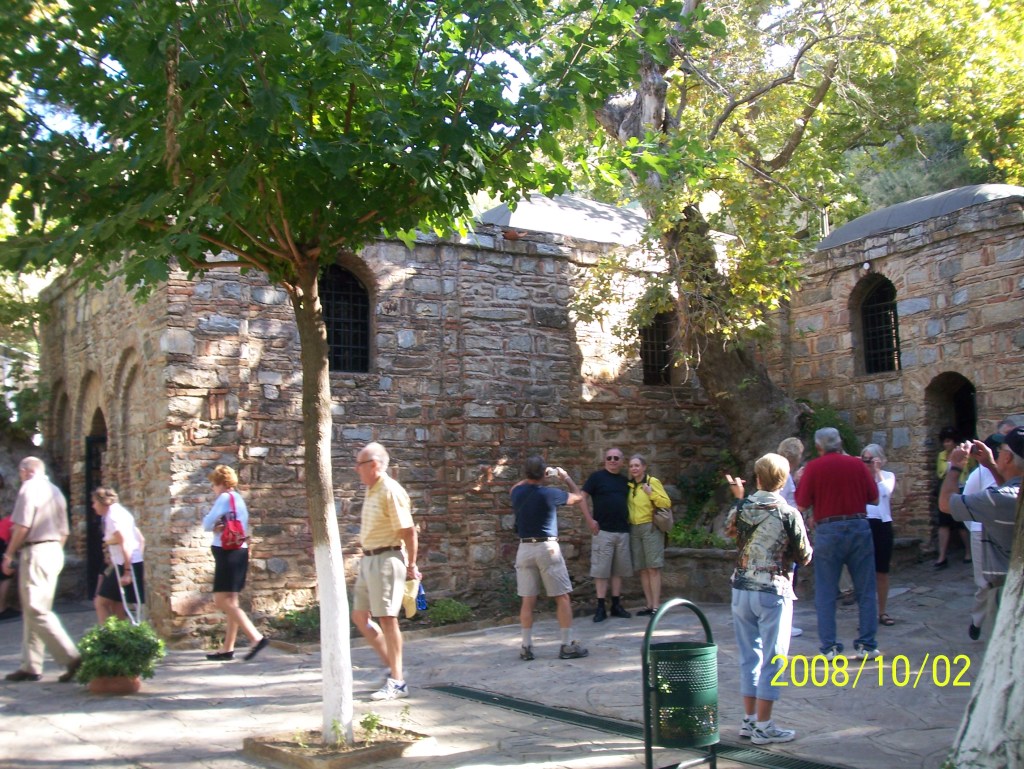
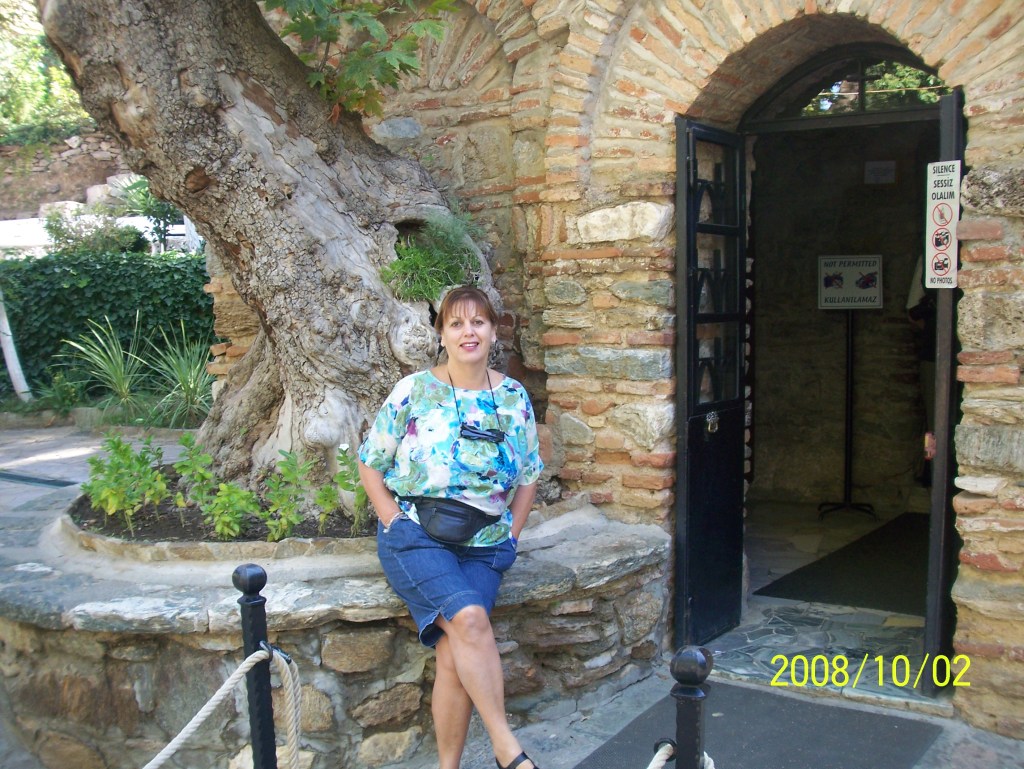
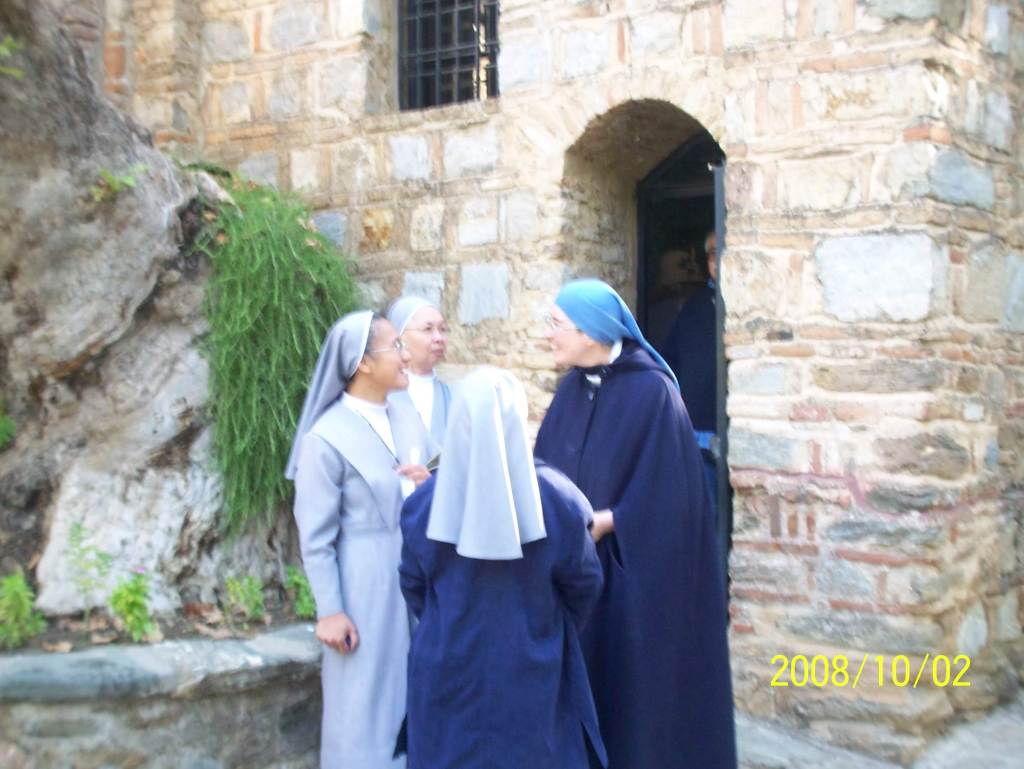
Our first stop was the House of the Virgin Mary. While not formerly recognized yet by the Catholic Church as verifiably authentic, pilgrims visit the shrine based on the belief that Mary was taken there by St. John to live out the rest of her days after her son Jesus’ resurrection and ascension. As we were a group of Catholics, it was spiritually meaningful for us to visit this site and for each make a written prayerful wish and leave it on the wall with thousands of others.
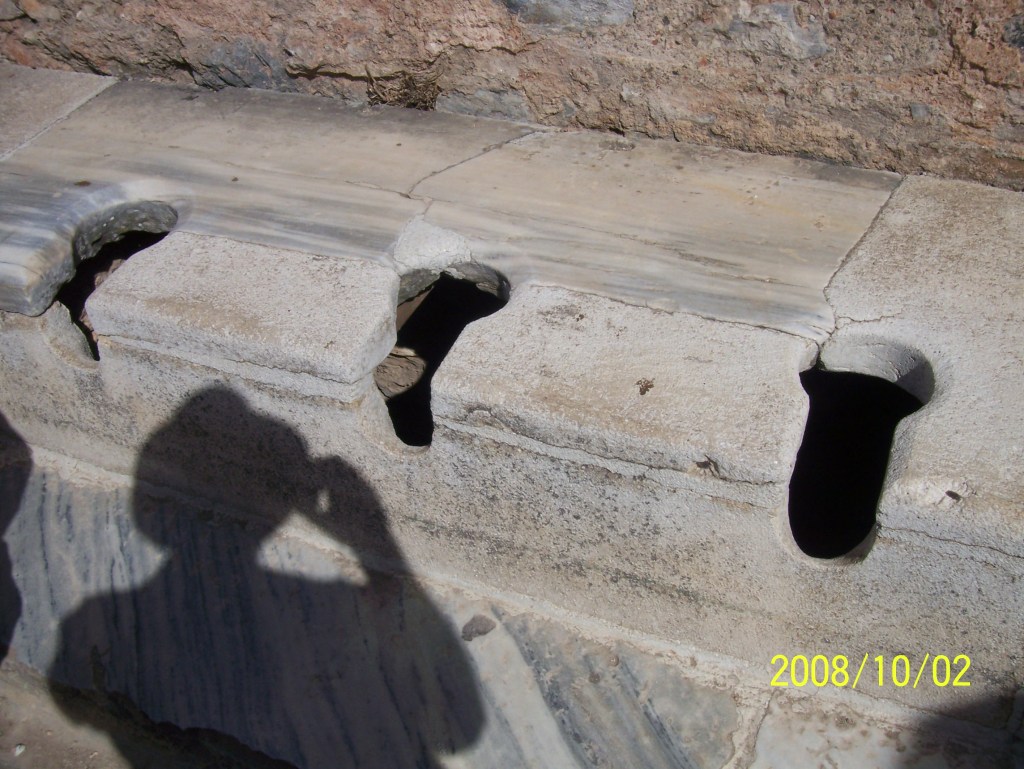
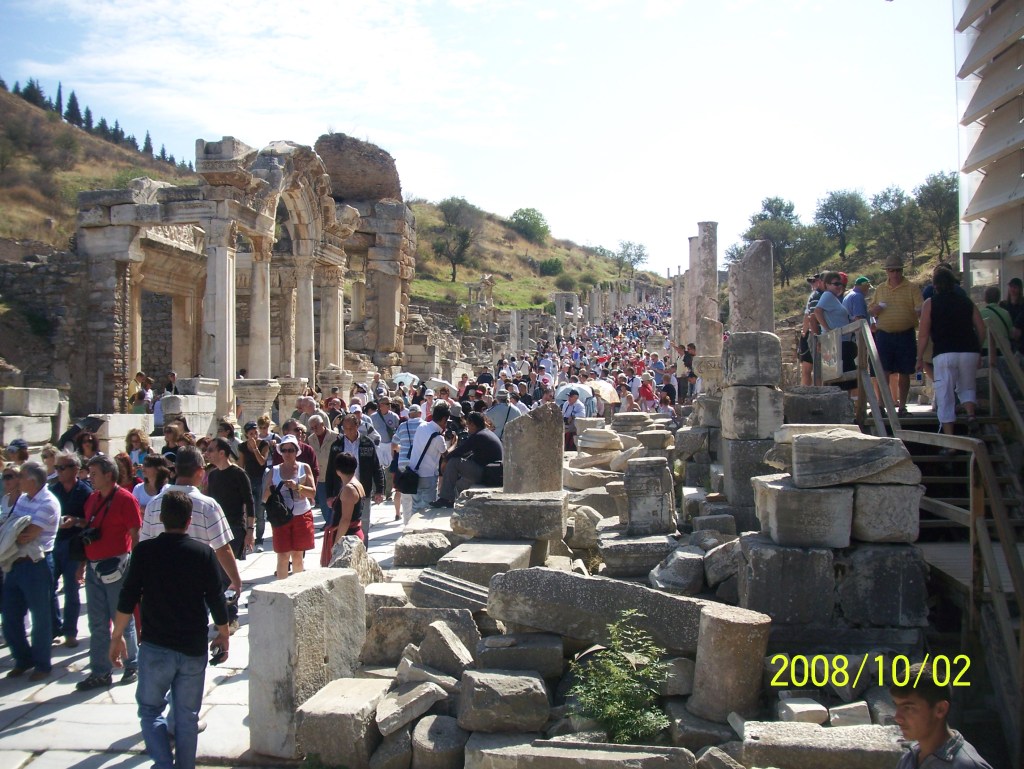
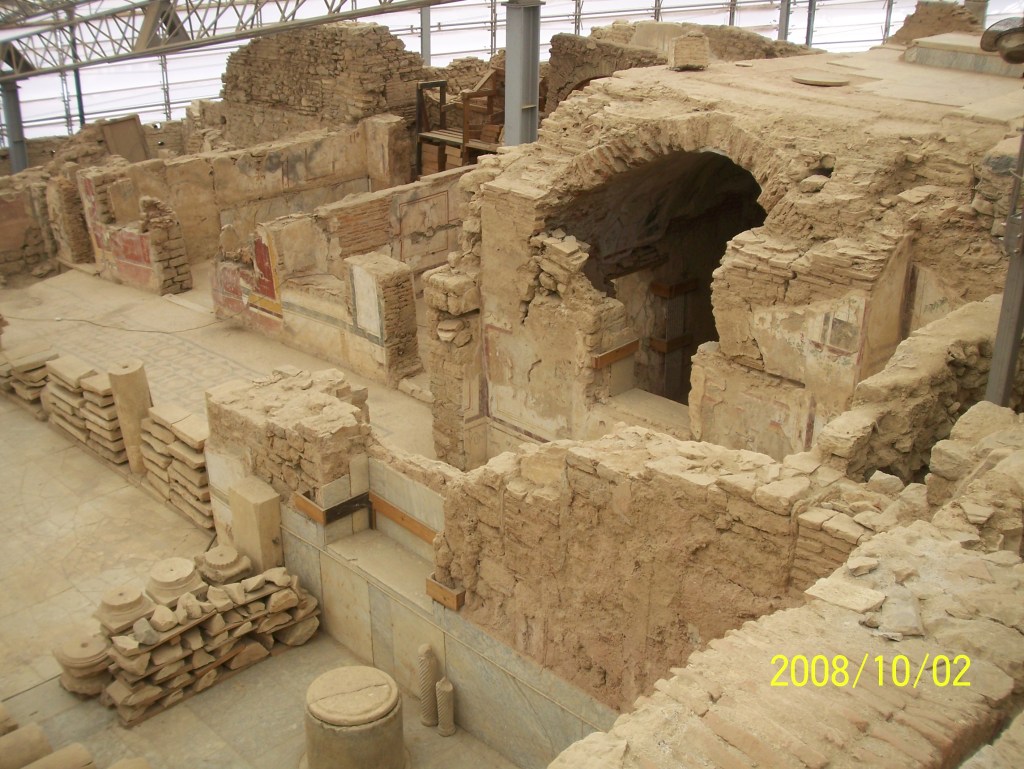
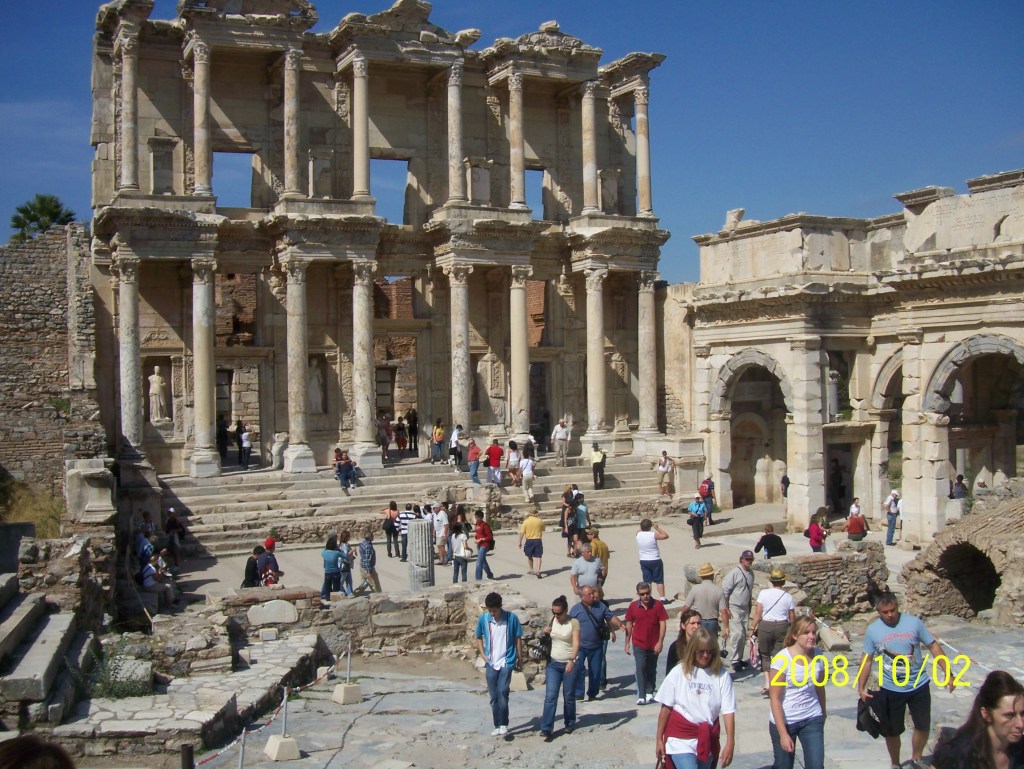
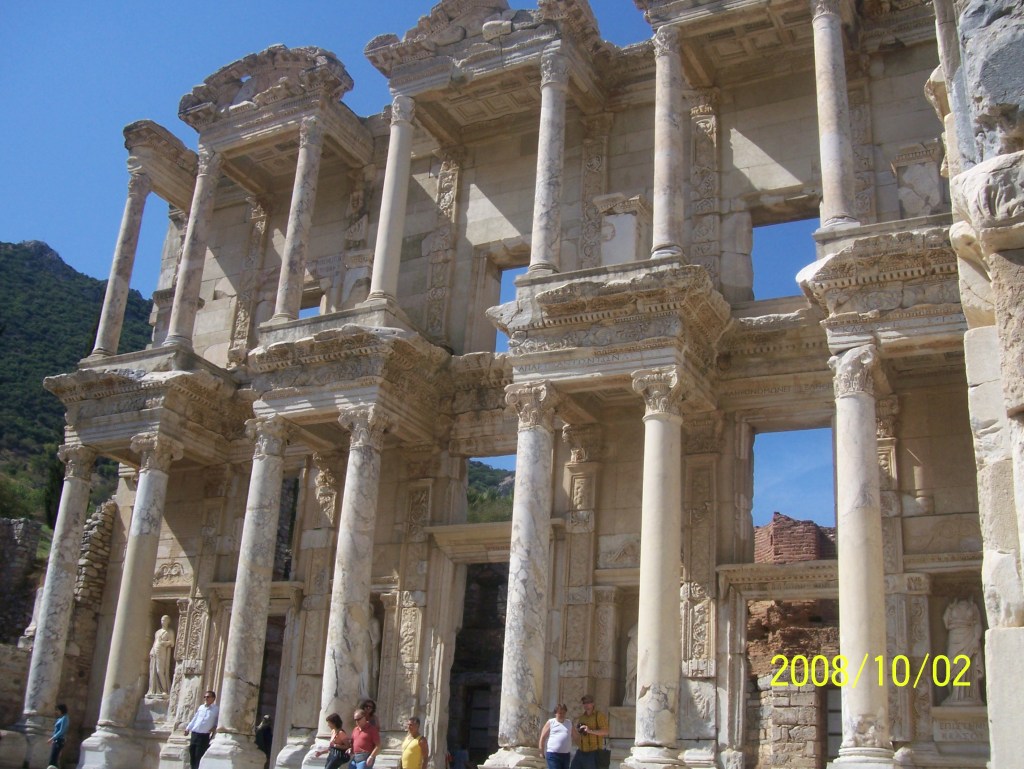
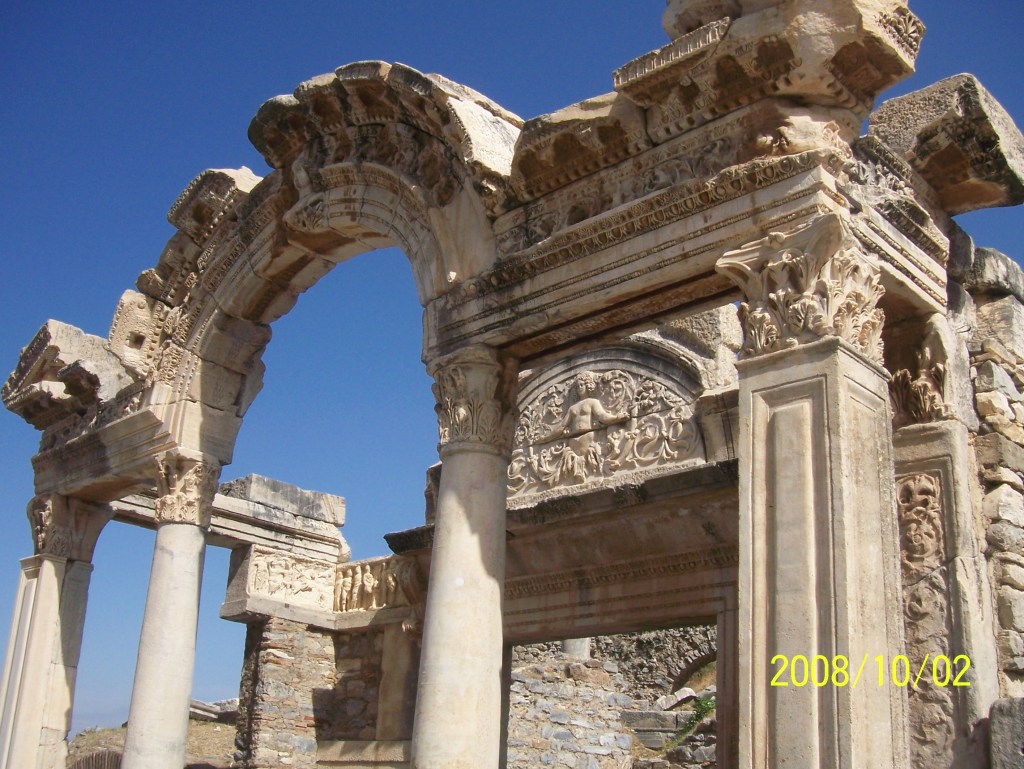
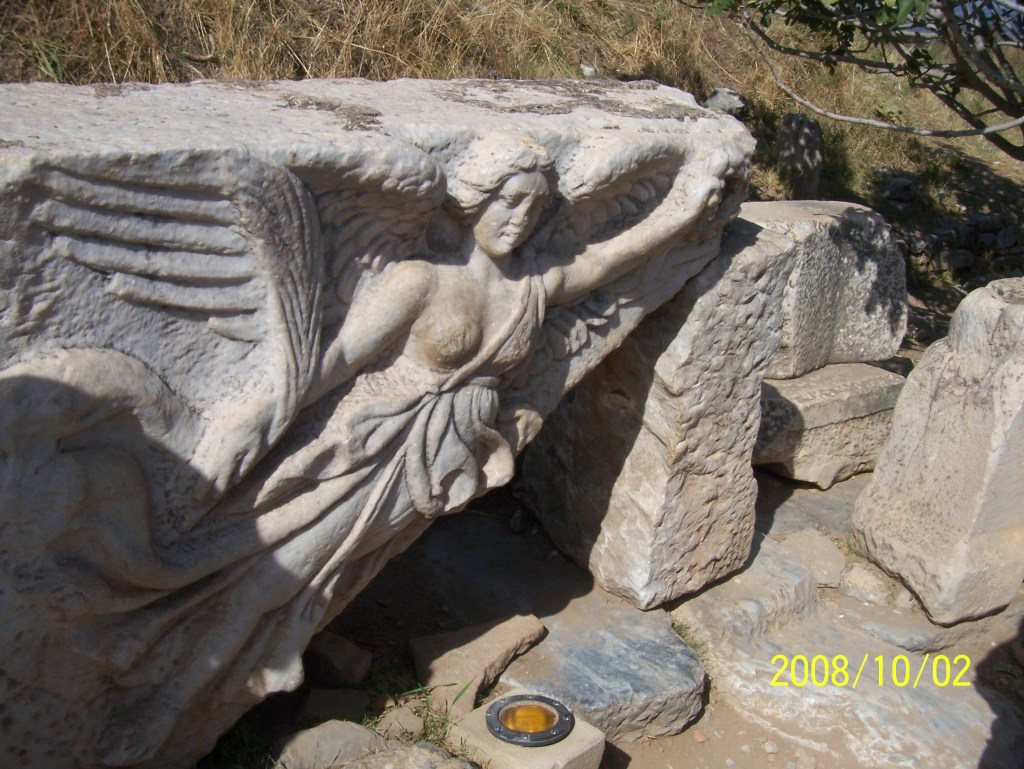
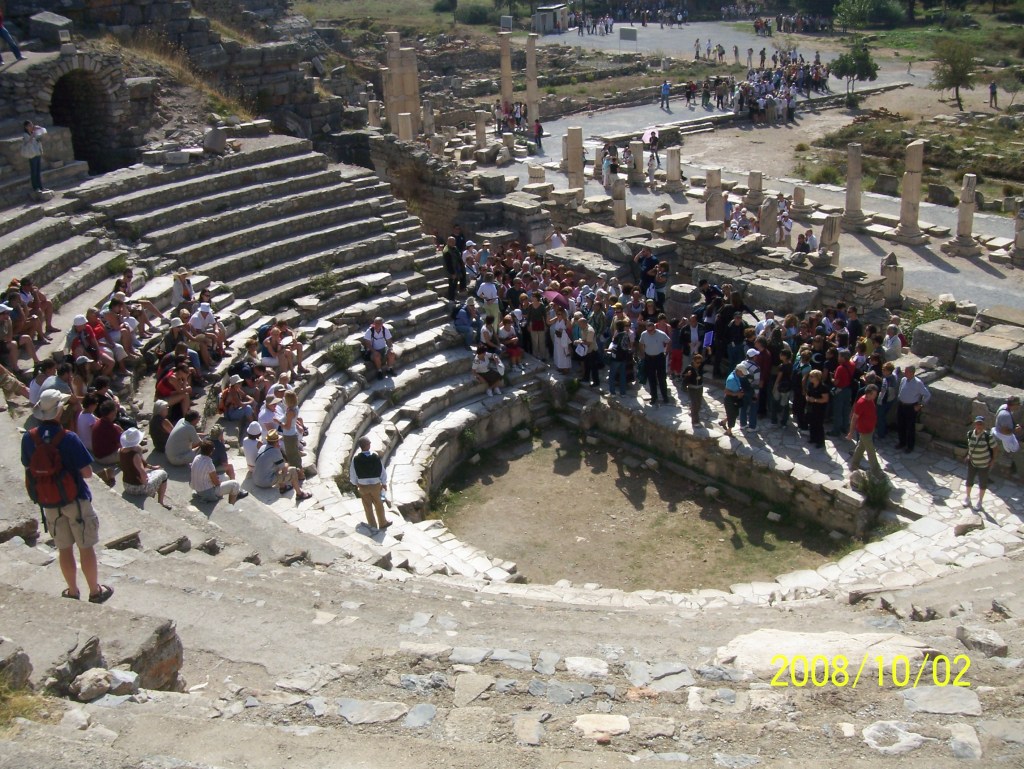
We then continued on to Ephesus which was very crowded. What an experience it was strolling down the main street of a Roman formerly Greek ancient city. There were dozens of buildings and monuments in good to excellent condition. They are constantly uncovering and restoring more. We marveled at the facade of the Library of Celsus and chuckled when our guide pointed out a tunnel running under the street to the brothel. We tried out the open air public toilets for size. We sat ourselves down in the huge open theatre and could hear the echo of Saint Paul preaching. Even though it was very busy, it was a beautiful marvelously maintained historic place to visit, to experience and to ponder about its mysteries. We will not soon forget Ephesus.
Tired, we headed back to Kusadasi for some shopping which was pretty good. In fact it was so good Dave decided to by a ring for Marie. We picked out a nice one and the proprietor said to come back in an hour or so and it would be ready after it was polished and adjusted. So Marie went back on board the Nautica and Dave wondered around a bit and then went back to the store for the ring. Well it wasn’t ready yet…. Not to worry. Dave waited and waited and finally it did come after servicing.
But now Dave had only 10 minutes to get back to the ship before its scheduled departure. Sprinting like O.J. Simpson in the Miami airport to the Hertz counter, he hurtled plant stands, dodged street vendor wagons as he bee lined it for the dock. Running onto the dock, the crew were just about to winch up the gangway when they saw him coming. They cheered him on with “Come on, you can make it!” just like in the ad. At last he jumped up onto the gangway just in time. A little too close for comfort but in the end we were happily reunited in time for happy hour. It was such a great day! Lol!
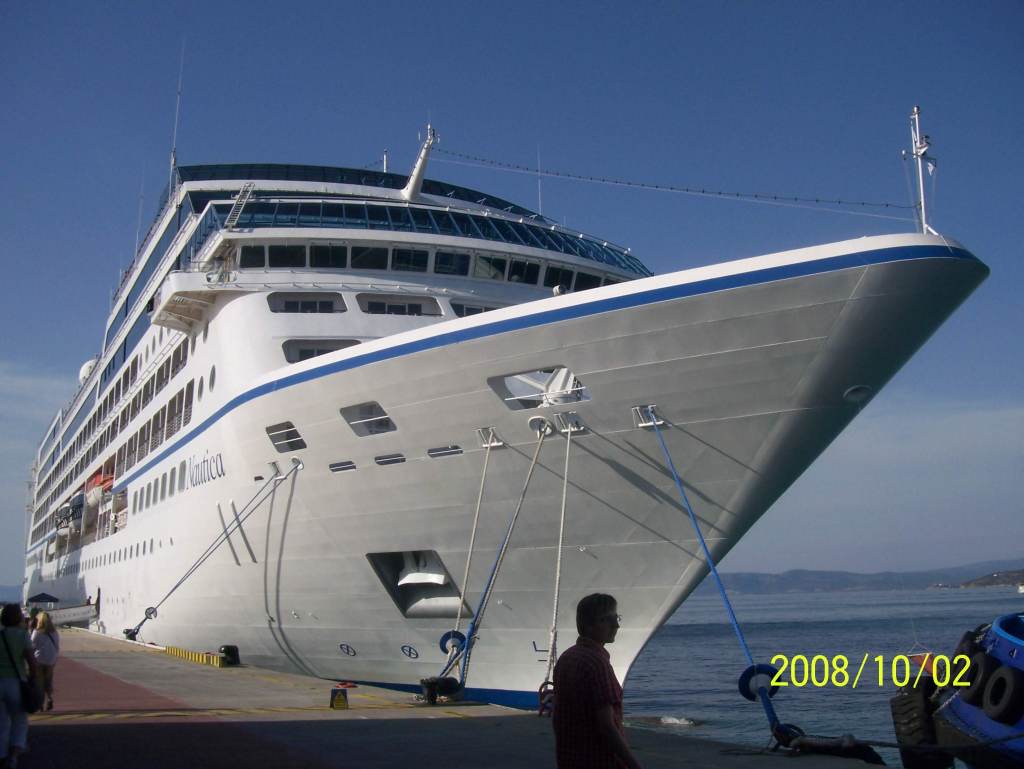
Our ship – the Oceania Nautica
Resuming our 2008 Eastern Med group cruise, after 4 days in Istanbul we boarded our ship the lovely Oceania Nautica. It is a smaller sized vessel with 684 passengers and 400 crew capacity. We deliberately chose a smaller ship since it can get into smaller ports easier and has a higher crew to passenger ratio. Oceania bills itself as an upscale cruise line with the best food at sea. Dave had listened to some podcasts where past passengers had raved about Oceania, so we decided to give them a try. We were not to be disappointed.
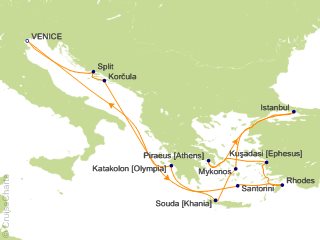
This is the approximate routing we were undertaking
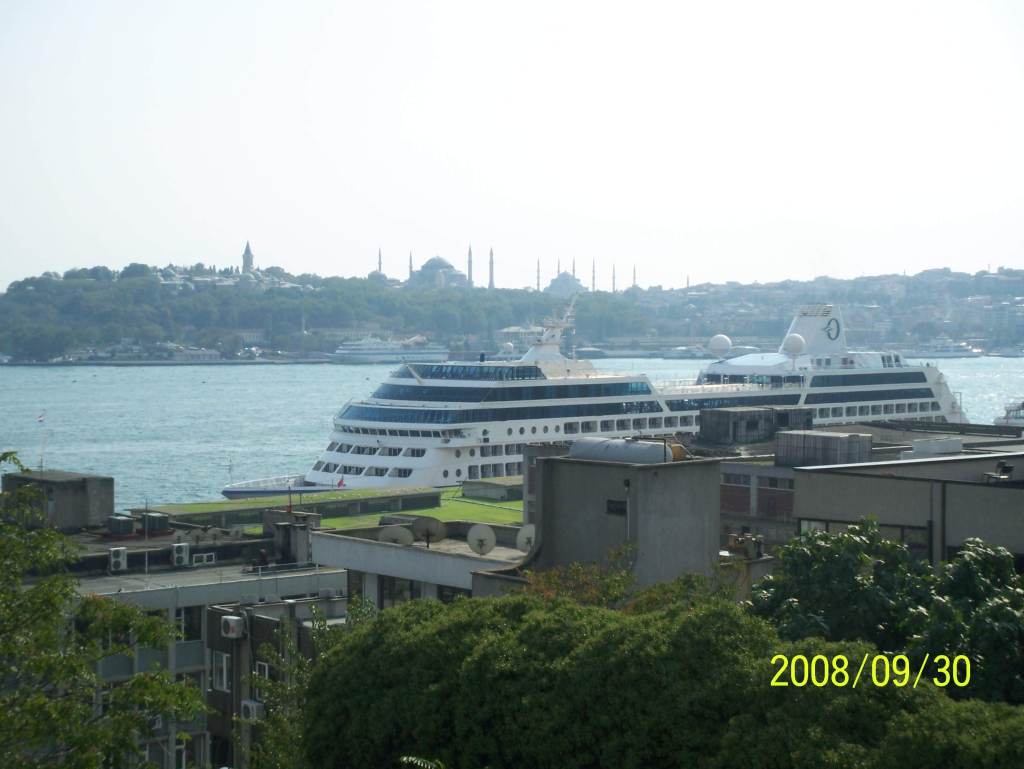
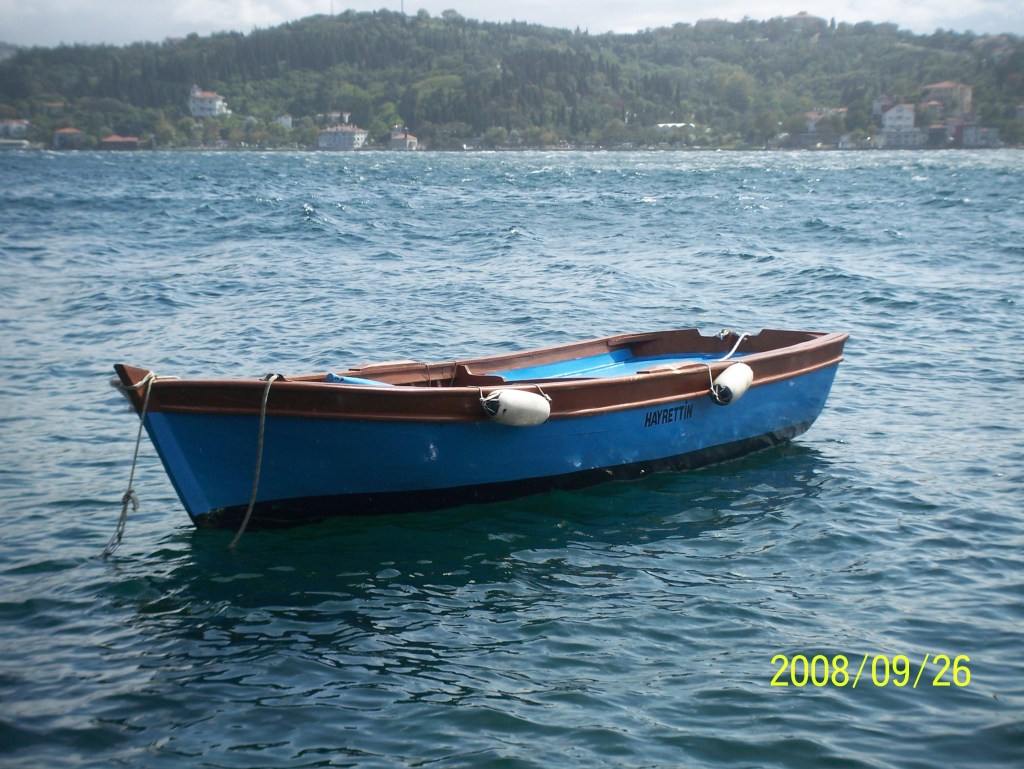
We spent one more night in Istanbul while settled into our balcony cabin on board Nautica. We were anxious to leave but spent the day doing more sightseeing near the dock. That evening we tucked into some of Oceania’s famous food including some great seafood, steak and a colourful desert. The next afternoon we headed out the Bosphorous and caught some memorable pics as we departed Istanbul.
Galata Tower or Tower of ChristOur small ship
Blue Mosque left, Hagia Sophia right
One our group was a military history buff and has been raving about the need to see the monument to the WW I Gallipoli Campaign near the entrance to the Dardanelles, that narrow straight which connects the Aegean Sea to the Sea of Marmora. Unfortunately we were to pass this area in the middle of the night. We nevertheless set our watches and rose about 3:30 AM, the predicted time of passing. Incredibly, I think I saw the monument and snapped the poor quality picture below. We would have liked to visit the battlefields while in Istanbul but did not have the time to do this.
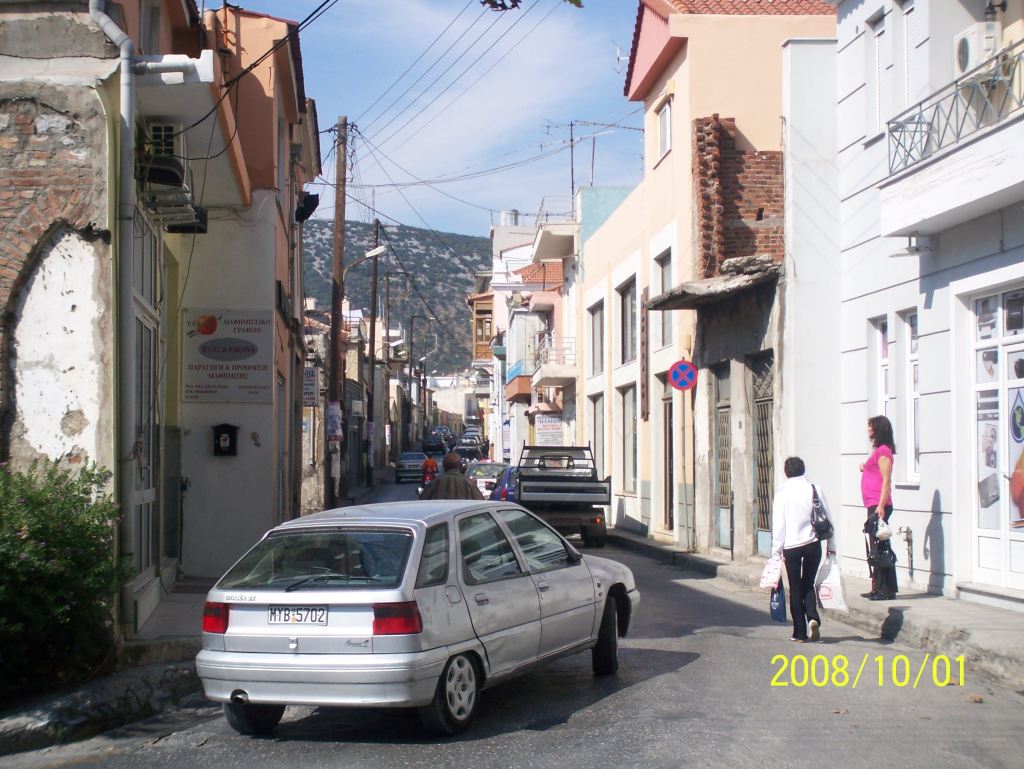
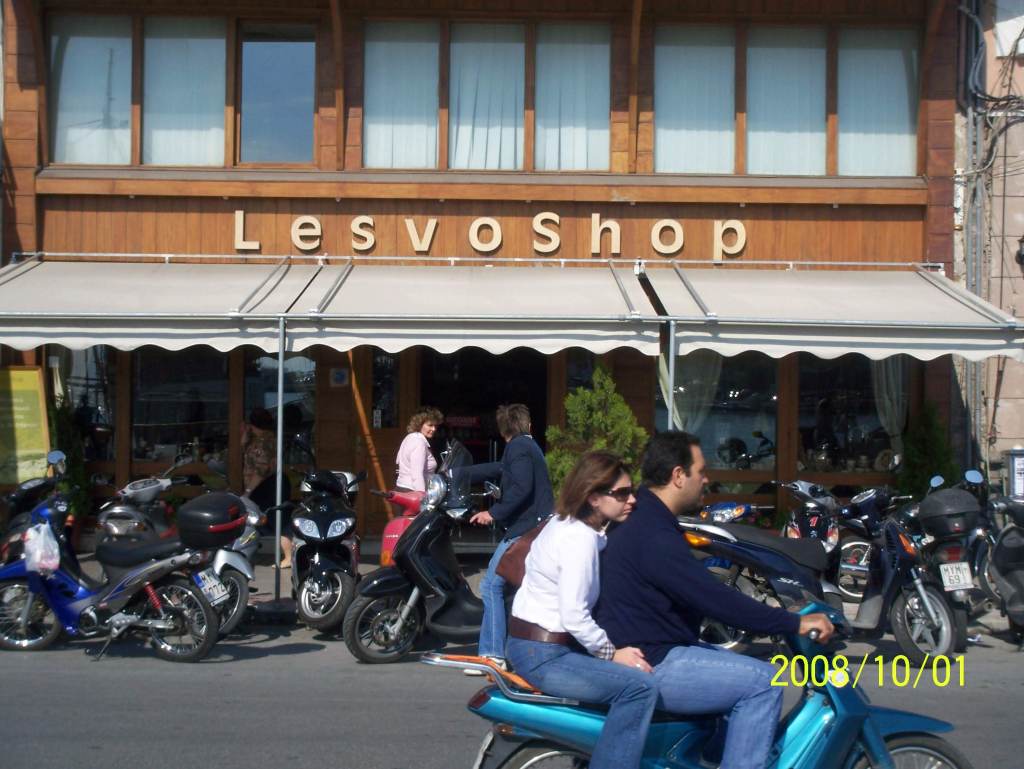
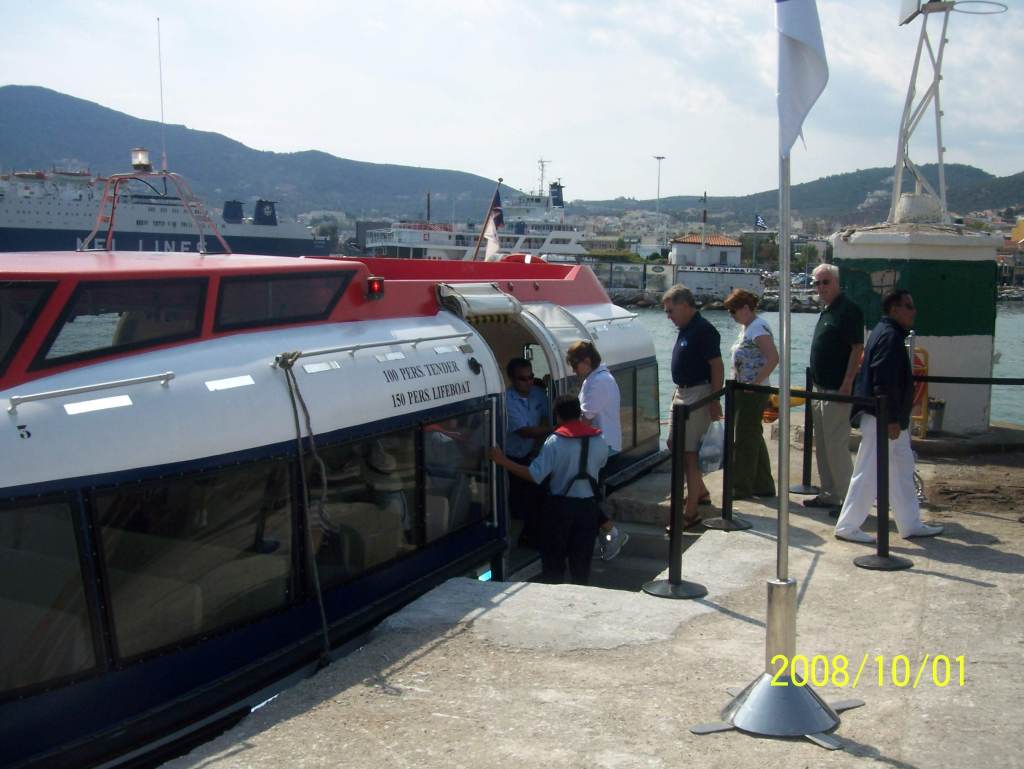
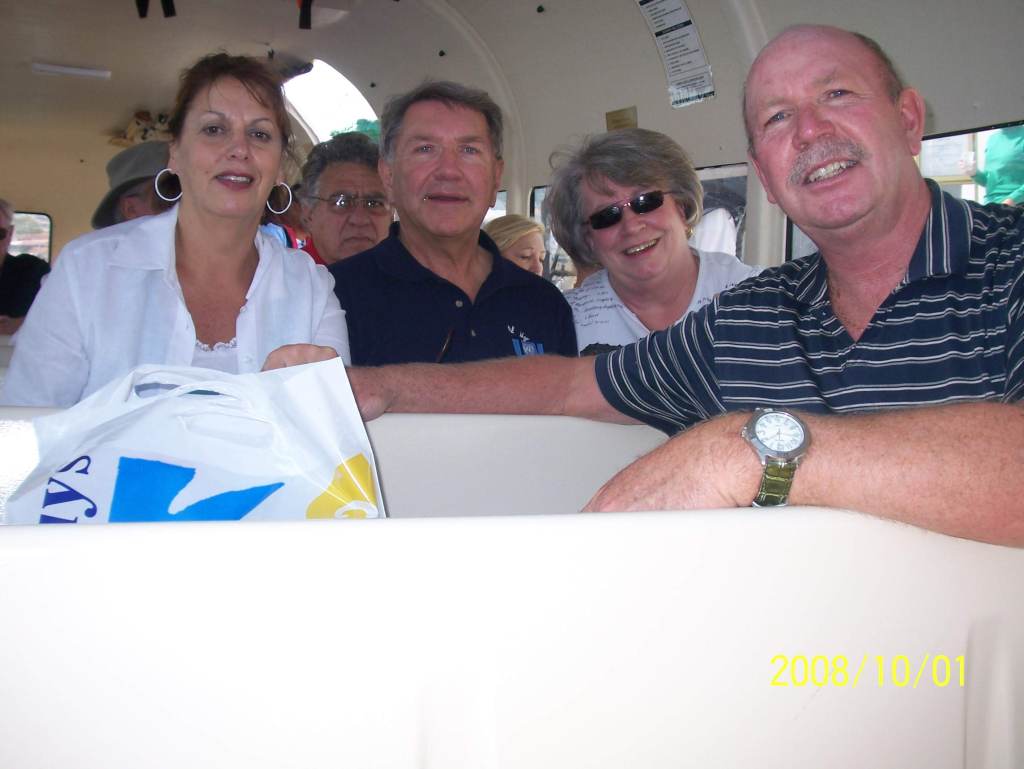
We awoke to bright sunshine and were soon at our first port – Mytilene – the capital city of the Greek island of Lesbos, founded in the 11th century. Lesbos, also known as the Island of Poets, is most famous perhaps for the Greek lyric poet Sappho who wrote with powerful emotional content directed at other women. The term “lesbian” is indeed derived from the name of the island. We did not see any tourist evidence of this. In fact, Mytilene was a little disappointing in that we found it to be more of an industrial port, with fewer tourist type attractions. Lesbos was in the news a few years ago when thousands of refugees attempted to cross the rough body of water from Turkey to Greece and sadly, many did not survive. We enjoyed our short stay there and were soon on our way to the next port and more food lol!
Our last two days in Istanbul were jam packed with tourist activities:
Belly Dancing Show
The Blue Mosque
Hagia Sophia
Topkapi Palace
Taksim Square
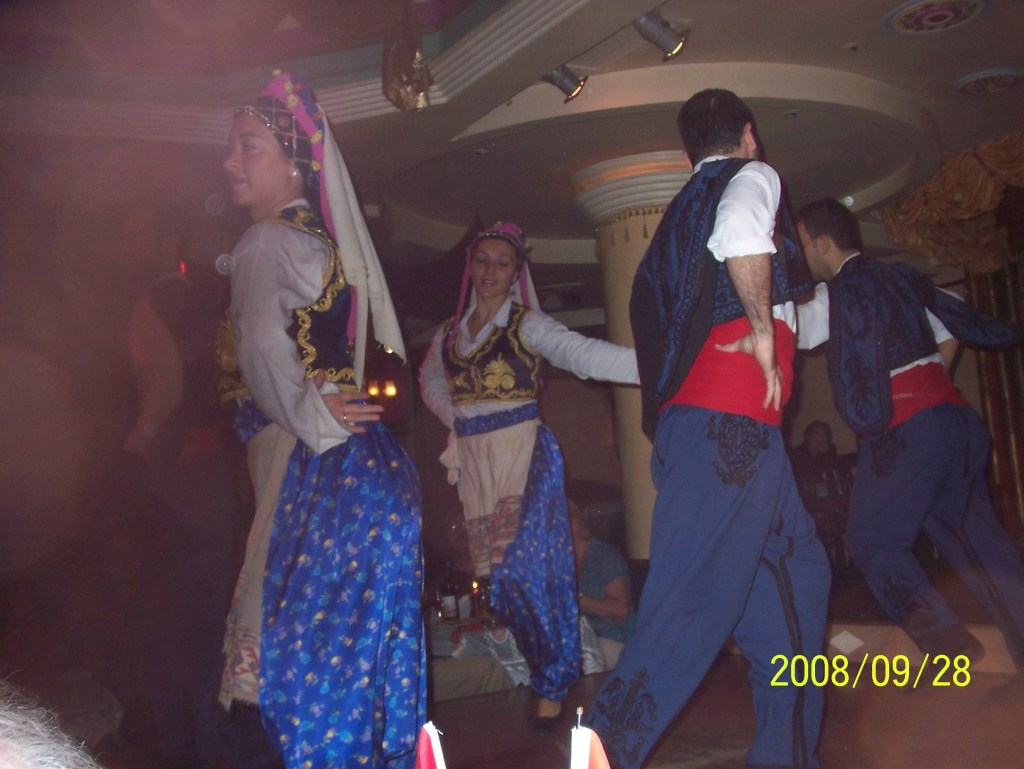
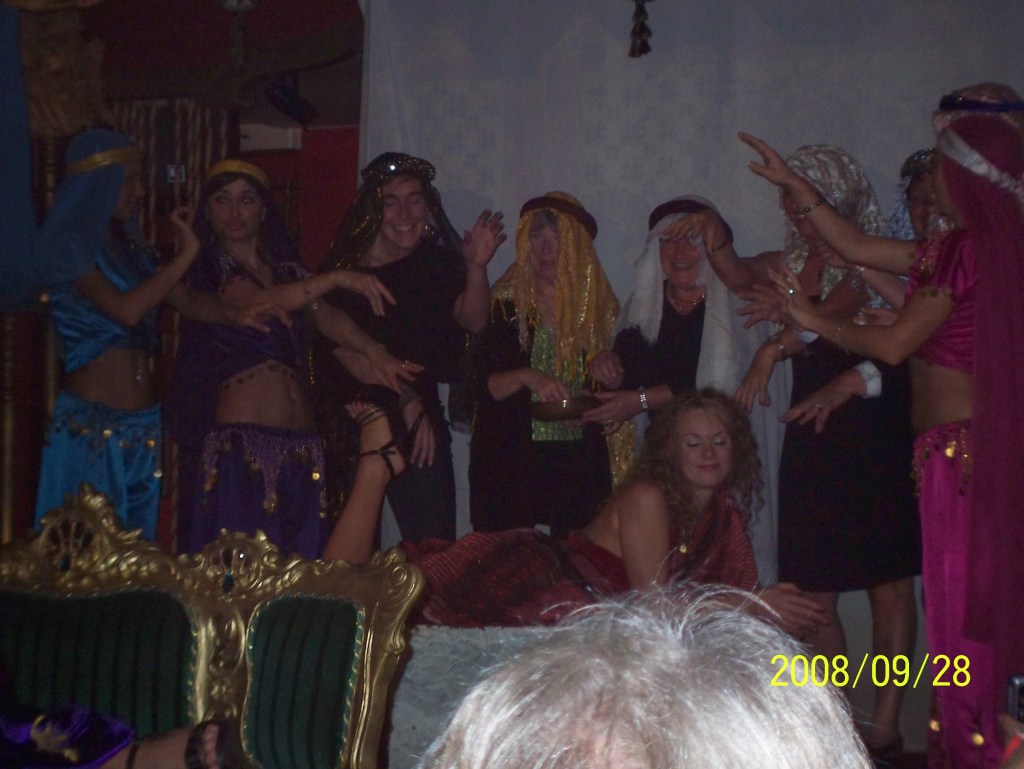
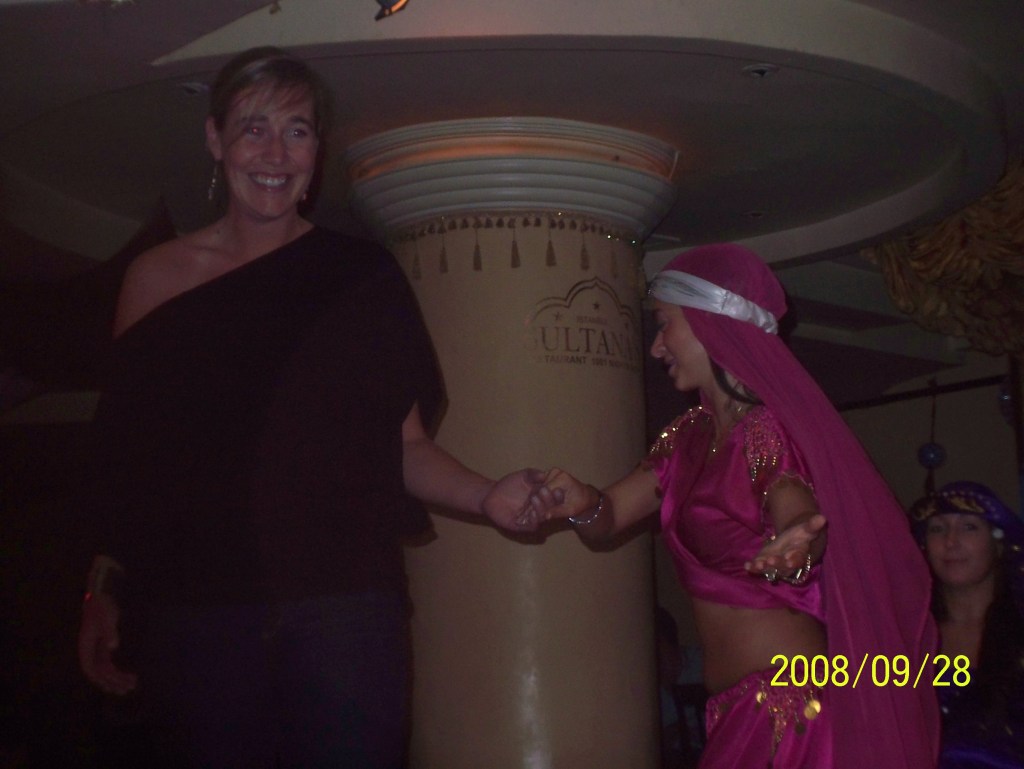
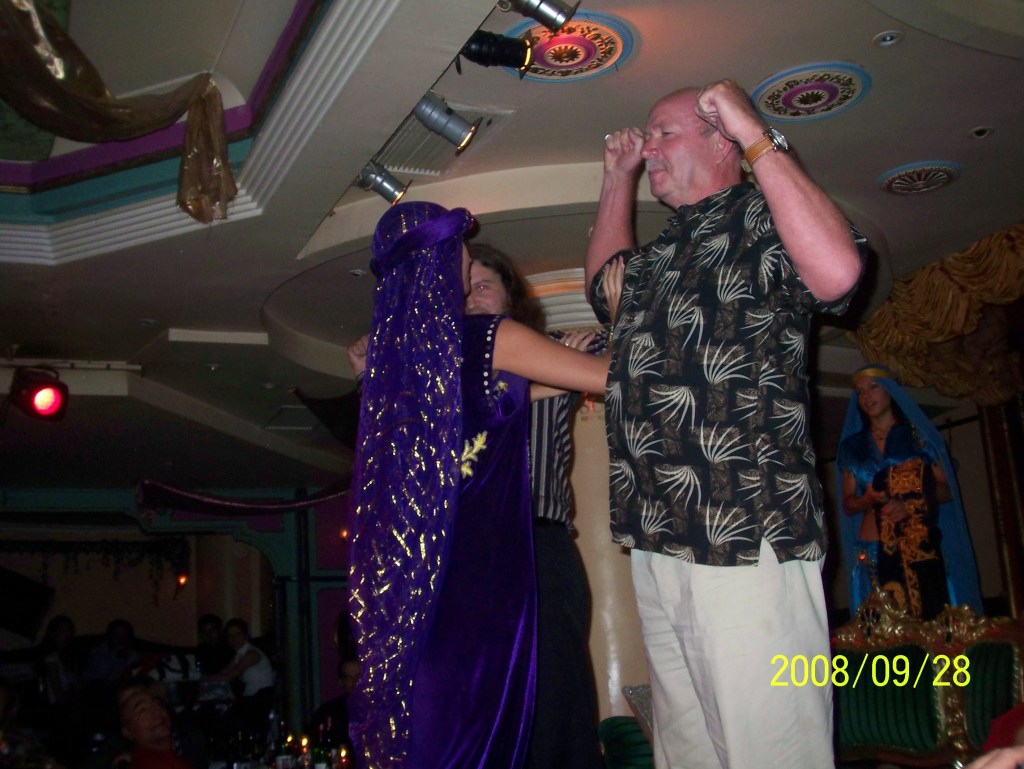
I think it was Sultana’s that our group went to for dinner and a belly dancing show. Granted, these shows are for tourists and not indicative of the authentic culture, we nevertheless had fun. Dinner, drinks, show and transportation were included in the service. Our table was next to the stage and a few of was were dragged up to compete in the show including yours truly. I would rate it 7 out of 10 experience. Lot’s of fun if you played around with it. I was the 2nd to last man still standing. Here are a few pics.
Our private tour guide Gulgun Asutay was a fascinating and talented person. She was extremely well informed about art, church and religious history and could easily answer any of our questions. She was strongly “pro west” and supportive of women’s rights in the Islamic secular state. We had some very interesting conversations about Turkish culture, politics and religion. She also knew how to control a tour group of individuals who like to wander off.
Gulgun at work
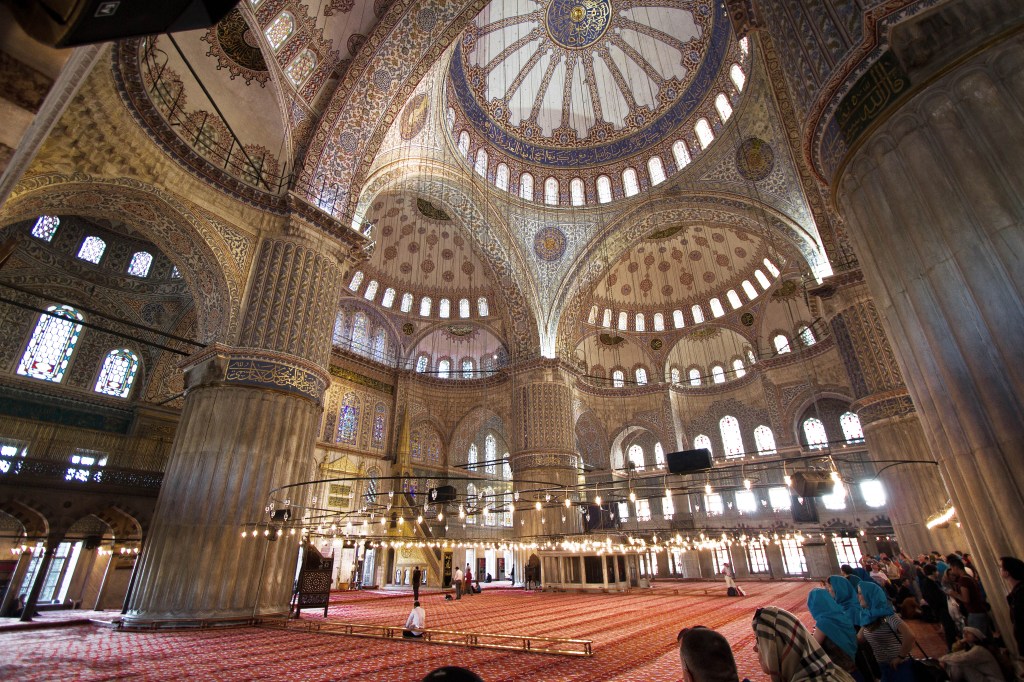
The Blue Mosque also known as the Sultan Ahmet Mosque is perhaps the most beautiful mosque in Istanbul. Constructed from 1609 to 1616 as a rival to the adjacent dark and imposing Byzantine Hagia Sophia, it’s called the Blue Mosque because of the dominating blue colour of its interior. It’s exterior has the grace and delicate lines representative of mosques in Istanbul. At night it is bathed in blue light. It is a functioning mosque that Pope Benedict XVI visited it in 2006. He paused inside for a full 2 minutes with his eyes closed in silent meditation
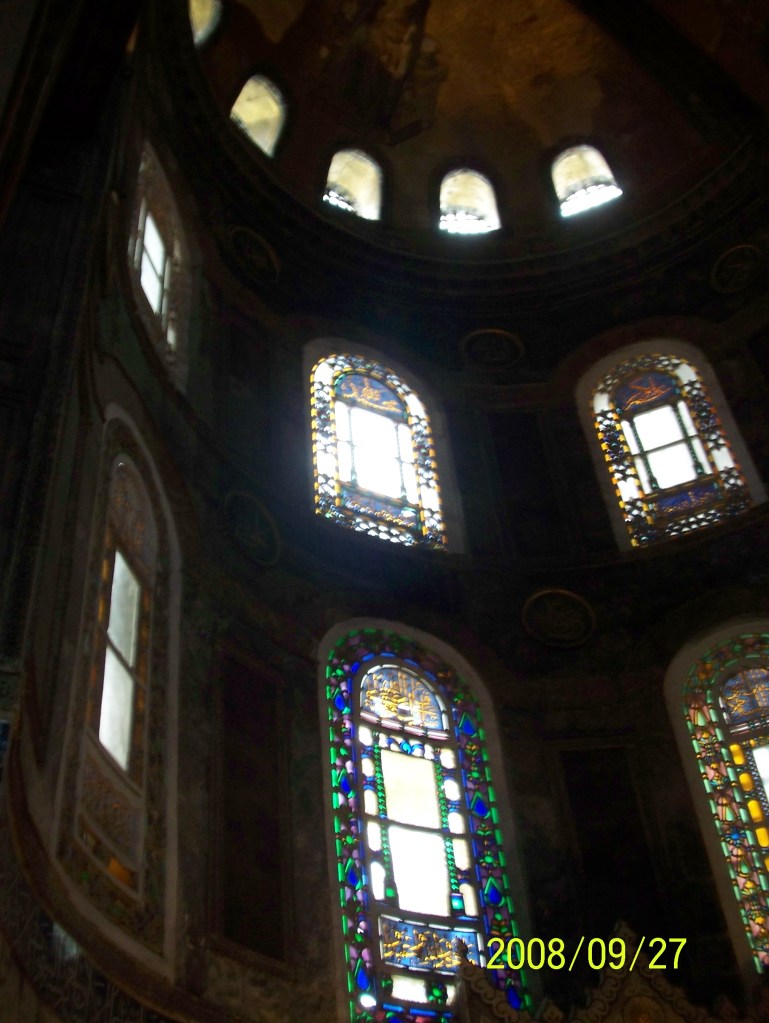
We were not allowed to wear shorts and had to remove our shoes upon entry. We marvelled at the beauty of the prayer area, the cupola and the coloured glass windows. Because of my modest camera, I was unable to take very good pictures due to the sheer size of the interior space. Here are a few courtesy of Wikipedia.
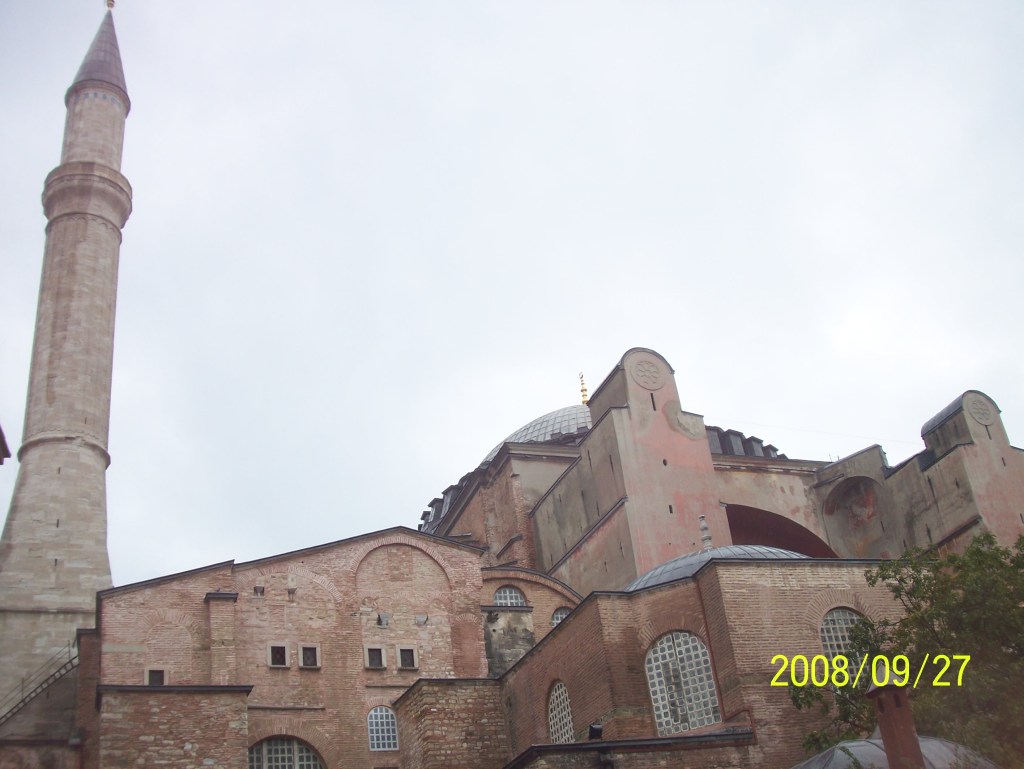
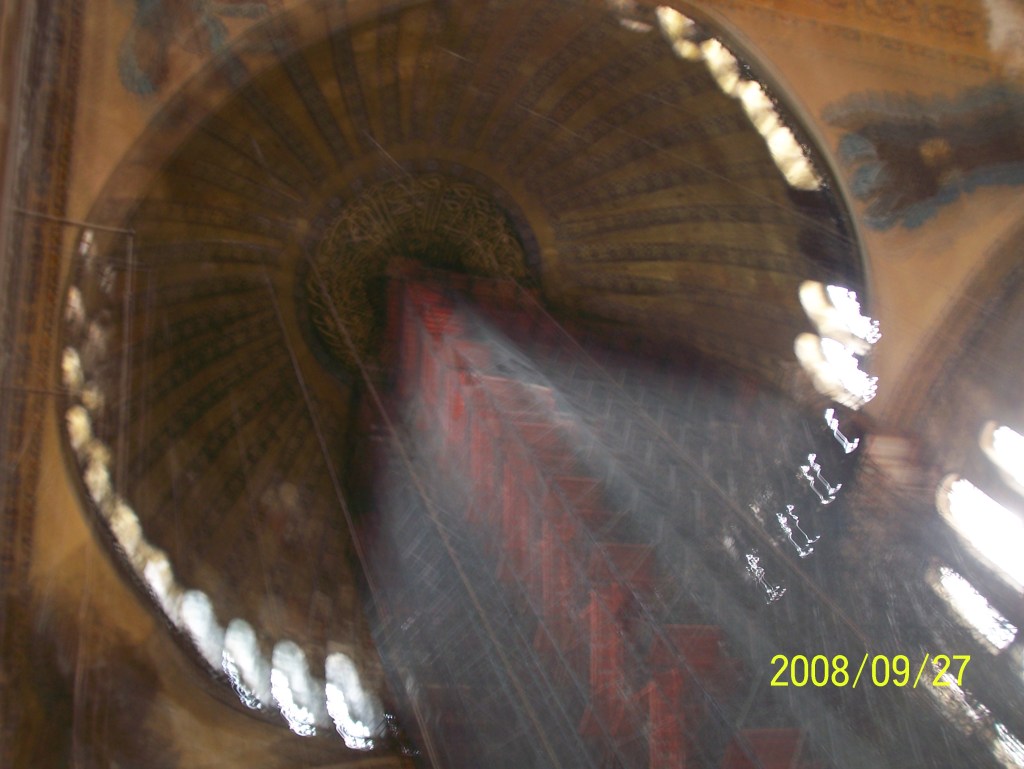
For me the Hagia Sophia was the highlight of Istanbul. It’s name means Holy Wisdom. Here are some of the superlatives. It is the former Greek Orthodox Christian Cathedral which later became an Ottoman Imperial mosque. In 1935 it was secularized and opened as a museum. It is famous for its large dome built in 537 AD during the reign of Justinian. It was the world’s largest building and an engineering marvel of its time. It is the epitone of Byzatine architecture that changed the history of architecture. It remained the largest cathedral in the world for almost a thousand years.
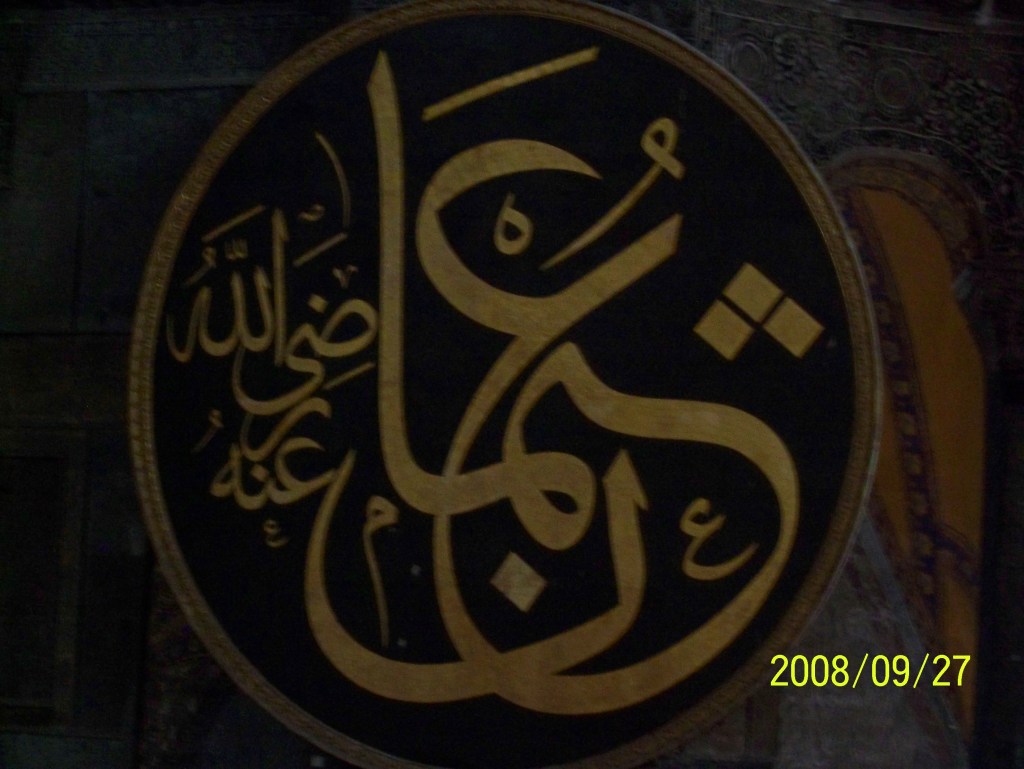
The great dome of the Hagia Sophia is 107 feet in diameter and 2 feet thick. It has collapsed a couple of times due to earthquakes and some sections were rebuilt. Inside the church there are many restored Christian mosaics as well as Islamist art works side by side. Restoration has been delicate and extensive seeking to keep a balance between the two religious traditions. Gulgun knew the story and history behind every mosaic and explained them in detail. It is very dark and imposing inside, a religious and historical experience we will not soon forget.
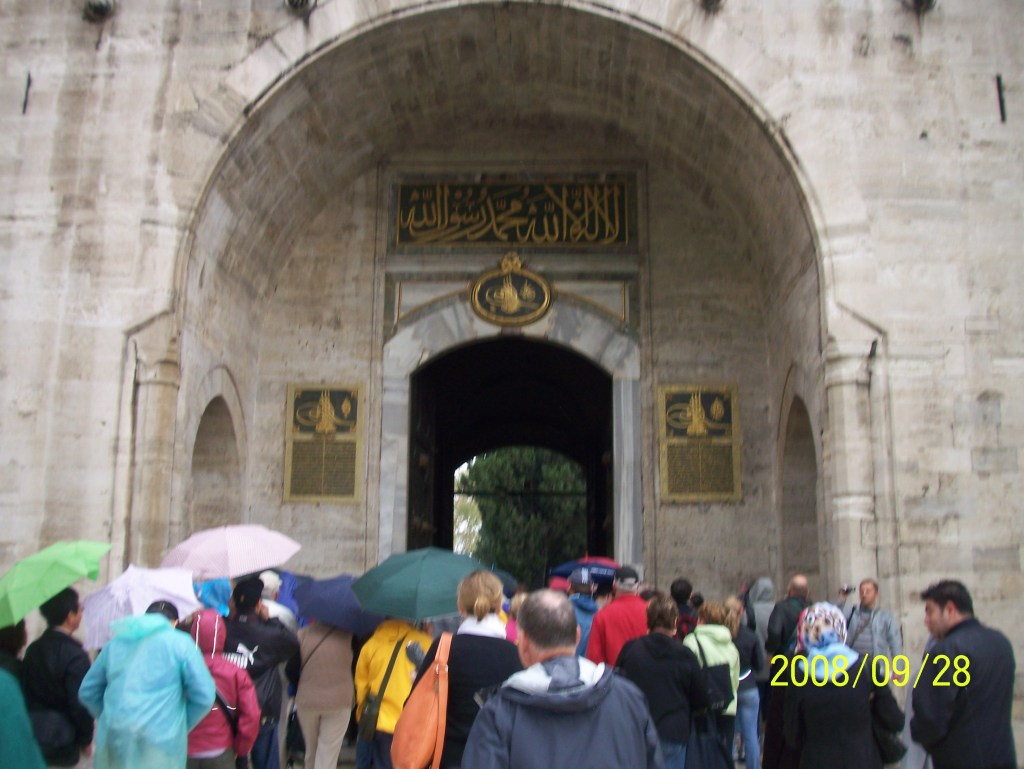
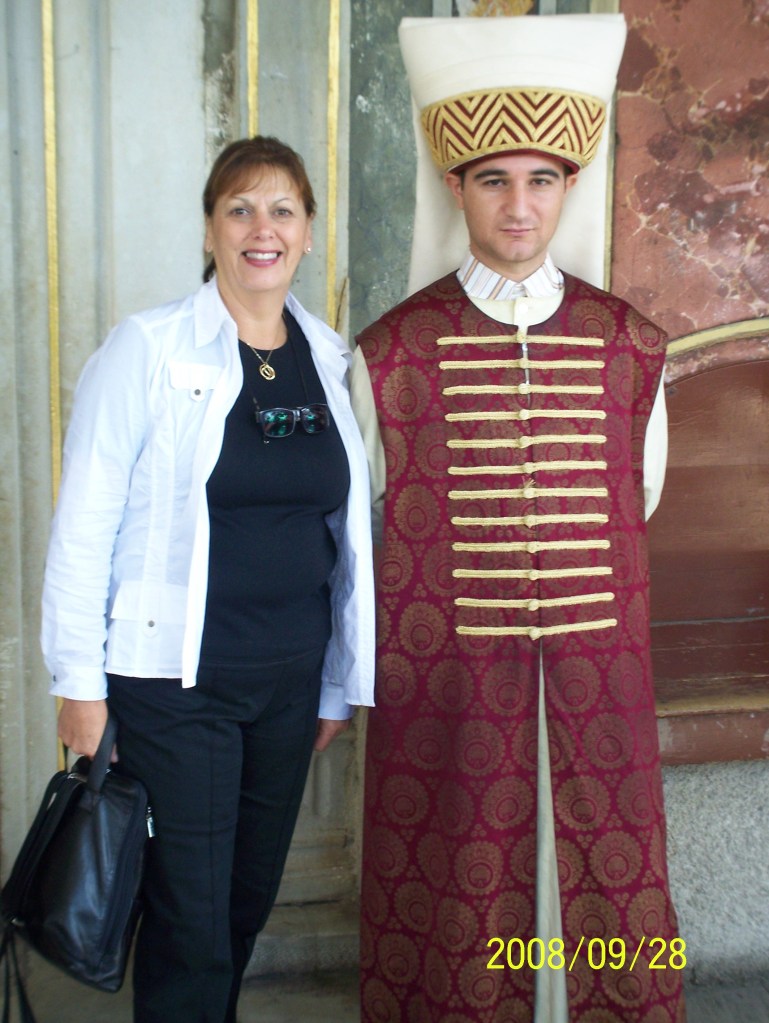
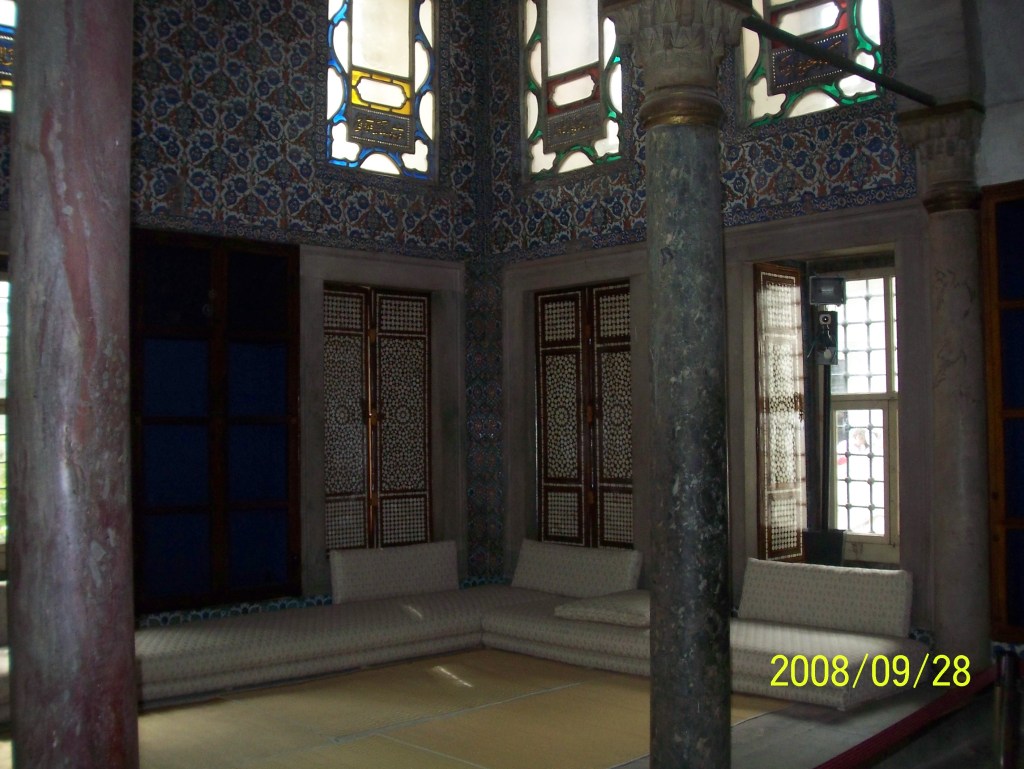
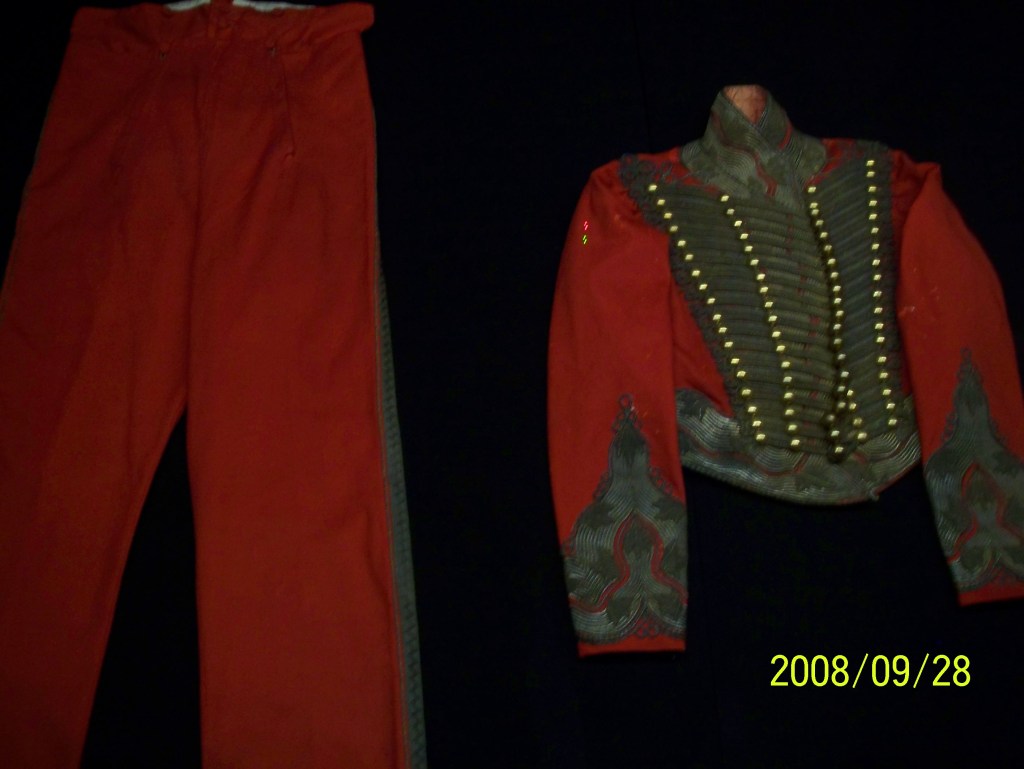
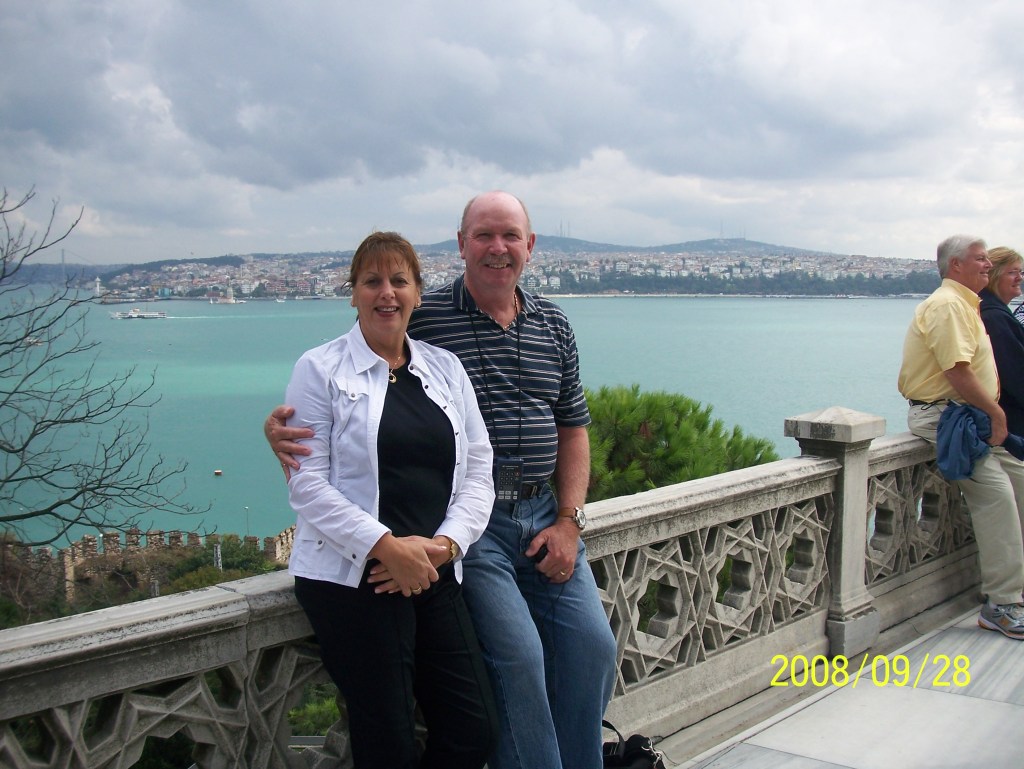
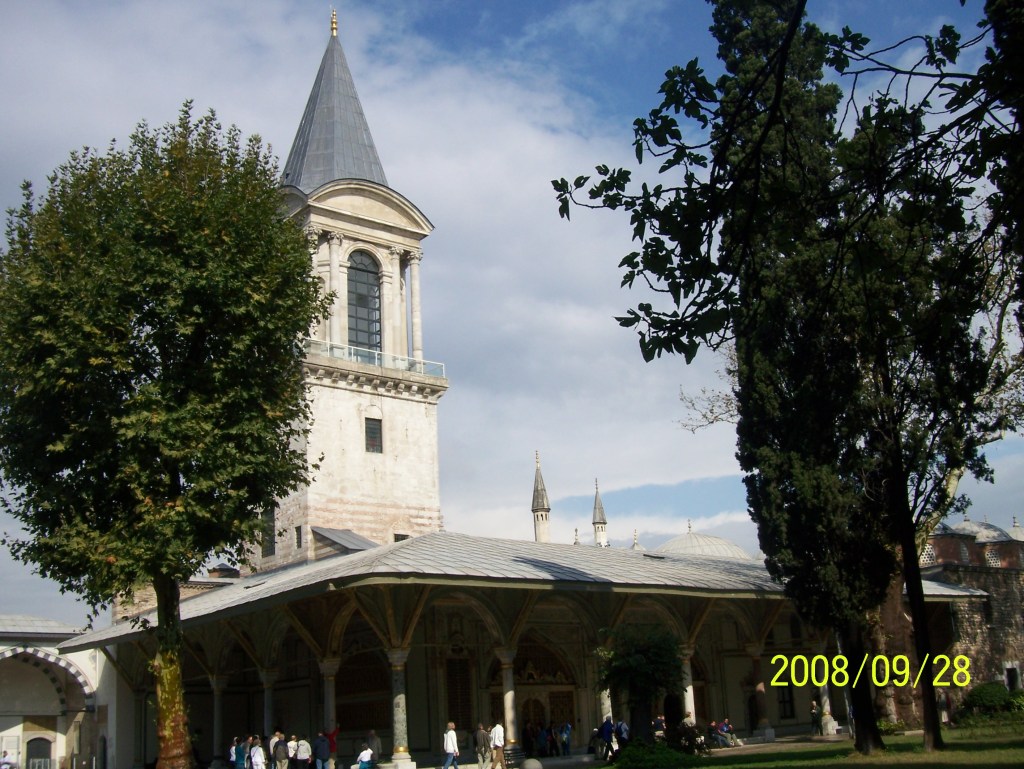
Our visit to the Topkapi Palace was memorable too. A museum today, it served as the principal residence and administrative headquarters of the Ottoman sultans during the 15th and 16th centuries. It’s name means “cannon gate”. The seaside palace is spread out over many acres and includes the Ottoman Imperial Harem where the women lived, many buildings such as kitchens, stores, treasury, administration, avaries, gardens and 4 principle courtyards. There are clothing, art works, tools and many more items on display in this indoor/outdoor treasure. We much enjoyed our visit there.
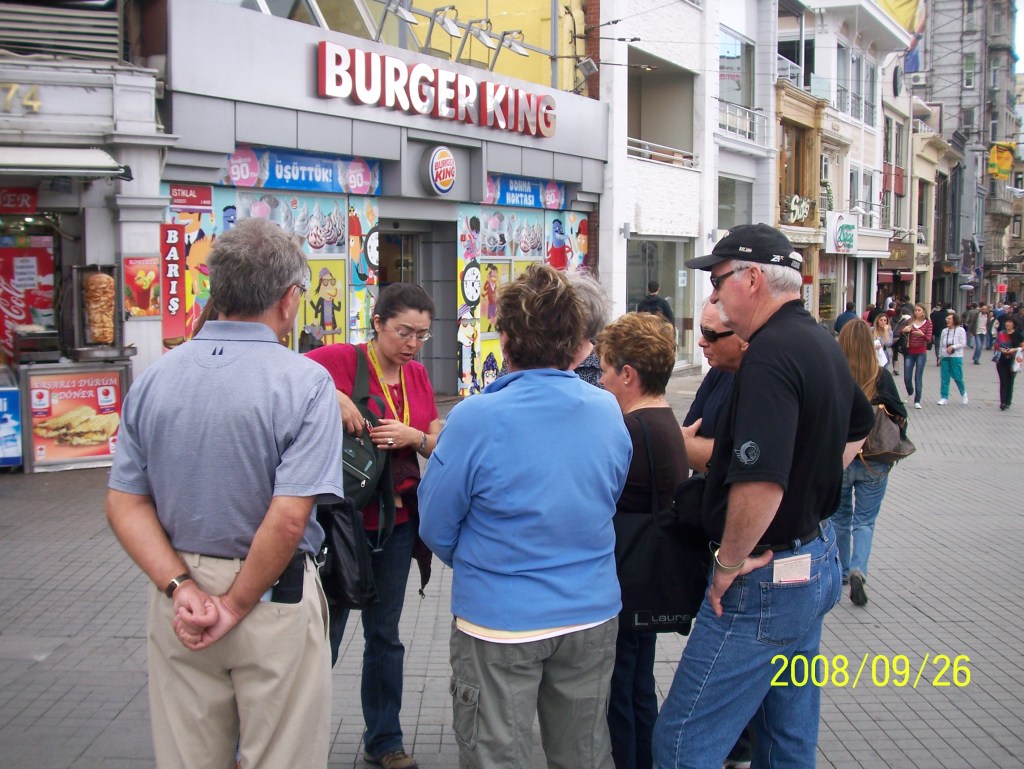
Our visit to Taksim Square involved a short street car ride and slow walk up the grand Istiklal Caddesi lined with shops, art galleries and beautiful late Ottoman era buildings. Taksim Square is a major tourist attraction lined with hotels, boutiques and monuments. Sadly it is famous for many protests including the tragic massacre of up to 42 leftist protesters in 1977 upon the resumption of labour day celebrations which had been banned in Turkey since 1928.
There were many more places we visited such as the Galata Tower and the Obelisk of Theodosius resurrected in the Hippodrome of Constantinople. Some of our group even crossed over the bridge to Asia. We could have stayed much longer but our cruise ship was now beckoning us.
Ramadan 2008
In this post I would like to talk about:
our hotel
the Grand Bazaar
carpets
Turkish Baths
Ramadan
HOTEL
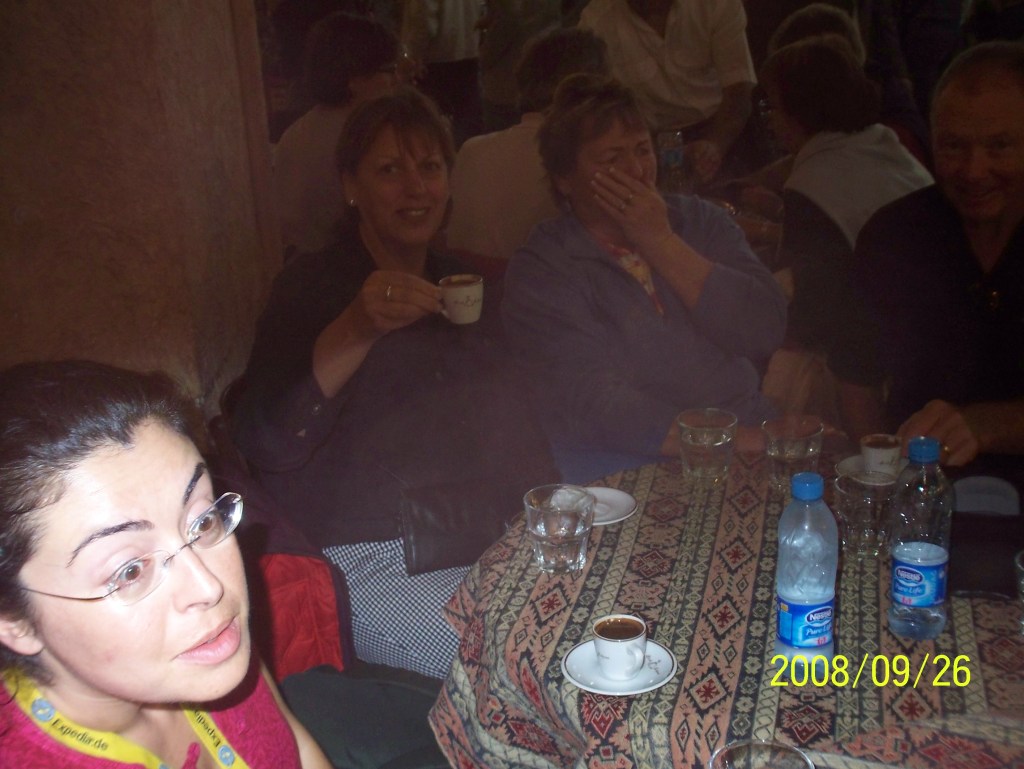
We stayed at the lovely Hotel Niles in the old city. It was beautifully decorated, had a lovely roof top terrace and was located minutes from the Grand Bazaar. I particularly remember the wonderful breakfasts: home made jams, goats milk cheeses, Turkish olives, salamis, coffee and breads. Turkish coffee is made unfiltered with finely ground coffee beans. The ground beans are as fine as cocoa powder and boiled with sugar and cardamom in a special pot called a cevze or ibrik.
What too was interesting was a leather goods workshop next door we could see people working shifts at. The Bosphorus was visible from the rooftop. The staff were very gracious and accommodating. We were very comfortable there for our 4 night stay. But, Turkish coffee takes some getting used to. I liked it, Marie not so much.
GRAND BAZAAR
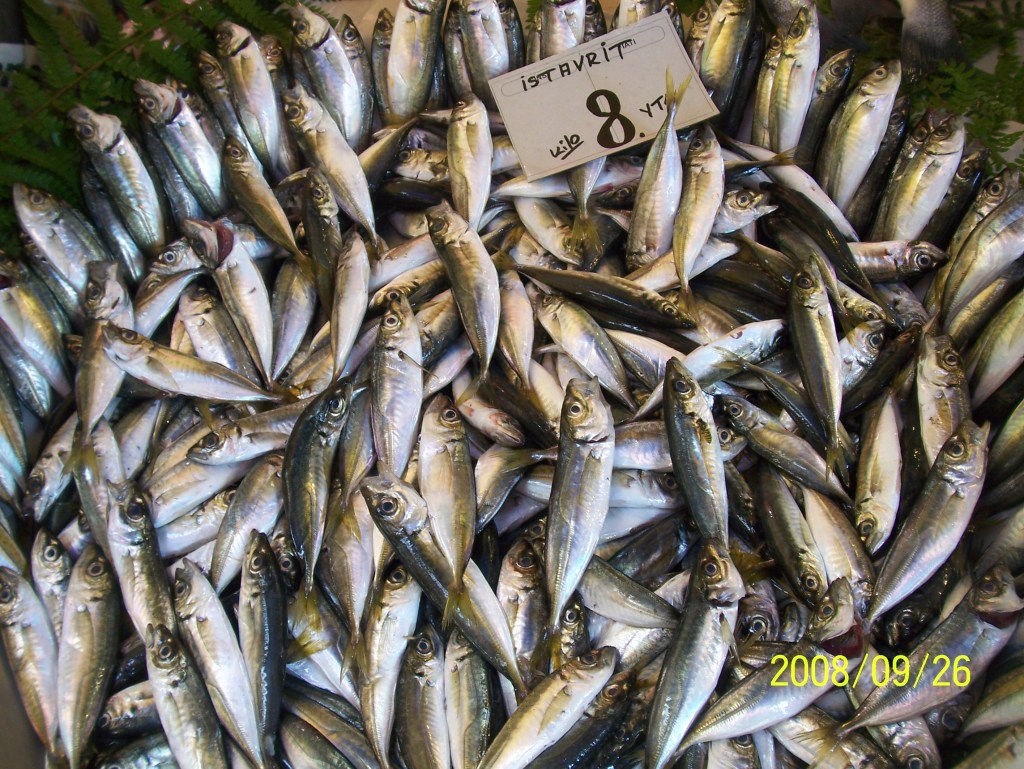
We walked to the Grand Bazaar. It is a huge indoor/outdoor shopping experience with 61 covered streets and 4000 shops. It attracts 250,000+ people every day. In 2014, it was listed as the world’s number 1 tourist attraction with over 91,000,000 annual visitors. We marveled at the colours, fabrics, artisan creations, kiosks, carpets, jewelry, cafes and throngs of people speaking in many different languages. It is a 560 year old marketplace. We were not the first ones to be so overwhelmed! The huge Spice Bazaar near the Golden Horn is jam packed with colourful spices, fresh fruits, vegetables, nuts, fish, people and vendors. It is just as impressive.
CARPETS
There are carpets everywhere for sale in Istanbul. These are very beautiful. We were walking down the street when a man offered us some unsolicited tourist advice. Then he asked if we wanted to buy a carpet. It would soon become a standing joke “Would you like a carpet with your fries?”
Travelling with a suitcase we were not about to buy a carpet but we came very close. Of course they offer overseas shipping but we resisted the temptation. It is a common experience that many visitors are not adequately prepared to deal with well here. Scams happen. Here is an article on how not to get scammed when buying a Turkish carpet.
TURKISH BATHS
Turkish Baths or Hammans are everywhere in Istanbul. They are places of public bathing associated with the Islamic world. It focuses on water. Men and women are separated and each given a private change room. You then start with relaxation in a room with warm water and hot humid air. You then move to an even hotter room with a heated pedestal that you lie on. Finally you wash down in cold water. You can have an optional message too before moving to the final cooling down room. Being adventuresome, we decided to try it. It was very proper, relaxing and cleansing. We enjoyed it. When in Istanbul or anywhere in Turkey, a not to be missed experience that we recommend.
RAMADAN
You likely have heard of Ramadan too. But what exactly is it? Simply put, it is a month of increased reflection, fasting and prayer that most of the world’s 1.6 billion Muslims observe annually. It commemorates when God revealed the first verses of the Koran to the Prophet Mohammed. It is one of the 5 pillars of Islam. Muslims must fast from dawn to dusk during Ramadam which means no food, no water, no sex, nothing until after sunset. While this sounds harsh, it is actually a period of great joy and celebration spent with loved ones. Muslims keep working during this period and it must be a real challenge to keep their energy up as the work day progresses. At the end of Ramadan, families come together to share big meals and exchange presents in Eid al Fitr- a kind of Christmas time celebration for Muslims.
Men in prayer at the Ortakoy Mosque
Ramadan 2008 was nearing its end when we were there. We did not see any visible evidence that it was Ramadan except on one night. In the middle of the quiet street in front of our hotel, a large circular table with 6 chairs was set up. After sunset some women brought huge platters of food – pizza like breads piled high with meats, cheeses, vegetables. Six men in their 40s or so sat down and had a feast – right in the middle of the street. It was an amazing sight. The food looked and smelled so delicious and they looked so happy!
Social distancing in the Ortakoy Mosque during the 2020 Covid-19 Pandemic
We also went on a road tour, saw the ancient underground water reservoir, visited a carpet factory, a pottery store and small church. Such was the first day of our adventure in Istanbul.
It was the last few days of Ramadan. The public call to prayer that we heard 5 times daily was truly beautiful and unforgettable. Broadcast from loud speakers on tall minarets around Istanbul, there was often an echo you would hear from farther away, adding to the overall mystery. The Koran when chanted like this is very beautiful. But let’s back up a bit.
I bet you knew that Istanbul used to be called Constantinople, but did you know it was called Byzantium before that? Byzas, a figure in Greek mythology, is said to have founded the city named after him, on the Golden Horn in 667 BC. Byzantium became a trading city located strategically between Europe to the west, Asia to the east, the Sea of Marmora and Mediterranean to the south and the Black Sea to the north. The city was taken by the Persians in 513 BC and then by the Greeks in 411 BC.
In 196 AD the Romans overran Byzantium and desecrated it. In 330 AD Roman Emperor Constantine built a palace there after having legitimized Christianity. The city was renamed Constantinople after his death and became the capital of the culturally rich Byzantine Empire which flourished from the 4th to the 15th century AD.
Despite its Roman beginnings, Constantinople remained oriented to the Greek culture and the Eastern Orthodox Church. By the 12th century it was the largest and wealthiest city in Europe, well known for its artwork and culture. Sadly, Constantinople was delivered a mortal blow in 1204 AD when it was sacked in the Fourth Crusade.
Left: Christ Pantocrator mosaic from the Hagia Sofia, circa 1261, courtesy Wikipedia
Since the 11th century, the Seljuk Turks had been making steady progress in conquering Anatolia, just across the Bosphorus from Constantinople. Later, the Byzantine-Ottoman Wars would bring about the end of the Byzantine Empire. In 1453, Constaninople fell to the 21 year old Ottoman Sultan Mehmed II. Sunni Islam was now the state religion and the city was renamed Istanbul.
Right: Mehmed II the Conqueror’s entry into Constantinople, by Fausto Zanaro, courtesy Wikipedia.
Fast forward to the 20th century. Field Marshal Mustafa Kemal Ataturk founded the modern Republic of Turkey from the ashes of the defeated Ottoman Empire after the First World War. He implemented a series of cultural, economic and political reforms that transformed Turkey into a modern secular nation state. He died in Istanbul in 1938 hailed as a great leader against colonialism and imperialism. The current President of Turkey, Recep Tayyip Erdogan, has denied that he wishes to reimpose Islam in favour of the secular state. However, his authoritarian style has been criticized both within and outside of the country.
This short tour of Istanbul’s history sets the context for the mashup of architecture, art, history, religious, culinary and cultural experiences and activities we were about to enjoy there on our 3 day sojourn. The city of 16 million awaits us.
In September 2008, we were fortunate enough to visit Istanbul. We were with a group of friends from church and about to embarque on a 2 week eastern Med cruise. We were celebrating our 25th wedding anniversary and had just payed off our mortgage!! Freedom 58!
Our ship the Oceania Nautica awaits us
It was the second trip with these friends so we were accustomed to travelling together. We invited a travel agent specializing in group travel to help plan our trip: Magda Newman of New Wave Travel. Magda did a great job. We had a group information and sign up session. Then she provided all the tickets and documents needed. We had chosen Oceania Cruises as I had heard great things about them and they offered smaller ships.
It was a good time to go. Istanbul was considered to be a relatively safe place then for tourists. Since then there have been some terrorist incidents targeted at visitors but I believe calm has been restored again by President Recep Erdogan. Istanbul is where East meets West. It is therefore a very culturally exciting place to experience if you ever have the chance.
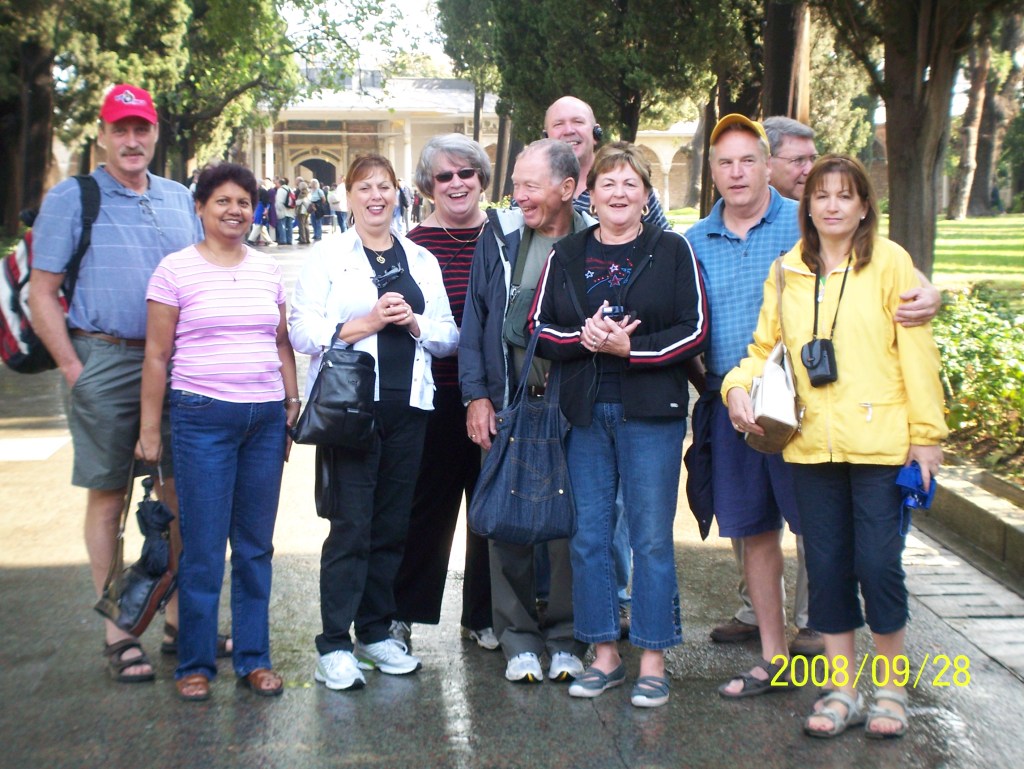
Gulgun (back row 2nd from right) with some of our group at Ortakoy Square
Another key element. We had prearranged for a 2.5 day private tour of Istanbul led by Gulgun Asutay, a highly rated local tour guide. We were not to be disappointed. She is very knowledgeable and is still in business today. Here is a link to a recent video she made of Istanbul. You may not understand the Turkish but you will understand the beauty that we saw there.
Yum!
So the stage was set. We had done the planning, paid the bill and were ready for another great trip with friends. We flew Air Canada from Ottawa to Franfurt and then Turkish Air on to Istanbul. All went well.