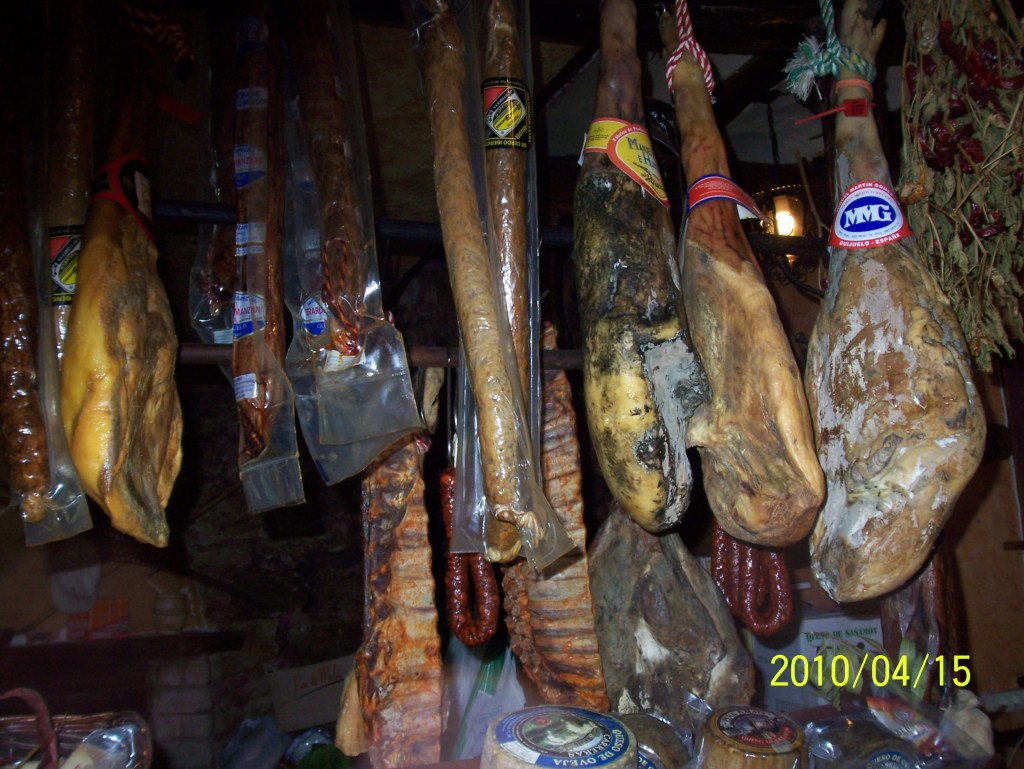
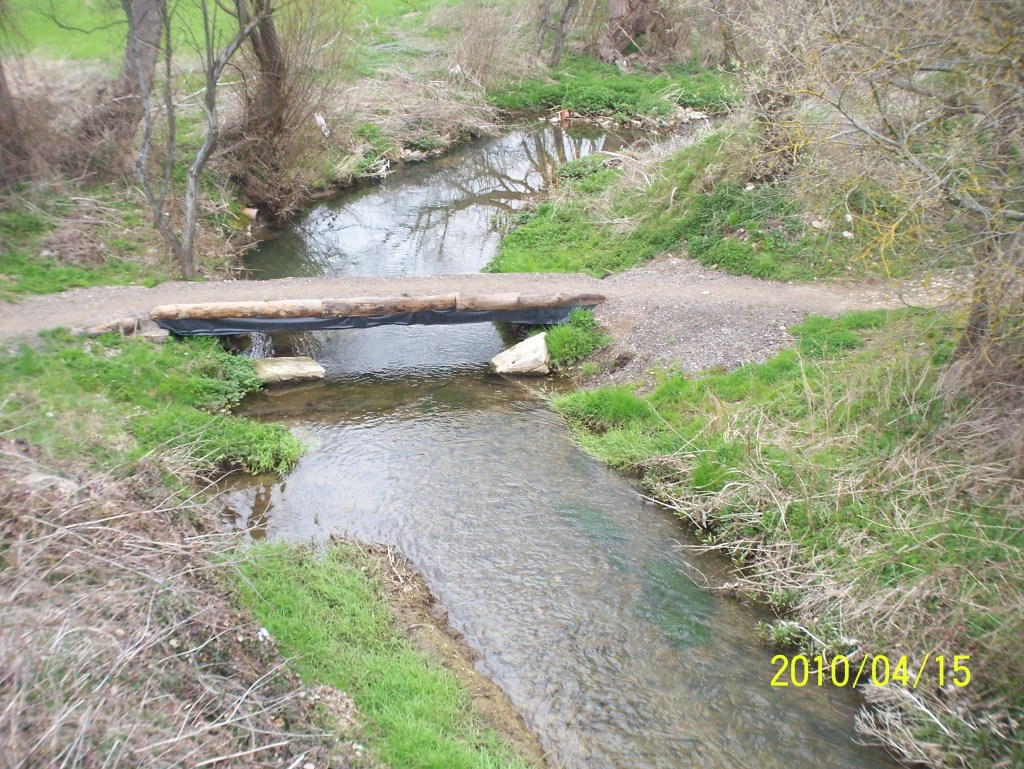
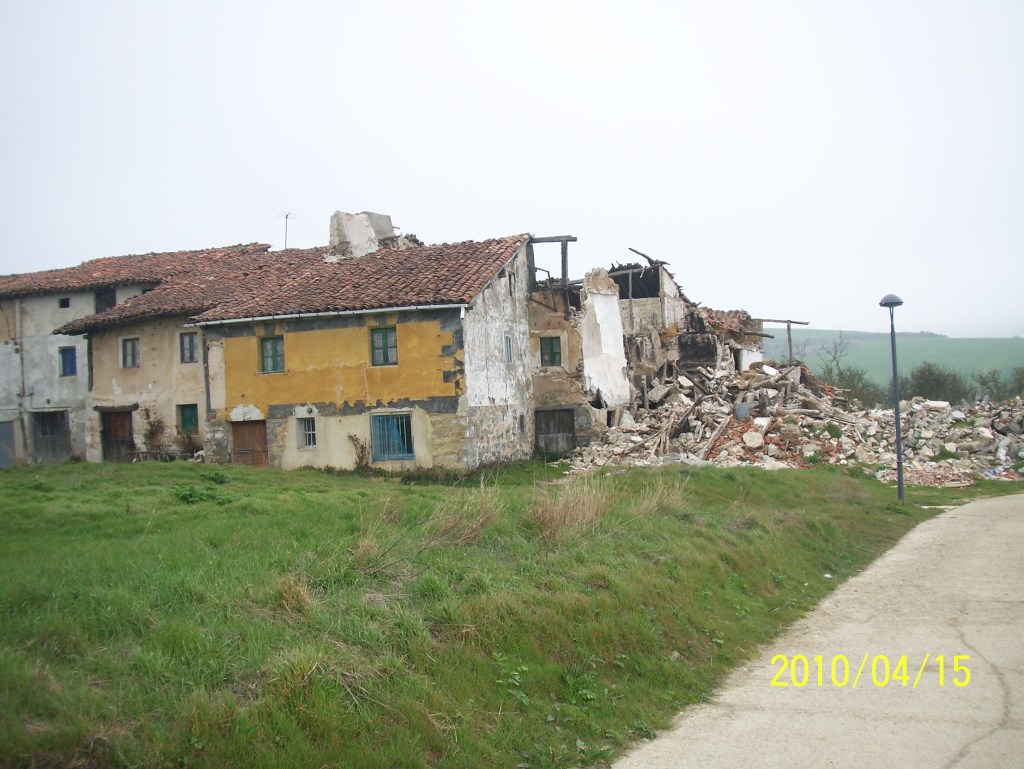
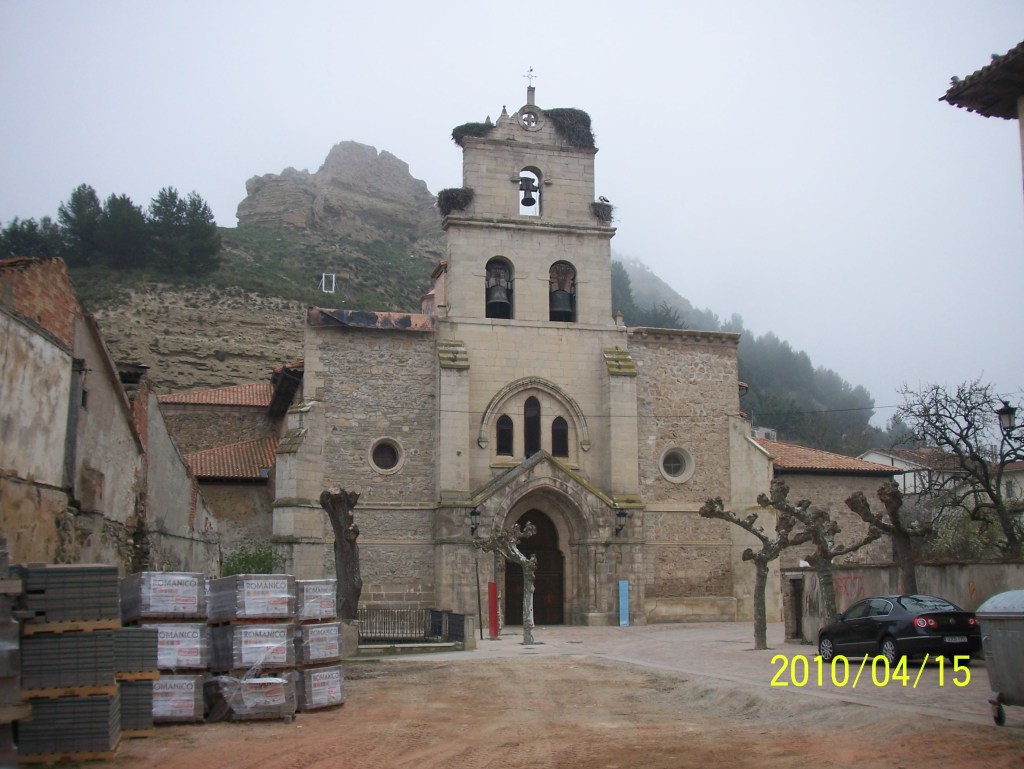
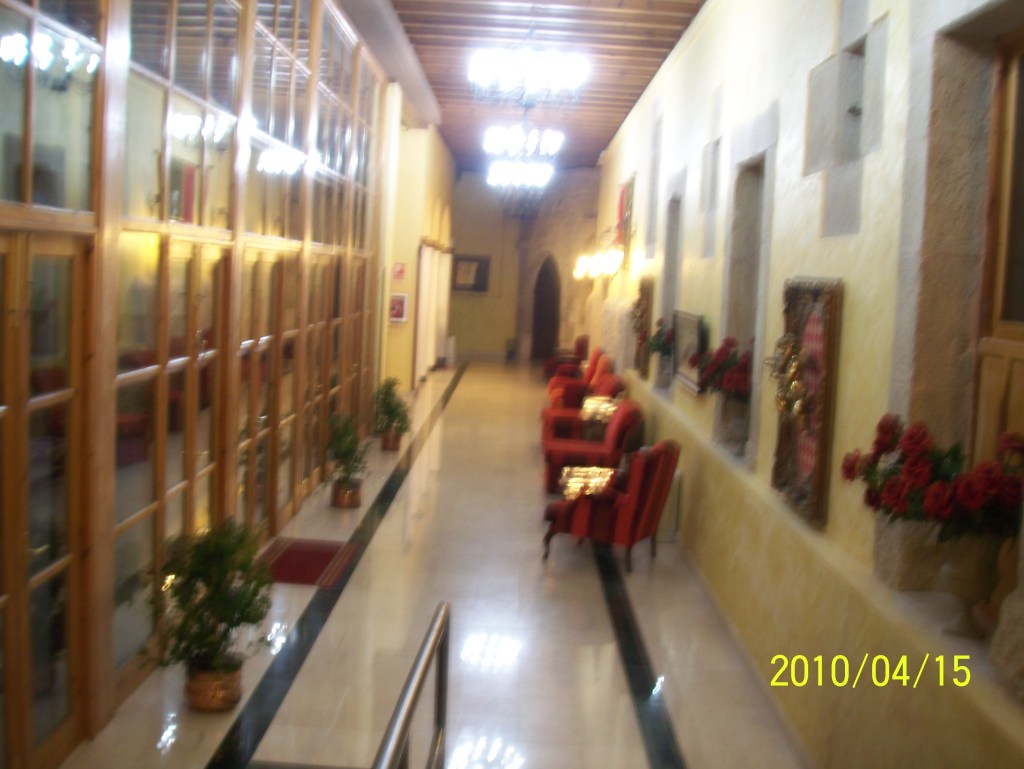
We hiked to Villafranca Montes de Oca on Day 8, about a distance of 21 km. Strangely I do not remember much about this day. Luckily Marie took notes. We decided to stay in the Hotel San Anton Abad which was a cross between a real hotel and an alberque if we remember correctly. Here are a few pics from that day. Crumbling buildings, old monasteries, small churches and cured meat. It was freezing in our dorm. A young lady walked in named Ainsley and exclaimed “Holy f**k it’s cold in here. She was from Edmonton and we are still connected on Facebook. We had an interesting dinner. Dave invited a lady from Milan to join us and she walked out halfway through and left us with her bill. A few bottles of wine later we had forgotten about the whole incident.
Hallway to the dining room in our hotelOutside our hotel room
We got up the next day and set an aggressive goal – Burgos. However it was some 37 km away so we took a bus. Next to Pamplona, Burgos was the biggest city we had traversed – 170,000 inhabitants. Wow we thought, civilization again.
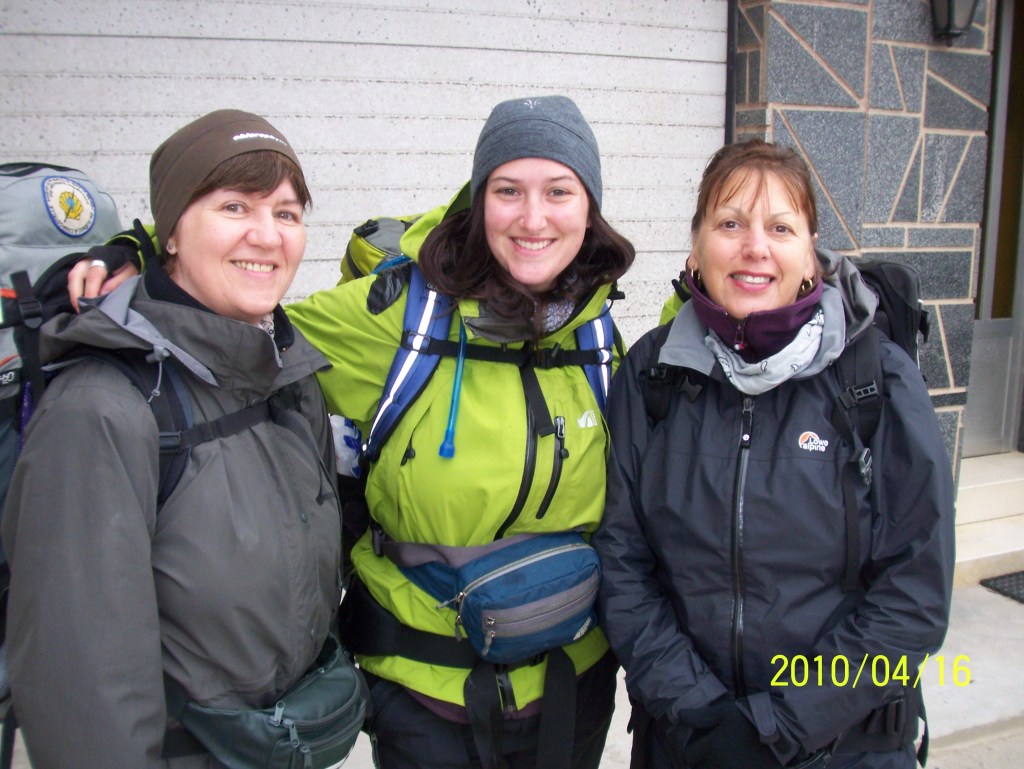
Nicole and her daughter Lydia from Quebec
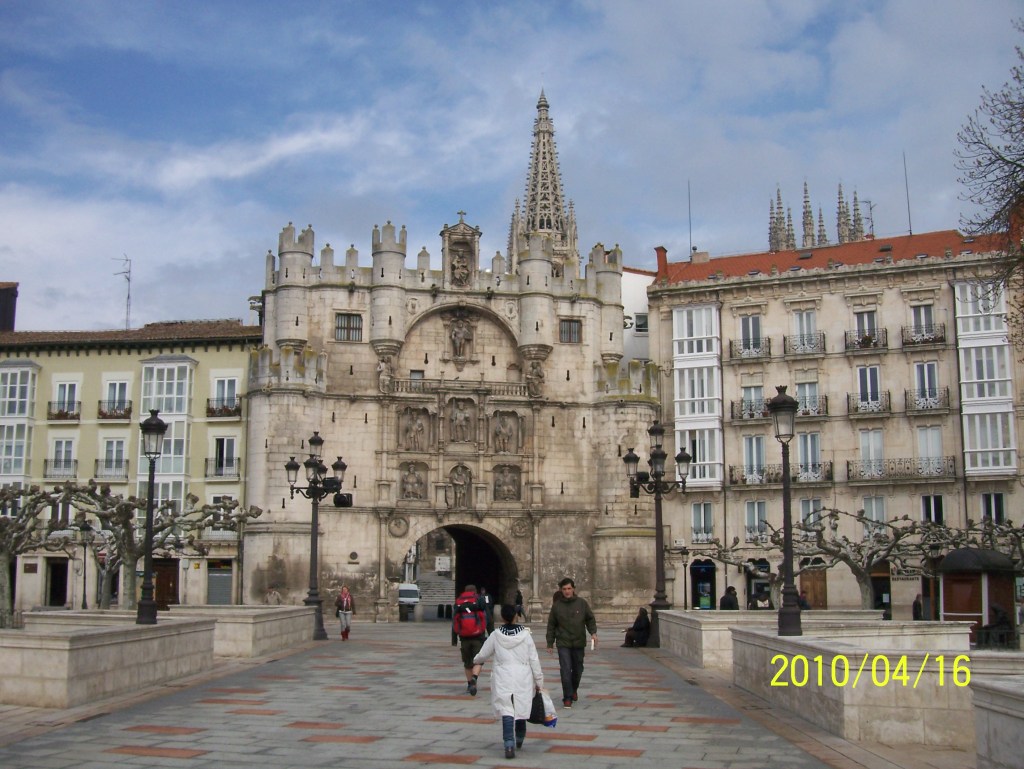
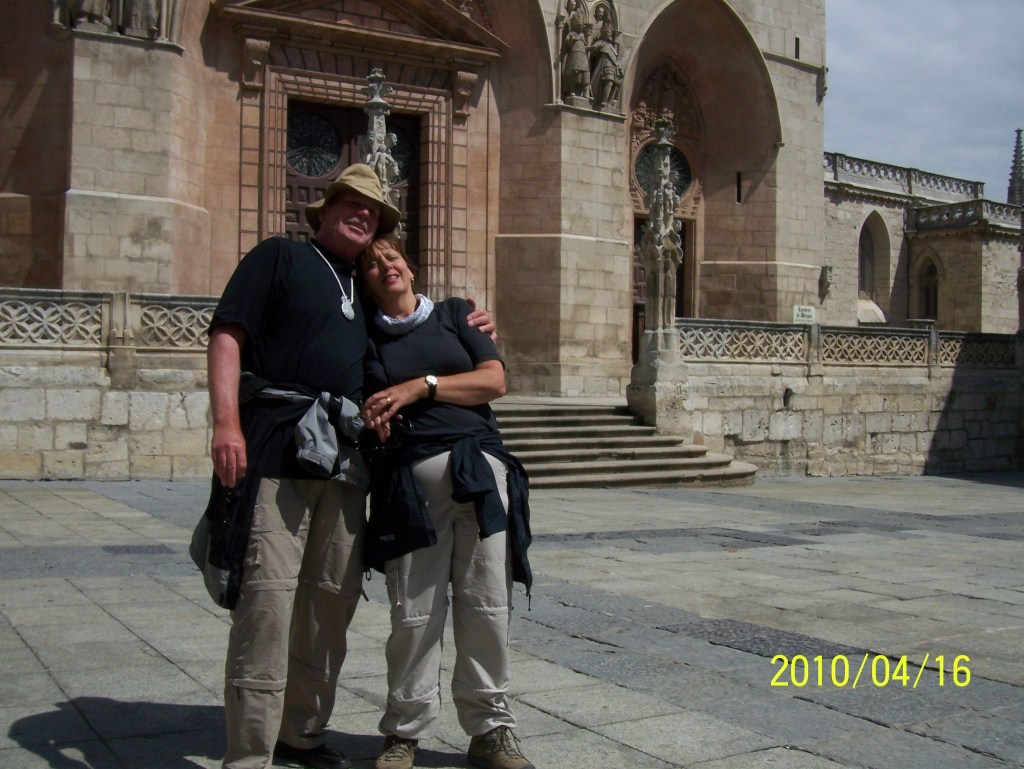
Burgos is an historic and hectic city. It is home to the Cathedral of St Mary a beautiful gothic structure dating from 1221. We spent a lot of time looking inside and out. It was right around the corner from the 110 bed municipal alburgue we stayed in.
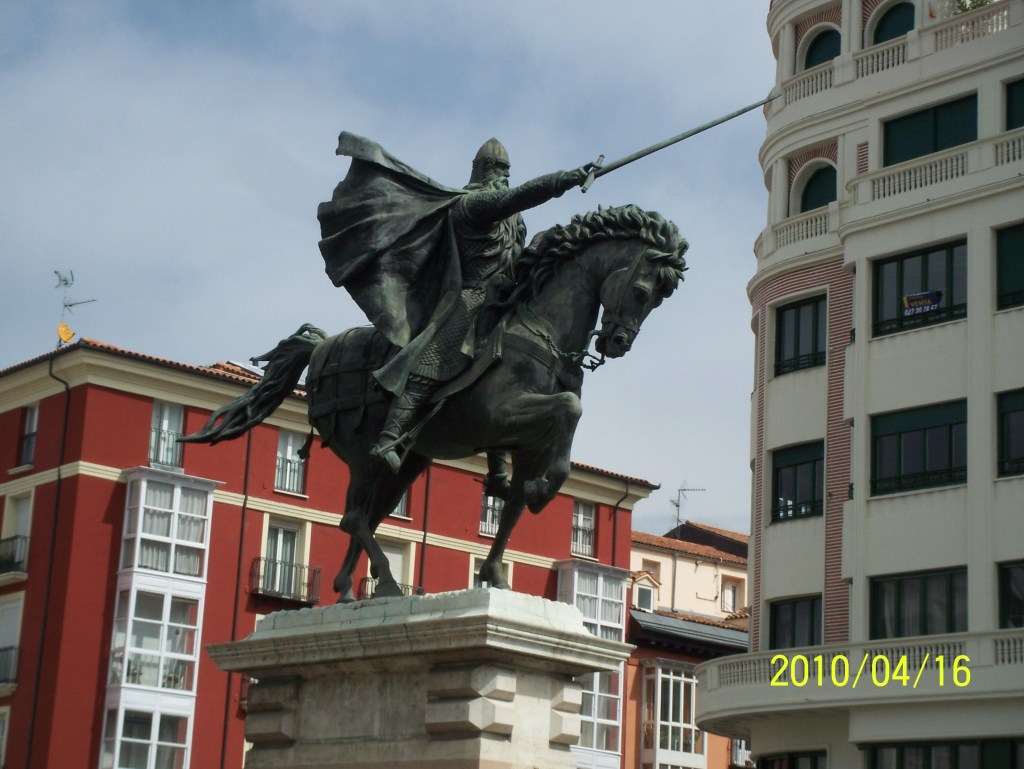
Coming into BurgosEl Cyd the famous CrusaderCathedral of St Mary of Burgos
We decided to take a break. Marie’s pack was proving too heavy and cumbersome so we found a store and she bought a new lighter one. We sent her old pack ahead by post to our hotel in Santiago. A note on weight. Marie’s loaded pack weighed 14 to 15 lbs and mine was 18 to 19 lbs. They recommend that your pack weigh less than 10% of your body weight. Particularly at the start, we saw people with huge packs, hanging fry pans, extra shoes, clothes etc. that they were soon shedding. We each carried a change of clothes, a pair of flip flops for the evenings, extra socks, a couple of small devotional books, camera and charger, toiletries, rain gear and a warm sweatshirt I carried both our lightweight sleeping bags and a roll of TP. That was it. It was all we needed.
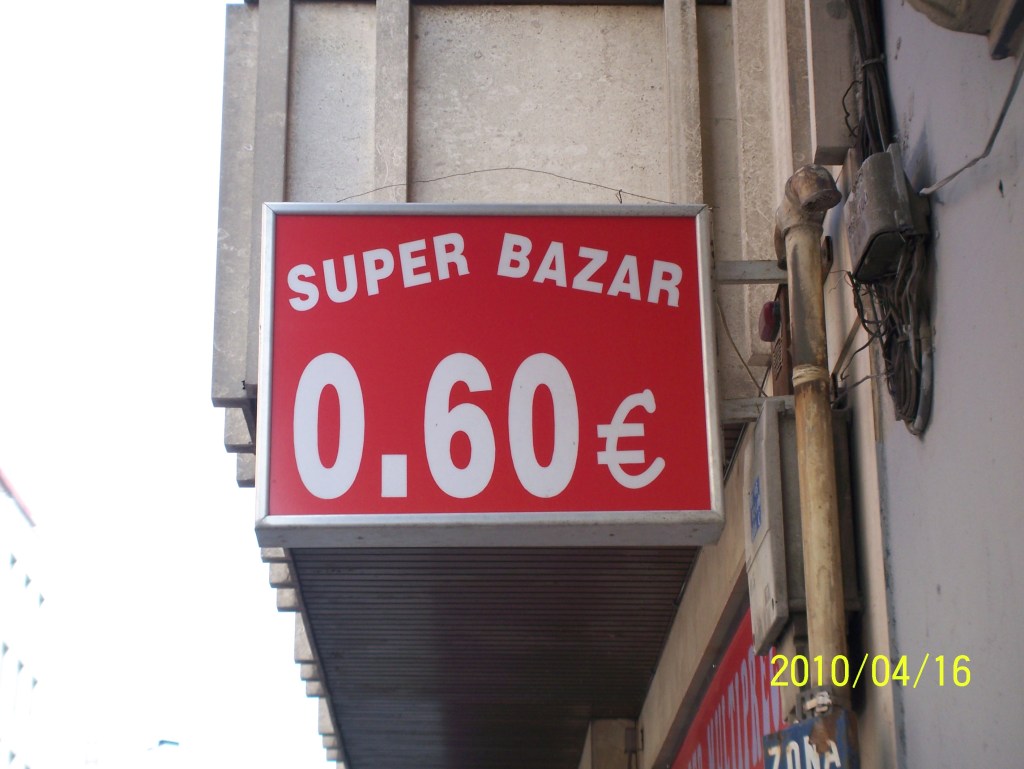
The dollar store (0.6 Euro = 1 US$) LOL!
We had a cubby hole to ourselves at the large refugio and I remember the huge pile of boots at the door. A Danish man came over and asked to borrow our plastic wine glasses. I remember Kim from S. Korea was there and popped over to say hi. We had a good time in Burgos.
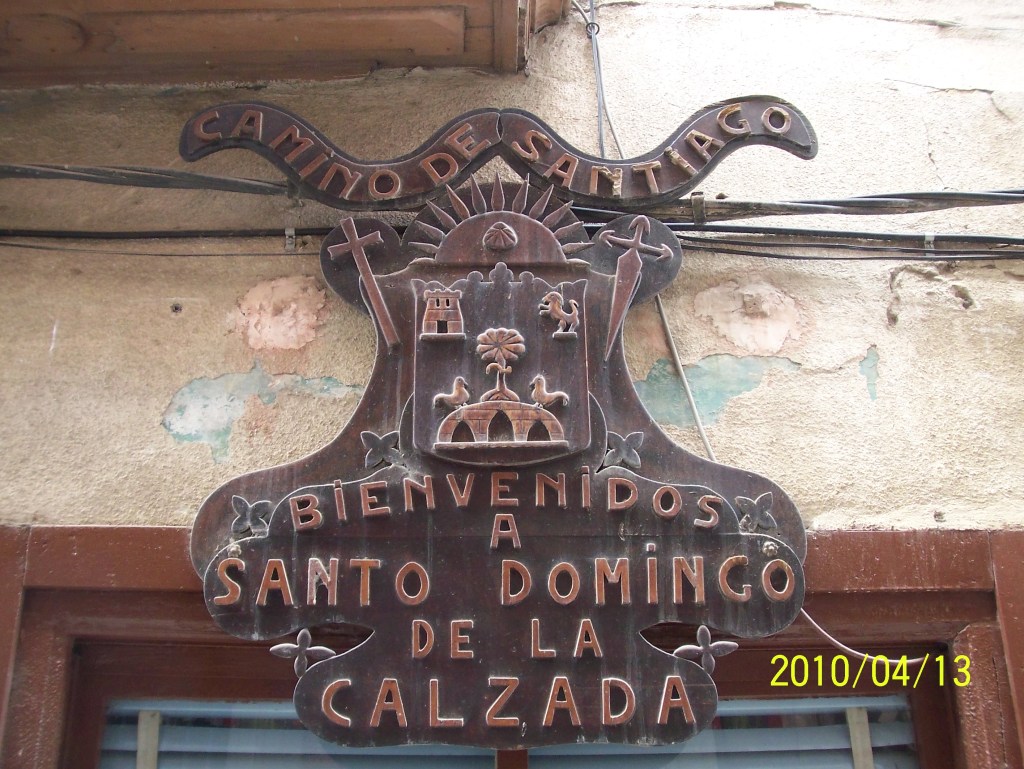
So in Santo Domingo de la Calzada we were about a quarter of the way from Pamplona to Santiago de Compostella. We had come about 175 km so far. Before we began this adventure, we were not sure we would be able to complete the long walk. We discovered that if you get up everyday and put one foot ahead of the other all day long, day after day – it works – the kms really add up!
But it is an ongoing mental challenge. “Am I going to complete this journey or am I going to quit?” we asked ourselves most days, as did many other pilgrims we presume. You find out what you are made off and who you really are. The path is made in walking, the saying goes. It was OK to ask for help. And if someone asked you for help, you helped them – it was an honour to be asked. We were all in it together and had each others’ backs. A common purpose and goal – not unlike the current Covid-19 pandemic lock down situation. Barriers between strangers melt away.
Marie’s feet were better so we headed out for Viloria de la Rioja, a distance of about 15 km just east of Belorado. We were in for a very pleasant surprise that night at the 12 bed privately owned Acacio y Orietta Albergue.
We were the first to arrive. Acacio and Orietta our hosts were from Brazil. They were most accommodating. It had been cool and raining a bit. They invited us to sit by the fire and have a cup of tea. Acacio was passionate about the Camino, had statistics at his fingertips and could answer any question we posed in at least 3 different languages. After, I dozed off a bit. When I awoke, another person had arrived and was chatting about their camino. It was the lady we had seen in Najera and chatted with on the trail a bit.
Turns out she was an opera singer from France (or Germany?) and was planning to give a short concert in the cathedral in Santiago when she got there. She was explaining that for her, the Camino was about the journey, not the destination. She was walking to the beat of her own drum, not following the recommended daily distances etc. Content to walk on her own, she did not talk for long but had merely stopped in to warm up before trudging off again. In the days ahead, I remember thinking about what she had said and thinking she was right. Unfortunately we do not remember her name and did not get a photo.
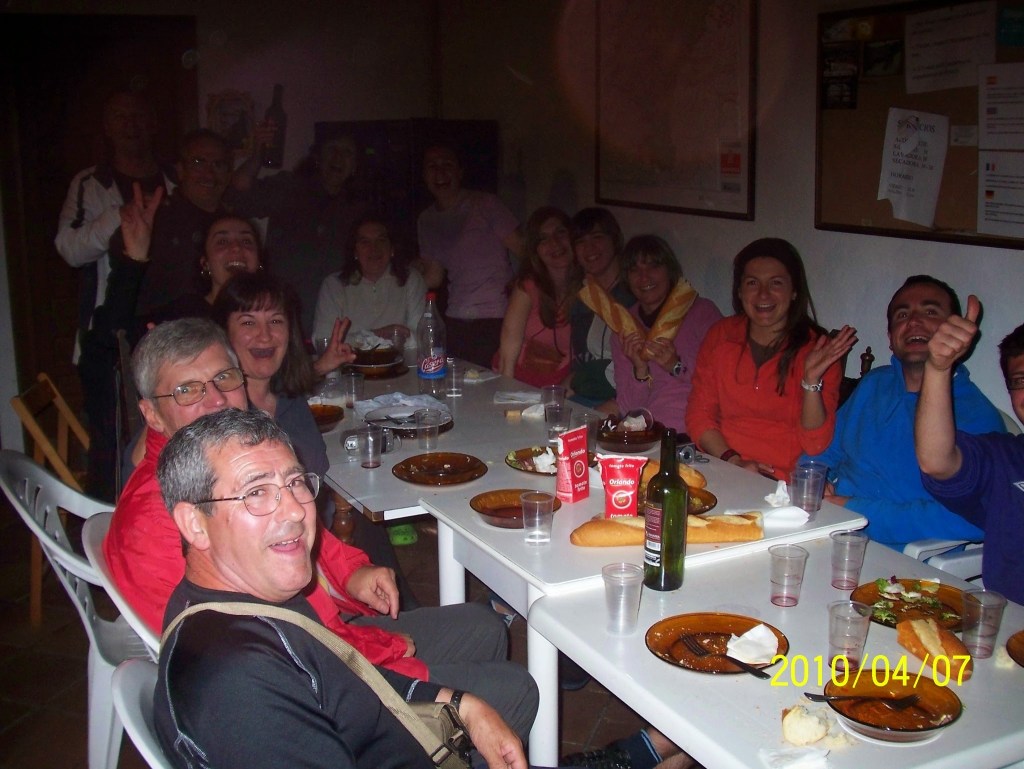
About 6 PM a group of 6 cyclers – all Spanish young men – checked into the refugio for the night. So there would be 7 men and Marie all seeping in the same room tonight I thought. Orvietta with Acacio’s help cooked us a wonderful dinner. I am sure there was plenty of wine to go around. We laughed and laughed and laughed the whole evening. Somehow we could all understand each other, each in his own language.
Acacio on the left, Orietta 3rd from left and the bikers
We had such a good time. Biking the Camino rather than walking is extremely popular. There were bikers everywhere but they stuck to the nearby roads rather than the path so it was rare that we would meet. What a great bunch of guys! Orietta was so nice too! She took one look at me with my low slung backpack, had me take it off and she cinched up the shoulder straps so it would ride some 4 inches higher. My pack felt lighter after that. The next morning they posed for the great photo below.
Marie and the biker gang
We said our goodbyes after a great stay and wished each other Buen Camino! Dave is still connected with Acacio and Orietta through their Facebook page where you can see a photo of the interior of their homey refugio that we will not soon forget.
Perhaps this is a good time to talk about footwear – very important when you are hiking long distance. Marie had a pair of Merrill water proof hikers she wore. They were light weight but not quite high enough to prevent water coming in on occasion. I had a pair of Vasque Breeze water proof hiking boots that I was very happy with. They were taller but heavier and took longer to put on with the long skate like laces. Some people wore simple sneakers. Others wore full hiking boots that were very solid but too heavy. We would frequently see hiking boots discarded that someone had got tired of.
Foot care was important. I already mentioned the Vaseline. I wore merino wool socks inside my Vasque’s and had no blisters the whole time – just hot and tired feet. Marie had to content with blisters and find special bandages. A product called “second skin” and foot pads were helpful and generally available in the many pharmacias in the towns along the way. Now we know why feet, sandals and dust is mentioned in the Bible so often. When you walk everywhere, feet are important and must be properly cared for.
We were now about 145 km from our start in Pamplona. After a restful night in Najera, Marie decided to take the bus and rest her blistered feet another day. I was feeling good so decided to walk solo to Santo Domingo de la Calzada – 21 km. We would meet at the refugio. I was a little wary but the bus ride seemed straight forward. So off we set on our own.
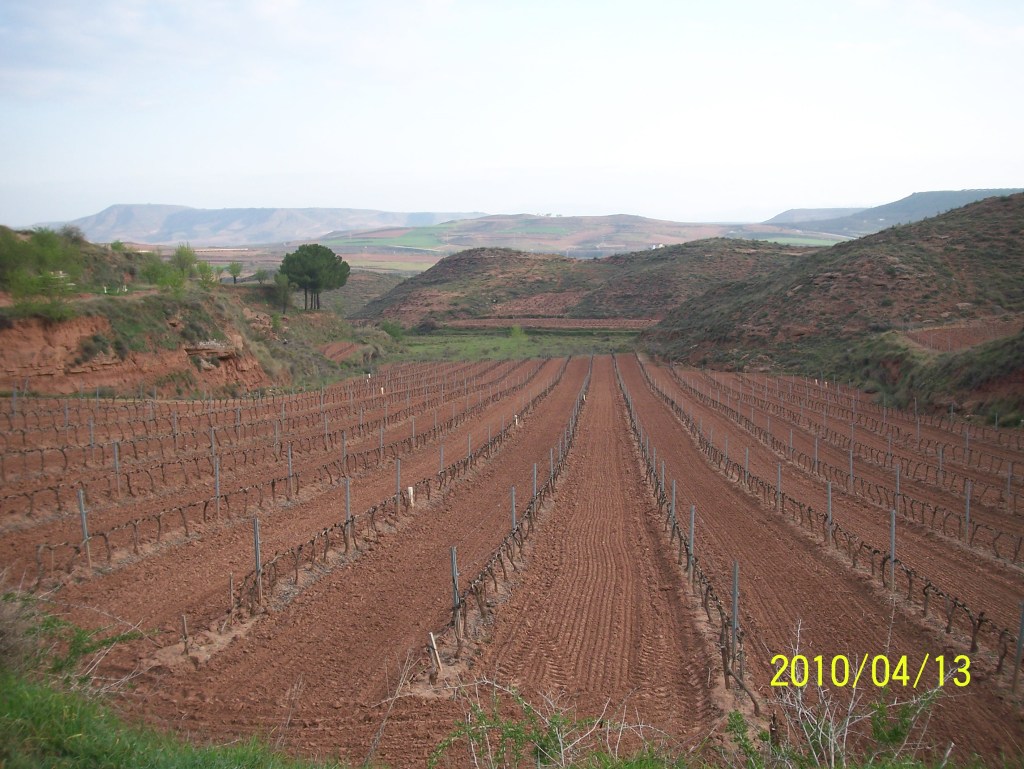
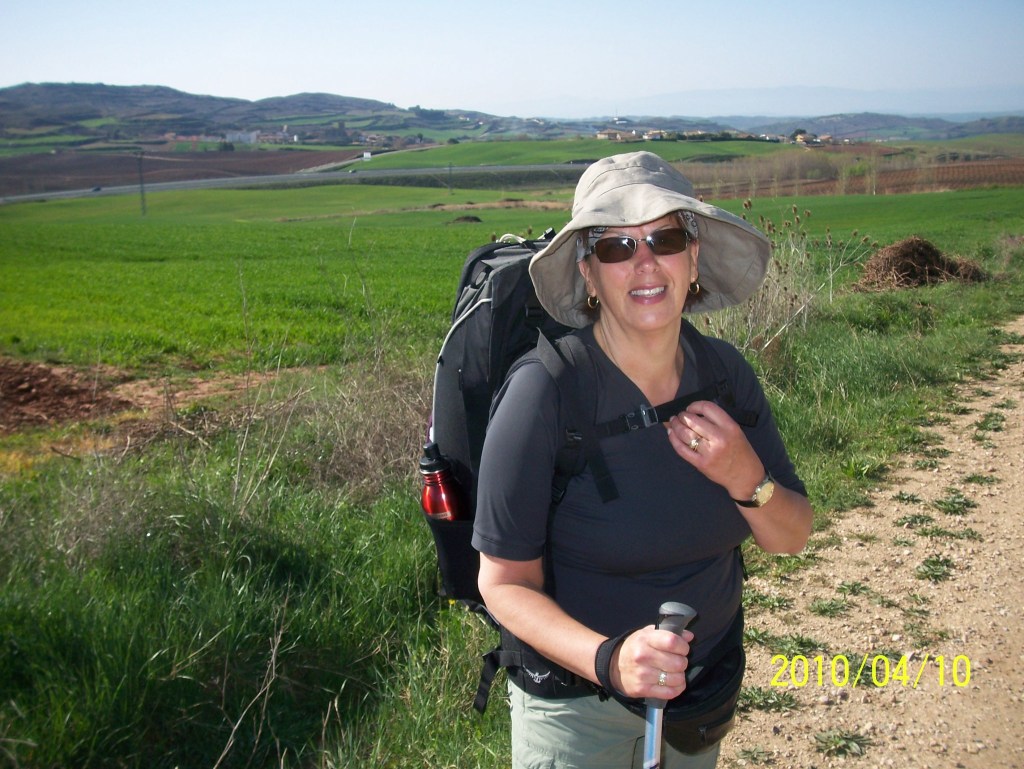
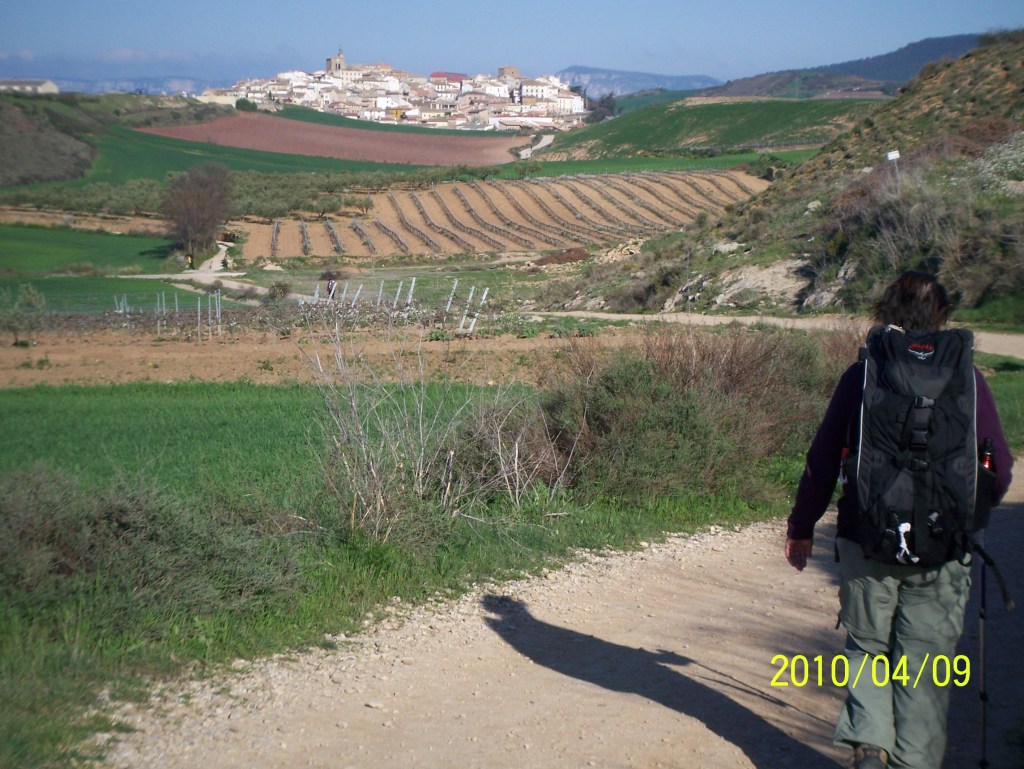
Beautiful Rioja
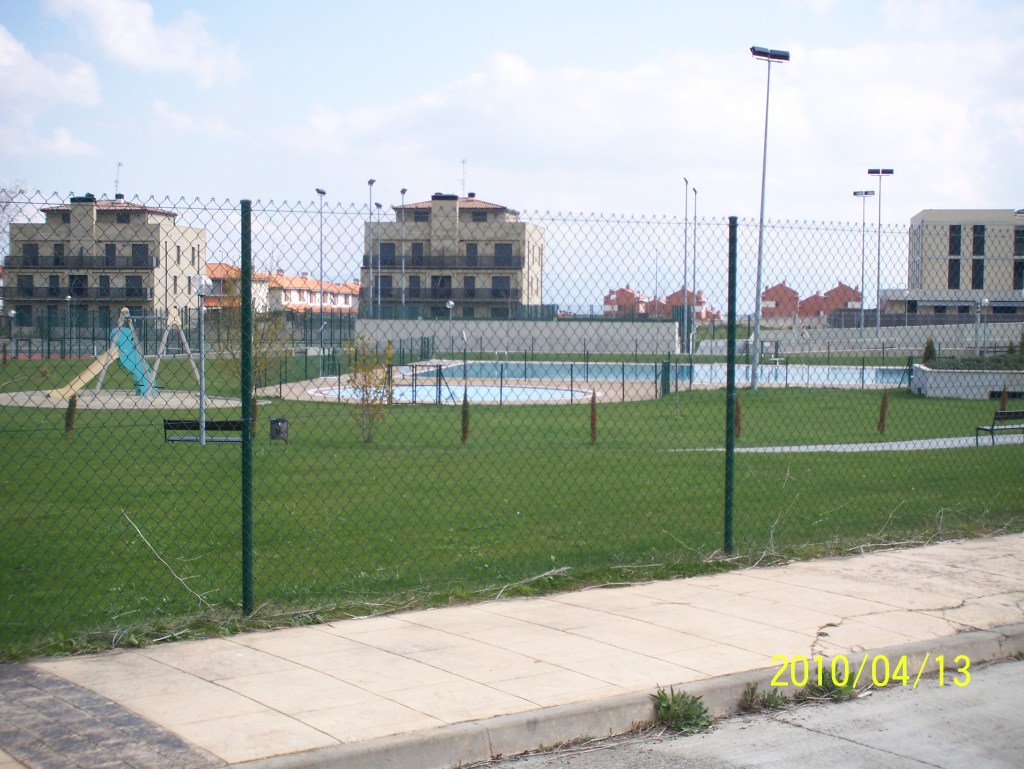
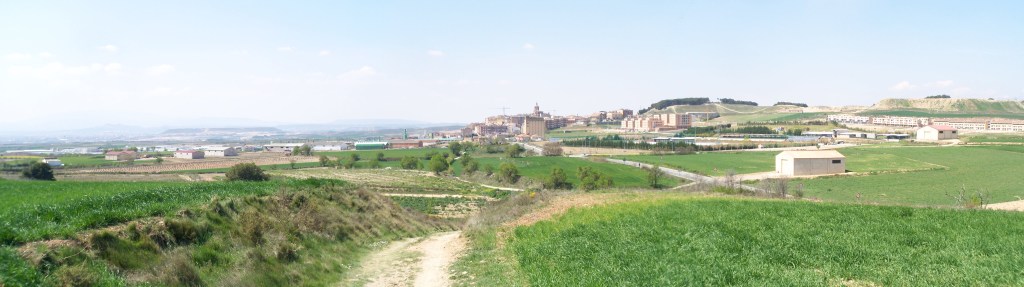
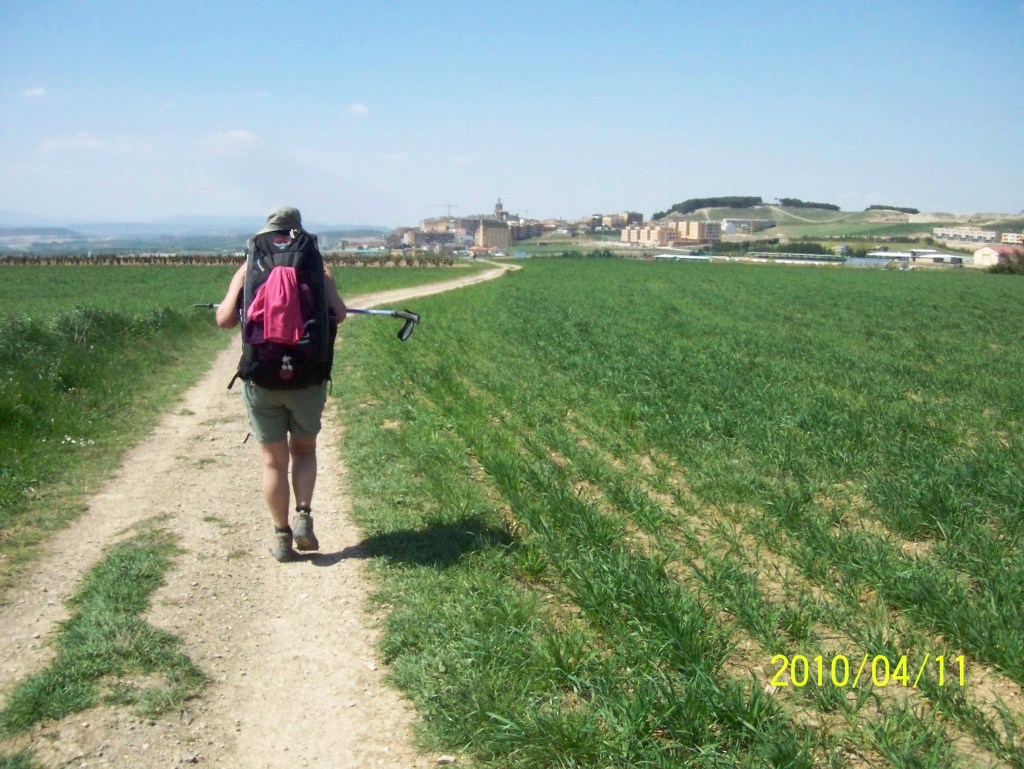
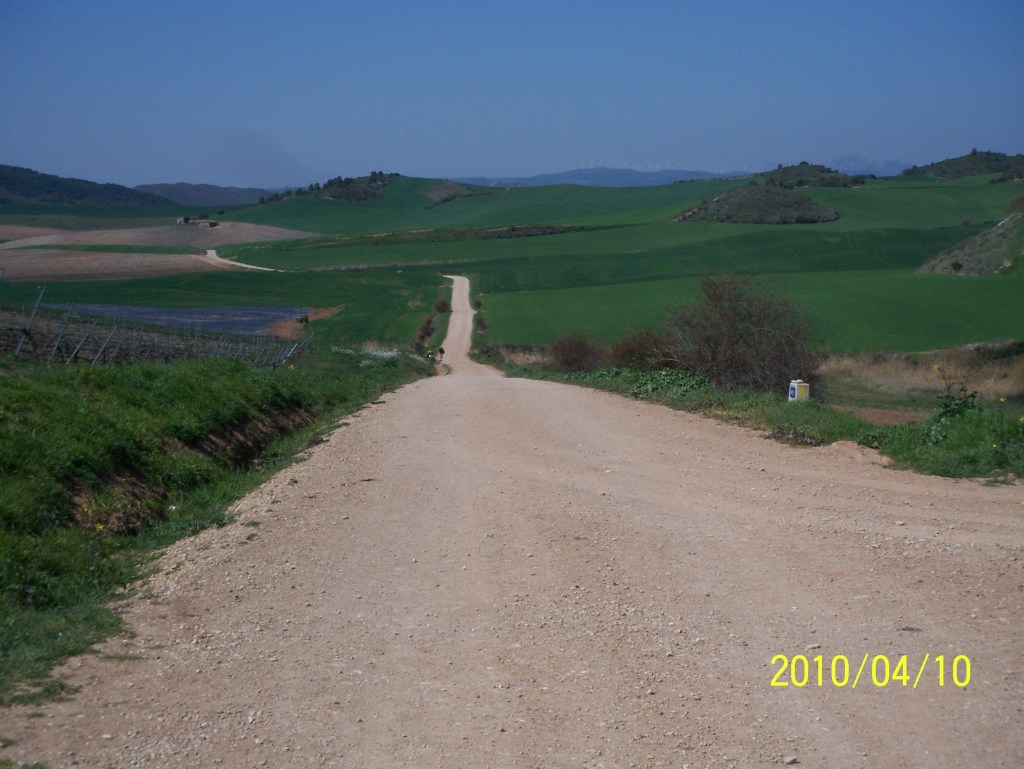
Most of this stage was on wide country tracks passing through remote and generally undulating vineyards and farmland – Rioja. I remember hearing cuckoo birds in the trees along the way but could not spot them for a photo. I made good time, nodding to other pilgrims that I passed. Continuing on, I came into what appeared to be a small deserted town called Ciruena. There were dozens of new houses, a community swimming pool, paved streets and no people. I thought this very strange. Looking at the map now, it turns out that there is a golf course there called the Rioja Alta. So this must have been a golf course development that failed to take off or perhaps it was still early in the season or something. Bizarre and eerie!
Heading out of town the path became gravelly – yellow sandstone I think. I was glad I had on my Vasque’s as I did not feel the lose rocks at all. Suddenly in front of me I see a younger man hobbling slowly. As I come up to him, I see he is wearing flip flops – yes flip flops! I asked him if he was OK. He explained that his feet were so swollen he could not get his hiking boots on that day and was walking painfully in his flip flops. So I slowed down and we walked the remaining 5 km together.
His name was Pekka and he was from Bavaria. We talked about the Camino, our working lives, relationships, hobbies, whatever. He told me his town has a much better Octoberfest than Munich and that I should come sometime. His English was very good as was that of all the Germans we met. I enjoyed our conversation and thought nothing of it. We made it to the refugio and checked in. Marie was there and in good spirits. That evening or perhaps in the morning, Pekka came up to me and thanked me for walking with him as it took his mind of his pain. I felt honoured that he so appreciated our time together.
Pekka
Marie counseled him to stay and go see a doctor about his swollen feet and blisters. So we said our goodbyes for now. Turns out he was a very popular guy, liked to joke and we met many others who knew him. I don’t think we met again but we are still connected on Facebook. A special guy and experience for sure.
I almost forgot to mention the famous miracle that took place in Santo Domingo de la Calzada that involves a rooster and a chicken. The legend goes that in the 14th century, a German 18-year-old named Hugonell, goes on pilgrimage to Santiago with his parents. A Spanish girl at the hostel where they were staying makes sexual advances toward Hugonell; Hugonell rejects her advances. Angry at this, the girl hides a silver cup in the German’s bag and then informs the authorities that the youth had taken it. Hugonell is sentenced to the gallows in accordance with the laws of the time.
The parents sadly decide to examine their son’s body, still hanging on the gallows, but suddenly hear his voice – he tells them that Saint Dominic the founder of Santo Domingo, has saved his life. His parents quickly make their way to Santiago to see the magistrate and tell him. The magistrate, who is at the time eating dinner, remarks: “Your son is as alive as this rooster and chicken that I was feasting on before you interrupted me.” And in that moment, the two birds jump from the plate and begin to sing and crow happily.
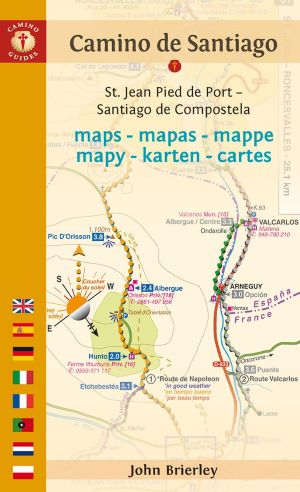
You’ll be happy to see I have combined two days into one in these daily recollections! We had been having good weather and Day 5 was no exception. We decided on walking to Viana, a distance of 19 km rather than the 28 km shown as the typical goal in John Brierly’s excellent guidebook.
This light and easy to carry water proof book of maps, shows the location of all pilgrim hostels en route, distances between villages, elevation profiles, points of interest, as well as alternative routes and accommodations. It was de rigour to use for most pilgrims. We had no cell phone, portable GPS or other aid other than the Camino trail markers, arrows and signs as we made our way each day. Yes we did get lost a few times so this book proved indispensable.
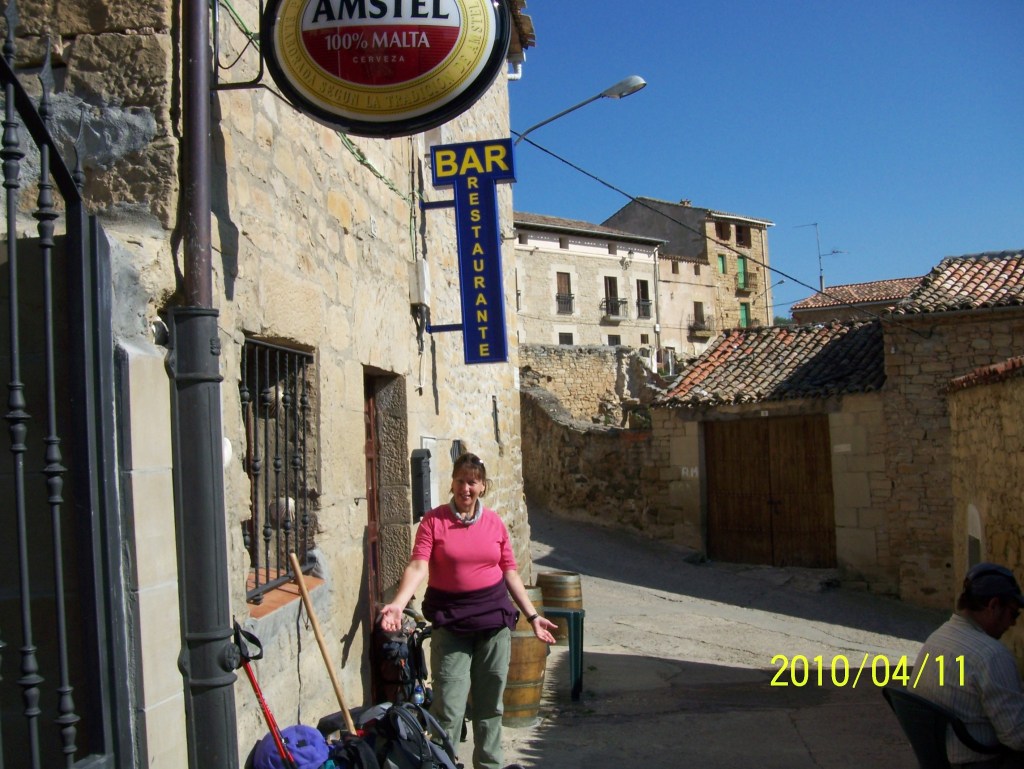
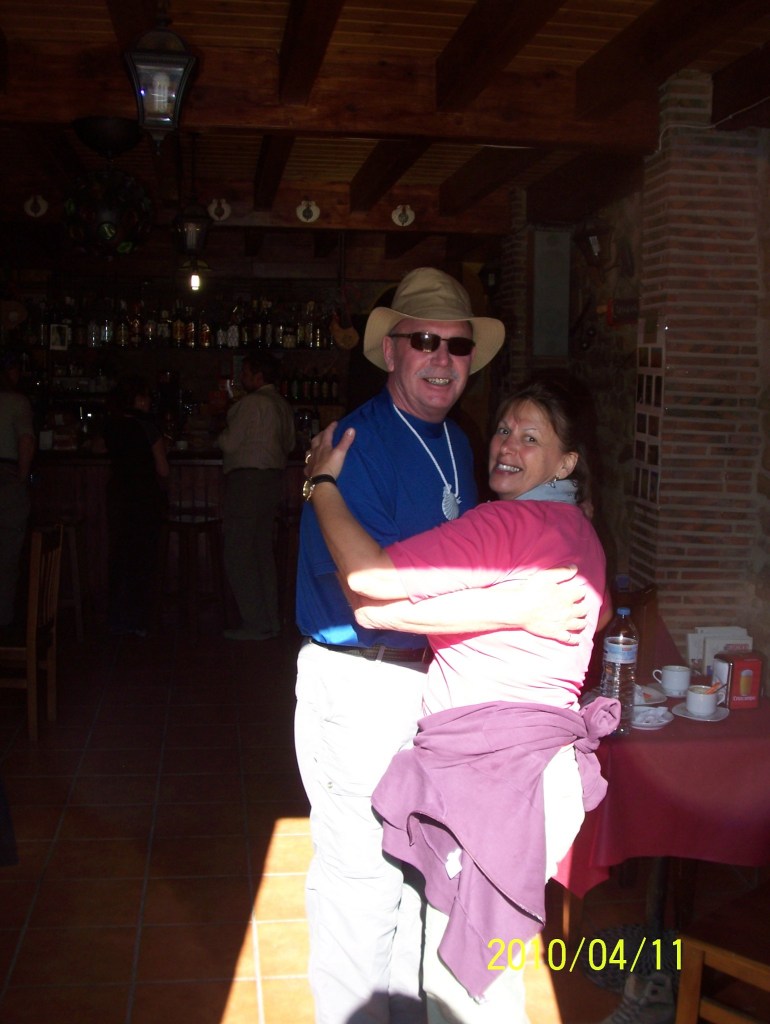
Breakfast placeSpontaneous dance after breakfast
We made our way to Viana a town of about 3500 and checked into the 54 bed Andres Munoz municipal refugio. We had a semi-private room as I remember and a window that opened up to the sun with a gorgeous view – all for about 8 Euro each, the typical cost of a bed in 2010.
The next day turned out to be colder. So we hiked about 11 km into Logrono – a large city of some 145,000. At that point we decided to take a taxi or bus to Najera, another 29 km ahead. This put us back on Brierley’s ‘recommended pace’. We arrived early and had to wait for the refugio to open. Typically they don’t open until 3 PM. Unless you or sick or something, you can only stay one night. Everyone must vacate by 9 AM so the staff can clean and prepare for the next night.
It was a large dorm style refugio so perhaps we did not sleep all that well. But we were safe and dry and had lots of food and of course some wine as you can see in the bag above.
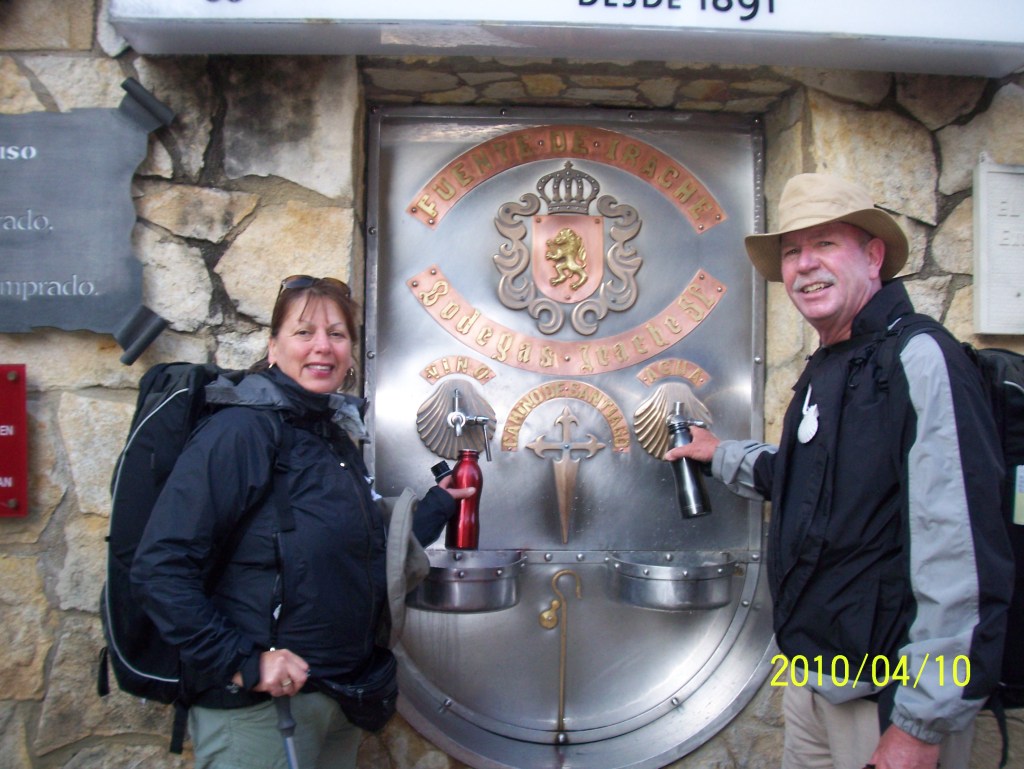
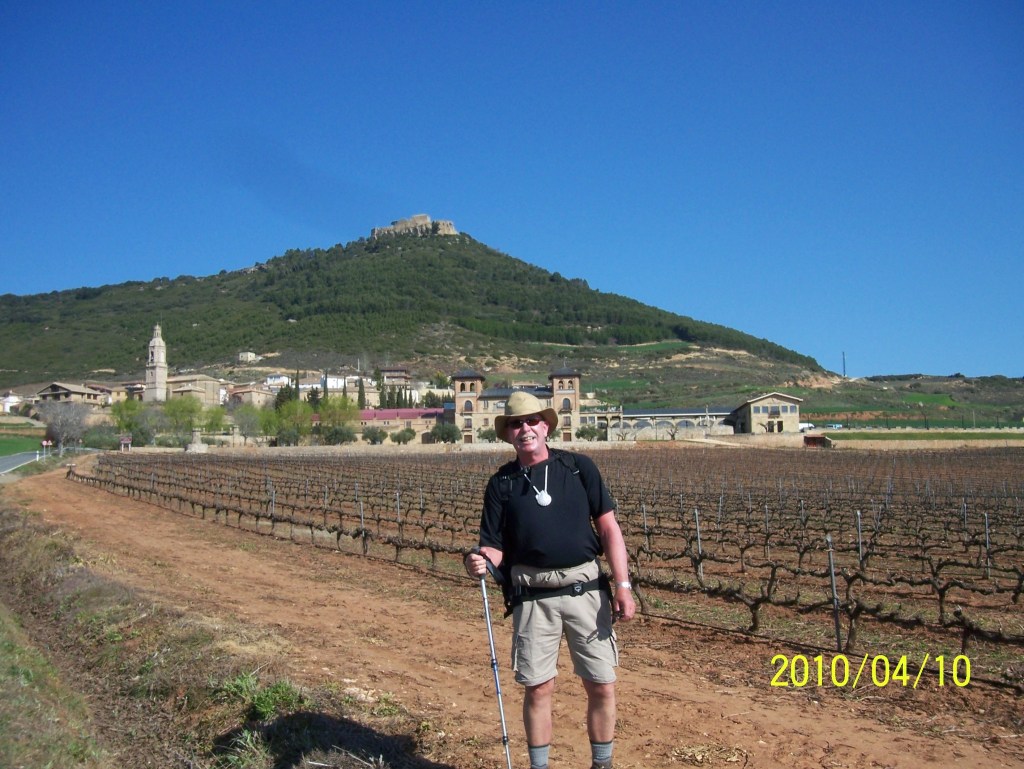
We were up and at it early before saying our goodbyes to everyone. We were heading for Los Arcos and there would be some climbing today. We had gone about 3 km so it was like 9 AM. We came upon the beautiful Bodegas Irache vinyard. We were wishing it was later in the day because they had to our astonishment a dispenser for pilgrims – red wine and water! I filled my water bottle, my hat, my pockets with wine. Marie was more sensible and filled up more on the water. The rest of our day was going to be a fun one for sure.
By now we were starting to feel the physical strain of the pilgrimage. I remember having to lift my legs one by one with my hands to get into bed at night – they were so weak and tired from the day. And climbing up and down from an upper bunk on the ladder was painful on the feet. Marie had blisters on her feet she had to contend with. To reduce friction, we would apply vaseline to the souls of our feet each morning before dawning our socks. Still, after a good nights sleep (we were getting somewhat immune to the snoring), we would feel healed, energized and ready to go again.
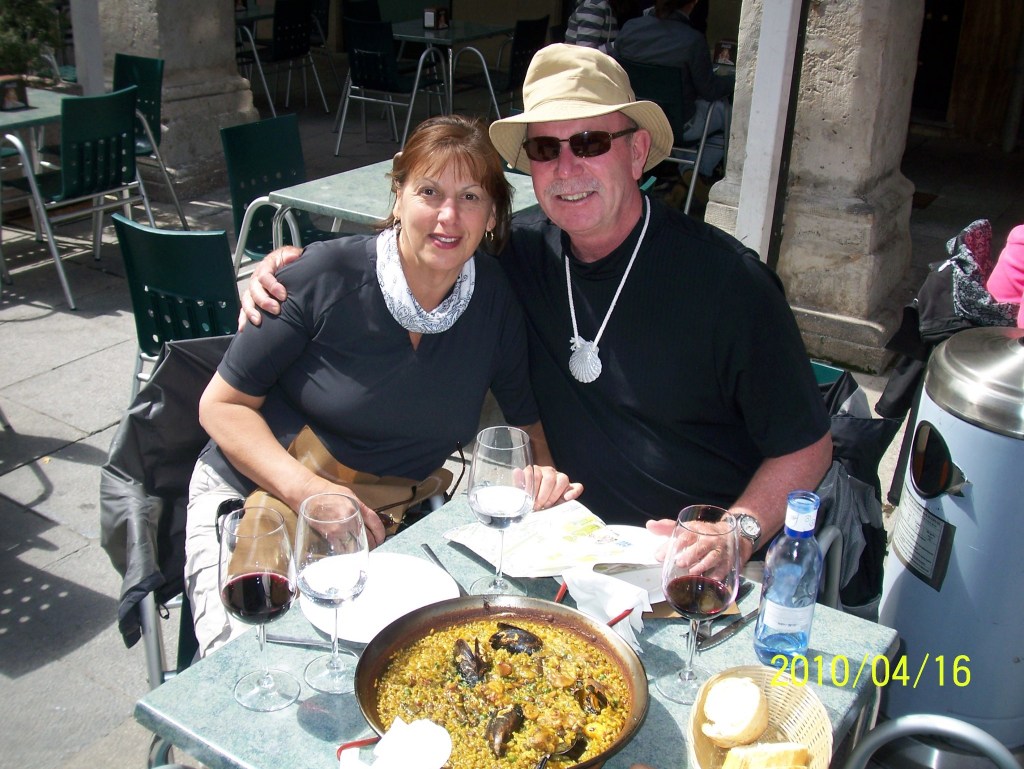
Each day, we would stop at a small corner store and pick up some fruit, bread, cheese, nuts, carrots etc for the following day. In the morning we would have some fruit and Dave would make a sandwich to share for lunch. We would stop for a continental breakfast and later in the early afternoon, have lunch alongside the trail. In the evening, either there would be a communal meal or we would find a restaurant for the menu del dia. This would usually consist of salad or soup, meat and potatoes and a desert – with endless wine included.
The trick with all this is the hours that places are open in Spain are different from home. Corner stores and restaurants were generally closed from 12 to 3 PM and again from 6 to 8 PM. Too often we would arrive to see the “cerado” (pronounced serado) sign in the window – “cerado, cerado, cerado” became our frequent chant. So we adapted and tried to get in early enough to have dinner before the restaurants closed at 6 PM. Otherwise we would have to wait until 8PM, faint with hunger. Language was never a problem. We simply pointed and they brought it. We were eating to fuel our bodies.
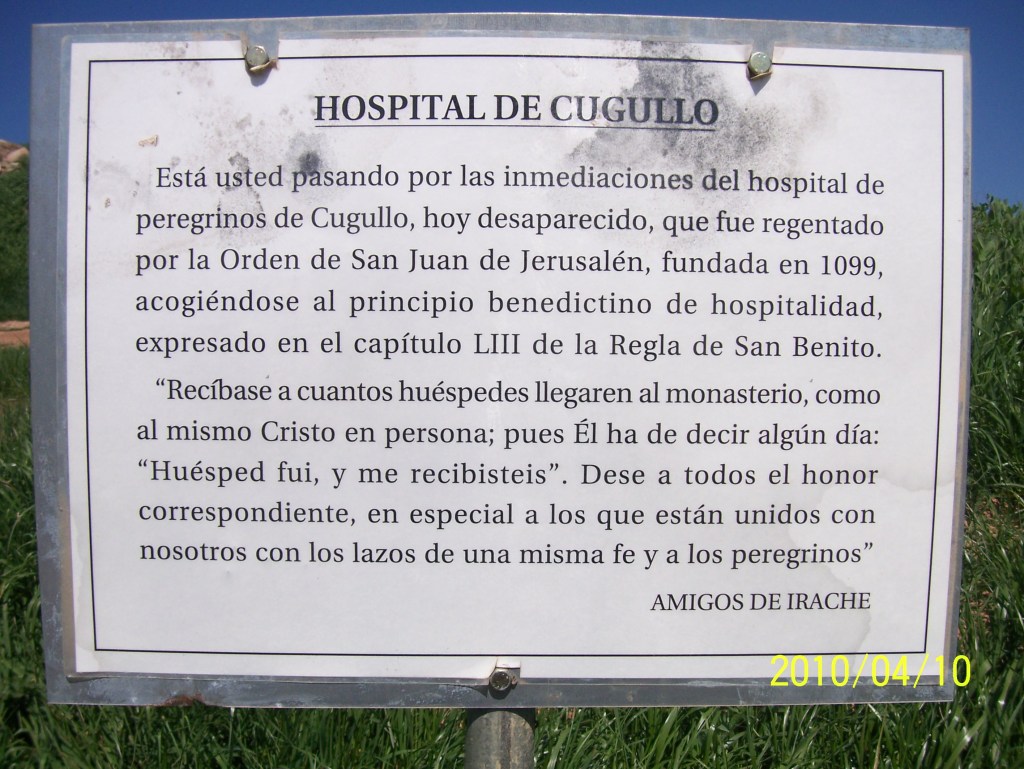
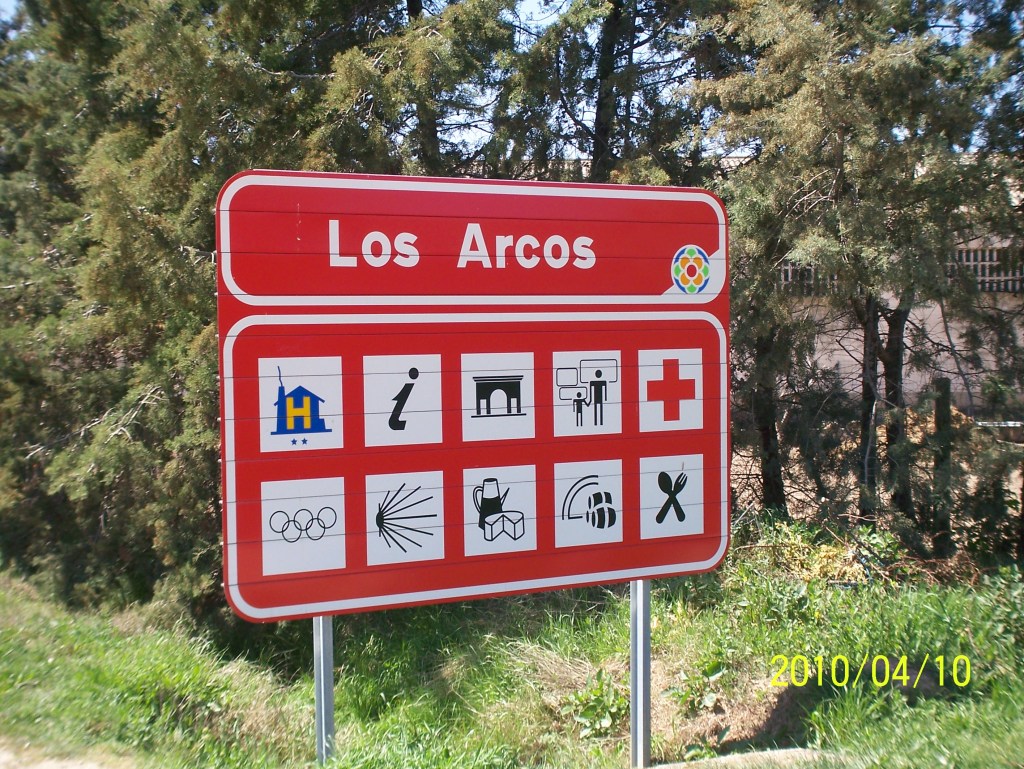
Plaque beside the ruins of a pilgrim hospital built around 1099Typical of the pilgrim information signs all along the Camino
We made it to Los Arcos, a town of 1300 residents. We checked into a 48 bed private refugio sponsored by Austria – La Fuente. Freshened up we checked out the local church. Often there were special Masses for pilgrims and we attended a few. The “race for beds” though each day made us not want to linger and then get in too late and potentially be turned away. We never were turned away and never had a reservation anywhere except at our hotel in Santiago for the very end.
Santa Maria de Los Arcos ChurchFound the gang in time for a beerDick, Italian waiter and Sherry from Washington State
We went out to a spiffier restaurant then usual and had a great Italian dinner with friends shown above. We then went shopping for some food at the corner store. Another day done – about 22 km.
Resuming our pilgrimage adventure (only 29 more days to go lol), it was starting to warm up a bit. We hiked for awhile enjoying the fine panoramic views. We stopped in a town called Cirauqui pictured above for café con leche. Our goal today was Estella a distance of 21 km.
I’m not sure she appreciated me taking her photo
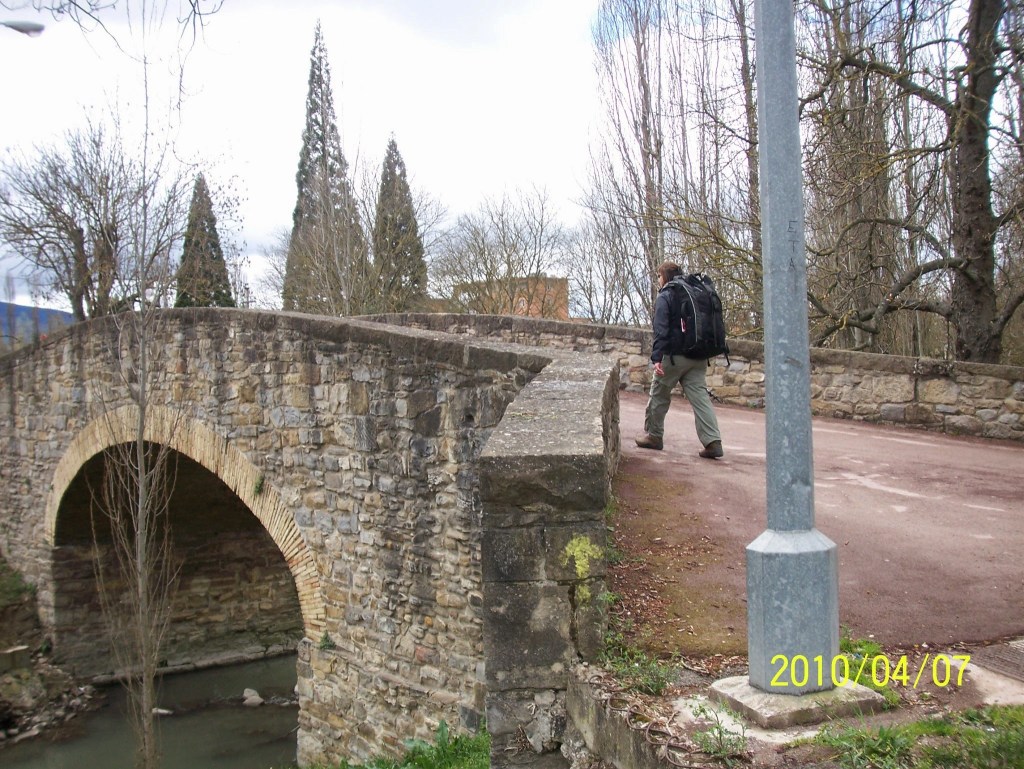
Most of the Camino Frances (our route) was generally a well maintained foot path. Occasionally we had to walk along a busy highway but this was rare. There were indeed some steep gravely sections and some wet areas. There were also some old wonderful Roman roads and medieval bridges. Traversing cities could be confusing. It is not a wilderness hike by any means. There are frequent small restaurants, grocery corner stores and a choice of accommodation facilities: refugios (dorms), hostels (private room, no facilities) and hotels (full facilities.)
Roman road and bridge coming out of Cirauqui
By now we were getting to know a few fellow pilgrims. You would get to know someone, not see them for a day or two and then run into them again. The most frequent nationalities were Germans, followed by S. Koreans, Brazilians, Americans, Brits, French, Canadians, Italians and gradually more and more locals. We remember also meeting Danes, Austrians, Poles, 2 Irish nurses and a fellow from Russia.
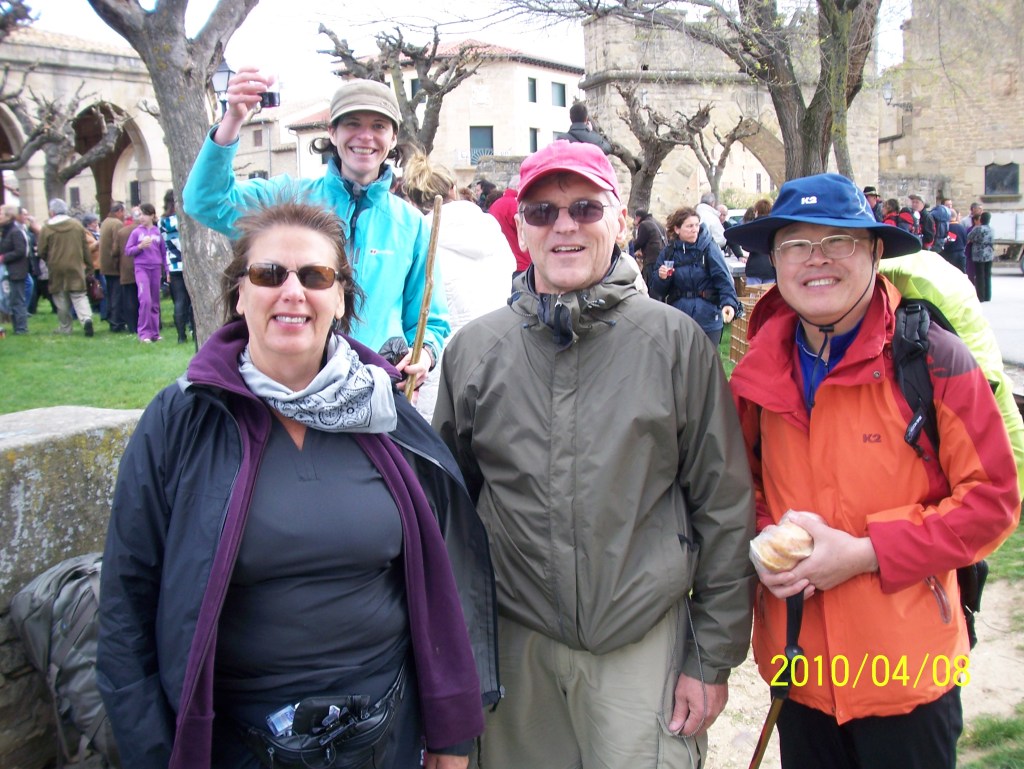
That’s Victor from the UK (left) on his 6th Camino with his nephew Christian on his 1stSmiling beside some olive trees with my backpack slung too low
We decided to stay in a smaller parochial refugio in Estella – S. Micuel Arcangel. We had stayed so far in a large municipal one and a privately owned one. This was fun. We all had to help prepare the communal dinner and make a contribution. There was much laughter and sharing of stories. There was group prayer and blessings and we all ate together. It was very moving.
Our refugio home in Estella for a night
One of the guests had a sad story to tell. His name was Hung from S. Korea. He had misplaced his wallet a few days prior and had no money or ID. His wife back home was scrambling to replace his credit cards and send him some money. He may have lost his passport too. He really missed his wife. What a mess this is when you are in a foreign country! He was staying in the refugio for 2 weeks until everything could be sorted out. He was very sad about this delay and we expressed our sympathy and support. Suddenly at the dinner table he broke out into the song “If you go to San Francisco, be sure to wear a flower in your hair.” Thinking of this moment now still brings tears to our eyes!!!
Saying goodbye to Hung, he manages a smile
We were never to see Hung again as he would be walking 2 weeks behind us now. Such is life on the Camino with its ups (graces) and its downs (misfortunes). Just like in the real world!
A risk of rain so we dawned our back pack rain covers
We arose early on Day 2. However some people had gotten up in the dark earlier, rummaged around with a light on their head, found their stuff and left before us. I remember it being cool and we needed light gloves. Leaving Cizor Menor, we decided on going to Punte La Raina – about 20 km. Today there would be a steep climb up to Alto del Perdon and then a steep descent.
Heading for Puente la Reina
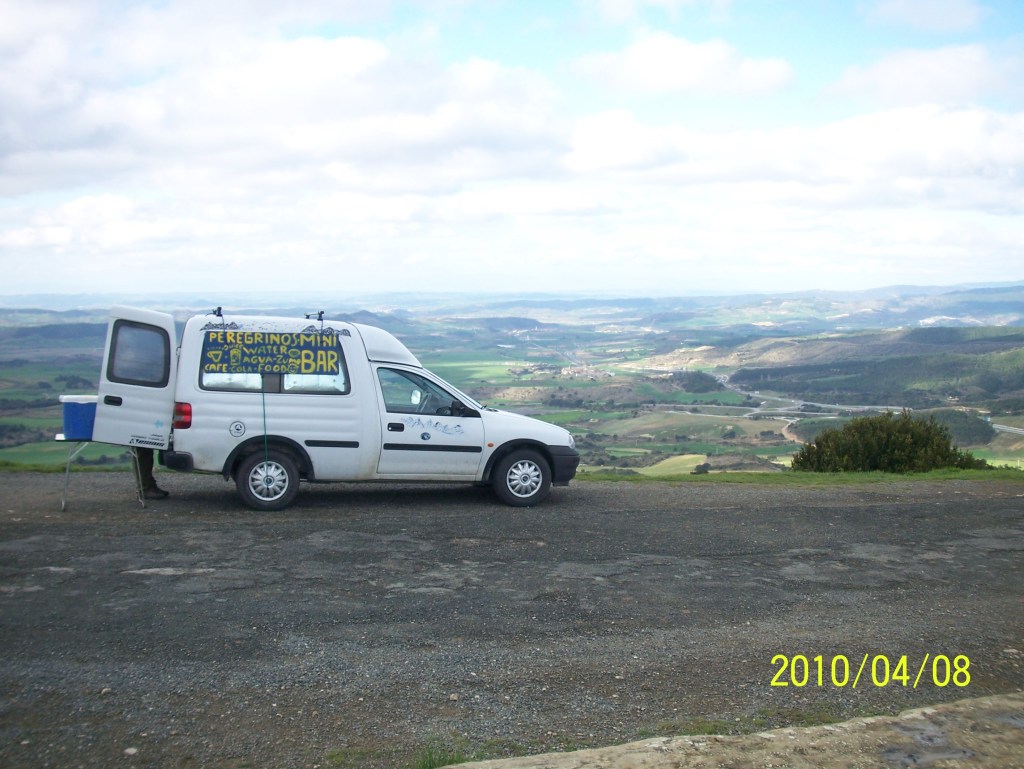
We likely stopped for breakfast but may have had our own snacks. It soon became the norm for us to get up and walk 5 km or more before stopping for a continental breakfast. We then climbed to Alto del Perdon and surprisingly found some warm coffee at a canteen truck at the top. We then gazed back at Pamplona in the distance as we prepared to descend.
Typical of the many pilgrim services along the wayPamplona now some 25 km in the distanceAt the top of Alto del Perdon
Why were we hiking the Camino de Santiago you probably wonder? Dave had just retired and Marie was a few years into hers. We wanted to bookend our work lives. Carrying what we needed on our backs, not knowing where we would be staying at night and getting physically exhausted every day, was a great segway to freedom. But equally important was spending time together to reflect on our faith, our lives, our relationships. And, we wanted to get closer to God. The Camino de Santiago is a thin place – one where we were more aware of God’s presence in the world and our daily lives. We were seeking a spiritual reawakening and renewal.
Inscription: “I looked for Jesus, to find Jesus and I really love Jesus
We continued through some beautiful farmland and vinyards. We saw some beautiful little churches and chatted with fellow pilgrims, some of whom we recognized from the before. It ended up being another dry and pleasant sunny day.
In the early afternoon we were getting hungry. We trudged into a town called Obanos. As we entered a lady exclaimed to us “Bocadillos. bocadillos!” Great we thought – there is a sandwich place around the corner that she is raving about. (bocadillo is snack or sandwich in Spanish). Continuing, we rounded the corner to see a procession of people following some priests around a church.
When we rounded to the other side of the church, to our amazement, we saw dozens of people congregated around open boxes of bocadillos. And furthermore, they were about to serve red wine, all for free. Needless to say we saw this a one of God’s little blessings on our Camino journey.
Marie with Dick, Kim with Claire from Scotland at back
Turns out – the Church of San Pablo y Felicia – annually commemorates the Camino mystery of Felicia and her brother Guillén. In the middle ages, Felicia, daughter of the Duke of Aquitane, set out against her family’s wishes on a pilgrimage to Santiago. Seeing misery, poverty and disease all about her, she decided to stay on and help those in need. Her brother Guillen came looking for her to convince her to come home. He was unable to convince her to return. In a fit of rage he killed her with a knife. Feeling much remorse, he prayed to St. James (Santiago) as to what he should do. He decided toobecame a hermit and moved to a hermitage on a hill overlooking Obanos. To this day, this congregation has this annual celebration with food and wine in their honour- and we just happened to arrive there exactly at the right time!!!
More than satisfied, we continued on our way another 4 km and checked into the large Santiago Apostol refugio in Puente La Reina. We had a relaxing evening and called it a day.
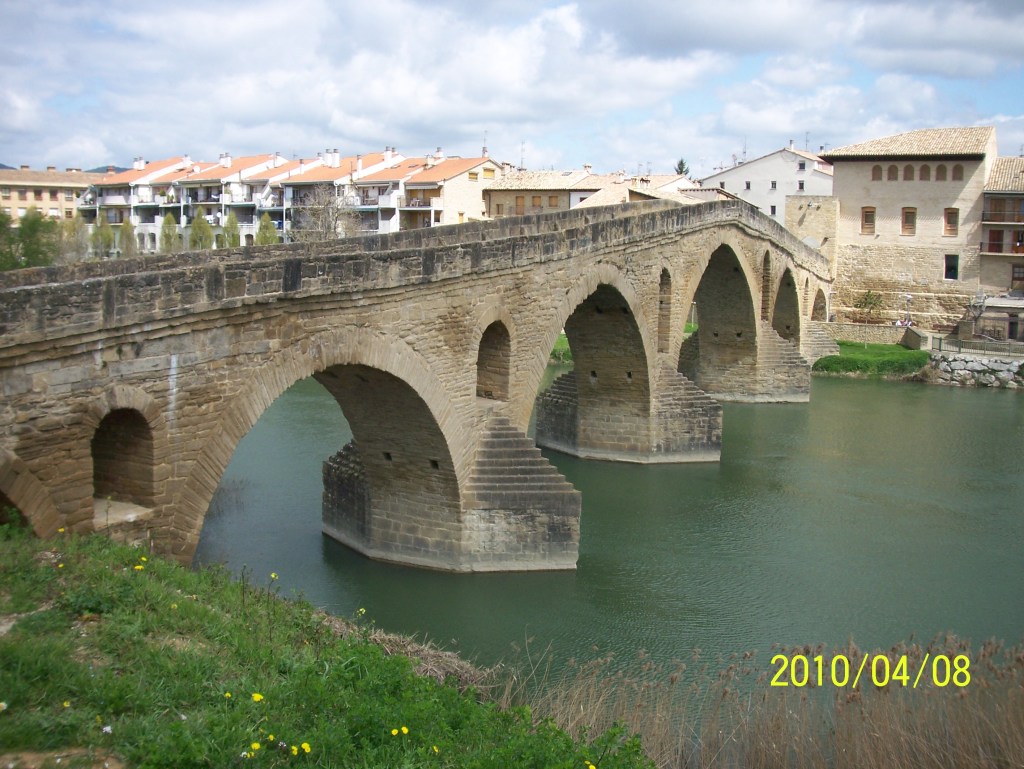
Beautiful stone bridge over the Rio Argo At dinner with new friends from Austria
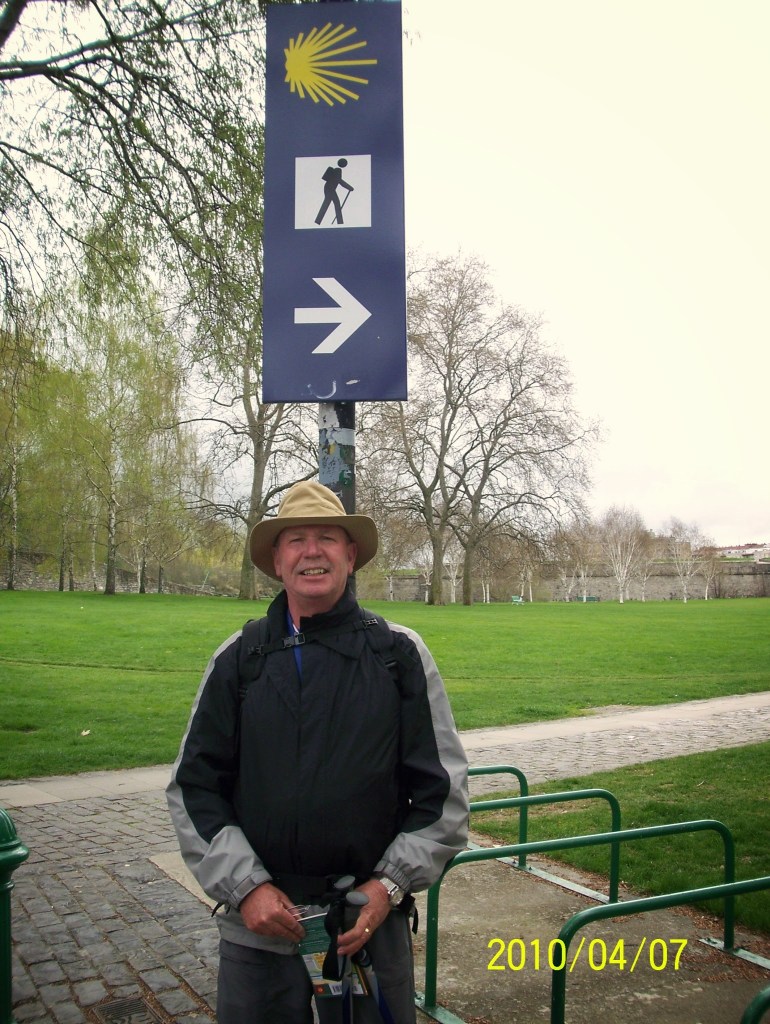
It was exactly 10 years ago today that we embarked on the Camino de Santiago pilgrimage in Spain. In the photo above we are all smiles. Right after it was taken, I realized I had forgotten my Tilley hat on the train lol.
It was a Holy Year – July 25, the Feast of St. James fell on a Sunday. This meant it would be more crowded than other years and that there was the possibility of gaining a Plenary Indulgence. The next Holy Year isn’t until 2021, an 11 year gap. We had been in training for months, read everything we could find and been to a workshop or two to prepare. Still we were green and not sure what to expect.
Making our way through Pamplona wary of the bullsWe found our first marker (note the new hat)
After taking a trans-Atlantic cruise to Barcelona and then a train to Pamplona, we decided to start here. We could have gone on to St Jean Pied de Port, France to start but it was complicated to get there. We walked only about 10 km that first day as far as a place called Cizur Menor. It was cool and dry.
Maribel Roncal Refugio dorm style accommodation building
We checked into the Albergue pictured above but forgot to get our pilgrim passports stamped. While we were checking in, an American man was making enquiries about how to send some stuff back home that was ot needed and too heavy to carry. His name was Richard and we got to know him well.
Richard (Dick) 2nd from front on left
After showering and a short nap (de rigour as we were quite tired) we headed out for a short walk to find something to eat as we had not been invited to the group meal depicted above. We immediately met a friendly lady from South Korea who answered all our questions and made us feel most welcome on our first night. Dave is connected with her on Facebook.
Sue from S. KoreaPilgrim’s Menu del DiaEnd of the first day
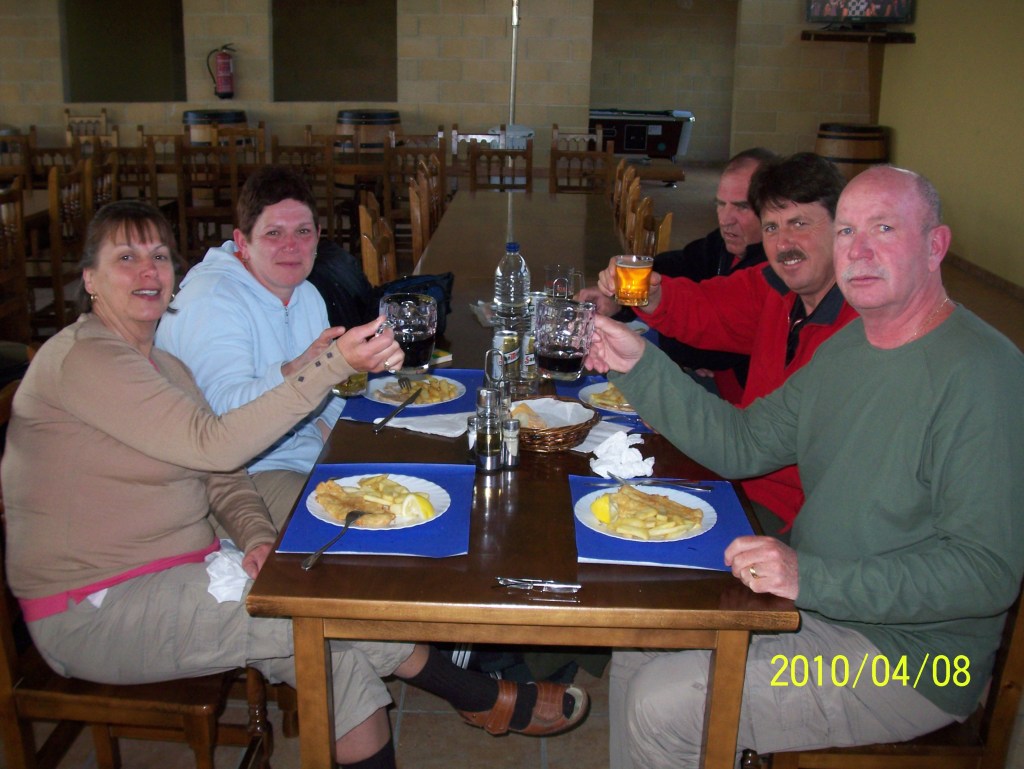
We found a restaurant right across the street and enjoyed the 3 course pilgrim meal including all the wine we could drink for 10 only Euro each. Very reasonable. We then retired to our bunk beds in the open room refugio dorm and slept as well as might be expected given some very loud snoring. We later met and befriended the loud snorer named Kim who several people were talking about in the morning.
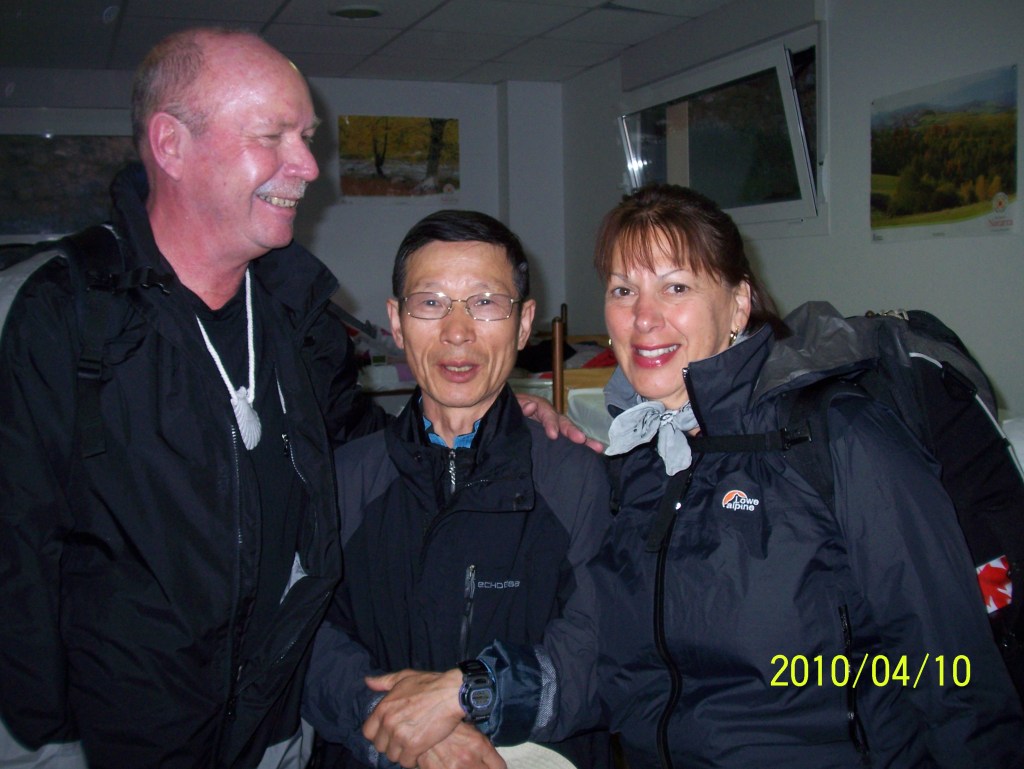
Dick on the left with Kim on the right (the apparent champion snorer)
All in all we felt quite exhilarated and satisfied after our first day. So far so good.






 Beautiful Rioja

















 mattersofthemoment