Woodroffe High School Band – 1

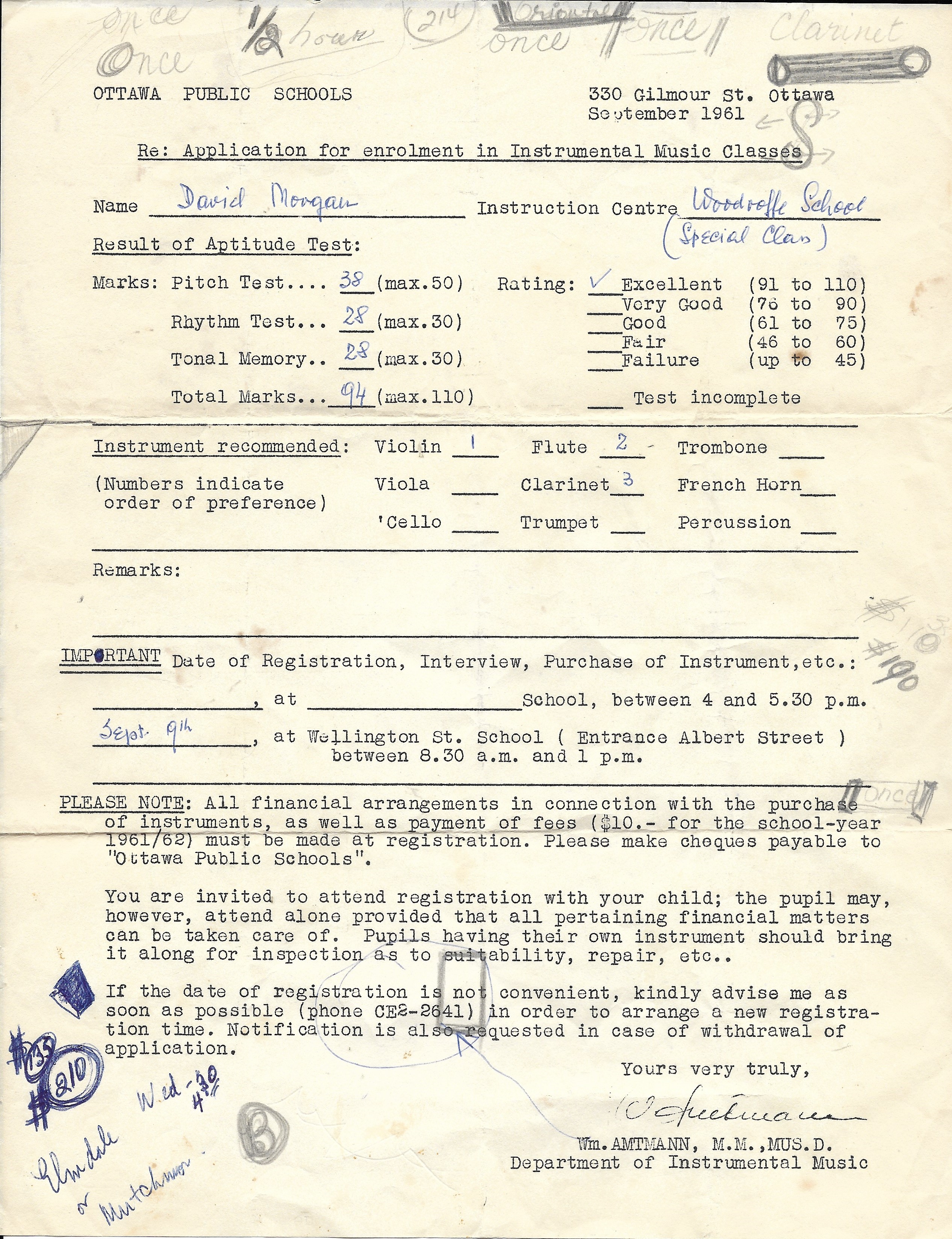
I was a member of the Woodroffe High School (Ottawa, Canada) Band for 3 years way back. I played the flute which happens to figure prominently in the recent concert above. The reason I played flute goes back further. In Grade 6 my mom decided to enroll me in music lessons. I was given an aptitude test and found out I had good aptitude. The results are shown below complete with Mom’s scribbles. It was recommended that I take up the violin. For some reason I abhorred the violin and instead chose the 2nd recommendation, the flute.
The flute is a relatively easy to play wind instrument (you need to develop your ombouchure) and relatively inexpensive. The one above is what I think I had – it currently retails for $129CDN. So I began music lessons on the flute after school. However in those days, that was a lot of money!
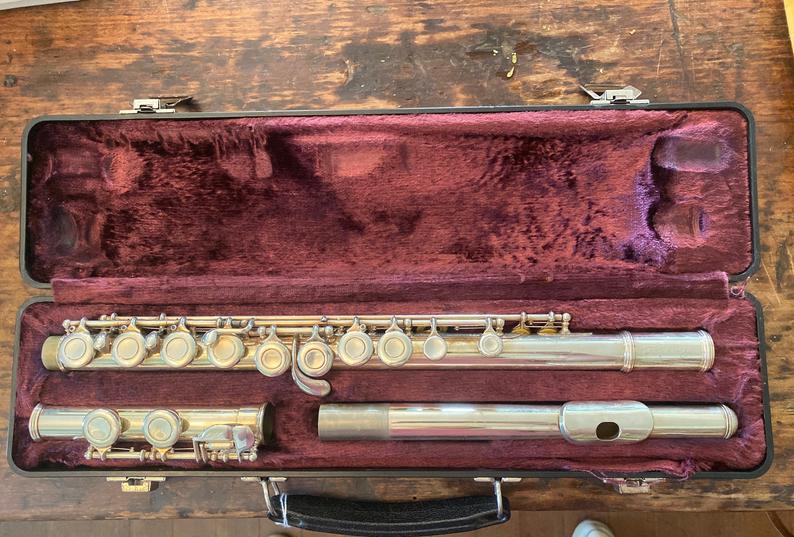
Armstrong Beginners Flute

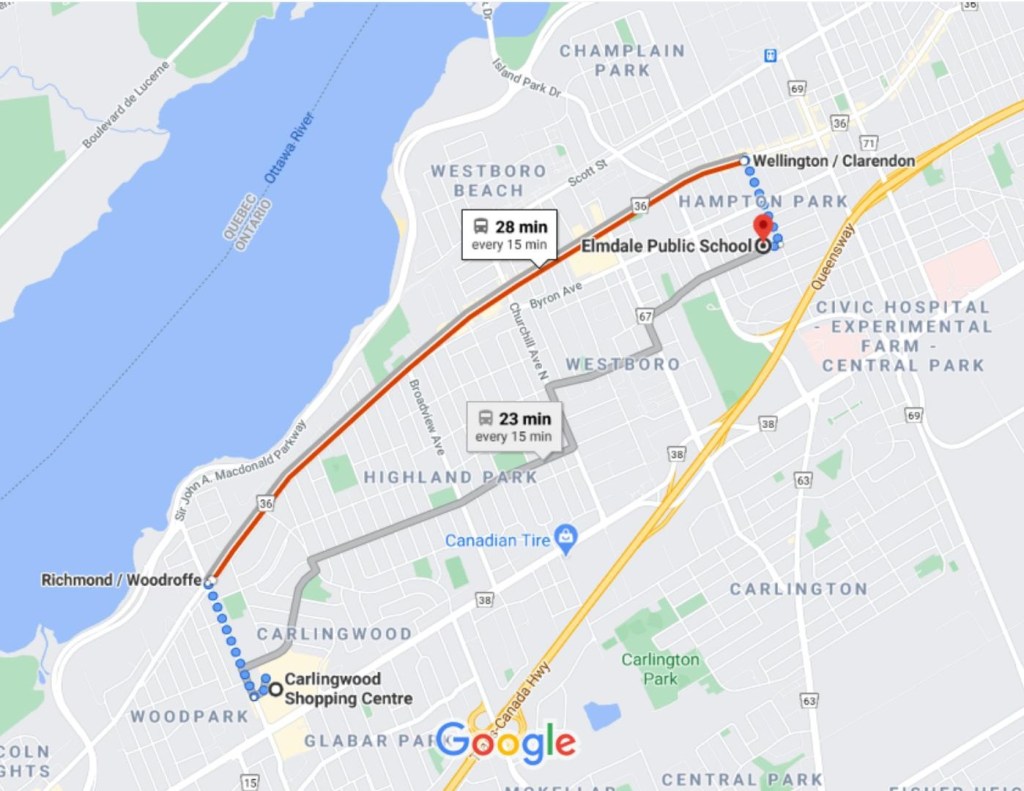
This is the 52 bus route I took every Wednesday after school. I had to go to Elmdale School for the lessons as they were not offered at D. Roy Kennedy or Woodroffe public schools. It was fun taking the bus and walking a few blocks – rain or shine. It was my first experience at solo travel.

A Mr. Guibault was my flute teacher. He frowned a lot when I played meaning I had not likely done my lessons nor practiced sufficiently in his eyes. I was not a natural for sure. I remember practicing at home. Gradually I made progress, learned to read music and my embouchure, the way in which you apply your mouth to the mouthpiece, strengthened. I remember being in a concert once as a Scout. We all had no idea how to play our instruments but our parents clapped anyways. This reminds me that Miles Davis once told a bandmate “to play that instrument like you don’t know how to play it.” It all paid off though when I got to high school.
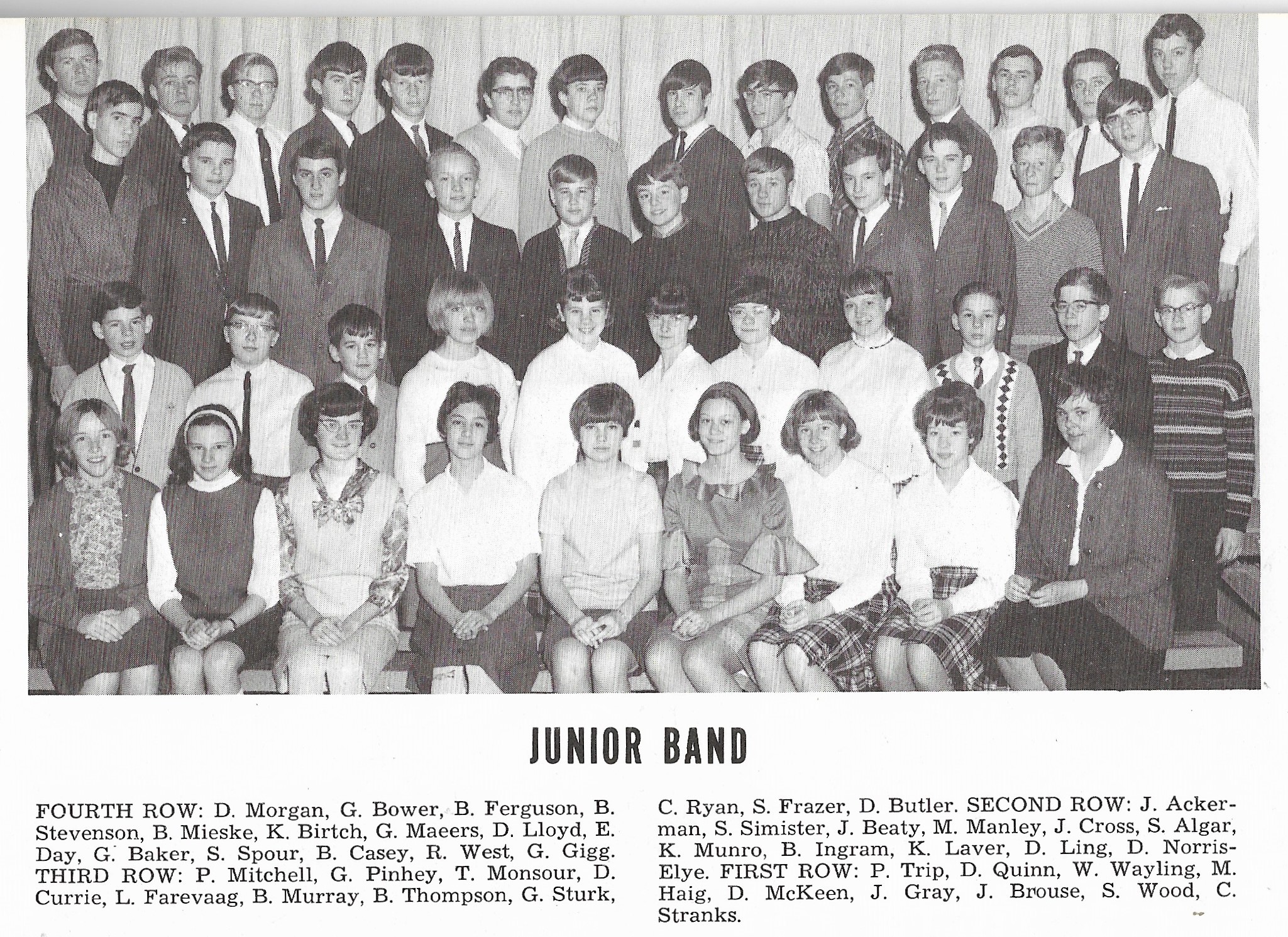
1965-66 Wyvern (Woodroffe High) yearbook photo

In Grade 9 I took Music and continued to practice and learn how to play the flute. The next year I made the Junior Band pictured above. We were a concert band that played in the auditorium occasionally but mostly practiced in preparation for individually moving up to the Senior Band. We did enter band competitions and placed well. In the spring of 1966, the Senior Band lost a large number of it’s senior members due to graduation. So I was moved up to the Senior Band, flute in hand by the end of Grade 10 in the spring of 1966.
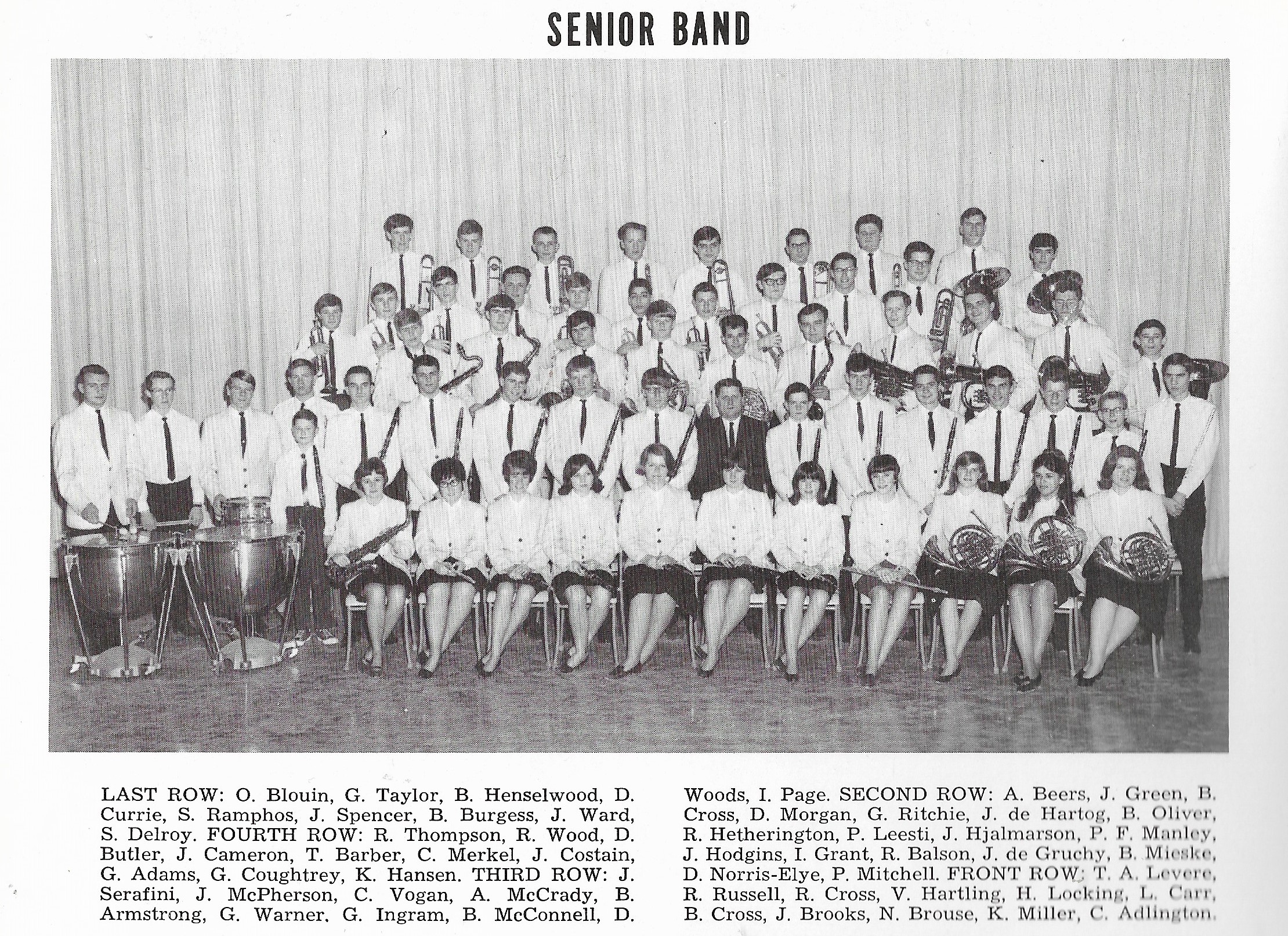
Me 2nd Row 4th from left, Mr. Manley centre, (photo 1965-66 Wyvern)

Mr. Peter Manley was our very talented conductor. He had built this band up in only a few years to be among the best in Ottawa. It had tied in the A class competition with Ottawa Tech and got invited to play at the World’s Fair in NYC in 1965 before I joined. It was indeed an honour to become a member. It was an extra-curricular activity and we practiced at 8AM sharp every Thursday morning. I remember waking up at 7:40, throwing my clothes on and literally running the 4 blocks to school. You did not want to be late – Mr. Manley was a great ribber. In front of the whole band he would say something like – “Ah Mr. Morgan, late again. Perhaps we should all change our time to suit your schedule, eh?” as I slunk into my place.

We played a lot of marches, some orchestral overtures adapted for concert band and selections from musicals such as Gigi. Our set piece was Colonel Bogey on Parade which figured prominently in the Bridge Over the River Quai movie if you remember it.

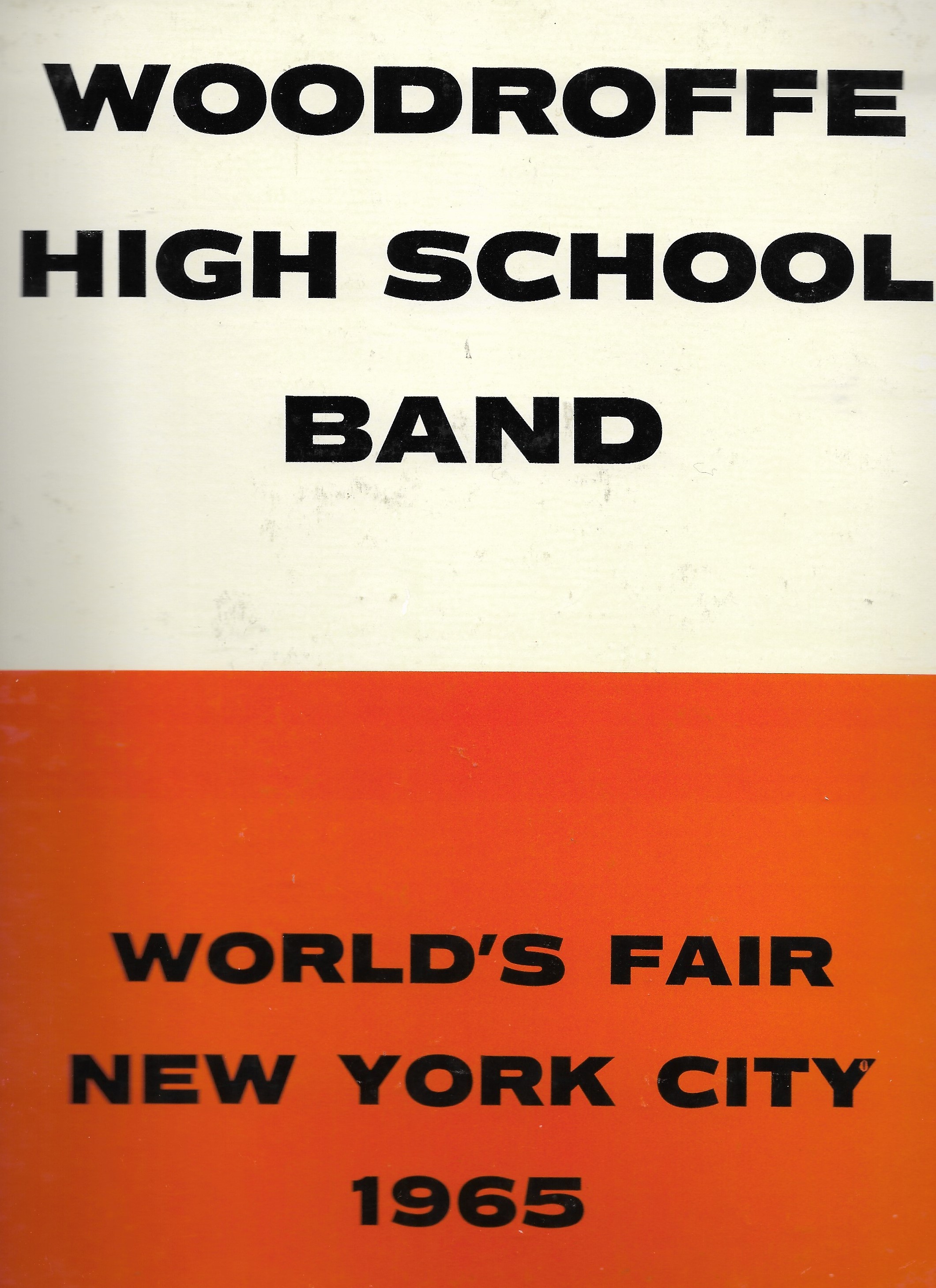
I have 2 records they made in the mid 1960’s just before I joined, but no record player on which to play them lol. Here are the numbers recorded as listed on the 1964 recording:

  • On the Quarter Deck (Alford)
  • Mannin Veen (Haydn-Wood)
  • Chorale and Alleluia (Hanson)
  • Academic Festival Overture (Brahms)

And on the 1965 recording:

  • “Finale” New World Symphony (Dvorak)
  • 2nd American Folk Rhapsody (Grundman)
  • Colonel Bogey on Parade (Alford)
  • Selection “Mr. Lucky” (Mancini)
Record Cover

Wow, pretty cool! An awesome band experience was in store.
10 Comments

Filed under Uncategorized

Put Yourself in His Place

A delightful if long read about economic and love life in Victorian times small town England. Henry Little, an inventor struggles against powerful trade unions and a bad guy named Coventry. He is blown up and his house and equipment are destroyed. He is forced to go to America to sell his invention of saw making equipment and make his fortune so that he will be worthy of marrying the beautiful Grace Carden. Meanwhile, Coventry steals his love away.

Upon returning to England, Grace has given Henry up for dead because the vile Coventry stole Henry’s letters before they ever got to her. After much resistance she slowly agrees to marry the rich Coventry upon the very strong urging of her father.

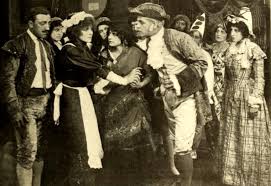
Image from the 1912 silent film Put Yourself in His Place

From there the plot turns many times unexpectedly with Coventry the villain continuing to block the union of Grace and Henry. A huge dam break floods the town and cripples Coventry while Henry the hero, rescues dozens of people. I won’t tell you the end but when it finally comes it is good.

The character development is great. One of them the warm hearted Dr. Amboyne has this saying “Put yourself in his place.” which he uses frequently to empathize with others and interpret others’ behaviour. It is an interesting and useful philosophy. There is also the devoted Jael Dence who loves Henry too and Henry’s supportive uncle Squire Raby. Interesting characters abound.

I read this book as it was specifically mentioned in John A. MacDonald the Old Chieftain. It must have been the rage back in 1870. I downloaded it for free and read it on our Kobo. A great read indeed, 4.5 stars out of 5. A little long else would have been 5.

Leave a comment

Filed under Uncategorized

The True Meaning of Our Whole Livelihood

Saint Columban Memorial Day

This meditation in Magnificat today connected with me as this will be the first time in 7 years we will be at home this winter:

Pilgrims continuously sigh for and long for our homeland, for travelers are always filled with hope and desire for the road’s end. And so, since we are travelers and pilgrims in this world, let us think upon the end of the road, that is of our life, for the end of our way is our home…. Many lose their true home because they have greater love for the road that leads them there.
Let us not love the road rather than our home, in case we should lose our eternal home, for our home is such that we should love it. Let us keep to this principle, therefore, that we should live as travelers and pilgrims on the road, as guests of the world, free of lusts and earthly desires, but let us fill our mind with heavenly and spiritual forms, singing with grace and power: For my soul thirsts for the mighty and living God. When shall I come and appear before the face of my God? (Ps 42:2-3), and My soul is like a parched land before you (Ps 143:6), and saying with Paul: I desire to be dissolved and to be with Christ (Phil 1:23). Let us know that although we are strangers to the Lord while in the body, we are present to the eyes of God. And so, turning our back on all evil and laying aside all apathy, let us strive to please him who is everywhere, so that we may joyfully and with a good conscience pass over from the road of this world to the blessed and eternal home of our eternal Father, moving from present things to absent ones, from sad things to joyful ones, from passing things to eternal ones, from earthly things to heavenly ones, from the region of death to the sphere of the living, where we shall see heavenly things face-to-face, and the King of kings, ruling his realms with an upright rule, our Lord Jesus Christ, to whom be glory from age to age. Amen.

Saint Columban

Saint Columban († 615) was born in Leinster, Ireland, and was the founder of several European monasteries.(From Celtic Spirituality, translated and introduced by Oliver Davies, with the collaboration of Thomas O’Loughlin. © 1999 by Oliver Davies. Published by Paulist Press, Inc., New York/Mahwah, NJ. http://www.paulistpress.com. Used with permission. Magnificat 2020)

Leave a comment

Filed under Uncategorized

Brazil ’14

This posting is about Marie and my visit to Rio in 2014.  I promise I won’t talk any more about Brazil  – well perhaps one more posting on my love of Brazilian music, lol.

Brazil ’14

Leave a comment

Filed under Uncategorized

Brazil ’79

Photo courtesy Manchete
Great Samba!

I had had so much fun the first time around that I had to go back to Rio de Janeiro in time for New Years 1978. Kim was living there then having transferred to the Canadian Consulate located there. She and Andy were going strong and were to be married later in 1979.

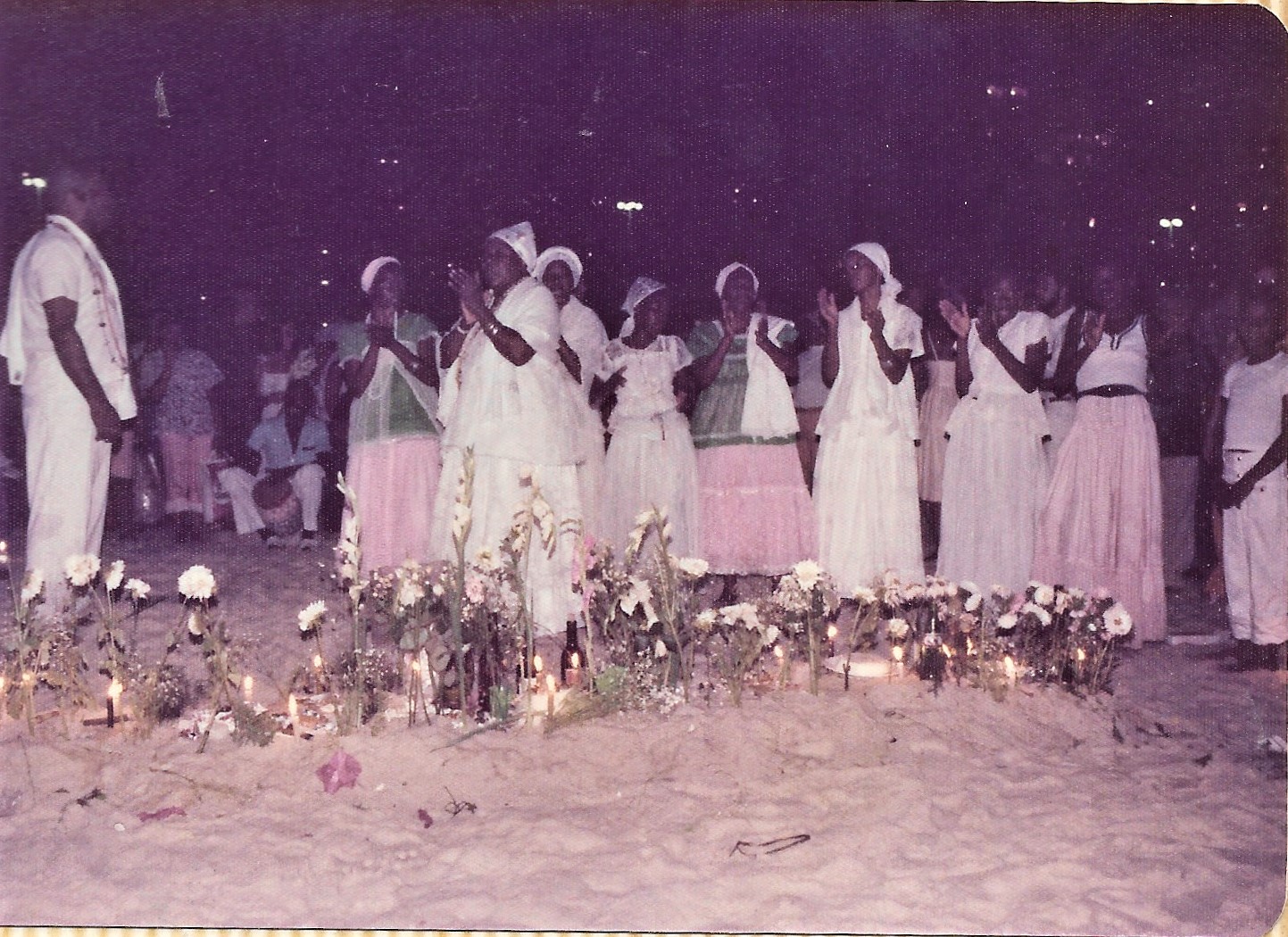
On New Years Eve we went to a party in Copacabana. I remember going up to a nice apartment. We had a few drinks and then heard fantastic drumming sounds coming from the streets. Groups of young men had formed spontaneous drum groups and were competing to outdo each other. It’s samba drumming like you hear in Beth Carvalho’s video above. Then we headed for Copacabana Beach for more fun. There were hundreds of people there celebrating the Reveillon as it is called in Brazil.

Offerings to Iemanja

The people on the beach dress in white and prepare little handmade boats and load them with offerings, aiming to please Iemanja, the goddess of the water, so she can provide them with prosperity for the coming year. There are rituals and dances happening to celebrate the coming year in a spiritual manner. The Candomblé religion originated in SW Nigeria and is practiced in Brazil. It is syncretized with the Roman Catholic religion meaning separate beliefs and traditions have been merged into a inclusive combined tradition. Wow, this is special folks!

Offering Kim up to Iemanja

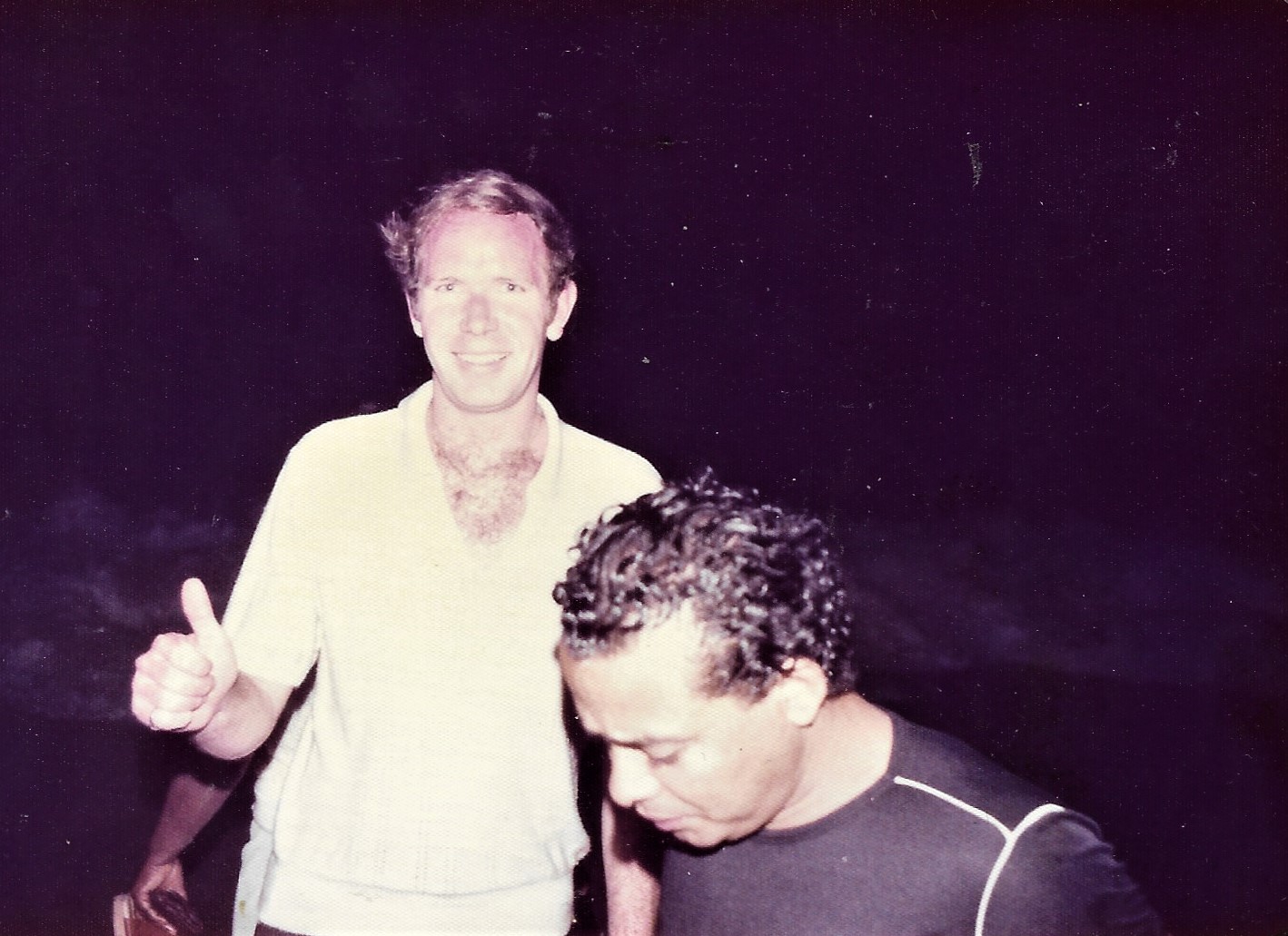
It was truly an amazing experience. We all wondered into the sea to watch the little boats float away. If they didn’t come back, that signified acceptance by Iemanja. If they did, that means bad luck for the sender I guess. I wondered into the sea, glass of wine in hand. When I wandered out I wondered what had happened to the glass, lol. At midnight a huge wall of fire poured out from the top of a hotel skyscraper and there were fireworks all about. Wow, Happy New Year 1979!

Soaking it all in literally

In 1979, Brazil was a led by a military dictatorship as were many other South American countries. The president at the time Gen. Ernesto Geisel was relaxing restrictions after left wing guerillas had been largely defeated in the brutal U.S. backed Operation Condor which had killed thousands. I do not recall seeing any evidence of this – no troops in the street etc.

Copacabana Beach

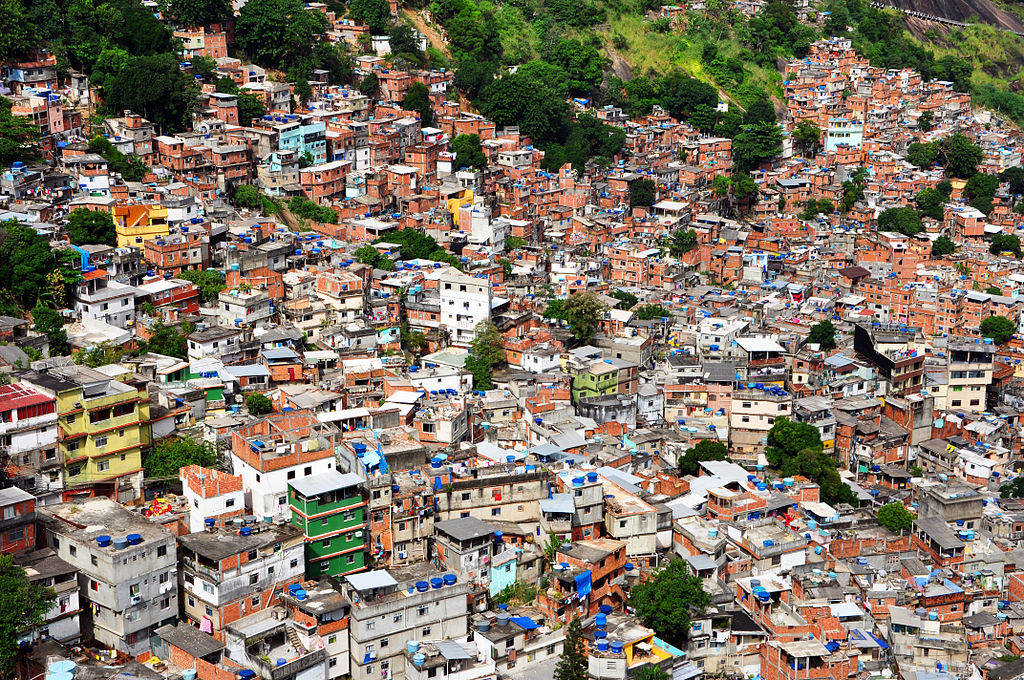
Of course we returned to the beach during the day. I remember lots of beautiful people, kids playing soccer, vendors selling matee (tea) and limanche (lemonade). There was lots of visible poverty around too. Favelas, the informal low-income settlements were always in sight wherever we were. When you parked your car at the beach you had to pay the local kids a fee or risk it being vandalized. When you went to an outdoor restaurant there were kids begging. You saw beggars on the street everywhere. It was a dichotomy of riches and poverty. Perhaps you saw the 2002 movie City of God which depicts drug gang warfare in Rio. Sad but real.

Photo courtesy Wikipedia

On a lighter note we went to a “churascaria” restaurant and enjoyed it – as much BBQ meat as you can possibly consume. We went to a seafood restaurant at Barra de Tijuca which was a barren beach then and now all built up. We enjoyed “feijoda completa” on Saturdays – a spicy stew made of meats. We enjoyed “Chopp” beer and caiparinha cocktails made with cachaça made from fermented sugar cane. But the real highlight was going to the bar in Ipanema where the song The Girl from Ipanema was written by Anonio Carlos Jobim. What a dream.

Kim and Andy off to a party

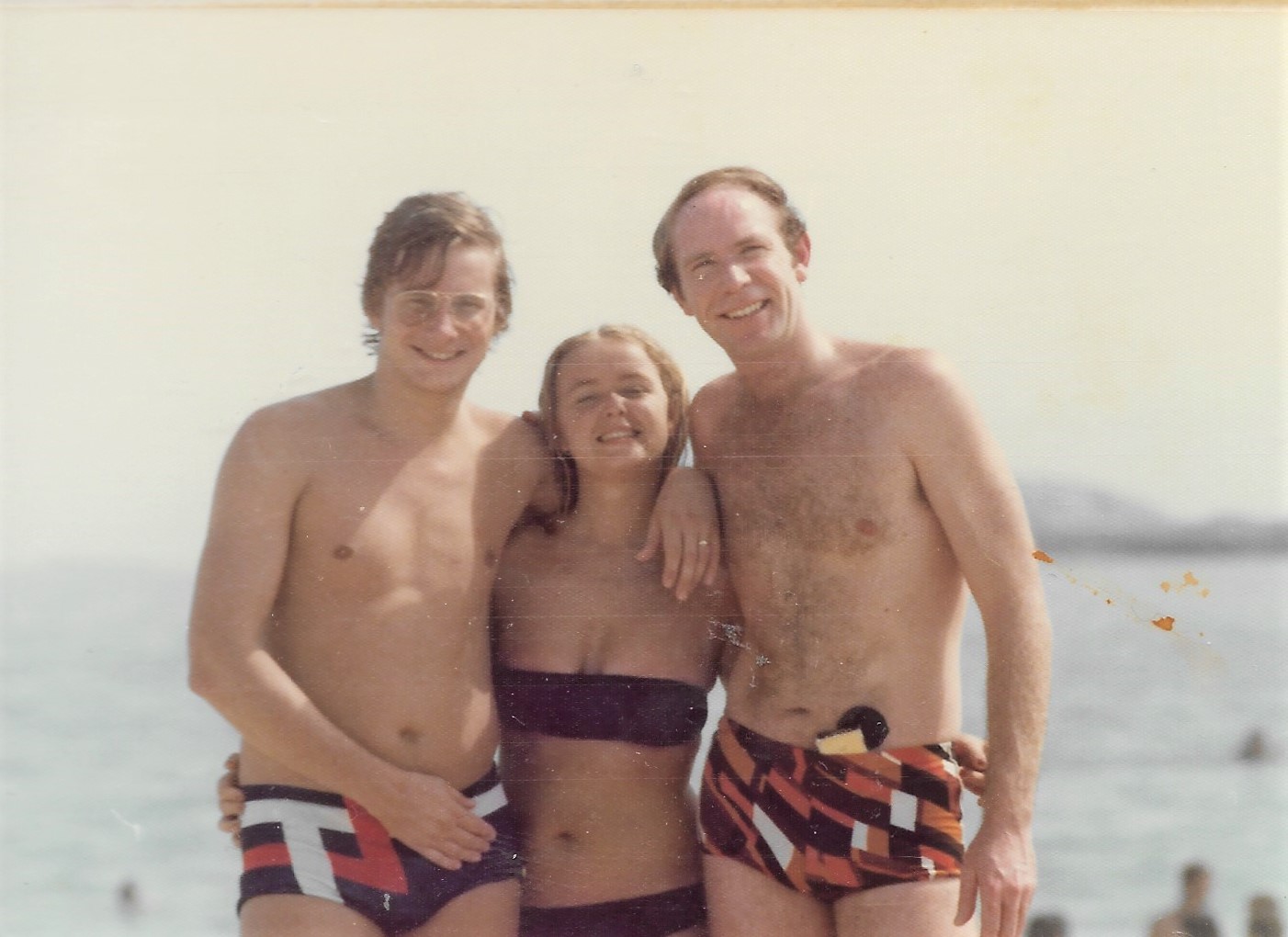
My visit was coming to and end but not before one more trip to the beach.

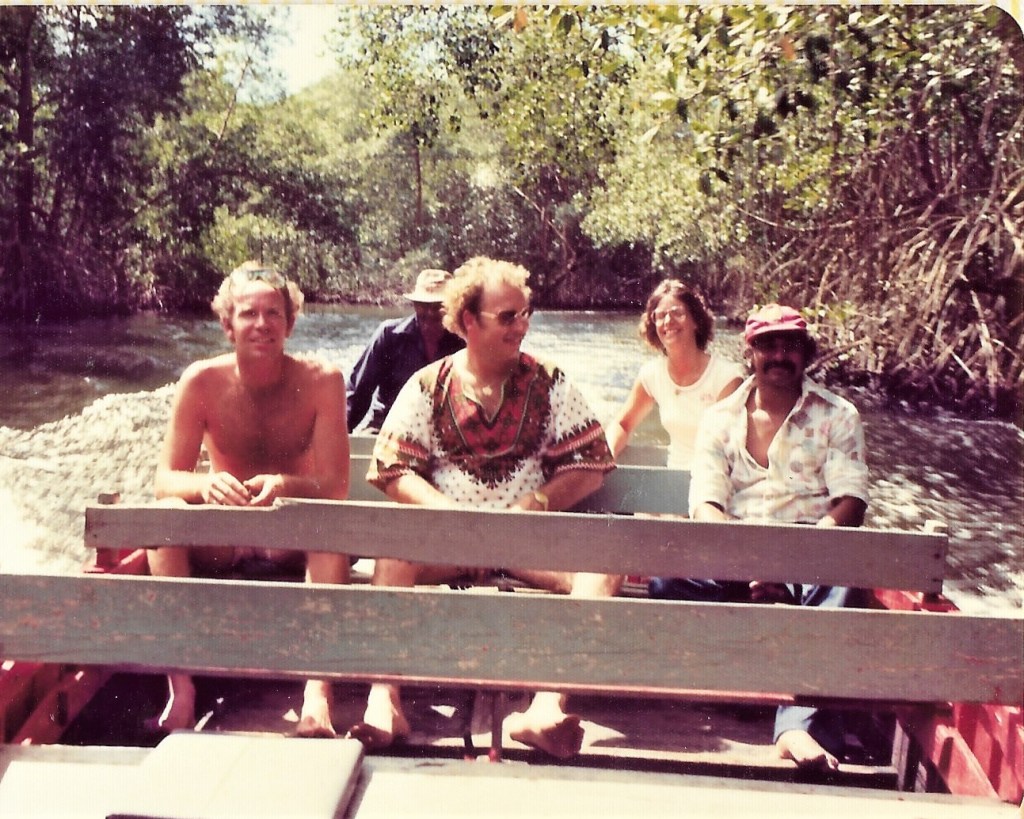
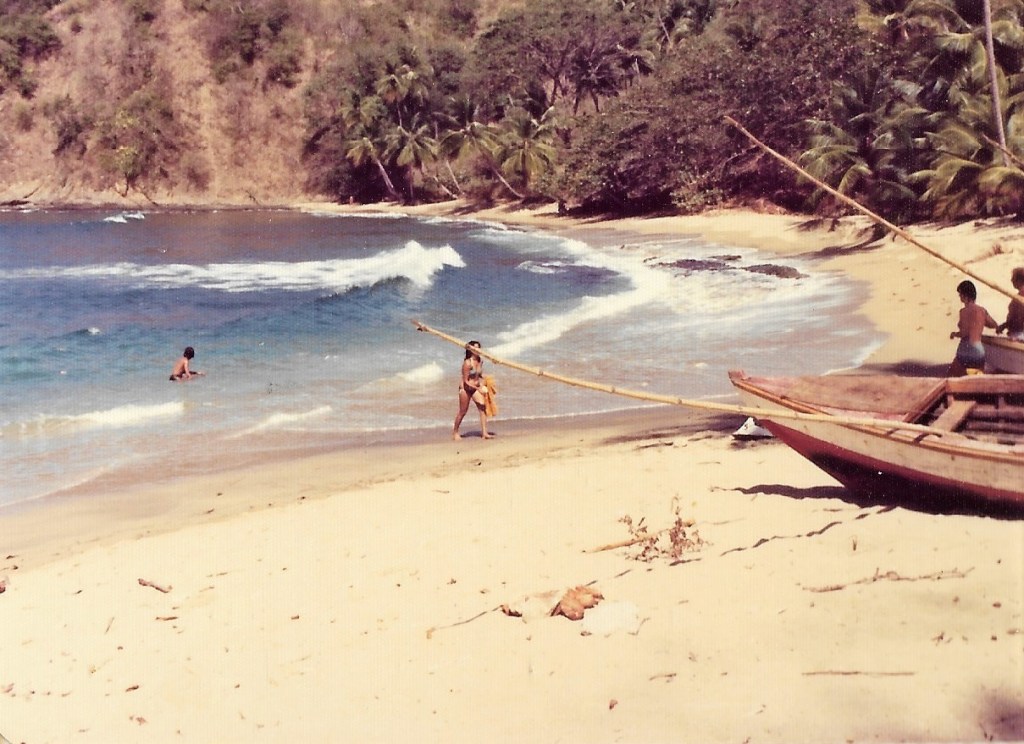
On the way home this time, I stopped in Caracas, Venezuela and Trinidad and Tobago to meet up with some friends. In Caracas I remember seeing a favela right beside the Simon Bolivar skyscaper. In Trinidad we visited the La Brea tar flats before heading for Tobago with its quiet beaches. Another great trip had come to an end.

Leave a comment

Filed under Uncategorized

Garcelon Stamp Company

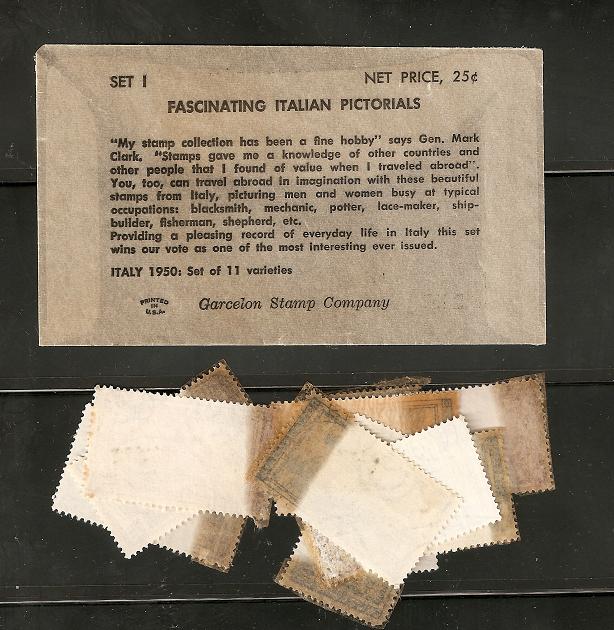
I think my interest in travel was first kindled by the Garcelon Stamp Company. When I was about 12, my parents bought me a postage stamp album. Back then stamp collecting was very popular. Franklin D. Roosevelt had said: “The best thing about stamp collecting is the enthusiasm which it arouses in youth as the years pass. It dispels boredom, enlarges your vision, broadens your knowledge and in innumerable ways enriches your life.” Collecting stamps was a way to travel the world – and still is.

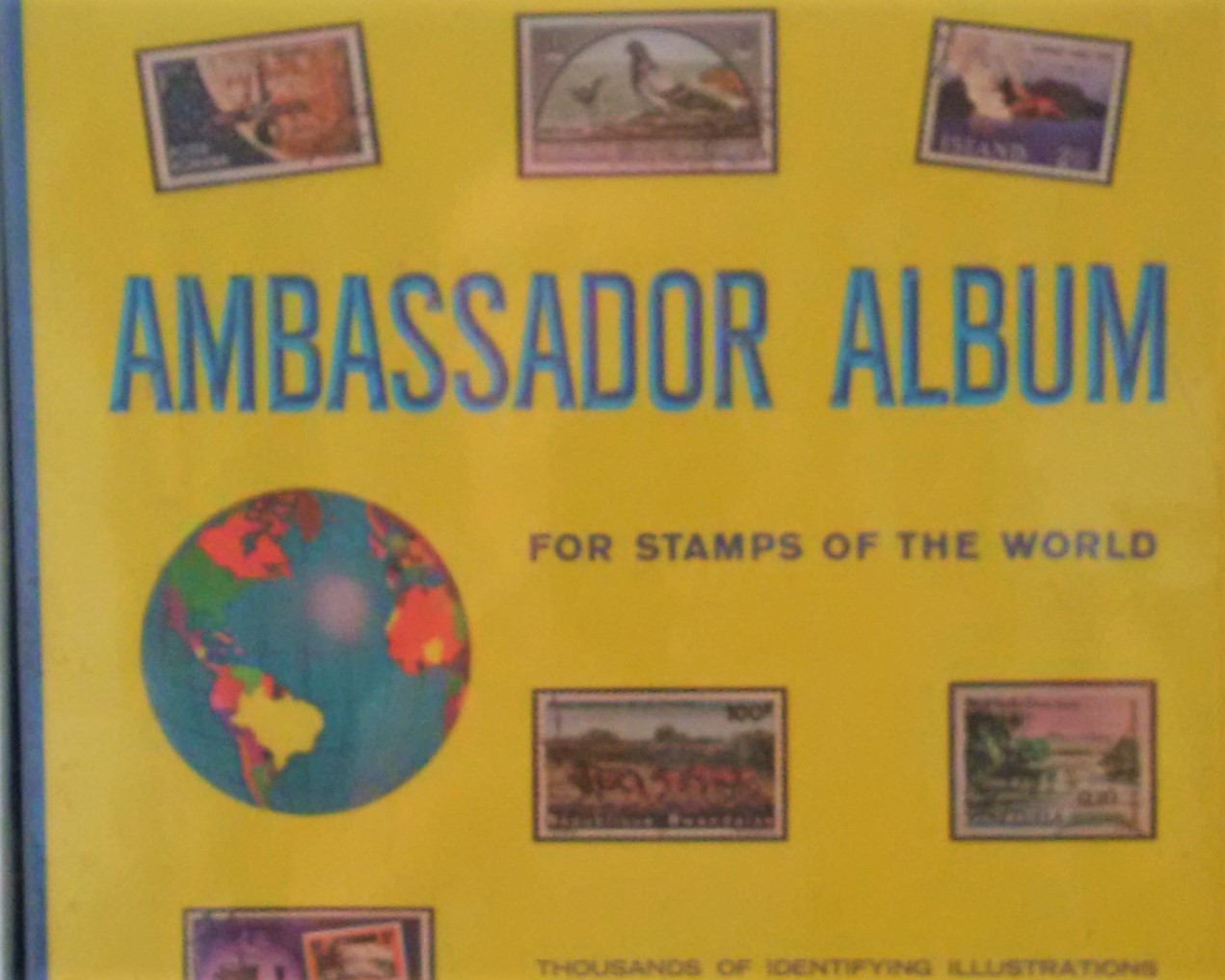
My Harris Ambassador Stamp Albun

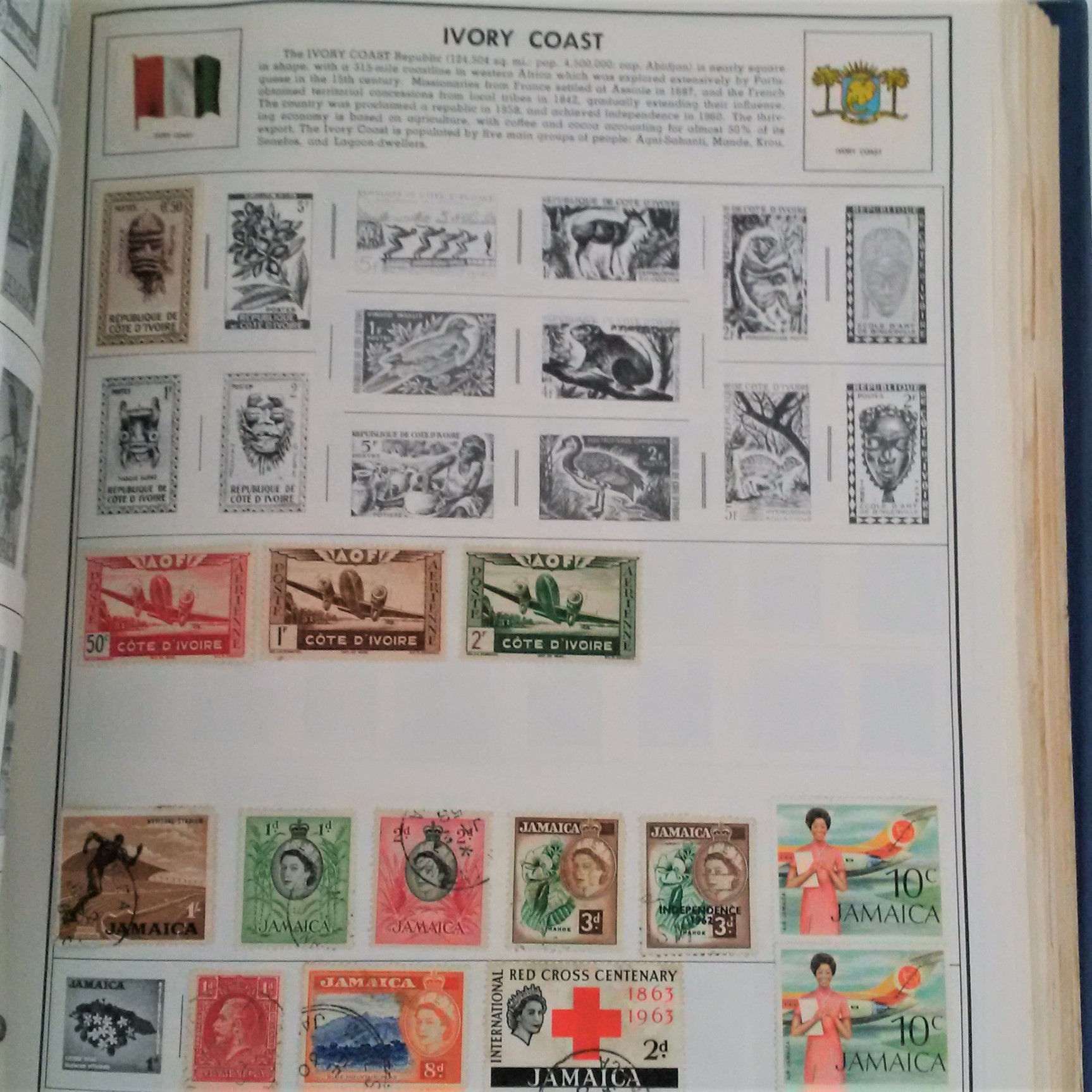
I had a Harris album. For each country there was a brief description, their flag and coat of arms. Initially I collected mostly Canadian, U.S. and U.K. stamps. Then I discovered the Garcelon Stamp Company. I soon learned that Sverige is Sweden, Helvetia is Switzerland, Magyar Posta is Hungary, Deutsche Bundespost is Germany, Polska is Poland and Norge is Norway. My collection started to grow and so did my dreams of travel. Do you remember them?

Typical country page in my stamp album

The Garcelon Stamp Company had these ads in comic books saying that if you sent them your name and address they would send you some free stamps as well as others “on approval”. When that fat envelope arrived from Garcelon with my name on it, boy was I in heaven. If you liked the “on approval” stamps you would keep them and send in payment. Else, you would have to return them. Well once a packet of beautiful exotic stamps is in your hands, it is near impossible to send them back. This habit consumed my weekly allowance for several years.

I had always thought that it is was an American company but turns out Garcelon was based in St. Stephen, NB. It grew to 150 employees with daily mailings to stamp customers weighing tons! Mr. Garcelon trusted in people and it sure paid off for him. Here is their brief story.

As the years went by I lost interest in the hobby as I started travelling. Back in the early 80s I got briefly interested again and started up a Brazil stamp collection – I suppose because of my travels there.

While my collection sits dormant now, I hope someone will want them some day so they too can dream and travel – all thanks to Garcelon Stamp Company.

4 Comments

Filed under Uncategorized

Brazil ’78

Manchete Magazine cover Feb 18 1978

I first fell in love with all things Brazilian in 1978. My sister Kim worked for External Affairs and was sent on a posting to Brasilia the capital. I was living in Vancouver at the time and decided to go down for a visit. Our mother joined us from Ottawa. I flew via Los Angeles, Lima and San Paulo. It was a long flight – Braniff Airlines from LA – if anyone remembers them.

I was immediately impressed with Brasilia. It’s centre is shaped like a giant airplane pointed towards the Amazon region signifying development of the country. Completed in 1960, it is a masterpiece of modern urbanism and architecture thanks to the work of architects Lucio Costa and Oscar Niemeyer. In 1978 there were no traffic lights in the city (well maybe 1 or 2) since roundabouts were used extensively. I found this amazing.

Brazil’s National Congress – photo Ben Tavener
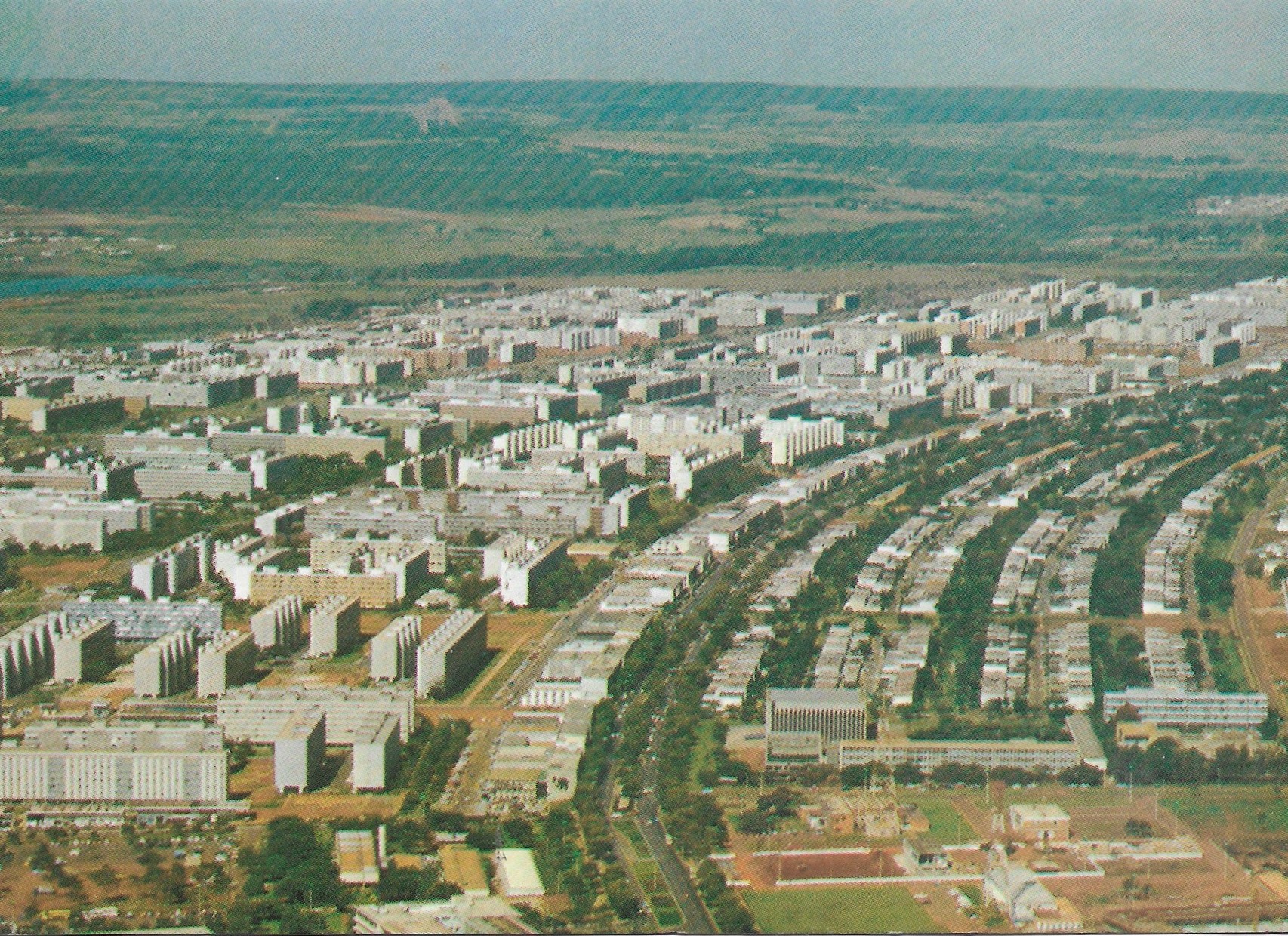
Brasilia superblocks and W-3 Avenue 1978 postcard

Kim lived in a 2 bedroom apartment complete with paid maid and drinking water service. A 19 litre jug of purified drinking water was always on tap on a dispenser stand. I had never seen this before. We toured around town and visited the Canadian Embassy. I loved the musical sound of a Brazilian’s speech. Everything has an “ee” on the end of it e.g. “Kingy Kongy plays pingy pongy in Hongy Kongy”. Sandwich is pronounced “sandweeshay”.

Kim and Mom at the gate to the Canadian Embassy
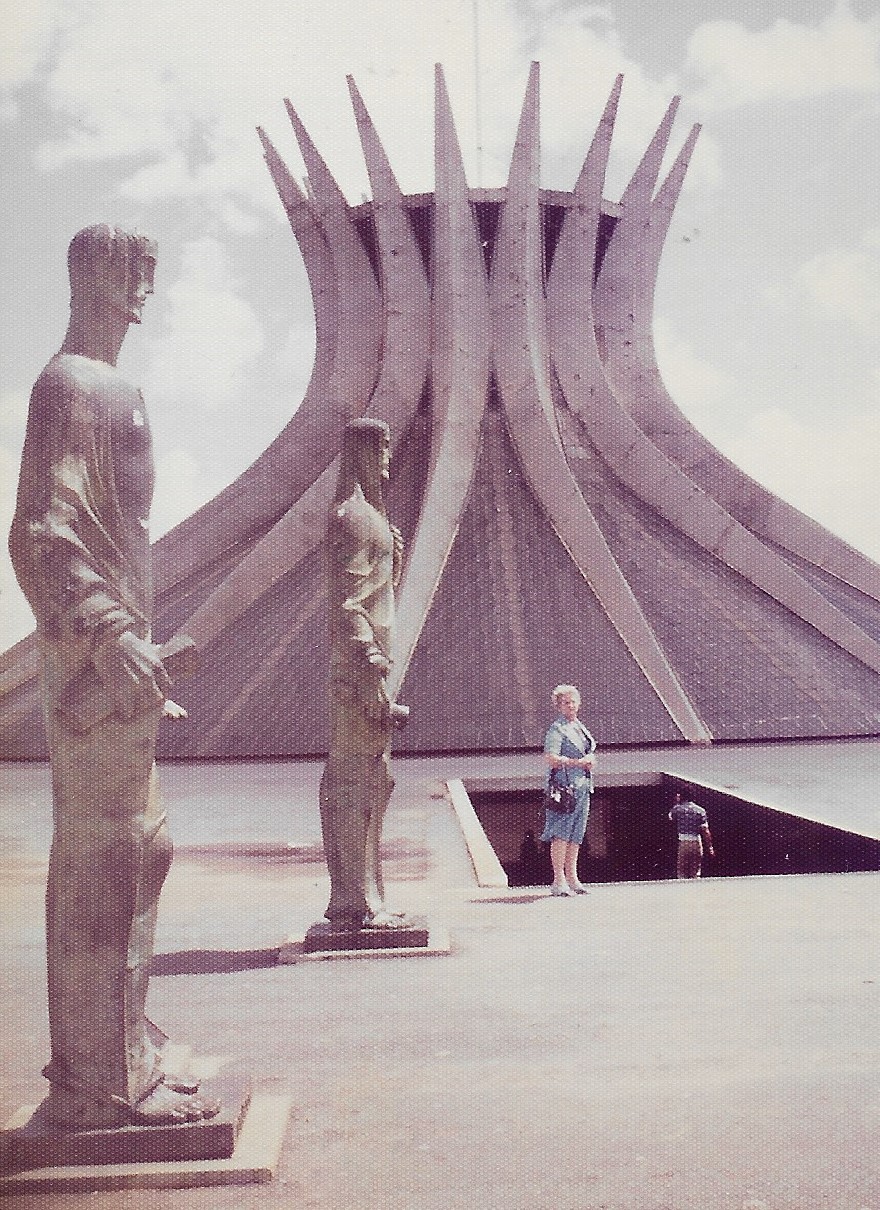
Entrance to Oscar Niemeyer ‘s hyperboloid shaped Catedral Nacional
Inside (Brazil is the largest Catholic nation in the world)

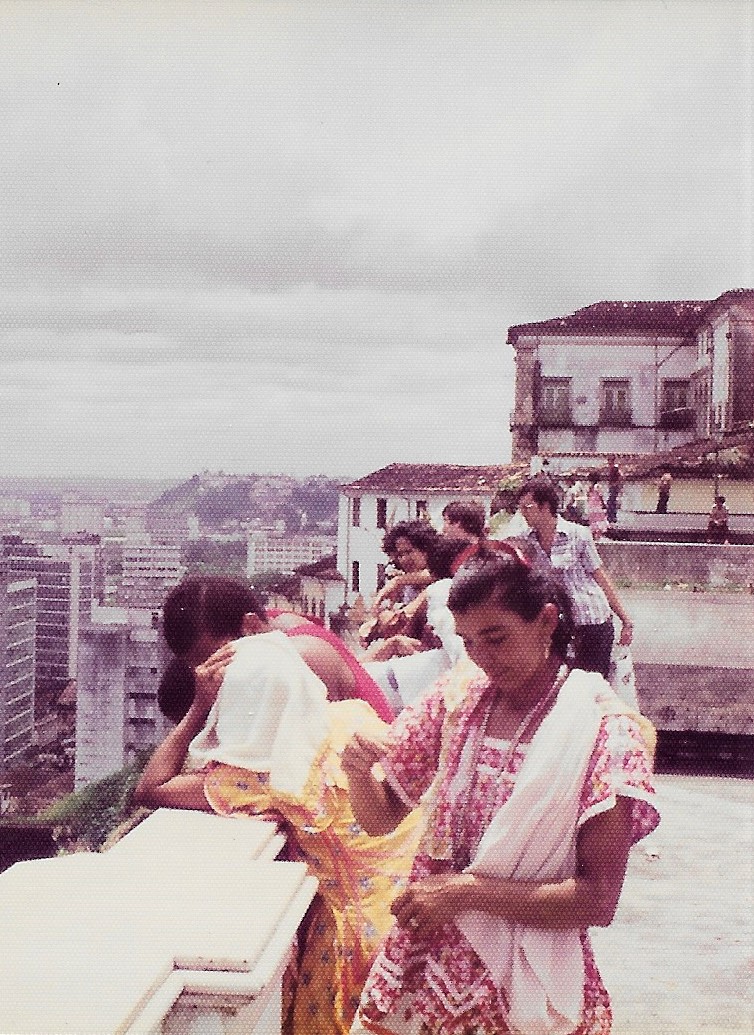
I then flew to Salvador, Bahia for a sightsee of 2 days. It is on the coast north east of Rio. It has a fascinating culture known for its food and music. The island of Itaparica is a short ferry ride away and offers a superb beach. It was so hot there! The lady in the photo below accosted me right after I took this picture. I had to pay for the photo or buy some of the stuff she was selling – no problem.

Alto – Upper City view

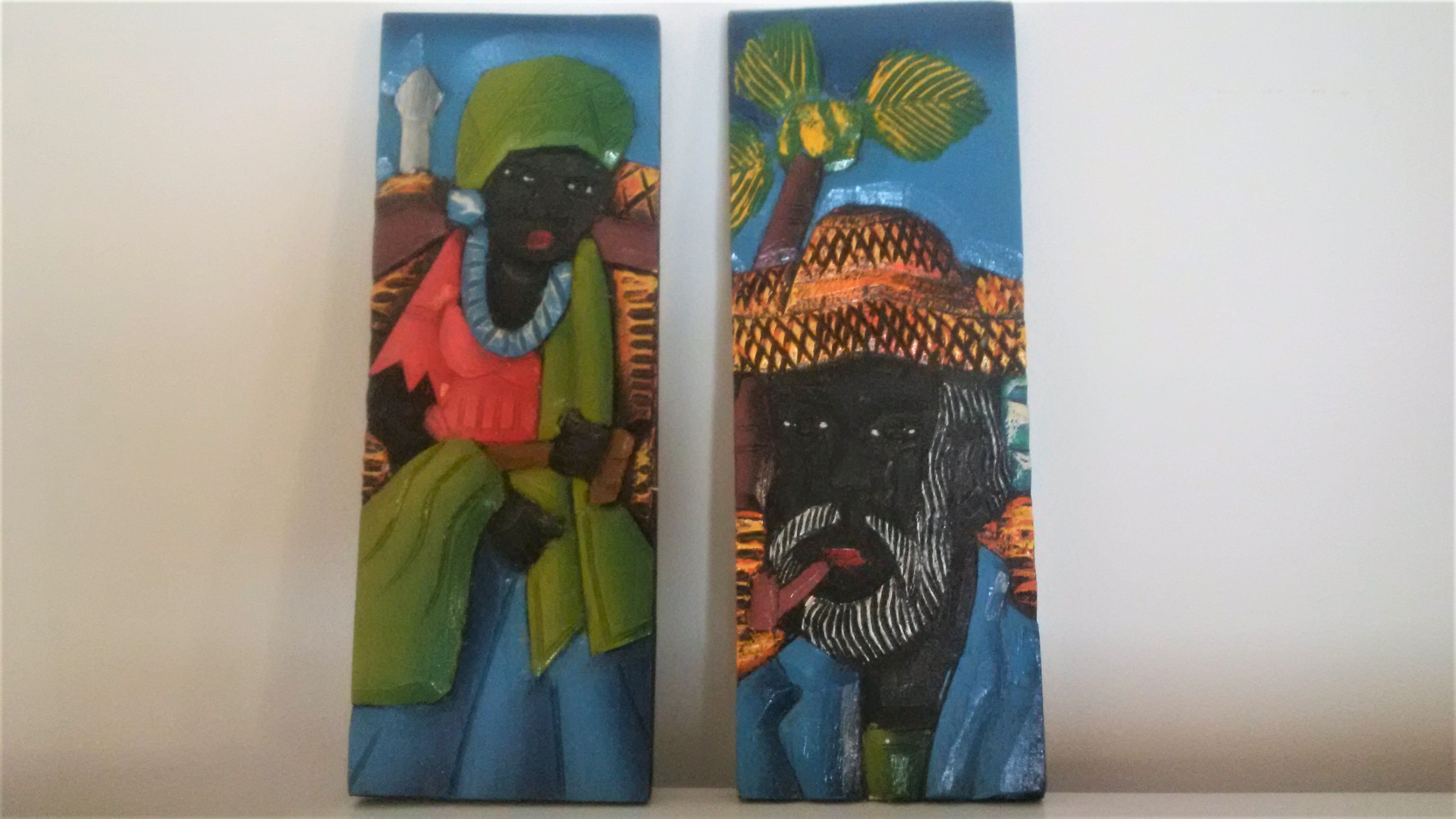
Language was a problem. I did not speak Portuguese nor were there any English speaking people around. Pointing and use of facial expressions works but it was confusing at times for sure. I bought some nice painted wood carvings at the artisan market. I sampled the spicy food from the local vendors.

Wood cravings by Aquera

Next it was a short flight to Rio de Janiero to meet up with Kim and her boyfriend Andrew who worked in the British consulate there. Andy was really a nice guy and made me feel at home. He had a lovely large apartment overlooking Pria do Flamengo (Flamengo beach). He showed us around and was fluent in Portuguese.

Andrew and Kim
Pria do Flamengo from Andy’s apartment window

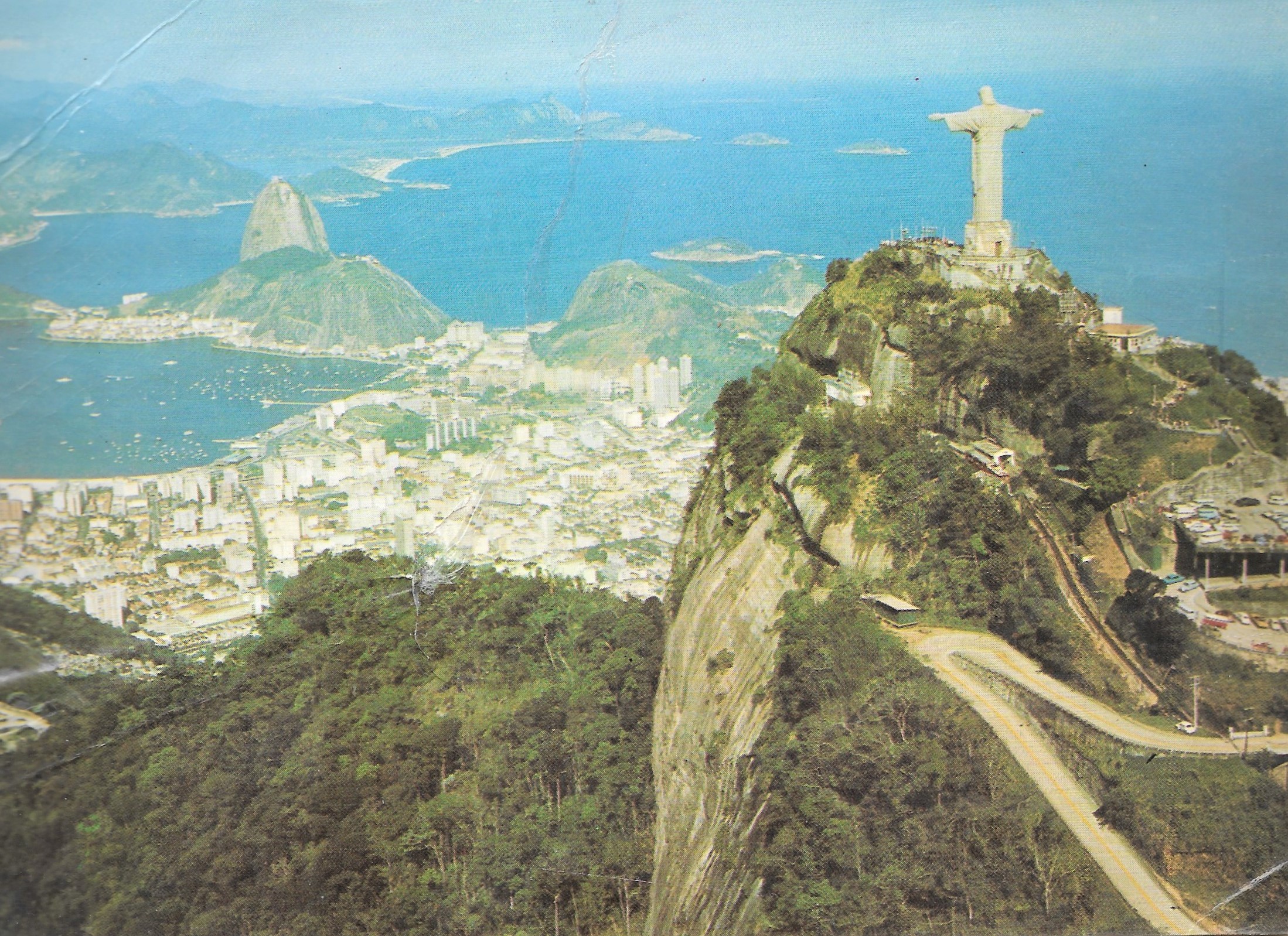
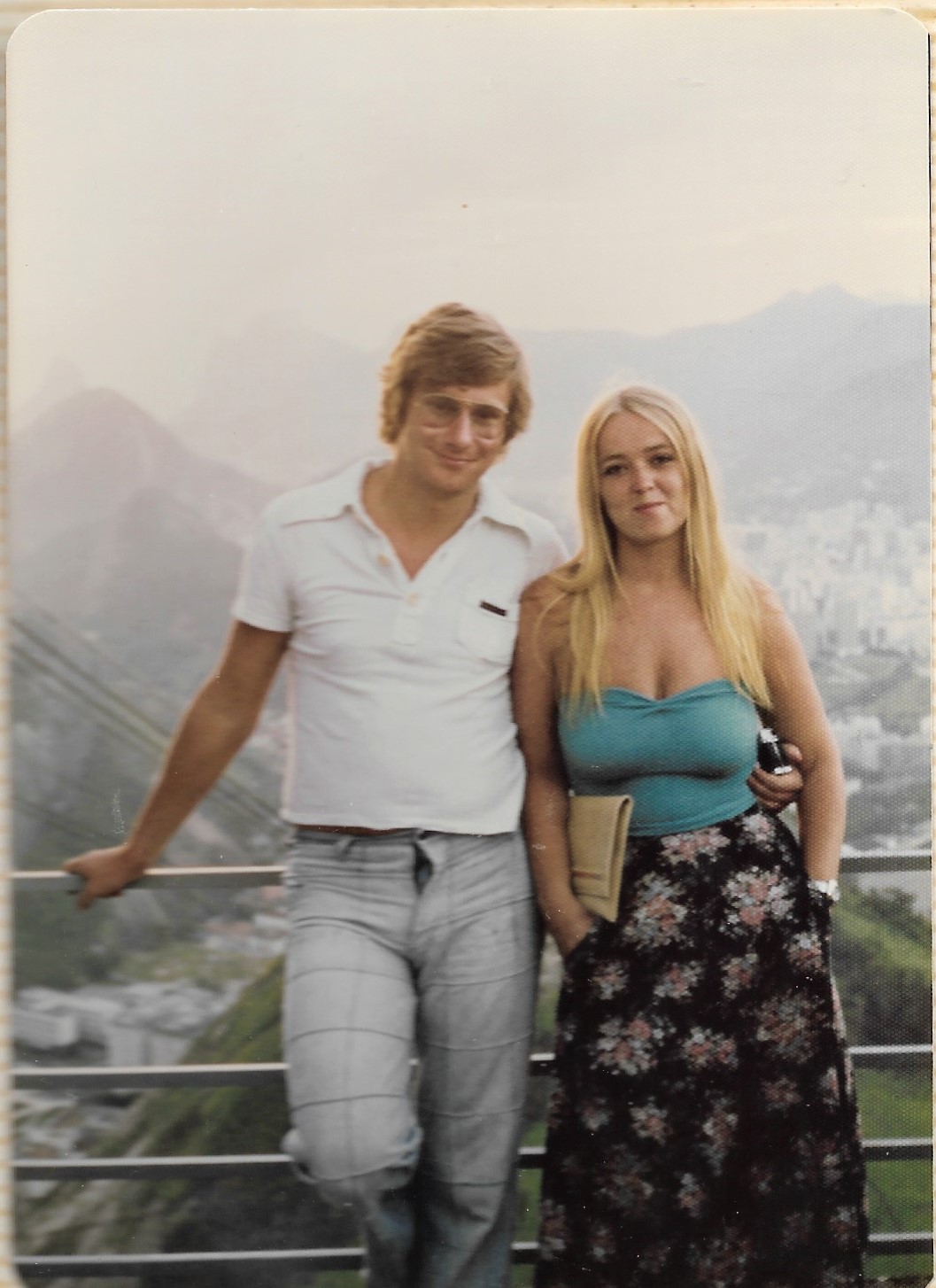
We toured Copacabana and Ipanema beaches, Sugar Loaf Mountain, Corcovado, a slew of bars and restaurants. What an incredible place.

Barril 1800 Pub on Ipanema Strip

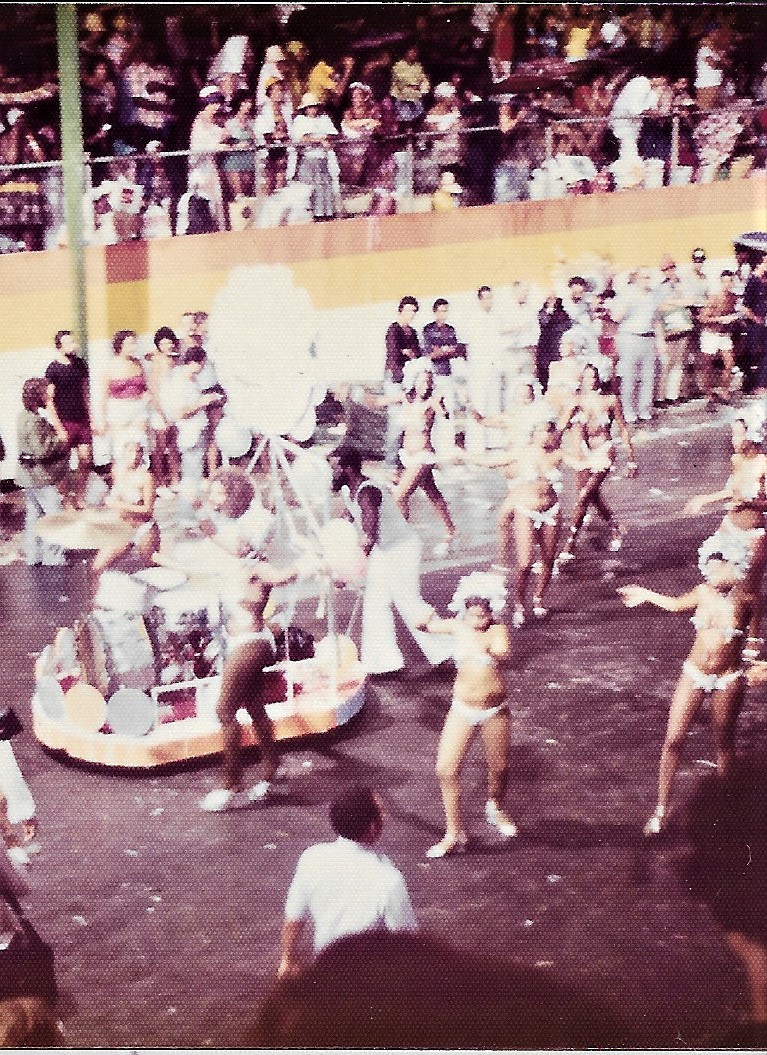
But the best was attending the 1978 Rio Carnaval – one of the biggest cultural expressions on earth. Andy was able to get us good tickets in the Sambadrome – a permanent set of bleechers where the parade takes place every year. There are 10 or more Samba Schools who compete with costume, floats, music and dancing all night long to gain top honour for their community. It was an absolutely incredible show filled with colour, smiles, beautiful people and great music. It started at about 8 PM and ended around 6 AM!! There were thousands and thousands of dancers and singers. I think we saw Oscar Peterson sitting a few rows in front of us.

Rod Stewart was there too

Exhausted we went home in the morning to recuperate. I bought a cassette tape of the music that year and still listen to it from time to time. This started my love of Brazilian music. The video below is of the 1978 Beija Flor samba school who won the contest for the second year in a row. There were alligations the results were fixed but it was truly a great show!

On the radio was this wonderful voice of Roberto Carlos, the King of Latin music. With over 120 million records sold globally, I doubt you have ever heard of him right? His album Amigo was all over the air waves in 1978. Here is a live version of the title track.

We also listened to Radio Nacional FM (Efee Emee) from Brasilia. In those days there were no commercials and a deep Brazilian voice would announce the time every so often. They played Brazilian pop music (Musica Populeira do Brazil), samba, boss nova, jazz and other regional genres. Of course it is still on the air, try it here.

OK this is getting to be a long post. It was time to head home. I stopped in Guetamala City and Mexico City on the way home. Guetemala City was eerie as many buildings were still visibly cracked from a major earthquake in 1976. In Mexico City I could hardly breath as the air was so polluted with car exhaust fumes.

Guetemala City Catedral under repair
Paseo de La Reforma Mexico City 1978

That’s all for now folks. Thanks for travelling with me! Dave

Leave a comment

Filed under Uncategorized

Recife

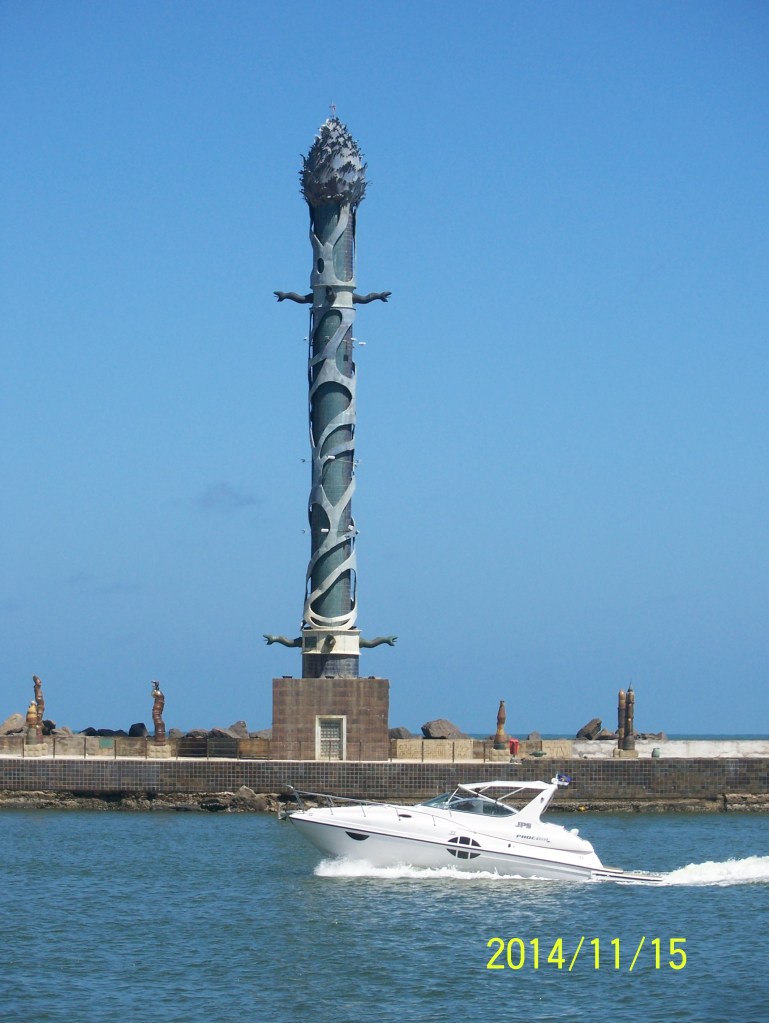
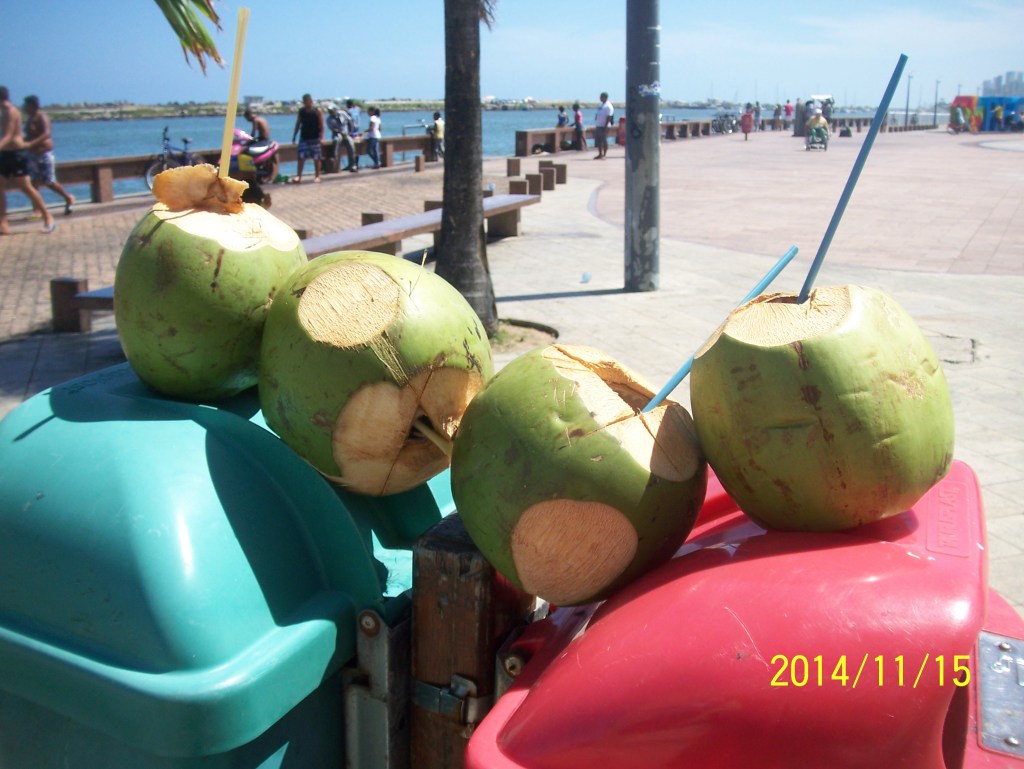
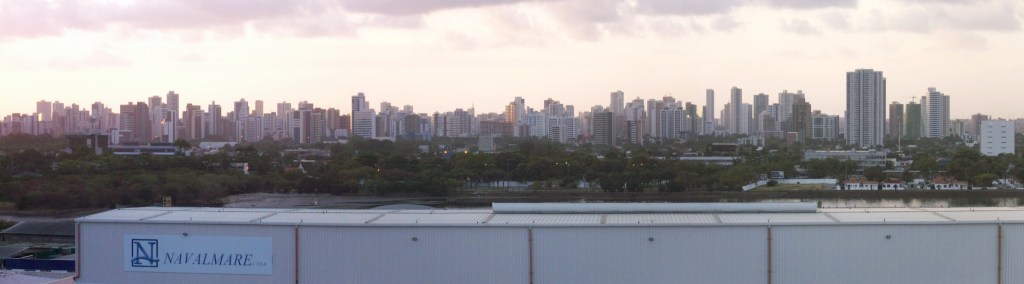
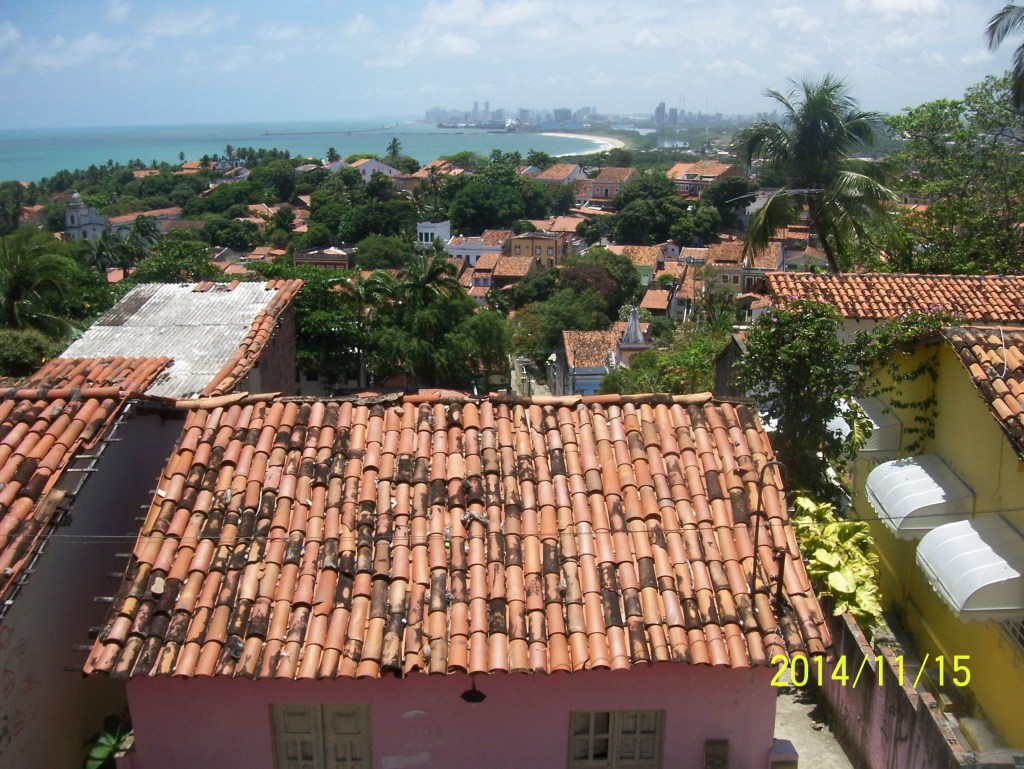
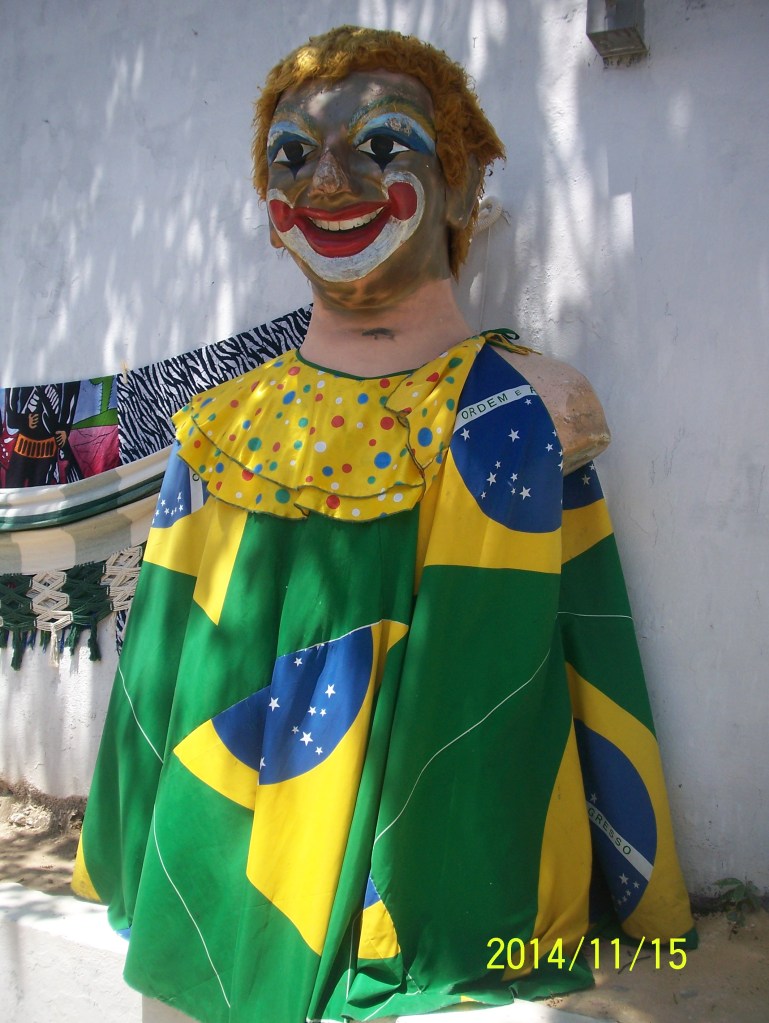
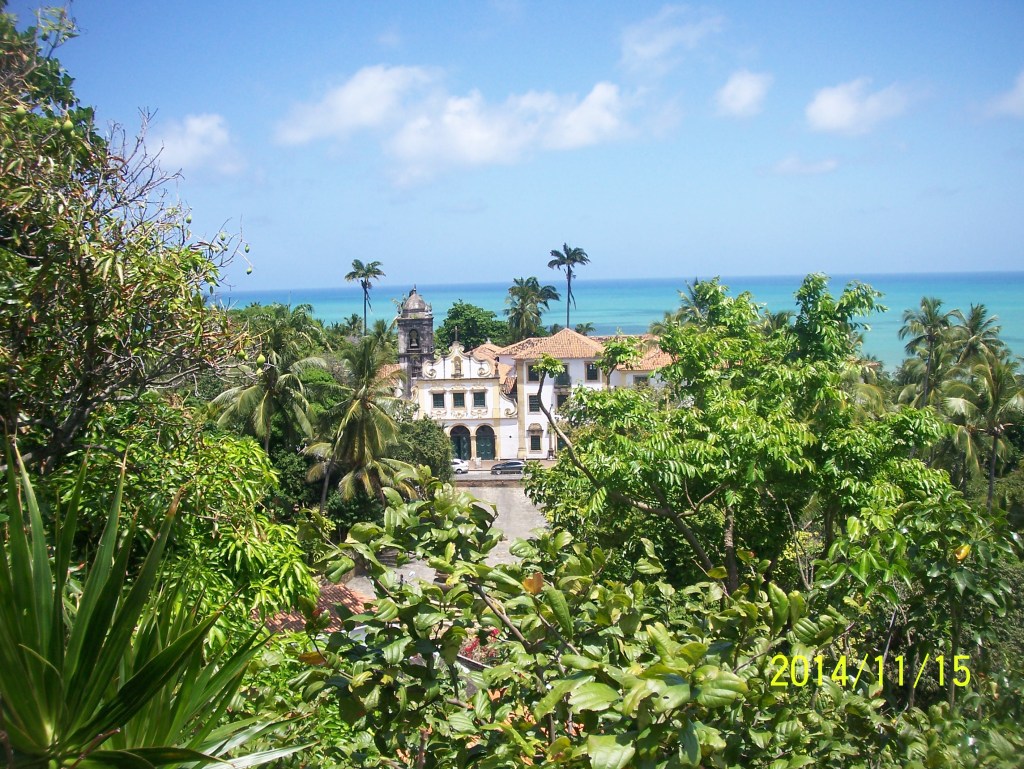
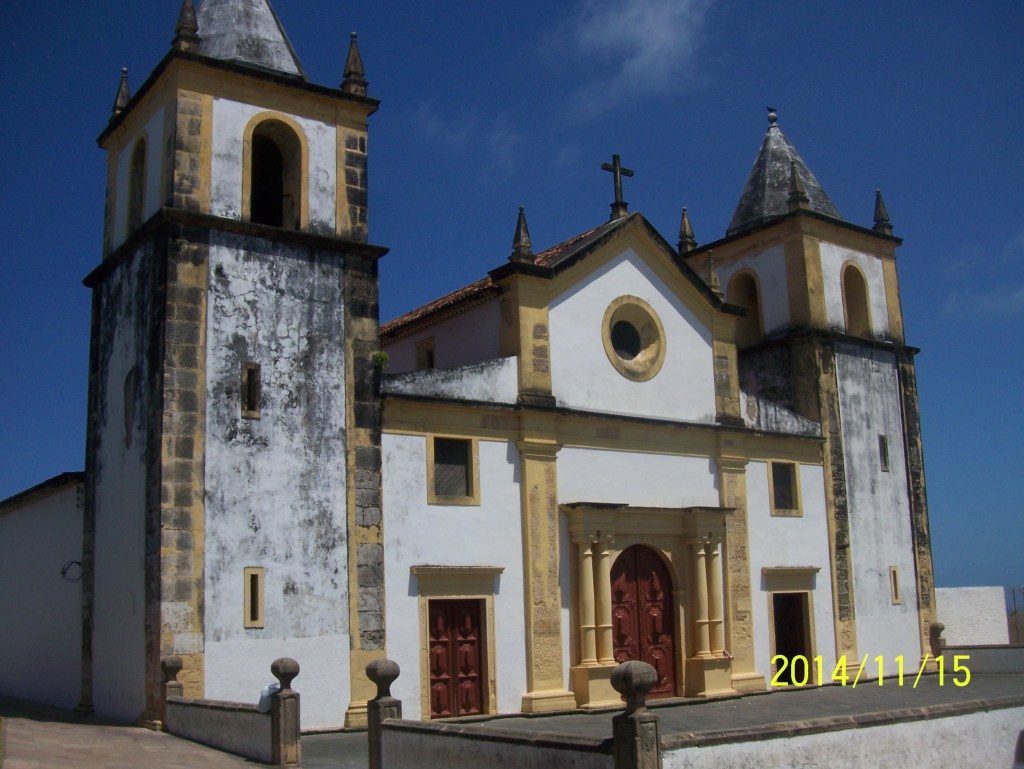
Lenine (leneenay) is one of my favorite recording artists. He is from Recife (resifi), Pernambuco, Brazil. In 2014 Marie and I went there.

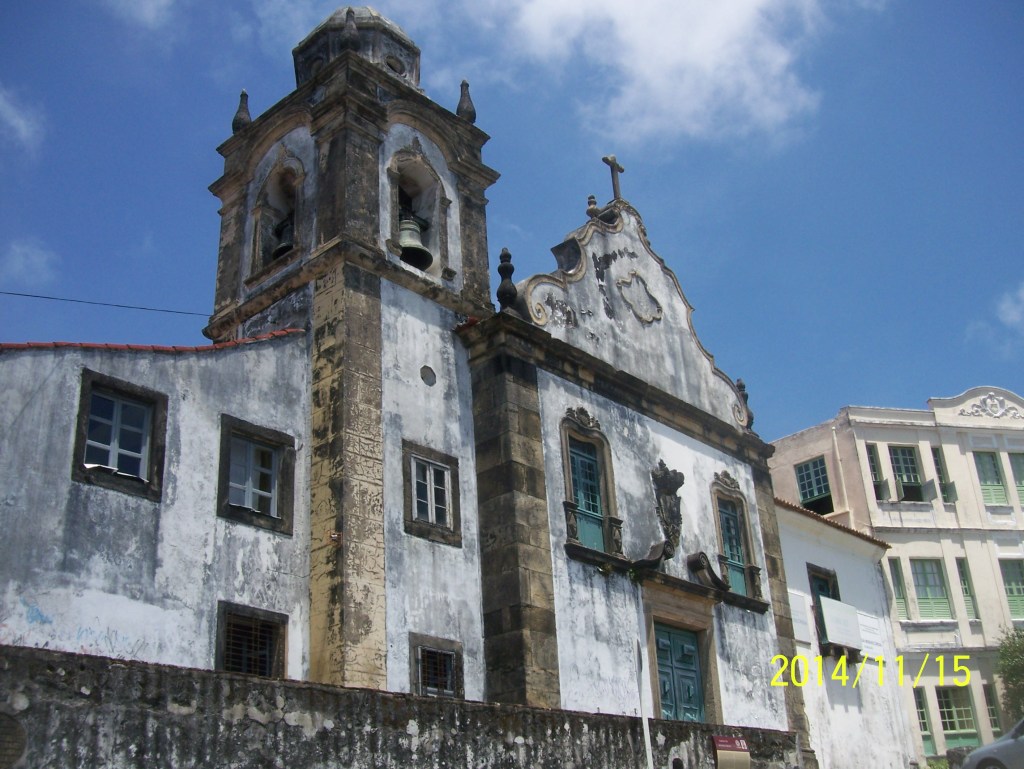
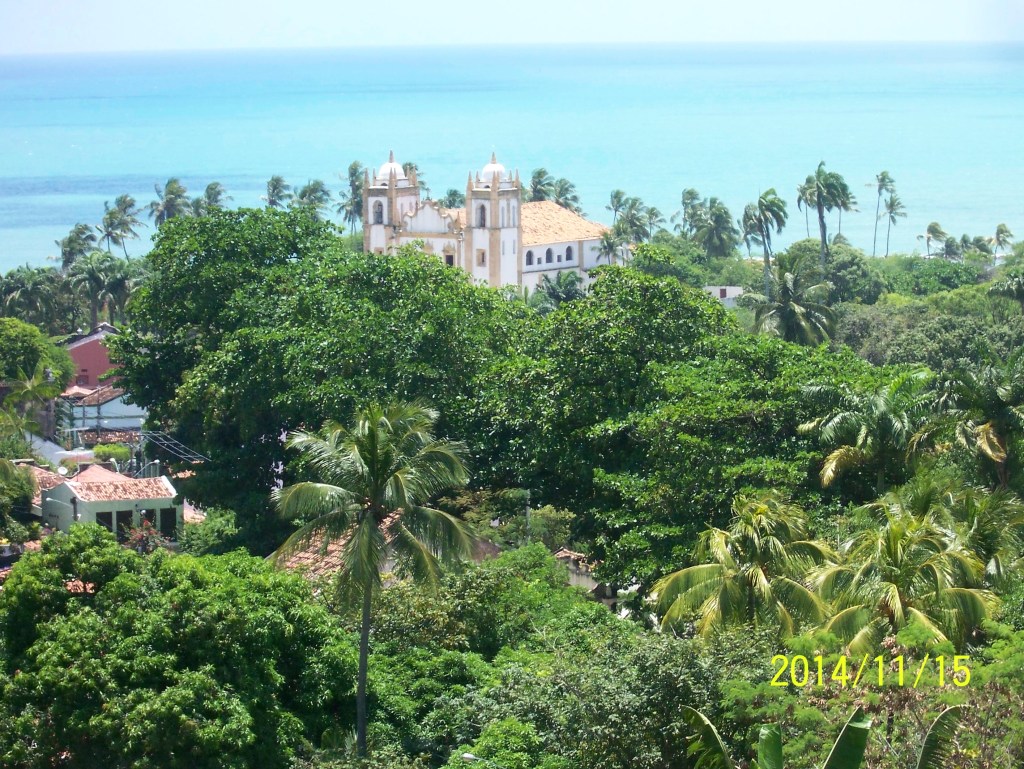
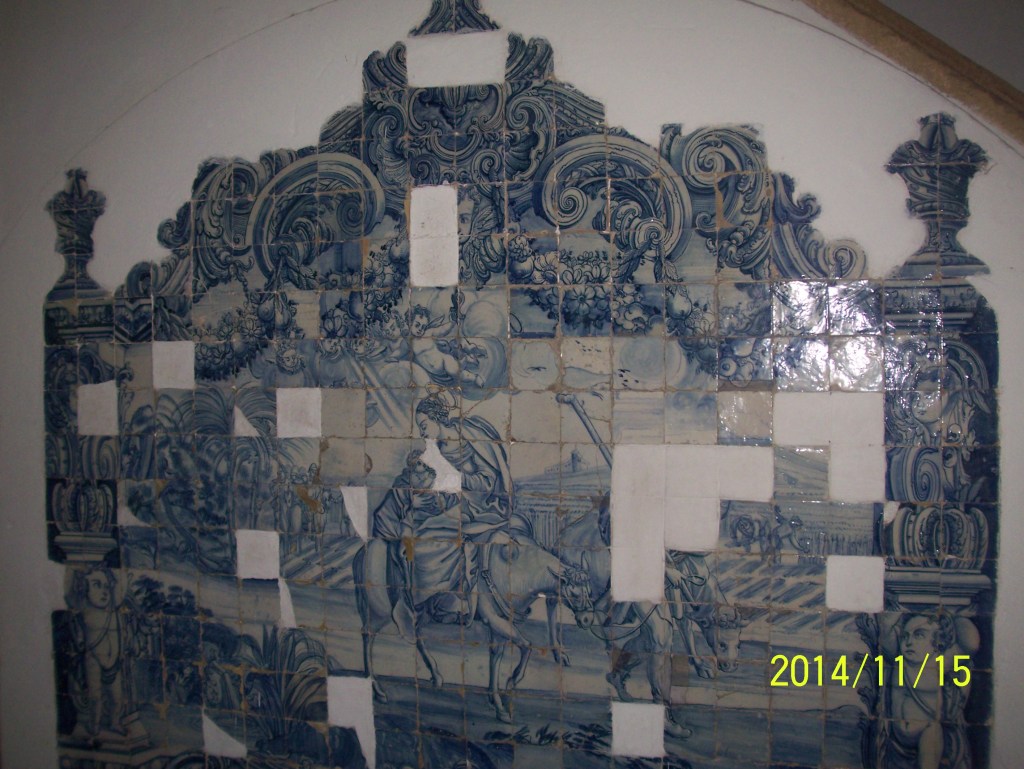
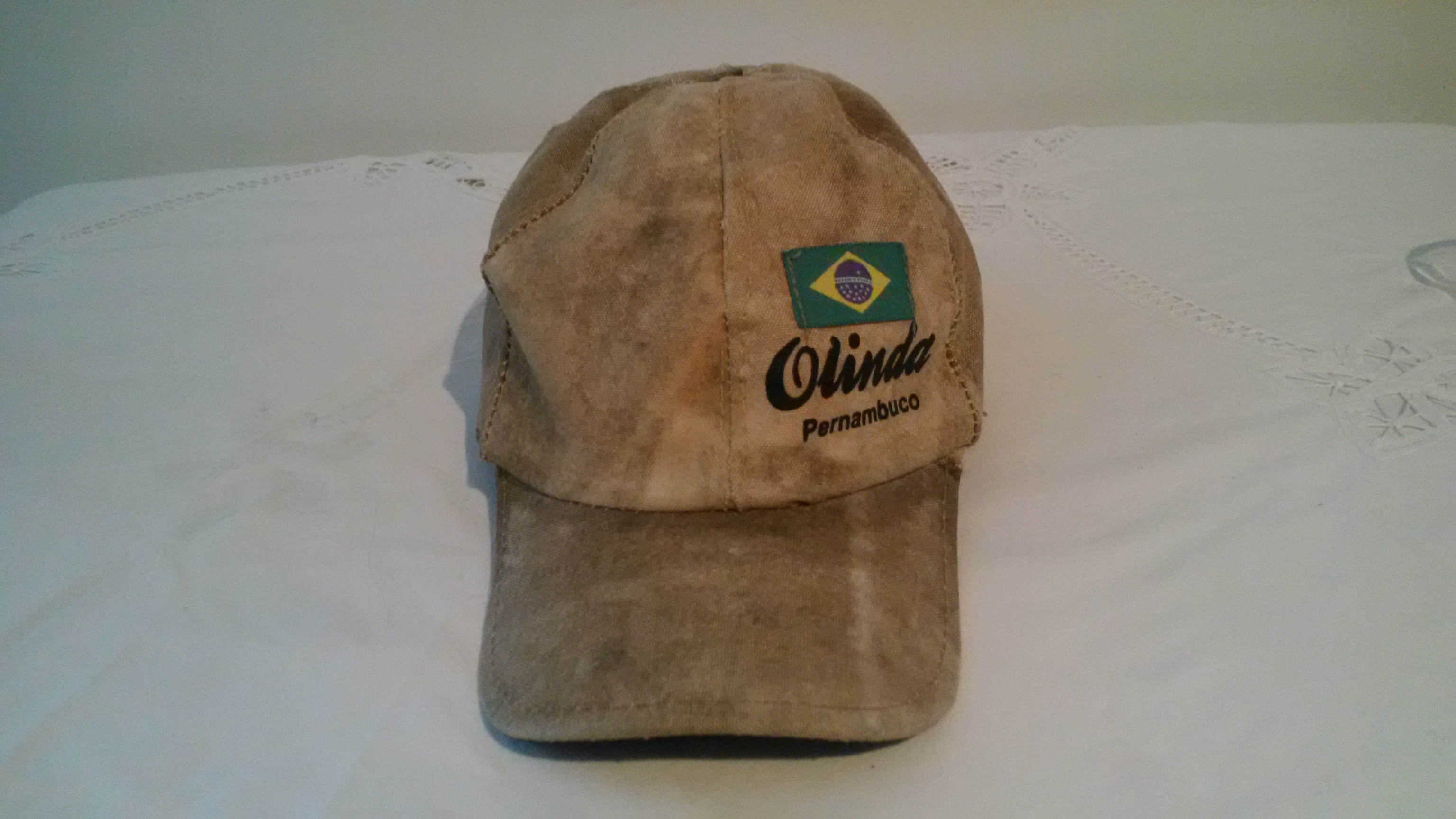
It was preceded by a visit to the beautiful colonial town of Olinda (olide), where I bought a canvas ball cap which I still wear often.

We had seen Lenine at the FIJM in July 2000. It was a fab concert and a fab visit.

Good travel memories in pandemic times.

Leave a comment

Filed under Uncategorized

The Small Faces

Described as the best British band that never hit it big in America – this is the Small Faces: Steve Marriott (lead guitar and vocals); Ronnie Lane (bass and backing vocals); Kenny Jones (drums) and Ian McLaglan (organ and backing vocals and guitar). Perhaps you remember Itchykoo Park too. Outside of Europe, this was the only song they were known for. In England they were one of the most extraordinary and successful mid-60s bands rivalling The Who and The Rolling Stones in popularity. I have become a fan of their great music. Itchykoo Park was hardly representative of what they could do. They were a unique very stylelish pop/rock band known for Steve Marriott’s powerful voice and their aggressive live performances. They were mods and wore dandified styles. In those days “face” was slang for a person of style known around town and since none of them were more than 5’6″ in height, they adopted the name Small Faces. Do you remember mods and rockers? They were the Mod band.

Their first hit – What’cha Gonna Do About It?
When they first came together in 1965, they could hardly even play their instruments. Steve Marriott had a background in stage and at their first gig, jumped up on the piano destroying it. A fellow named Don Arden started to manage them and got them their first record deal at Decca. Marriot and Lane did the bulk of the song writing and they soon had a string of five hits in England. They were exploited though by their manager who never gave them enough time in the studio to achieve their potential. So in 1967 they left Arden and Decca moved under manager Andrew Loog Oldham who managed the Rolling Stones.

Tin Soldier – my favorite song
Their music style then evolved into something amazing. Soft and explosive, subdued and over the top. Psychedelic yet folksy. They produced their signature album in 1968 Ogden’s Nut Gone Flake. One of the songs on it Lazy Sunday was released as a joke but made it to number 2 on the British charts. Marriott sings in a cockney accent because one of the Hollies said he sounded too American. I love this song.

Despite the creative quality of their music it never connected well with fans in America. They were again short changed by their manager and their record label Immediate Records failed. Expenses rose and sadly they never got the chance to go on tour in America. In 1968 they recorded a song that did not chart well – The Universal – which to me sounds almost Bob Dylanish. Steve was discouraged by the lack of interest in it and left the band to form Humble Pie with Peter Frampton. The Small Faces became the Faces and invited a budding Rod Stewart to join them… Steve Marriott sadly died in a fire in 1991. Ronnie Lane died of MS in 1997.

The Universal 1968
The Small Faces – the best British band that never hit it big in America. In 2012 they were inducted into the Rock and Roll Hall of Fame. I love them.

All or Nothing 1966 (Steve claimed this was his favorite song)
P.S. Their is a wealth of videos, music and information including documentaries on the Small Faces on Youtube. Allmusic provides a great biography and their discography. There is also a Facebook group. I am just getting into it all.

Leave a comment

Filed under Uncategorized

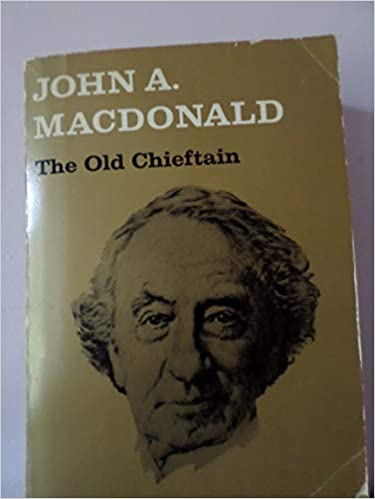
John A. MacDonald – The Old Chieftain

This book written in 1955 by Canadian historian Donald Creighton is an absolute page burner! It is one of the most riveting books that I have read in a long time. Written in novel style, it tells the detailed story of the “architect of Canada”, our first Prime Minister – Sir John A. MacDonald – from just after he took office in July 1867 until his death in June 1991 at age 76. It is Vol 2 of a 2 part book that won the Governor General’s award for history and is considered a classic of Canadian history.

Why I like it is because the style of writing makes the history come alive. It is written as if John A. were writing his own autobiography except rather than in the first person “I did this or that or felt this or that” it is told in the third person “He did this or that or felt this or that” with all the intimacy of personal action. Somehow Donald Creighton is inside the head of Sir John A. and so are we the reader.

While this style of history writing may be somewhat discredited now as it can only present one side of the subject, it makes for a most entertaining and intimate portrait. I learned so much about Canadian history that I never knew before:

  • the long delicate balancing act to prevent the U.S. from annexing or attacking parts of the fledgling Dominion
  • the creation of a strong federal government in the face of demands for more power sharing from provincial governments
  • deft political integration and peaceful coexistence between English and French Canadian societies
  • the financial challenges of completing of the Canadian Pacific Railway which literally and figuratively knitted the county together
  • the need for tariff protection to build up a strong Canadian economy in the face of American bullying and self-interest
  • importance of the direct ties with Great Britain, Canada’s one and only ally during these critical birthing times

He was a nationalist like no other. Today many look back and say yeah, but he bulldozed the indigenous culture and had Metis leader Louis Riel executed. He was a colonial tyrant who destroyed everything that was not of the British culture or liking and furthermore he was white and Scottish. Yes but, IMHO, if he had not been so visionary, so persistent, so crafty and so indefatigable, we would not even have a country from within which we could look back to make such judgments. If it were not for Sir John A., we would most likely be casting votes in the upcoming American election!!!

Yes, he has his faults – he was a workaholic and never retired. He would not name or mentor a successor until his dying bed and he drank too much from time to time. His party and he personally accepted bribes from a Montreal business man who was trying to get the contract to build the CPR.

Perhaps in the book there is too much detail about proceedings in the House of Commons and the names of various ministers. Perhaps there is too much denigrating of American politicians. Perhaps we would like more discussion about his private life with his 2nd wife Agnes and their daughter Mary. But all in all, this book is a measure of the times that we know too little about – yet we think we do! Personally, I dropped out of history class as soon as I could in HS. If I had read this book back then, perhaps I would not have done so so quickly.

Whoever says Canadian history is boring should read this book. Highly recommended read – 5 stars out of 5!

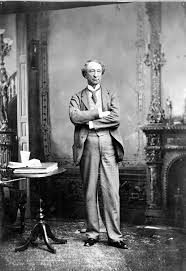
Sir John A. – the man who made us

1 Comment

Filed under Uncategorized