
After reading various accounts of exactly what led to the creation of the fateful gap in the Union lines on the 2nd day at the Battle of Chicamauga, I am somewhat of the opinion it was not Rosecrans fault.
First of all who is Rosecrans and what was Chicamauga?

Major General Rosecrans (Old Rosy) was commander of the Army of the Cumberland on that fateful day Sept 20, 1863. A West Point graduate, he had worked his way up from 2nd lieutenant starting in 1842 in the Army Corps of Engineers. He was a civil engineering professor and superintendent of a coal company before rejoining the Union Army in 1861. At the Battle of Chicamauga he was in charge of 60,000 troops facing Confederate Major General Braxton Bragg who outnumbered him with 65,000 troops that day. He was generally recorded as the best general the Union had in the west and had just skilfully maneuvered Bragg out of Chattanooga with minimal losses.

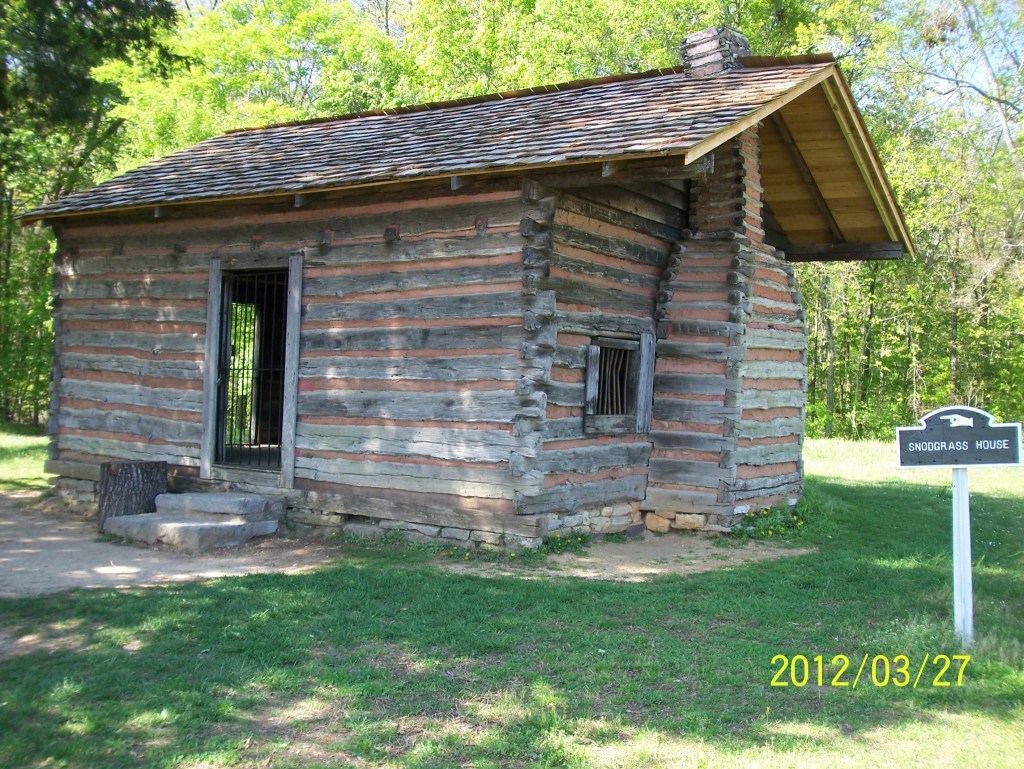
The Battle of Chicamauga was fought over 2 days in Sept 1863 around the Chicamauga Creek in northern Georgia just south of Chattanooga, TN. As such it was the second deadliest of all US Civil War battles with 34,600 total casualties behind only the Battle of Gettysburg which had occurred just 2 months prior. We toured the Chicamauga site in 2012 and that was when I first learned of General Longstreet’s breakthrough and the splitting of the Union lines in the late morning of day 2.
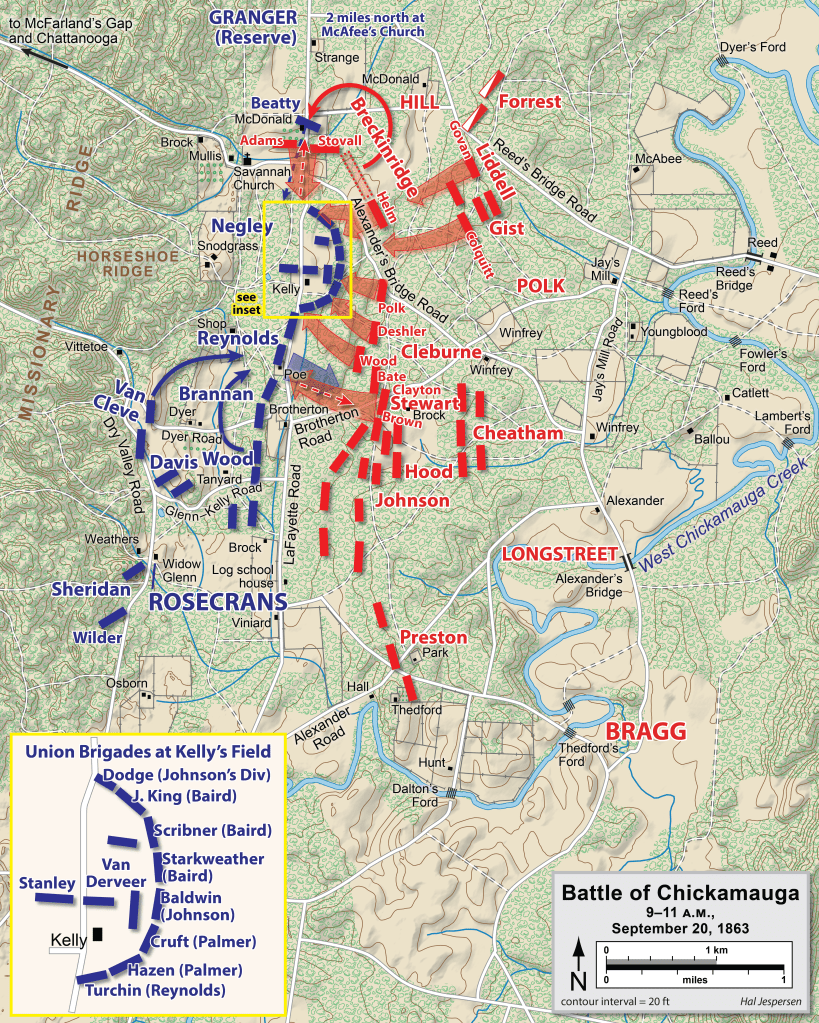
Union General Thomas (who was to become known as “The Rock of Chicamauga” for his heroic stand later that day) was heavily attacked on the morning of day 2 by a superior number of Confed forces under Gen Leonas Polk (see above courtesy Wikipedia). He sends an aid, nephew Sanford Cobb Kellogg down the lines to the right seeking reinforcements to come to his aid. Kellogg asks Brig Gen Brannon if he would help out and move his men north to help his uncle George out. Brannon naturally reluctant to move without Rosecrans approval, awaits confirmation.
When Kellogg reaches Rosecrans headquarters, there is a naturally quite a bedlam of activity. By some reports Kellogg makes it known that Brannon had already moved out which indeed was not the case. In a panic, Rosecrans dictates an order to fill the unauthorized (and unexisting) gap to Brig Gen Wood to “close-up and support Reynolds” divisions. “Close-up” in military jargon means to link up with while “support” means to get behind of. So in fact the order was slightly ambiguous in the actual context. The order was written down by a secondary aid verbatim as Rosecrans primary aid was busy documenting other orders and would have known that Brannon had not moved out and so would have stopped the order from being issued.
So the order reaches Wood who looks left and sees Brannan is still there so there is no way to link up with Reynolds. But because he had been scolded publically by Rosecrans just that day for not promptly obeying orders, he decides the order must mean to pull back and go behind Brannan and come up behind Reynolds in support. This he does creating an unintentional gap in the Union lines that the order was meant to prevent from happening in the first place. 20 minutes later Longstreet’s Corps by chance is ordered to charge the Union line at the exact spot where Wood had just pulled out of and hence the massive breakthrough.
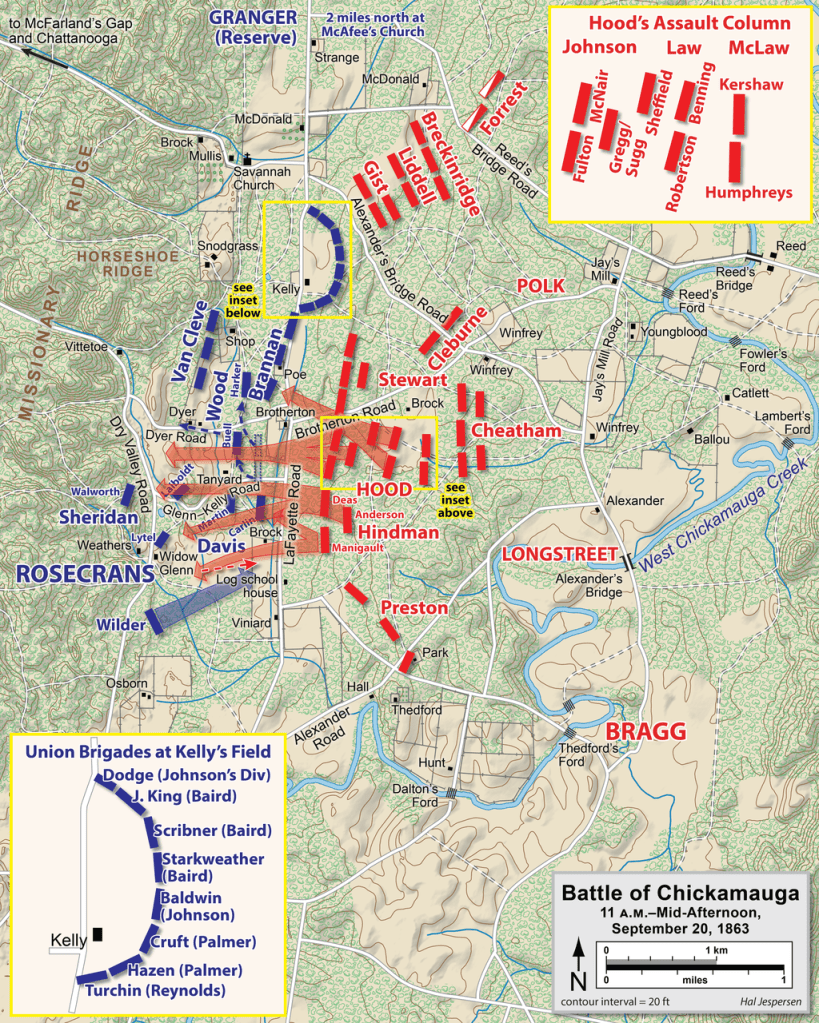
After thinking about this, it seems to me Rosecrans was given false information by Kellogg and possibly others which led to the debacle. Rosecrans was dismissed as a result, rather unfairly in my view.
For a somewhat supportive view of this please read the following report about the irony of this whole affair here.
So why have I bored you with the details of this? Because I made a brief presentation on this subject at our most recent National Capital Civil War Roundtable study group. See their website info here.





 mattersofthemoment