The Chemin de Saint Jacques – 800 km from Le Puy to Saint Jean Pied de Port
In June 2013, I walked the first 200 km of the Chemin de Saint-Jacques (St. James Way) from Le Puy to Conques in France. It was more difficult than our first Camino de Santiago in Spain on account of the hilly terrain plus I was now … 3 years older. This route, also called the GR 65 – is part of the long distance walking route Grand Randonnée network and part of the European long distance paths. Sometimes I think I was born on the wrong continent since I love walking so much.
I picked up my credential booklet at the magnificent Cathedral in Le Puy. It identifies the carrier as a bona fide pilgrim entitled to stay in the various gites d’etape (equivalent to the refugios in Spain).
I also purchased a copy of an excellent Michelin map book with suggested daily walking goals for this route, as well as the Miam Miam Dodo guide book to eating and sleeping.
So there I was all ready and anxious to head out on a 10 day walking adventure. I attended the early morning pilgrim Mass at the Cathedral in front of the Black Madonna and then said goodbye to Marie over pastry. I started hiking up the steep hillside leading out of Le Puy with pauses to catch my breath.
I remember gasping for air as I continued to climb out of Le Puy. This was going to be a tough one I thought. Not sure if I am going to be able to complete this. It is the familiar ring of doubt one feels everyday on a long hike such as this. I was carrying my pack on my back but already thinking it was too heavy. However, I was soon to be rewarded with some of the most gorgeous scenery anywhere France – the central rural plateau region.
Here are a few pictures of my very first day.
I managed to make it that day to a small town called Montbonnet, a distance of about 16 km and checked into my first gite d’etape (pronounced jeet deh tap). There were 7 other pilgrims there, all women as you can see below!
I had completed my first day safely but was feeling very exhausted. Thanks be to God!
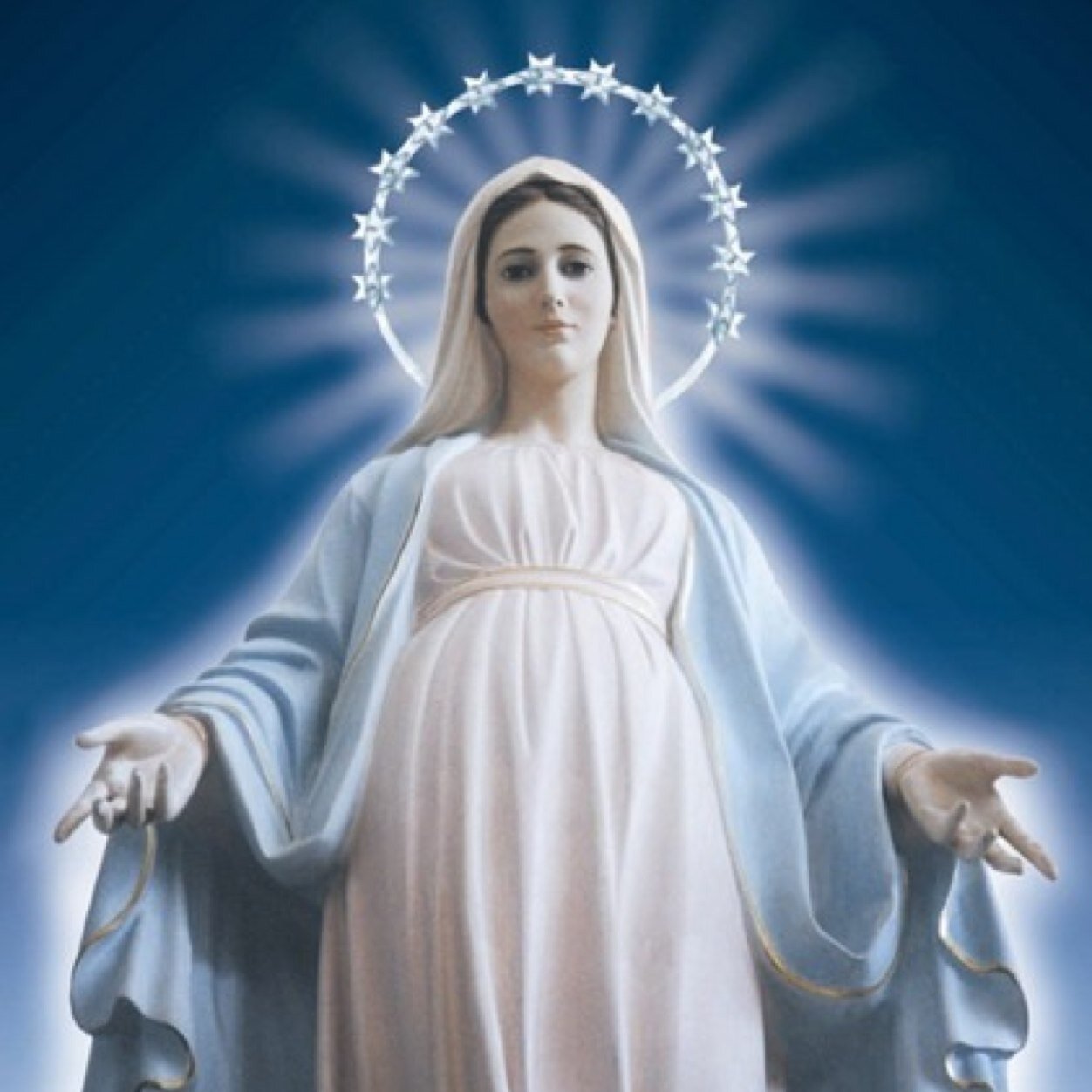
Statue of Our Lady of Notre Dame left, Cathedral Notre Dame du Puy, right.
Le Puy-en-Velay (le pwee) is a mythical city of 18,000 located in south central France. It is one of the oldest Christian settlements there having been established by St. George in the 4th century AD. Le Puy’s most striking attraction is the Cathédrale Notre-Dame du Puy dating from the 12th century. It is also the founding place of the Sisters of St. Joseph Congregation in 1650. And for hundreds of years, a major starting point for pilgrims on the Chemin de St. Jacques (St. James Way) all the way to Santiago de Compostella in Spain 1600 km away. Ten years ago now Marie and I were blessed to go on pilgrimage to Le Puy.
The occasion was a workshop on Jean-Pierre Medaille’s Eucharistic Letter to the Sisters of St. Joseph which resulted in the founding of their Little Design way of life lay communities around the world. Sister Rosemary O’Toole, CSJ of the Upper Room House of Prayer in Nepean, Canada, led the workshop. Marie, being a “little designer”, was invited to attend and I, Dave tagged along. The story of the Eucharistic Letter is told in Sr Rosemery’s beautiful video that follows.
We were taken aback by the magnificent monuments and majesty of Le Puy: the ancient cathedral where a pilgrim Mass is celebrated each morning in front of the Black Madonna; the towering statue of Notre Dame de France (The Virgin Mary) overlooking the town; the Chapel of Saint-Michel d’Aiguille perched high on a rock spire; the small twisted hilly streets and a marketplace where women weave fine lace products.
The Black Madonna in Le Puy
The Sisters of St Joseph International Centre was a very comfortable place to stay overlooking the city. We were welcomed by a sister from Goa as well as two American sisters. They and their staff were charged with welcoming visitors, hospitality and operations. There was a main lodge, a guest house, kitchen, dining and meeting room facilities as well as a small chapel. There were sheep in the fenced yard next door that we could hear bleating. How lucky were we to stay in such a pastoral place!
View back to town from the Cathedral entrance way.
The next day Marie started her Eucharistic Letter program with Sister Rosemary and other participants from Canada, the USA , France and elsewhere. After breakfast at a small cafe, Dave said his goodbyes, attended the pilgrim Mass and then headed out for 10 days solo hiking on the Camino de Saint-Jacques.
At the Cathedral in Santiago after completing our pilgrimage.
Our first Camino de Santiago pilgrimage had been in 2010. Marie and I hiked some 700 km over a 29 day period from Pamplona to Santiago. I have already blogged about this journey in great detail here. In 2011, we were excited to embarked on our 2nd Camino – this one at the Galilee Retreat Centre in Arnprior, ON.
Fr. Jack Lau, OMI, Spiritual Animator, led us in a “virtual pilgrimage” at Galilee and on our own path in our local neighborhood. The idea was to walk everyday in a reflective way, reporting our progress, thoughts and observations, over a 3 month period. The goal was to bring the unity of Body, Mind and Spirit together.
Fr. Jack would send out a prayer or reflection that we were to keep in mind as we walked each day. We would monitor our distance and thoughts and report back to the group, whenever we felt like sharing. For example in the month of August I logged 146 km and reported back several times. Fr. Jack would acknowledge our messages and respond with prayers and encouragement. There was signage up at Galilee so often Marie and I would walk the lovely grounds there in silence and appreciation.
During this period, it was a bit of an upheaval time for us. We had sold our house in Ottawa, were living in a small RV and waiting for our new house to be ready in Arnprior. Dave’s mother passed away at this time. Hence the meditative walks, inner spiritual growth and stirrings and the frequent communications with Fr. Jack and the group were very helpful.
Here is a example of a typical message from Jack:
Camino@Galilee “Reflections”
I sent out earlier a reflection from an El Camino Pilgrim which was powerful and so will leave you with only this prayer from the Buddhist Monk Thich Nhat Hahn. Buen Camino, Jack,omi
To meditate does not mean to fight with a problem. To meditate means to observe. Your smile proves it. It proves that you are being gentle with yourself, that the sun of awareness is shining in you, that you have control of your situation. You are yourself, and you have acquired some peace.
We had a sharing night where those who had done the Camino in person before talked about their experiences. And at this time many of us we were being formed as Oblate Associates by Jack. It was the best of times! Thank you Fr. Jack for your spiritual guidance, creativity, love and leadership during the years you were here at Galilee. It was 10 years ago last month that you were called back to the U.S. to continue your ministry there. Miss you still!
The story on religious participation in Canada could not be bleaker. According to the Global national news last night, only 18% of Canadians remain religiously active or committed. Furthermore many Canadians no longer see religion as beneficial to society. While tolerant, they feel discomfort about organized religion. The full story can be read here: https://globalnews.ca/news/8759564/canada-religion-society-perceptions/
The reasons for the decline of religious participation in Canada are numerous. Youth are no longer instructed in the Faith at school or at home. The abuse scandals that rock the Catholic Church have resulted in much pain and shame and caused many of the flock to leave. The notion that Islam is a violent religion bent on world domination, has been sown by the media. Rigid pro-Trump views of the “religious right” have spilled over over into Canada causing much political division and negative views of religion. Pandemic authorities made things worse for believers by classifying religious ceremonies as “non-essential” services. Some faithful are still afraid to attend an indoor service and may never come back. The rise in the west of consumerism and neoliberalism with its cult of individualism means: I define what is wrong or right for me personally. Anti-authoritism and lack of respect for differences is rampant in social media.
Canadians see evangelical Christianity (e.g., Baptists, Mennonites, etc.), Islam and Roman Catholicism as the least beneficial to Canadian society. The younger the age group, the more strongly opposed they are to such institutions. While tolerance continues at present, is it just a matter of time until open persecution of members of these groups becomes socially acceptable? Sadly, it seems in the case of Muslims, such persecution has already begun in Canada on a regular basis.
So what are we religiously still active to make of this? Is the end of public religion as we know it, just a few short years away? When us old folks die off, will that be the final blow to organized religion? Will faith without buildings or people to fill them mean the end? I SAY FIRMLY NO! There are many positive happenings, please read on.
When we were in Mexico this past winter we attended a non-denominational evangelical church, because we were invited to by friends and the service was in English. As Catholics, it was great to experience the emphasis on the “word of God” and the great 35-40 min sermons that ensued by some great preachers. What was also unique and edifying was the fact that the service was held out-of-doors in a multi-purpose event facility rented to us on Sundays. It was a beautiful jungle setting and often there were gorgeous flowers for taking home that were left from a wedding held the previous day. This was a faith service without a building.
When in Winnipeg recently, we attended St Kateri Tekakwitha RC church which shares their building with a local Mennonite church community. In fact Lutherans had originally built the church but when their numbers declined, they sold the building and it became a multi-congregational facility.
Another positive development in my view is the proliferation of online religious services. In addition to regularly attending Mass, I watch EWTN daily Mass from Alabama, St. Michael’s Cathedral Masses from Toronto, Holy Cross Church Sunday Mass from Kemptville, ON and even the occasional service from St. Paul’s Presbyterian, my childhood church in Ottawa. I recently saw the Chrism Mass from the Pembroke Diocese without having to drive there. Wow! These have greatly enriched my lived religious experience. I imagine many of you have similar experience too. Hence accessibility to religious services is greatly enhanced now for all the committed, the curious and those seeking.
The last thing I wish to say on this subject (apart from sorry for the long post) is to ask the question “What are we being called to?” IMHO, to a new form of Church, a new form of religion. Whether it be attending small group services in peoples’ homes or outside, watching religion online, sharing a church building with other groups, going on a religious pilgrimage or spiritual retreat, private prayer and meditation at home, people today are still seeking healing and the Truth. Perhaps the need now is more than ever. Hence as children of God called to worship Him, the future is just as bright with or without the buildings.
I found this book to be hot and cold. The summary of philosophical thought from pre Greek to the 20th century was excellent. I kept falling in love with progressive philosophers from Plato to St Augustine, Immanuel Kant to Soren Kierkegaard to John Paul Sartre.
I learned that if St. Thomas Aquinas had chosen Plato’s philosophy to integrate into the Catholic faith rather than Aristotle’s, women would likely be treated as equals in the Church today. Plato saw men and women as equals while Aristotle thought women were incomplete men.
The fictional content of this book was confusing and boring. It was hard to understand what was going on between Alberto the philosophy teacher, Hilde his 15 year old student, her Dad and Sophie another 15 year old and her Dad. It seems Sophie (or was it Hilde?) existed as a dream in the mind of Hilde’s Dad (or was it Sophie’s dad?). It all seems superfluous to what is a great summary of western philosophical thought. I give the book a 3 star rating which otherwise would have been much higher.
A wonderful book on the importance of prayer in Christian life. It tells the story of a Russian peasant who wants to learn how to pray without ceasing. He wonders the country in search of a mentor who will instruct him and subsequently learns the Jesus prayer: “Jesus Christ, Son of God, have mercy on me, a sinner.”
The author quotes extensively from the Philokalia, the Bible of Orthodox Spirituality. There is plenty of practical instruction on how to develop contemplative interior prayer, its benefits and how to overcome obstacles. If anything, there is perhaps a little too much repetition making it hard to finish reading.
It certainly convinced me of the importance of regular prayer if one calls themselves a Christian. Regular prayer is perhaps the most important aspect of living one’s faith. I found the book refreshing and very well written. 4.5 stars. Well worth the read.
This is an unusual story about an unusual man. George Florian Walter celebrated his Catholic faith by walking the world from 1970 to 2013. He renounced all his possessions (see LK 14:33), left his father and mother (see MT 19:29), denied himself, and took up his cross (see LK 9:23). The book recounts what led him to do this, where he walked and how he did it. He is a one man religious order – the Order of the Pilgrim.
Growing up in the Pittsburg, PA area he had a Catholic education followed by 4 years of study in the seminary to become a priest. On completion, he decided he could not be ordained as a priest because his faith was not strong enough. He had extensive book knowledge but no personal knowledge of God. A few years later, he came upon his vocation as pilgrim after three steps:
he realized God created him and loved him unconditionally (while in the Rocky Mountains in Colorado)
he discovered Jesus was with him always and that he is never alone (while on the Camino de Santiago in Spain)
receiving the Holy Spirit’s gift of prophecy (while at a Charismatic Renewal prayer seminar in Pennsylvania)
He also cites as inspirational The Way of the Pilgrim written by an anonymous 19th century Russian peasant who learns to pray the Jesus Prayer continously as he walks across Russia.
With this foundation in place he decided to focus on eschatological issues. i.e., those relating to death, judgement and final destiny of the soul and humankind. God owns me, Walter thought, so I must journey back to him. There is no point in collecting possessions, money, status, relationships along the way because all these are passing and will be lost at death, he concluded. So he gave away his possessions, said goodbye to family and friends and walked 40,000 miles over the next 43 years lifting up the cross of Jesus Christ and being a witness to the world.
He travelled with only a change of clothes, a plastic sheet, a staff, a bible and an icon of the Virgin Mary, no money, no food. He slept mostly outside and relied on donations of food and water and occasional shelter. He walked by the side of the road through 41 countries. He visited some places familiar to me such as the Shrine of the Canadian Martyrs in Midland, ON, Madonna House in Combermere, ON, Anchorage, AK, Rome, Paris and Jerusalem. In one of his longest hikes, he walked from Our Lady of Guadalupe Shrine in Mexico, to California, to Alaska, across Siberia, through Kazakstan and on to SW India over a 7 year period.
During winters he would ensconce himself in a poustinia, often a small storage room spending 4 days a week meditating, praying and reading. The other 3 days he worked in a parish or monastery to earn his keep. Watch the short interview below while he was in poustinia.
Pilgrim George experienced many challenges and persecution. His father could not accept his choice of vocation for the first 20 years. He was stoned by Muslim children in Turkey, beaten over the head with his staff in California and wrestled to the ground by robbers in Kazakstan. Getting visas to enter particular countries for extended periods of time was a real challenge for someone with no money or fixed address. Understanding the language or maps was a problem. However he had many passers by give him donations of food and water, offer him a lift, invite him into their house and the strong support of his mother and home Bishop. He said he never went hungry.
In the last chapter of the book, George recounts some lessons learned and observations on his pilgrim life. For example he came not to expect hospitality from religious people or groups. Churches, schools and rectories have insurance policies in place that trump hospitality. Nor could he expect hospitality from daily Mass goers whom he had just been united with who after Mass, would just walk out with not so much as a word of welcome, a who are you or would you like a drink of water? Most of his hospitality came from unchurched people and in poorer countries. Going to church does not automatically make someone a more loving person. Often it was young mothers with children in car seats who stopped to offer him a ride. This went against every natural instinct of concern for human safety and often their husband’s specific directions, notes George.
There is so much more fruit in this book. I will sign off here with a 5 star rating for content, meaning and interest. May God Bless you pilgrim George.
(Surprisingly I found this book at my local library. For further information search on YouTube to find several longer interviews of Pilgrim George.)
Pilgrim George working on his sandals that used truck tire treads he found along the side of the road
We have just returned from an inaugural cross-cultural and transformative learning experience at the Galilee Centre in Arnprior, Ontario. It was called Kendaasawin (kenDAWsawin) – how we learn who we are – using teachings on life’s stages and a learning circle where each person shares. It was organized by the Kateri Native Ministry of Ottawa.
The sacred fire was tended to all weekend
Knowledge keeper elder John Rice from Parry Sound, ON provided the bulk of the teachings and had us in stitches many times with his humorous stories about the stages of our life journey and respect for the land, our ancestors and ourselves. There was much coversation, music, singing, drumming and group dancing. Galilee provided superb hospitality. We had a wonderful closing Eucharist celebrated by both diocesan and religious RC priests.
The group was very diverse – young people, not so young people, indigenous and non-indigenous, male/female, extroverted/introverted. clergy and lay people. The event was over subscribed and several people were turned away.
We learned some words in Ojibway – miigwich gitchi-manitoo – thank you great spirit. We relearned that our ancestors as well as our parents have helped shape who we are. We experienced the power and emotion of the indigenous learning circle, an experience we do not use use as often in non-indigenous learning events. We discovered that we are all the same – indigenous/non indigenous. Wow, what a gift!
It was a small step toward reconciliation, something concrete in learning more about indigenous culture and spirituality. Thank you Donna Naughton of Kateri Native Ministries, John Rice of Feather Keepers: Leadership for Life Promotion, Gerry Kelly of Galilee Centre as well as the others who helped make this a special and memorable learning experience on the road to healing and reconciliation.
I was raised in the Protestant reformed christian faith as a child (Presbyterian). We did not hear much about Mary other that she was the acknowledged mother of Jesus. Hence since converting to the RC faith some 27 years ago, I have remained somewhat curious why Mary is so important to Catholics and indeed members of the Missionary Oblates of Mary Immaculate, the order I am a lay associate of.
Well I finally found an answer in The Catholic Thing, a daily message that (Canadian) Cardinal Thomas Collins had recommended a few months ago. The author of the article, Casey Chalk, quotes no less than Reformed theologian Karl Barth, to illustrate Protestant suspicions about RC Marian importance and veneration. In his Church Dogmatics Barth said:
“Marian dogma is neither more nor less than the critical, central normative dogma of the Roman Catholic Church, the dogma from the standpoint of which all their important positions are to be regarded and by which they stand or fall. The “mother of god” of Roman Catholic Marian dogma is quite simply the principle, type and the essence of the human creature cooperating servant-like (ministerialiter) in its own redemption on the basis of prevenient grace, and to that extent the principle, type and the essence of the Church.”
Not all Catholic theologians, religious or clergy might agree, citing Jesus Christ’s Incarnation and Resurrection as centerpieces of Catholic dogma. Chalk goes on to quote Manfred Hauke in his Introduction to Mariology: “Mary, virgin Mother of the Savior, is closely united with the work of salvation. God made the Incarnation depend on the ‘yes’ of this woman, who deeply becomes part of the mystery of the Covenant.” Without Mary’s consent, there is no messiah.”
Well I never exactly thought of it this way. Furthermore, in Mary, we see a perfect model for ourselves. We too are chosen by God manifested by our baptism or through a calling from Christ later in life. Our cooperation is required, just like Mary’s was. We can reject the baptismal promises that were made by our parents on our behalf. We can ignore His callings to us later in our life. Of course, this participation in our own salvation is not accomplished solely through our own willpower, but by God’s grace operative at the beginning, middle, and end of all our actions.
Catholics aim to imitate Mary in being entirely submissive to the divine will. Hauke explains: “Mary is like a focal point in which the central truths of the Catholic faith can be seen.” This was certainly true for St. Eugene de Mazenod, founder of the Oblates.
This clarifies somewhat why Protestants have downplayed Mary’s importance. Inasmuch as Mariology illuminates human collaboration in our salvation, it violates the core Protestant principles of sola fide (“by faith alone”) and sola gratia (“by grace alone”). Mariology becomes, in Barth’s words, “a tumor, i.e., a diseased construct of theological thought. Tumors must be excised.” For Protestantism, Marian devotion is not merely a matter of idolatrous distraction from worship of God, it vitiates the salvific economy.
Mary’s witness, as the RC Church teaches, reminds us that our wills are not so deadened by sin that we require irresistible grace (another Reformed doctrine), but remain sufficiently intact that we are truly culpable for responding in faith and love to the overtures of divine grace. For Protestants, Marian dogma is not simply a distraction, but an attack on the very heart of Protestantism, and thus can be a serious obstacle for conversions.
As a child I was told that Jesus loves me. However I could not achieve salvation unless God alone willed it. God either chooses me or he doesn’t – for His reasons – which remain unknown. He is supreme. If God depends on me to say yes, this subtracts from his supremacy. It is a less welcoming way to come to salvation. I remember during my RCIA conversion program of feeling so welcomed into the Catholic faith. Now I recall why. Everyone is invited to the table and has a free choice in accepting His invitation – i.e. of cooperating with God, or not. Just as Mary had a choice and said yes. Her example of cooperating with God’s will is the supreme example we have on which to base our own personal decision. So that is why she is so important to Catholics, to the Oblate and more and more to me.
Quoting Barth directly: “We are thinking of a general ethical way of behaving – not just a single act. By love we do the ‘new’ by which the ‘old’ is overthrown and we breach the wall of the incomprehensible ‘not-doing’. Love is the outpouring of the Spirit, that reality by which men know God and lay hold of Him as the Unknown Hidden God. Love is thus human religious impossibility apprehended as the possibility of God. Love is the fulfilling of the law. To love thy neighbour in practical terms means that Thou shalt not kill; Thou shall not steal; Thou shall not covet…
That men should thus be confronted by other men is the riddle that is presented to us. If we in the unknowable neighbour, apprehend and love the unknown God then who then am ‘I’? Be thyself the neighbour and there is no need for any further question. Love is the good work by which evil is overcome. Love is that denial and demolition of the existing order that no revolt can bring about. If therefore, as a protest against the course of this world, I cease to love, I therefore simply do not love God.
We spend our years as a tale that is told – this is the secret of time which is known as the ‘Moment’ of revelation, in that eternal ‘Moment’ which always is, and is not. Time is the irrevocable way of the past and the relentless approach of the future. Facing, as it does, both ways, each moment in time is a parable of the eternal ‘Moment’. Every moment in time thus bears within it the unborn secret of revelation, and every moment can be thus qualified – This do, knowing the time. And so, the known time – apprehended and comprehended in its transcendental significance – provides the occasion for the incomprehensible action of love.
Wherever a moment in the past or in the future has been qualified by the Now of revelation that lies in the midst between the two, there is the opportunity for the occurrence of love – for its ‘living regiment’ (Kierkegaard). And faith which sees revelation is the fulfilling of the law. Love as the great possibility has become a command!”
In his Epistle to the Romans, Karl Barth advises readers of Romans not to start with the 13th chapter. If one does not understand the book as a whole, you will not well understand what he has to say here.
Chapter 13 deals with Paul’s advice on how to deal with positions expressed by Church, State, the Law and Society as a whole. Barth argues that one who has been transformed to God already has “the answer” and therefor could develop somewhat negative attitudes towards these bodies because they too profess to have “the answer”. Their rules and ordinances may impinge or conflict with one’s freedom to seek after God and his Order. If one already has “the answer” in God why bother with other “false God” answers? “In such cases should one rebel or not?” asks Barth.
Revolution against an authority is bad concludes Paul because after all it is God that has permitted these authoritative bodies to be established in the first place. So when you resist their edicts, rules and commands, you are resisting God’s work at least in an indirect way.
But this is justified you say when the ruler or government uses Evil to usurp what is good to impose their control over people. Is it not justified to harbor resentment against such an order? Of course it is tempting, but argues Paul and Barth, in adopting his plan, the revolutionary allows they themselves to be over come by evil. They set themselves up to be the “grand inquisitor”. They forget that they are not the One who judges all, but only God can do this.
We must overcome evil with good, not with more evil says Paul. When we resist the temptation to be angry, to assault, to rebel against authority even when it is an unjust one, we are using good to overcome evil Barth emphasizes. And that is the appropriate path we must take as Christians. Sort of humble passive submission. Else we succumb to the great negative possibility.
This position of humble submission of Barth’s was to severley challenge him in the events leading up to the 2nd World War. The German Christian Movement had corrupted church government making it subservient to the state and had introduced Nazi ideology into German Protestant Churches that contradicted the Gospel. Barth rejected this influence and was the lead author of the Barmen Declaration that said allegiance to Jesus Christ gives the church the impetus to resist influence of other lords such as the Fuhrer Adolf Hitler. He mailed this declaration to Hitler personally. Hence the limits of passive complicity in this world do have their limit. It is all about the supremacy of God.